Kirjojen hintavertailu. Mukana 11 342 296 kirjaa ja 12 kauppaa.

Kirjahaku

Etsi kirjoja tekijän nimen, kirjan nimen tai ISBN:n perusteella.

12 kirjaa tekijältä Stephen R L Clark

How to Live Forever

How to Live Forever

Stephen R L Clark

Routledge
1995
sidottu
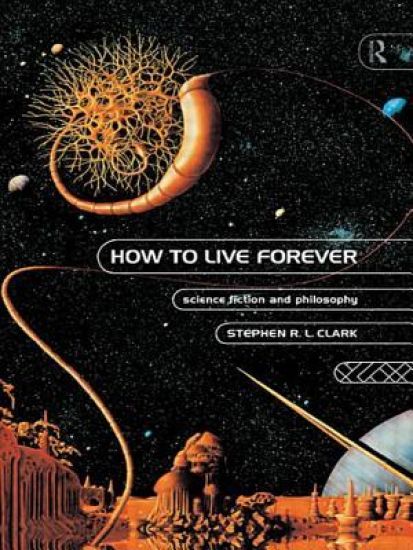
Immortality is a subject which has long been explored and imagined by science fiction writers. In his intriguing new study, Stephen R.L.Clark argues that the genre of science fiction writing allows investigation of philosophical questions about immortality without the constraints of academic philosophy. He reveals how fantasy accounts of issues such as resurrection, disembodied survival, reincarnation and devices or drugs for preserving life can be used as an important resource for philosophical inquiry and examines how a society of immortals might function through a reading of the vampire myth.How to Live Forever is a compelling study which introduces students and professional philosophers to the possibilities of using science fiction in their work. It includes extensive suggestions for further reading, both fictional and philosophical, and examines the work of such major science fiction authors as Arthur C. Clarke, Frank Herbert, Larry Niven, William Gibson, and Colin Wilson.
How to Live Forever

How to Live Forever

Stephen R L Clark

Routledge
2015
nidottu
Immortality is a subject which has long been explored and imagined by science fiction writers. In his intriguing new study, Stephen R.L.Clark argues that the genre of science fiction writing allows investigation of philosophical questions about immortality without the constraints of academic philosophy. He reveals how fantasy accounts of issues such as resurrection, disembodied survival, reincarnation and devices or drugs for preserving life can be used as an important resource for philosophical inquiry and examines how a society of immortals might function through a reading of the vampire myth.How to Live Forever is a compelling study which introduces students and professional philosophers to the possibilities of using science fiction in their work. It includes extensive suggestions for further reading, both fictional and philosophical, and examines the work of such major science fiction authors as Arthur C. Clarke, Frank Herbert, Larry Niven, William Gibson, and Colin Wilson.
The Mysteries of Religion

The Mysteries of Religion

Stephen R L Clark

Wipf Stock Publishers
2017
pokkari
Philosophy of religion too often confines itself to a few well-worn philosophical puzzles, such as the proof of God's existence, and overworked examples which are usually drawn from Western Christianity. This book considers religion practice and expression in a number of cultural contexts, both familiar and exotic, from sacred texts to rites of passage, from the British Israel movement to spiritism and Aztec devil-worship. The author argues that, although there are many points on which religious persons disagree and no definite way of settling these disagreements, Neoplatonic theory about the world and our place in it does at least provide the context for debate. Is religion an irrational human attempt to disguise an essentially meaningless universe? Or is irrelgion itself unreasonable and a spiritual universe the best explanation? Using a wide range of examples, The Mysteries of Religion provides an invaluable philosophical background for a discussion of such fundamental questions. ""In The Mysteries of Religion Stephen R. L. Clark explores what many thinkers in philosophy, theology, and religious studies will find to be an exciting thesis: that an introduction to philosophy can be written through the lens of religion. Clark explores not only religious belief, in general, but also all of the major particular religions in the world. Both students and advanced scholars will benefit from his nuanced and insightful reasoning and his lively writing style."" --Daniel A. Dombrowski, Professor of Philosophy, Seattle University ""With characteristic acumen and literary grace, Stephen Clark demonstrates how a concern with religion as actually lived can inspire philosophical exploration. In The Mysteries of Religion, Clark shows himself simultaneously sensitive to the significance of the issues raised for ordinary people by their religious experiences and thoroughly adept at analyzing these issues with philosophical precision. Deeply humane and reflecting his exceptional breadth of learning, Clark's insights will prove illuminating to philosophers and theologians, students, and general readers in search of greater understanding."" --Gary Chartier Distinguished Professor of Law and Business Ethics, Tom and Vi Zapara School of Business, La Sierra University ""If you want to understand questions--not just answers--do read this book. The questions haven't changed at all in the long years since it was first published. They still call for our attention."" --Mary Midgley, English Moral Philosopher Stephen R. L. Clark is Emeritus Professor of Philosophy at the University of Liverpool, and Honorary Research Fellow in Theology at the University of Bristol. His books include The Moral Status of Animals, Ancient Mediterranean Philosophy, and Plotinus: Myth, Metaphor, and Philosophical Practice.
The Mysteries of Religion

The Mysteries of Religion

Stephen R L Clark

Wipf Stock Publishers
2017
sidottu
Philosophy of religion too often confines itself to a few well-worn philosophical puzzles, such as the proof of God's existence, and overworked examples which are usually drawn from Western Christianity. This book considers religion practice and expression in a number of cultural contexts, both familiar and exotic, from sacred texts to rites of passage, from the British Israel movement to spiritism and Aztec devil-worship. The author argues that, although there are many points on which religious persons disagree and no definite way of settling these disagreements, Neoplatonic theory about the world and our place in it does at least provide the context for debate. Is religion an irrational human attempt to disguise an essentially meaningless universe? Or is irrelgion itself unreasonable and a spiritual universe the best explanation? Using a wide range of examples, The Mysteries of Religion provides an invaluable philosophical background for a discussion of such fundamental questions. ""In The Mysteries of Religion Stephen R. L. Clark explores what many thinkers in philosophy, theology, and religious studies will find to be an exciting thesis: that an introduction to philosophy can be written through the lens of religion. Clark explores not only religious belief, in general, but also all of the major particular religions in the world. Both students and advanced scholars will benefit from his nuanced and insightful reasoning and his lively writing style."" --Daniel A. Dombrowski, Professor of Philosophy, Seattle University ""With characteristic acumen and literary grace, Stephen Clark demonstrates how a concern with religion as actually lived can inspire philosophical exploration. In The Mysteries of Religion, Clark shows himself simultaneously sensitive to the significance of the issues raised for ordinary people by their religious experiences and thoroughly adept at analyzing these issues with philosophical precision. Deeply humane and reflecting his exceptional breadth of learning, Clark's insights will prove illuminating to philosophers and theologians, students, and general readers in search of greater understanding."" --Gary Chartier Distinguished Professor of Law and Business Ethics, Tom and Vi Zapara School of Business, La Sierra University ""If you want to understand questions--not just answers--do read this book. The questions haven't changed at all in the long years since it was first published. They still call for our attention."" --Mary Midgley, English Moral Philosopher Stephen R. L. Clark is Emeritus Professor of Philosophy at the University of Liverpool, and Honorary Research Fellow in Theology at the University of Bristol. His books include The Moral Status of Animals, Ancient Mediterranean Philosophy, and Plotinus: Myth, Metaphor, and Philosophical Practice.
From Athens to Jerusalem

From Athens to Jerusalem

Stephen R L Clark

Angelico Press
2019
pokkari
These expanded Gifford lectures attempt to answer Tertullian's jibe, "What business has Jerusalem with Athens?" Addressing this question within the horizons of multiple, sometimes apparently opposing, worldviews, Clark ends by stoutly defending reason, the achievability of truth, and the reality of consciousness against contemporary attack.
From Athens to Jerusalem

From Athens to Jerusalem

Stephen R L Clark

Angelico Press
2019
sidottu
These expanded Gifford lectures attempt to answer Tertullian's jibe, "What business has Jerusalem with Athens?" Addressing this question within the horizons of multiple, sometimes apparently opposing, worldviews, Clark ends by stoutly defending reason, the achievability of truth, and the reality of consciousness against contemporary attack.
How the Worlds Became

How the Worlds Became

Stephen R L Clark

Angelico Press
2023
pokkari
Our ancestors told many a story about the world, addressing in imaginative terms questions we now consider philosophical or scientific. Among the oldest stories are those telling how the First Thing emerged from Nothing and gradually became "the ten thousand things," including powers of a larger and longer-lasting sort than those of mortals, sometimes represented in the motion of heavenly bodies. Such imaginative tellings or myths in some ways resemble modern cosmological theories, but in their original sense were transformative resources for humane living, providing ways of enlivening our spirits. "The lover of myth," as Aristotle said, "is in a way a lover of wisdom, for the myth is composed of wonders." Let us then approach the stories included here as just such lovers of wisdom, keeping a keen but sympathetic eye out for their wonders, intent on unveiling new insights into our beginnings, and that of all the creatures with whom we share the world.
How the Worlds Became

How the Worlds Became

Stephen R L Clark

Angelico Press
2023
sidottu
Our ancestors told many a story about the world, addressing in imaginative terms questions we now consider philosophical or scientific. Among the oldest stories are those telling how the First Thing emerged from Nothing and gradually became "the ten thousand things," including powers of a larger and longer-lasting sort than those of mortals, sometimes represented in the motion of heavenly bodies. Such imaginative tellings or myths in some ways resemble modern cosmological theories, but in their original sense were transformative resources for humane living, providing ways of enlivening our spirits. "The lover of myth," as Aristotle said, "is in a way a lover of wisdom, for the myth is composed of wonders." Let us then approach the stories included here as just such lovers of wisdom, keeping a keen but sympathetic eye out for their wonders, intent on unveiling new insights into our beginnings, and that of all the creatures with whom we share the world.