Kirjojen hintavertailu. Mukana 11 358 488 kirjaa ja 12 kauppaa.

Kirjahaku

Etsi kirjoja tekijän nimen, kirjan nimen tai ISBN:n perusteella.

7 kirjaa tekijältä Stephen R. L. Clark

A Parliament of Souls

A Parliament of Souls

Stephen R. L. Clark

Clarendon Press
1990
sidottu
Limits and Renewals is a trilogy based on the Stanton Lectures in the Philosophy of Religion delivered at the University of Cambridge in 1986-8. In this, the second volume, Professor Clark attempts to restate a traditional philosophy of mind, drawing upon philosophical and poetic resources that are often neglected in modern and post-modern thought, and emphasizing the moral and political implications of differing `philosophies of mind and value'. He presents a study of the soul as it has traditionally been conceived and as it can be understood through imaginative attention to our changing moods, beliefs, and fears. He argues that without that traditional concept we have little reason to believe that liberal values (rational thought and individual autonomy) are either possible or desirable. Particular topics discussed include the political context of identity claims, the uses of introspection, free will, `the beast within' as alien monster or necessary angel, the possibility of knowledge and the dangers of curiosity, the fear of death, the philoprogenitive gene, the political roots of the distinction between facts and values, and the body-mind problem. Notable features of the book are the author's citation of writers other than the conventionally philosophical (Augustine, Hopkins, Stapledon, and Weil), and the emphasis that he gives to traditions other than the self-consciously secular.
God's World and the Great Awakening

God's World and the Great Awakening

Stephen R. L. Clark

Clarendon Press
1991
sidottu
In God's World and the Great Awakening, Professor Clark's main concern is with the way we can `turn aside' to the Truth from the normal delusions of self-concern. He restates a traditional, Neoplatonic metaphysics as the proper context for scientific and religious practice, and defends a serious Platonic realism against both scientism and anti-realism. Neither scientism, which identifies Truth with what can be revealed to the objectifying gaze, nor fashionable anti-realism, which equates Truth simply with what `we' choose to take seriously, offer an adequate ground for our scientific or religious faith. The primary faith of humankind is that there is a real world which is more than an obsequious shadow of our desires and fancies, and this real world can be discovered through right reason. The defence of this faith requires a properly worked, Platonic metaphysic of just the kind discernible in Christian orthodoxy. The other two volumes are: Civil Peace and Sacred Order (1989) and A Parliament of Souls (1990).
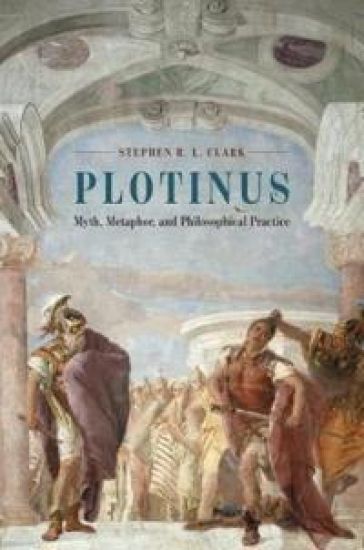
Plotinus

Plotinus

Stephen R. L. Clark

University of Chicago Press
2018
pokkari
Plotinus, the Roman philosopher (c. 204-270 CE) who is widely regarded as the founder of Neoplatonism, was also the creator of numerous myths, images, and metaphors. They have influenced both secular philosophers and Christian and Muslim theologians, but have frequently been dismissed by modern scholars as merely ornamental. In this book, distinguished philosopher Stephen R. L. Clark shows that they form a vital set of spiritual exercises by which individuals can achieve one of Plotinus's most important goals: self-transformation through contemplation. Clark examines a variety of Plotinus's myths and metaphors within the cultural and philosophical context of his time, asking probing questions about their contemplative effects. What is it, for example, to "think away the spatiality" of material things? What state of mind is Plotinus recommending when he speaks of love, or drunkenness, or nakedness? What starlike consciousness is intended when he declares that we were once stars or are stars eternally? What does it mean to say that the soul goes around God? And how are we supposed to "bring the god in us back to the god in all"? Through these rich images and structures, Clark casts Plotinus as a philosopher deeply concerned with philosophy as a way of life.
Biology and Christian Ethics

Biology and Christian Ethics

Stephen R. L. Clark

Cambridge University Press
2000
sidottu
This stimulating and wide-ranging book mounts a profound enquiry into some of the most pressing questions of our age, by examining the relationship between biological science and Christianity. The history of biological discovery is explored from the point of view of a leading philosopher and ethicist. What effect should modern biological theory and practice have on Christian understanding of ethics? How much of that theory and practice should Christians endorse? Can Christians, for example, agree that biological changes are not governed by transcendent values, or that there are no clear or essential boundaries between species? To what extent can 'Nature' set our standards? Professor Clark takes a reasoned look at biological theory since Darwin and argues that an orthodox Christian philosophy is better able to accommodate the truth of such theory than is the sort of progressive, meliorist interpretation of Christian doctrine which is usually offered as the properly 'modern' option.
Biology and Christian Ethics

Biology and Christian Ethics

Stephen R. L. Clark

Cambridge University Press
2000
pokkari
This stimulating and wide-ranging book mounts a profound enquiry into some of the most pressing questions of our age, by examining the relationship between biological science and Christianity. The history of biological discovery is explored from the point of view of a leading philosopher and ethicist. What effect should modern biological theory and practice have on Christian understanding of ethics? How much of that theory and practice should Christians endorse? Can Christians, for example, agree that biological changes are not governed by transcendent values, or that there are no clear or essential boundaries between species? To what extent can 'Nature' set our standards? Professor Clark takes a reasoned look at biological theory since Darwin and argues that an orthodox Christian philosophy is better able to accommodate the truth of such theory than is the sort of progressive, meliorist interpretation of Christian doctrine which is usually offered as the properly 'modern' option.
G. K. Chesterton

G. K. Chesterton

Stephen R. L. Clark

Templeton Foundation Press,U.S.
2006
sidottu
In this book, Stephen R. L. Clark, a philosopher with a lifelong "addiction" to science fiction, explores G. K. Chesterton's ideas and arguments in their historical context and evaluates them philosophically. He addresses Chesterton's sense that the way things are is not how they must have been or need be in the future and his willingness to face up to the apparent effects of the nihilism he detected in the science and politics of his day. Clark offers a detailed study of some of Chesterton's works that have been identified by science fiction writers and critics as seminal influences. He attempts to deal with some of Chesterton's theories that have been found offensive or "positively wicked" by later writers and critics, including his arguments against female suffrage and in praise of war, his medievalist leanings, and his contemptuous rejection of the Darwinian evolutionary theory.
Plotinus Ennead VI.9: On the Good or the One

Plotinus Ennead VI.9: On the Good or the One

Stephen R. L. Clark

Parmenides Publishing
2020
nidottu
This early treatise is placed by Plotinus' editor at the very end of the Enneads, as the culmination of his thought, matching Plotinus' own last recorded instruction, 'to bring the god in you back to the god in the all.' It is a cosmological sketch, arguing that the being of anything depends on its being unified by its orientation to its own good, and so also the being of Everything, the All. The One, or the Good, is at once the goal of all things both individually and collectively, and also the transcendent source of all that we experience, mediated through an intelligible order. But it is also, and perhaps more importantly, intended as a guide to the proper education and discipline of our own motives and experience. We are encouraged to put aside immediate sensory data, egoistic prejudice and sensual impulse, first to grasp at least a little of the intelligible order within which we all live, and at last to purge even those last intellectual attachments and experience what cannot be adequately described: the unity of being.