Kirjojen hintavertailu. Mukana 12 390 323 kirjaa ja 12 kauppaa.

Kirjahaku

Etsi kirjoja tekijän nimen, kirjan nimen tai ISBN:n perusteella.

6 kirjaa tekijältä Stephen R. Wilk

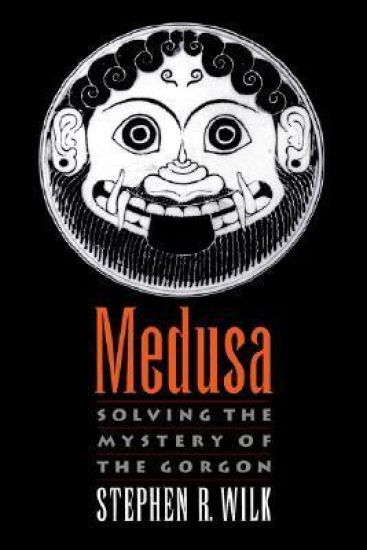
Medusa

Medusa

Stephen R. Wilk

Oxford University Press Inc
2000
sidottu
Medusa, the Gorgon who turns those who gaze upon her to stone, is one of the most popular and enduring figures of Greek mythology. Long after many other figures from Greek myth have been forgotten, she continues to live in popular culture. In this fascinating study of the legend of Medusa, Stephen R. Wilk begins by refamiliarizing readers with the story through ancient authors and classical artwork, then looks at the interpretations that have been given of the meaning of the myth through the years. A new and original interpretation of the myth is offered, based upon astronomical phenomena. The use of the gorgoneion, the Face of the Gorgon, on shields and on roofing tiles is examined in light of parallels from around the world, and a unique interpretation of the reality behind the gorgoneion is suggested. Finally, the history of the Gorgon since Classical times is explored, culminating in the modern use of Medusa as a symbol of Female Rage and Female Creativity.
Medusa

Medusa

Stephen R. Wilk

Oxford University Press Inc
2008
nidottu
Medusa, the Gorgon, who turns those who gaze upon her to stone, is one of the most popular and enduring figures of Greek mythology. Long after many other figures from Greek myth have been forgotten, she continues to live in popular culture. In this fascinating study of the legend of Medusa, Stephen R. Wilk begins by refamiliarizing readers with the story through ancient authors and classical artwork, then looks at the interpretations that have been given of the meaning of the myth through the years. A new and original interpretation of the myth is offered, based upon astronomical phenomena. The use of the gorgoneion, the Face of the Gorgon, on shields and on roofing tiles is examined in light of parallels from around the world, and a unique interpretation of the reality behind the gorgoneion is suggested. Finally, the history of the Gorgon since classical times is explored, culminating in the modern use of Medusa as a symbol of Female Rage and Female Creativity.
Sandbows and Black Lights

Sandbows and Black Lights

Stephen R. Wilk

Oxford University Press Inc
2021
sidottu
Why are candle flames yellow? Why does ultraviolet light supposedly kill vampires? What about the monocle? Why was the monocle--a corrective lens that only corrects vision in a single eye--so popular among businessmen and politicians for so many years? Stephen R. Wilk answers all this and so much more in Sandbows and Black Lights. This book is a collection of original essays on weird and unusual topics surrounding optics. Wilk uses the BBC's formula of "Education by Stealth" to explain unusual facets of science and technology through the matrix of interesting and cultural paths, all the while weaving in math equations in an accessible way. The first part of the book focuses on the history, the second moves to odd scientific approaches to visual phenomena, and the third part explains the unique use of optics in fiction, movies, and comic books over time. Chapters cover everything from endless corridors to the beam of light over treasure chests in movies. Whether he is explaining a rare discovery or answering a seemingly unapproachable question, Wilk is able to lure readers in on every page. He has a unique ability to turn complex science into an engaging story, and this book is full of narratives on esoteric topics anyone will find intriguing. Sandbows and Black Lights provides an enticing and entertaining look at physical illusions in a whole new way.
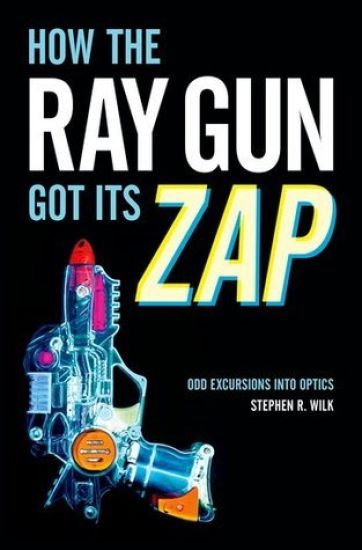
How the Ray Gun Got Its Zap

How the Ray Gun Got Its Zap

Stephen R. Wilk

Oxford University Press Inc
2013
sidottu
How the Ray Gun Got Its Zap is a collection of essays that discusses odd and unusual topics in optics. Though optics is a fairly specialized branch of physics, this book extracts from the discipline topics that are particularly interesting, mysterious, culturally relevant, or accessible. The essays all first appeared, in abbreviated form, in Optics and Photonics News and in The Spectrograph; the author has updated and expanded upon each of them for this book. The book is divided into three thematic sections: History, Weird Science, and Pop Culture. Chapters will discuss surprising uses of optics in classics and early astronomy; explain why we think of the sun as yellow when it is actually white; present how the laser is used in popular film; and profile the eccentric scientists who contributed to optics. The essays are short and entertaining, and can be read in any order. The book should appeal to general audiences interested in optics or physics more generally, as well as members of the scientific community who are curious about optics phenomena.
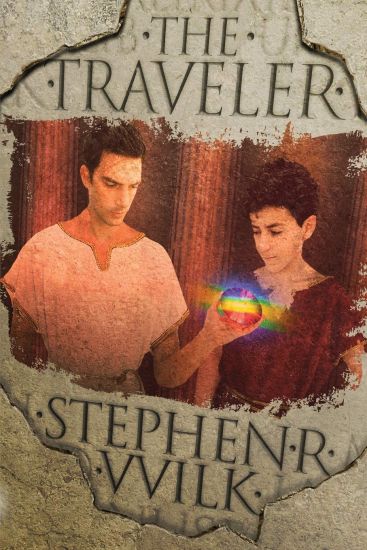
The Traveler

The Traveler

Stephen R. Wilk

Rogue Phoenix Press
2019
nidottu
Argus survived on the streets of Rome using his skill and his wits, but he had never seen anything like the Crazy Man, Tenobius. Tenobius looked odd, and couldn't speak Latin properly, but he had magical things and metal teeth. All Tenobius wanted to do was to repair his Dreamship (with Argus' help) and go home. What Argus could not know was that Tenobius was a Time Traveler, and his Dreamship was his crashed Time Machine. To get home, he had to rebuild it using only what he could find and make in ancient Rome.
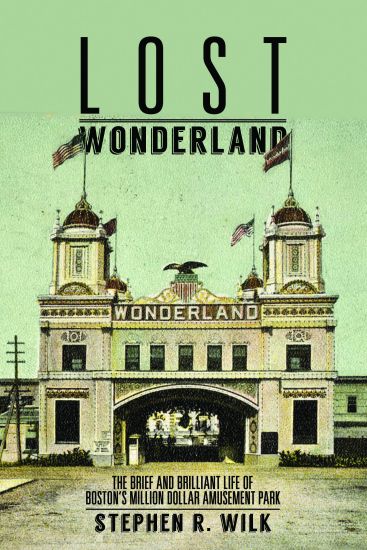
Lost Wonderland

Lost Wonderland

Stephen R. Wilk

University of Massachusetts Press
2020
nidottu
If you take Boston's Blue Line to its northern end, you'll reach the Wonderland stop. Few realize that a twenty-three-acre amusement park once sat nearby -- the largest in New England, and grander than any of the Coney Island parks that inspired it. Opened in Revere on Memorial Day in 1906 to great fanfare, Wonderland offered hundreds of thousands of visitors recreation by the sea, just a short distance from downtown Boston. The story of the park's creation and wild, but brief, success is full of larger-than-life characters who hoped to thrill attendees and rake in profits. Stephen R. Wilk describes the planning and history of the park, which featured early roller coasters, a scenic railway, a central lagoon in which a Shoot-the-Chutes boat plunged, an aerial swing, a funhouse, and more. Performances ran throughout the day, including a daring Fires and Flames show; a Wild West show; a children's theater; and numerous circus acts. While nothing remains of what was once called "Boston's Regal Home of Pleasure" and the park would close in 1910, this book resurrects Wonderland by transporting readers through its magical gates.