Kirjahaku
Etsi kirjoja tekijän nimen, kirjan nimen tai ISBN:n perusteella.
66 kirjaa tekijältä Stephen Smith
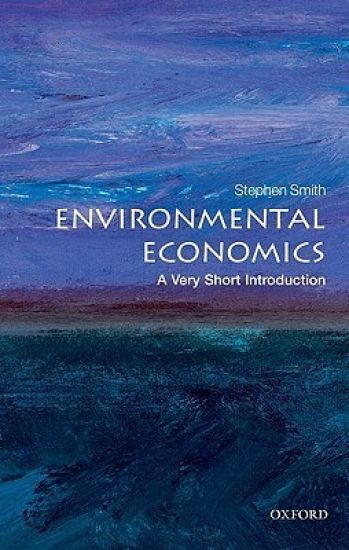
If environmental protection is costly, how much should we spend on pollution control? Is it worth reducing pollution to zero, or should we accept some level of pollution because of the economic benefits associated with it? How can we assess the benefits that people get from a less-polluted atmosphere? In broad terms, environmental economics looks at how economic activity and policy affect the environment in which we live. Some production generates pollution, such as power station emissions causing acid rain and contributing to global warming, but household consumption decisions also affect the environment, where more consumption can mean more waste sent to polluting incinerators. However, pollution is not an inevitable consequence of economic activity - environmental policies can require polluting firms to clean up their emissions, and can encourage people to change their behaviour, through environmental taxes on polluting goods, for example. Generally, though, these measures will involve some costs, such as installing pollution control equipment. So there's a trade-off: a cleaner environment, but economic costs. In recent years, many economists have argued for greater use of incentive in the form of pollution charges and emissions trading rather than more traditional direct regulation of polluters. In this Very Short Introduction, Stephen Smith discusses environmental issues including pollution control, reducing environmental damage, and global climate change policies, answering questions about how we should balance environmental and economic considerations, and what form government policies should take. Including many illustrative case studies and examples he shows that this is an exciting field of economics, and one that is at the heart of many public debates and controversies. ABOUT THE SERIES: The Very Short Introductions series from Oxford University Press contains hundreds of titles in almost every subject area. These pocket-sized books are the perfect way to get ahead in a new subject quickly. Our expert authors combine facts, analysis, perspective, new ideas, and enthusiasm to make interesting and challenging topics highly readable.
Taxation is crucial to the functioning of the modern state. Tax revenues pay for public services - roads, the courts, defence, welfare assistance to the poor and elderly, and in many countries much of health care and education too. More than one third of national income in the industrialized (OECD) countries is on average taken in taxation. Taxes affect individuals in many ways. Taxes paid on income and spending directly reduce taxpayer disposable income, taxpayers face the hassle of tax returns and making payments, and they may be anxious about the possibility of investigation and enforcement action. People also adapt their activities in various ways to reduce the impact of taxation - putting money into tax-free savings accounts, or making shopping trips to other countries where taxes are lower. Taxation is therefore central to politics and public debate. Politicians that make reckless campaign promises about taxation then have to live with the uncomfortable consequences if elected. Businesses lobby for tax breaks that they claim will create jobs and prosperity. In this Very Short Introduction Stephen Smith shows how taxes have real effects on citizens and the economy that tax policy-makers have to balance. Although tax policy will always be a highly political issue, he argues that public decisions about taxation would be improved by a better understanding of the role of taxation, and of the nature and effects of different taxes. ABOUT THE SERIES: The Very Short Introductions series from Oxford University Press contains hundreds of titles in almost every subject area. These pocket-sized books are the perfect way to get ahead in a new subject quickly. Our expert authors combine facts, analysis, perspective, new ideas, and enthusiasm to make interesting and challenging topics highly readable.
What is visible to the naked eye has been exhaustively raked over; in UNDERGROUND LONDON, acclaimed travel writer Stephen Smith provides an alternative guide and history of the capital. It's a journey through the passages and tunnels of the city, the bunkers and tunnels, crypts and shadows. As well as being a contemporary tour of underground London, it's also an exploration through time: Queen Boudicca lies beneath Platform 10 at King's Cross (legend has it); Dick Turpin fled the Bow Street Runners along secret passages leading from the cellar of the Spaniards pub in North London; the remains of a pre-Christian Mithraic temple have been found near the Bank of England; on the platforms of the now defunct King William Street Underground, posters still warn that 'Careless talk costs lives'. Stephen Smith uncovers the secrets of the city by walking through sewers, tunnels under such places as Hampton Court, ghost tube stations, and long lost rivers such as the Fleet and the Tyburn. This is 'alternative' history at its best.

For a growing number of British holidaymakers, Cuba is a Caribbean paradise, but it is also a land of cutbacks and economic instability. Stephen Smith comes to live on the island, and his search for the real Cuba inevitably becomes a search for Fidel Castro too. Before meeting his quarry, Smith travels extensively through the 'land of miracles' in an old American automobile. His highly-personalised account features a bloody initiation into a voodoo-like cult, dining on giant rat, and checking into the Love Hotel. And he goes on manoeuvres in the Everglades with armed, but not especially competent, Cuban exiles dreaming of a second Bay of Pigs. With disarming wit and considerable insight, Stephen Smith investigates a country where communism and voodoo coexist, and where the influence of its leader of forty years continues to throw a long shadow.

For Stephen Smith, author of UNDERGROUND LONDON, beneath the dales and downs of England's green and pleasant land there exists another country, its equal in beauty and fascination. On his underworld odyssey from Newcastle to Brighton, from the Welsh Marches to the Suffolk coast, Smith uncovers smugglers' tunnels and drowned cities, burial mounds and underground waterfalls, and investigates the errant nuns and secret societies, the eighteenth-century rakes and troglodyte communities who have made the netherworld their home. Erudite, curious and unfailingly entertaining, UNDERGROUND ENGLAND is at once subterranean ghost train, rollercoaster ride, and passport to a mysterious other world.
This play focuses on the zany world of the movie extra. Novice Mary is sent to the film shoot of a dubious sci-fi movie. At the early morning call she is initiated by seasoned pros, morose Malcolm and camp Roddy, but with the arrival of wealthy, eccentric Victoria, matters become decidedly wacky.
In a hotel room in Azerbaijan, Howard wakes up with a hangover. Proffering English tea and sympathy is ministry official, Yellena. Slowly, it emerges that Howard, who is to referee an important international football match, has disgraced himself the previous evening at a dinner. Or has he?
Mary decides to spice up her life and join Alfredo Leache's Background Artistes Agency. But spending just a short time in the office Mary learns that being a walk-on artiste isn't all glamour.3 women, 2 men
Stranded in an airport lounge during the inevitable delay of a holiday flight to Spain, Rosemary - "I`m a one-parent family, you see" - and her carbon-copy, not-very-bright daughter, Mandy, draw the reluctant Dennis and Shelia Tippit into a conversation.3 women, 1 man
A powerful and tense three hander based on the author's research while living in Thailand. Although written in the early nineties it is still topical today with themes of greed, morality and do the ends justify the means. Having made his name as a comedy writer this was the first of the author`s equally successful thrillers.-1 woman, 2 men
Four expectant mothers and one father find themselves in a small hospital room awaiting the midwife who is to give them their first Parentcraft class. Differences in experiences, outlook and class lead to some interesting and at times hilarious exchanges, as each of the five have to face, and come to terms with, the prejudices and foibles of their companions. An amazing revelation shocks them all - one of their number is not, in fact, going to be a parent at all!4 women, 1 man
Provides practical advice on the use of quantitative techniques used in tourism. Thoroughly revised and updated, the new edition includes new guidelines for domestic and international statistics produced by the World Tourism Organization. The book provides practical tools for both market planning as well as for product assessment, especially regional and environmental planning.

Established in 1961 by Alvin A. Goldberg, Franklyn S. Haiman, Mark Klyn, Robert M. O Neil, and George P. Rice to provide a forum for promoting the essential place of free and responsible communication in a democratic society, the "Yearbook "has sought for a quarter-century through articles, essays, and reviews to support the right of peaceful expression by any communicative means available.Topics covered include points of constitutional law, court cases, government regulation, obscenity, philosophy of communication, and the teaching of communication."
How can we accept the gender system in view of its ills? Yet, are we really at liberty to abolish gender differences, "when the gender system gives us benchmarks of personal identity and worth along with primary channels in which to pursue the rewards of love?" With this double question, Steven G. Smith introduces his inquiry into the idea of gender and how it is implicated in love, respect, equality, and personal character. Gender Thinking is the first comprehensive philosophical exploration of the concept of gender Asking the question, what is gender?—that is, what sort of thing do we take femininity and masculinity to be?—Smith considers how gender thinking is interwoven with ideas about human nature. He suggests ways in which ideas about race, class, culture age, temperament, and sexual orientation can be understood from clues found in gender thinking. And he calls for a renegotiated procreative partnership between women and men as the key to the redemption of gender.
How can we accept the gender system in view of its ills? Yet, are we really at liberty to abolish gender differences, "when the gender system gives us benchmarks of personal identity and worth along with primary channels in which to pursue the rewards of love?" With this double question, Steven G. Smith introduces his inquiry into the idea of gender and how it is implicated in love, respect, equality, and personal character. Gender Thinking is the first comprehensive philosophical exploration of the concept of gender Asking the question, what is gender?—that is, what sort of thing do we take femininity and masculinity to be?—Smith considers how gender thinking is interwoven with ideas about human nature. He suggests ways in which ideas about race, class, culture age, temperament, and sexual orientation can be understood from clues found in gender thinking. And he calls for a renegotiated procreative partnership between women and men as the key to the redemption of gender.

A twenty-year drug and drink horror trip from riches to insanity in the gutter. An incredible true story with a fairytale end. Part of the proceeds from the sale of the book will benefit homeless people. Publicity guaranteed.