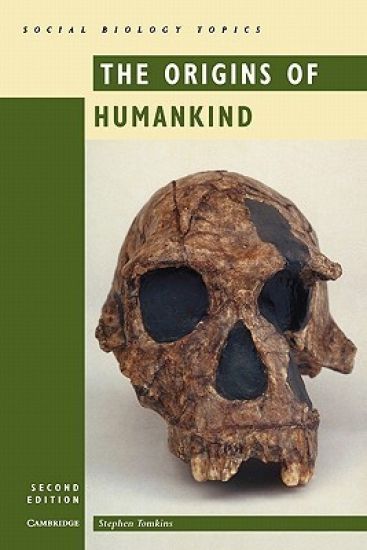
The Origins of Humankind gives a concise account of human evolution. It covers evolutionary theory, the primates, the human fossil story, the cultural evolution of humans and the origins of agriculture and civilisation. It begins with an account of the development of ideas about evolution, from pre-Darwinian theories through to the study of molecular evolution, and goes on to give detailed explanations of the physical and evolutionary stages leading to Homo sapiens.
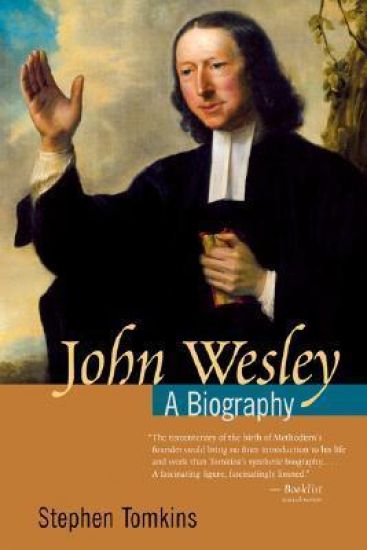
This biography tells the story of John Wesley's colourful and dramatic life, beginning with his childhood and his family background, looking especially at the influence of his powerful and austere mother, Susannah. The author then goes on to examine Wesley's school and university careers (including the Holy Club), his mission to Georgia and finally his "conversion" and mission to England - including the organisation of methodist societies. Key issues in Wesley's life, such as his renunciation of wealth and the role of women, are given prominent treatment as is an assessment of Wesley's long-term impact both in this country and abroad.
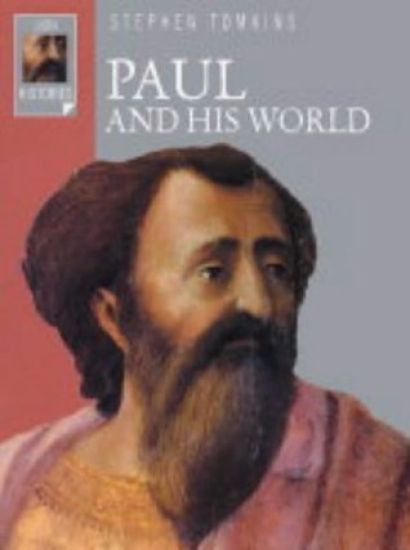
St Paul has had a huge impact on Christian history. In this book, Stephen Tomkins gives us a lively and accessible introduction to Paul's life. He paints a vivid picture of the world into which Paul was born - the Graeco-Roman culture and the Jewish religion and customs. He shows what the early church was like before Paul's conversion, and then tells the dramatic story of Paul's experience on the Damascus Road followed by his missionary journeys and disputes with fellow leaders. He also traces the changes in Paul's thinking and poses the question - did Paul rewrite Christianity? This fascinating book takes account of the latest biblical and historical scholarship, presenting a vivid portrait of Paul and the world in which he lived.
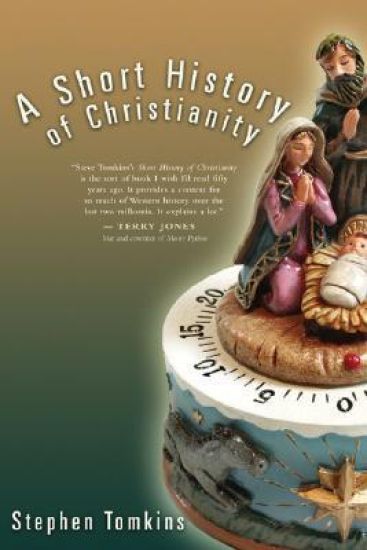
Worshipped by 2 billion Christians (and revered by 1.3 billion Muslims), Jesus Christ is the most famous human being ever. Yet how did this man from an obscure backwater in the Roman Empire achieve such extraordinary acclaim? How did religion founded in his name grom to become the most powerful on earth? What has been its relationship through history with that other giant of religions, Islam? In this fast-paced and entertaining book, journalist and historian Stephen Tomkins sets out to provide the answers. Beginning with the life of Jesus, he presents a warts-and-all portrait of the key people, events and movements in Christian history. For every debauched pope, murderous crusader and hate-filled inquisitor, there are glorious examples of heroic self-sacrifice, spiritual enlightenment and social transformation. Despite setbacks and conflict, the church has continued to change and grow, with the result that, at the start of the 21st century, its centre of gravity is moving south into sub-Saharan Africa and South America. The author ends by looking to the future, for the story is far from over. All those wanting to understand where Christianity is going need to learn where it has come from, and in this book they will find a lively and informative guide.
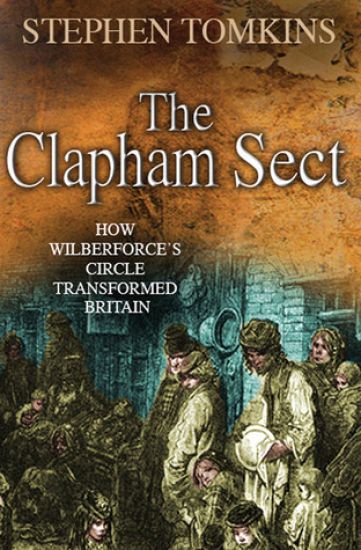
The Clapham Sect was a group of evangelical Christians, prominent in England from about 1790 to 1830, who campaigned for the abolition of slavery and promoted missionary work at home and abroad. The group centred on the church of John Venn, rector of Clapham in south London. Its members included William Wilberforce, Henry Thornton, James Stephen, Zachary Macaulay and others. Stephen Tomkins tells the fascinating story of the group as one of a web of family relations - father and son, aunt and nephew, husband and wife, daughter and father, cousins, etc. Within the story of the people are the stories of their famous campaigns against the slave trade, then slavery, the Sierra Leone colony, Indian mission, home mission, charity and politics. The book ends by assessing the long term influence of the Clapham Sect on Victorian Britain and the Empire.
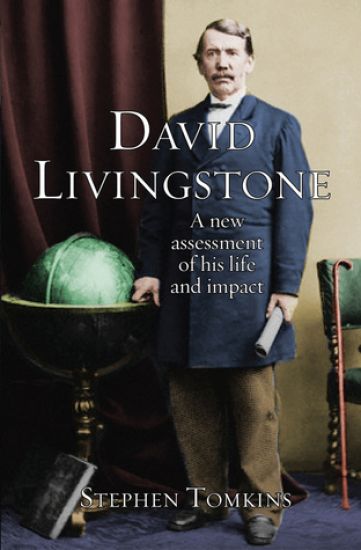
David Livingstone has gone down in history as a fearless explorer and missionary, hacking his way through the forests of Africa to bring light to the people - and also to free them from slavery. But who was he, and what was he actually like? "He was an extraordinary character," according to biographer Stephen Tomkins, spectacularly bad at personal relationships, at least with white people, possessed of infinite self-belief, courage, and restlessness. He was an almost total failure as a missionary, and so became an explorer and campaigner against the slave trade, hoping to save African lives and souls that way instead. He helped, however unwittingly, to set the tone and the extent of British involvement in Africa. He was a flawed but indomitable idealist. Fascinating new evidence about Livingstone's life and his struggles have come to light in the letters and journals he left behind, now accessible to us for the first time through spectral imaging. These form a significant addition to the source material for this excellent biography, which provides an honest and balanced account of the real man behind the Victorian icon.
The life and work of John Wesley (1703-1791) have had an enormous influence on modern Christianity, including his role as founding father of the Methodists, now 33 million strong worldwide. In this lively new biography journalist Stephen Tomkins narrates the story of Wesley's colorful and dramatic life for a new generation. Writing with verve and a light, sure touch, Tomkins follows Wesley from his childhood at Epworth rectory through his schooling and university career at Oxford to his mission to Georgia, his "conversion" in 1738, and finally his life as a religious leader in England. Preaching in numerous villages, towns, and cities, Wesley and his followers faced intense and savage persecution, but their missions were also accompanied by extraordinary phenomena such as convulsions, laughter, and healings. In the course of his compelling narrative Tomkins examines Wesley's relationships with key people in his life, including his powerful and austere mother, Susanna, and his hymn-writing brother, Charles. Tomkins also explores key issues in Wesley's life, such as his renunciation of wealth and his attitude toward women, concluding with an assessment of Wesley's ongoing influence both in his own country and abroad. Superbly crafted, grounded in thorough research, and published in the 300th year of Wesley's birth, this book will appeal to students of Wesley, people from the Methodist tradition, and general readers interested in church history.
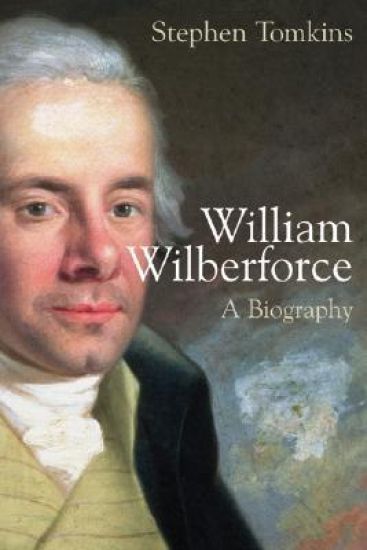
In the 1780s, around 40,000 slaves a year were taken from Africa in British ships, on the notorious "Middle Passage," to the Caribbean. In 1787, under an oak tree in Kent, the British Prime Minister, William Pitt, invited his friend William Wilberforce to introduce a parliamentary bill outlawing the slave trade. Neither of them imagined a twenty-year political campaign that would consume the rest of Wilberforce's life. Born in Hull, England, to wealthy middle-class parents, Wilberforce entered Parliament and became a political celebrity in his day. After undergoing a profound Christian conversion, he set out on a path of service to humanity. Stephen Tomkins charts Wilberforce's tireless battle to end the slave trade, portraying a man of contradictions and extraordinary determination. Written in a lively and engaging style, this biography of William Wilberforce transports the reader back to a dramatic age of conflict and upheaval. Published as part of the widespread commemoration of the 200th anniversary of the Anti-Slave Trade Act -- also celebrated by the 2007 release of the widely acclaimed movie Amazing Grace -- this biography brings an extensive cast of colorful characters vividly to life.
Worshiped by 2 billion Christians worldwide, Jesus Christ is arguably the most famous human being ever. Yet grasping the vast story of his followers over the last 2,000 years can be a dizzying, difficult task. In A Short History of Christianity Stephen Tomkins takes readers on an entertaining and enlightening journey through the key stages of Christian development, covering the people, the events, the movements, and the controversies of the church. Tomkins deals with the well-known (Augustine, Martin Luther), the unique (Simeon Stylites, the people's crusade, the Muggletonians), and the recent (Karl Barth, John Paul II, the Toronto blessing). His penetrating, energetic Short History of Christianity is sure to delight and inform a broad range of readers.
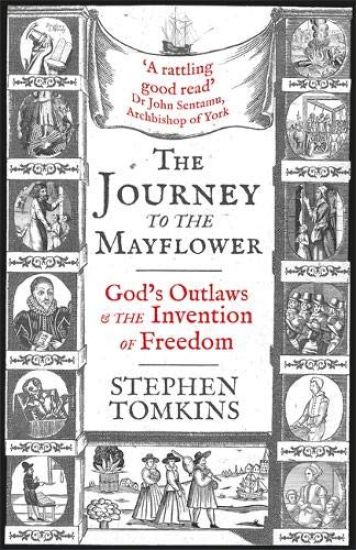
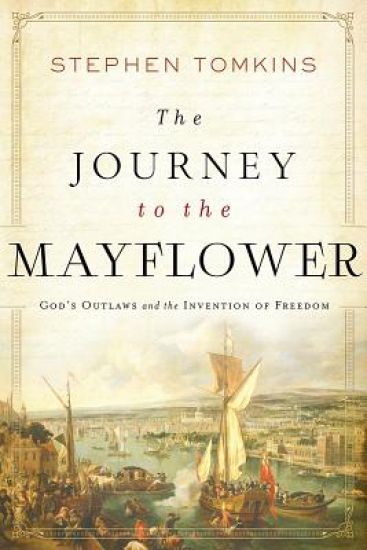
'Wonderfully learned, wonderfully written, a microscopic examination of the acorn from which a truly mighty oak would spring. I learnt a huge amount.' - Tom Holland, author of Dominion: The Making of the Western Mind2020 sees the 400th anniversary of the sailing of the Mayflower - the ship that took the Pilgrim Fathers to the New World. It's a foundational event in American history, but it began as an English story, which pioneered the idea of religious freedom. The illegal underground movement of Protestant separatists from Elizabeth I's Church of England is a story of subterfuge and danger, arrests and interrogations, prison and executions. It starts with Queen Mary's attempts to burn Protestantism out of England, which created a Protestant underground. Later, when Elizabeth's Protestant reformation didn't go far enough, radicals recreated that underground, meeting illegally throughout England, facing prison and death for their crimes. They went into exile in the Netherlands, where they lived in poverty - and finally the New World.Stephen Tomkins tells this fascinating story - one that is rarely told as an important piece of English, as well as American, history - that is full of contemporary relevance: religious violence, the threat to national security, freedom of religion and tolerance of dangerous opinions. This is a must-read book for anyone interested in the untold story of how the Mayflower came to be launched.'A rattling good read' - The Archbishop of York, Dr John Sentamu
'A rattling good read' - The Archbishop of York, Dr John Sentamu 2020 sees the 400th anniversary of the sailing of the Mayflower - the ship that took the Pilgrim Fathers to the New World. It's a foundational event in American history, but it began as an English story, which pioneered the idea of religious freedom. The illegal underground movement of Protestant separatists from Elizabeth I's Church of England is a story of subterfuge and danger, arrests and interrogations, prison and executions. It starts with Queen Mary's attempts to burn Protestantism out of England, which created a Protestant underground. Later, when Elizabeth's Protestant reformation didn't go far enough, radicals recreated that underground, meeting illegally throughout England, facing prison and death for their crimes. They went into exile in the Netherlands, where they lived in poverty - and finally the New World.Stephen Tomkins tells this fascinating story - one that is rarely told as an important piece of English, as well as American, history - that is full of contemporary relevance: religious violence, the threat to national security, freedom of religion and tolerance of dangerous opinions. This is a must-read book for anyone interested in the untold story of how the Mayflower came to be launched.'A riveting story ... impeccably researched history ... engaging and entertaining, this book serves as reminder of the importance of upholding religious freedom in our current age.' - Tim Farron MP
An authoritative and immersive history of the far-reaching events in England that led to the sailing of the Mayflower. 2020 brings readers the 400th anniversary of the sailing of the Mayflower--the ship that took the Pilgrim Fathers to the New World. It is a foundational event in American history, but it began as an English story, which pioneered the idea of religious freedom. The illegal underground movement of Protestant separatists from Elizabeth I's Church of England is a story of subterfuge and danger, arrests and interrogations, prison and executions. It starts with Queen Mary's attempts to burn Protestantism out of England, which created a Protestant underground. Later, when Elizabeth's Protestant reformation didn't go far enough, radicals recreated that underground, meeting illegally throughout England, facing prison and death for their crimes. They went into exile in the Netherlands, where they lived in poverty--and finally to the New World. Historian Stephen Tomkins tells this fascinating story--one that is rarely told as an important piece of English, as well as American, history--that is full of contemporary relevance: religious violence, the threat to national security, freedom of religion, and tolerance of dangerous opinions. This is a must-read book for anyone interested in the untold story of how the Mayflower came to be launched.