Kirjojen hintavertailu. Mukana 12 406 331 kirjaa ja 12 kauppaa.

Kirjahaku

Etsi kirjoja tekijän nimen, kirjan nimen tai ISBN:n perusteella.

9 kirjaa tekijältä Stevan K. Pavlowitch

A History of the Balkans 1804-1945

A History of the Balkans 1804-1945

Stevan K. Pavlowitch

Longman
1999
nidottu
The Balkans have often been a flashpoint of conflict in European history. The recent civil war has torn the country apart and the region faces an uncertain future. This authoritative study provides an account of the history of the whole area from the first major nationalist rising against its Ottoman rulers in 1804 to the aftermath of World War II. Covering the former Yugoslavia, Albania, Greece, Bulgaria and Romania , it provides a Balkan-wide overview as well as histories of specific states and sets the context to the recent conflict.
Serbia

Serbia

Stevan K. Pavlowitch

New York University Press
2002
sidottu
"A highly readable narrative of nineteenth and twentiety century Serbian history told with verve and deep knowledge." ?Mark Mazower, author of Dark Continent: Europe in the Twentieth Century "Pavlowitch has consistently maintained a very high standard of accuracy and scholarship in all of his work on the former Yugoslavia." ? New York Review of Books, April 25, 2002 Serbias have come and gone, and they have moved from place to place. This book looks at the historical forces, actors, ideas, and period which have molded the entities that go by the name "Serbia." In Serbia: The History of an Idea we learn about the medieval rulers and the church, the imperial rule of Ottomans and Hapsburgs, the two World Wars, the Yugoslav kingdom of Serbs, Croats and Slovenes, and, of course, modern Yugoslavia. At the time of Serbia's emergence from the ruins of Tito's Yugoslavia and of Milosevic's regime, Stevan Pavlowitch shuns the "doomed to violence" and the "doomed to martyrdom" paradigms favored respectively by some Western and Serbian analysts in order to pose difficult questions about Serbian history. Pavlowitch seeks to move forward from the past rather than look back to idealized ages or read history backwards from the last ten years. Serbia: The History of an Idea offers readers a look into the historical entities that have played a crucial, and sometimes devastating, role in the formation of Serbia, from the aftermath of Yugoslavia to its current political state.
A History of the Balkans 1804-1945

A History of the Balkans 1804-1945

Stevan K. Pavlowitch

Routledge
2016
sidottu
The Balkans have often been a flashpoint of conflict in European history. The recent civil war has torn the country apart and the region faces an uncertain future. This authoritative study provides an account of the history of the whole area from the first major nationalist rising against its Ottoman rulers in 1804 to the aftermath of World War II. Covering the former Yugoslavia, Albania, Greece, Bulgaria and Romania , it provides a Balkan-wide overview as well as histories of specific states and sets the context to the recent conflict.
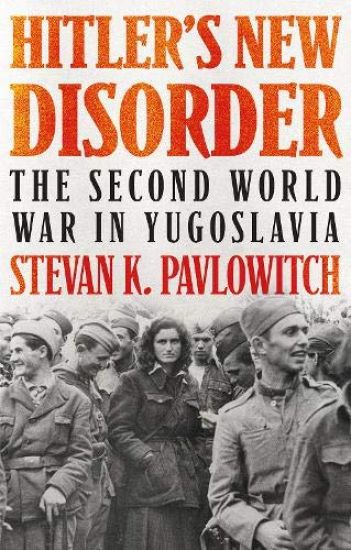
Hitler's New Disorder

Hitler's New Disorder

Stevan K. Pavlowitch

C Hurst Co Publishers Ltd
2020
nidottu
The history of the Second World War in Yugoslavia was for a long time the preserve of the Communist regime led by Marshal Tito. It was written by those who had battled hard to come out on top of the many-sided war fought across the territory of that Balkan state after the Axis Powers had destroyed it in 1941, just before Hitler's invasion of the USSR. It was an ideological and ethnic war under occupation by rival enemy powers and armies, between many insurgents, armed bands and militias, for the survival of one group, for the elimination of another, for belief in this or that ideology, for a return to an imagined past within the Nazi New Order, or for the reconstruction of a new Yugoslavia on the side of the Allies. In fact, many wars were fought alongside, and under cover of, the Great War waged by the Allies against Hitler's New Order which, in Yugoslavia at least, turned out to be a 'new disorder'. Most surviving participants have since told their stories; most archival sources are now available. Pavlowitch uses them, as well as the works of historians in several languages, to understand what actually happened on the ground. He poses more questions than he provides answers, as he attempts a synoptic and chronological analysis of the confused yet interrelated struggles fought in 1941-5, during the short but tragic period of Hitler's failed 'New Order', over the territory that was no longer the Kingdom of Yugoslavia and not yet the Federal Peoples' Republic of Yugoslavia, but that is now definitely 'former Yugoslavia'.
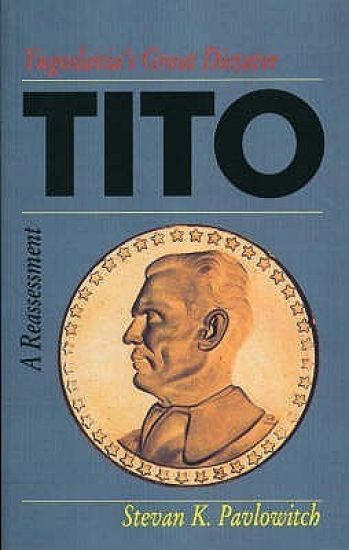
Tito

Tito

Stevan K. Pavlowitch

C Hurst Co Publishers Ltd
2019
nidottu
This biography offers a straightforward, balanced approach to the man who reigned over Yugoslavia for 35 years. Pavlowitch strips away the myths about Tito and his life and places him within a broad historical perspective as a key 20th-century European leader. He begins with the economic, social and national factors that helped to create Josip Broz Tito, then considers his role after the chaos of World War II, when he unified Yugoslavia by offering something to each of its constituent ehtnic communities. He admits that Tito remains paradoxical: a ruthless revolutionary and imaginative statesman, dogmatic hard-liner and triumphant heretic, disciple of Soviet Stalinism and the force behind a Yugoslav-style Marxism. According to Pavlowitch, the seeds of Tito's long-term failure lay in his short-term successes and his regime provided little more than transient unity. Tito, for all his faults, was one of the world's most influential leaders in his time - he also remains little understood. this study removes some of the mystery surrounding him and aims to help to explain the situation in Eastern Europe today.
Serbia

Serbia

Stevan K. Pavlowitch

C Hurst Co Publishers Ltd
2019
nidottu
Serbias have come and gone, and their boundaries have moved about. This text, rather than being a history, is an attempt to look at the historical forces, actors, ideas and periods which have moulded the entities that go by the name "Serbia". These are the mediaeval rulers and the church; the principality and the kingdom of modern times; the imperial rule of Ottomans and Habsburgs; the two world wars; the unification with other Slav populations and territories; the ideology of the three-named Yugoslav kingdom of Serbs, Croats and Slovenes; that of the brotherhood-and-union of Yugoslav nations in the communist federation; and the disintegration of Yugoslavia and its aftermath. Following Serbia's emergence from the ruins of Tito's Yugoslavia and of Milosevic's regime, Stevan Pavlowitch strives to get away from both the "doomed-to-violence" and the "doomed-to-martyrdom" explanations favoured respectively by some Western and some Serbian interpreters. He seeks to pose questions rather than to provide answers, and to move forward from the past rather than to look back to idealized ages or read history backwards.
Serbia

Serbia

Stevan K. Pavlowitch

C Hurst Co Publishers Ltd
2002
sidottu
Serbias have come and gone, and their boundaries have moved about. This text, rather than being a history, is an attempt to look at the historical forces, actors, ideas and periods which have moulded the entities that go by the name "Serbia". These are the mediaeval rulers and the church; the principality and the kingdom of modern times; the imperial rule of Ottomans and Habsburgs; the two world wars; the unification with other Slav populations and territories; the ideology of the three-named Yugoslav kingdom of Serbs, Croats and Slovenes; that of the brotherhood-and-union of Yugoslav nations in the communist federation; and the disintegration of Yugoslavia and its aftermath. Following Serbia's emergence from the ruins of Tito's Yugoslavia and of Milosevic's regime, Stevan Pavlowitch strives to get away from both the "doomed-to-violence" and the "doomed-to-martyrdom" explanations favoured respectively by some Western and some Serbian interpreters. He seeks to pose questions rather than to provide answers, and to move forward from the past rather than to look back to idealized ages or read history backwards.
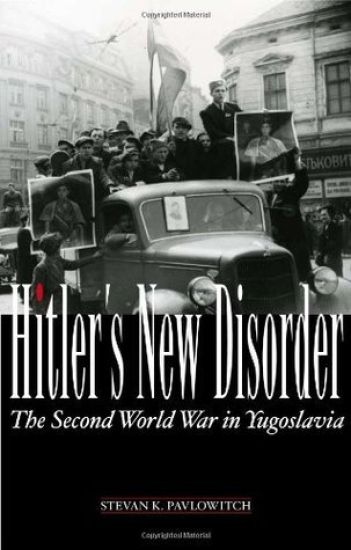
Hitler's New Disorder

Hitler's New Disorder

Stevan K. Pavlowitch

C Hurst Co Publishers Ltd
2008
sidottu
The history of the Second World War in Yugoslavia was for a long time the preserve of the Communist regime led by Marshal Tito. It was written by those who had battled hard to come out on top of the many-sided war fought across the territory of that Balkan state after the Axis Powers had destroyed it in 1941, just before Hitler's invasion of the USSR. It was an ideological and ethnic war under occupation by rival enemy powers and armies, between many insurgents, armed bands and militias, for the survival of one group, for the elimination of another, for belief in this or that ideology, for a return to an imagined past within the Nazi New Order, or for the reconstruction of a new Yugoslavia on the side of the Allies. In fact, many wars were fought alongside, and under cover of, the Great War waged by the Allies against Hitler's New Order which, in Yugoslavia at least, turned out to be a 'new disorder'. Most surviving participants have since told their stories; most archival sources are now available. Pavlowitch uses them, as well as the works of historians in several languages, to understand what actually happened on the ground. He poses more questions than he provides answers, as he attempts a synoptic and chronological analysis of the confused yet interrelated struggles fought in 1941-5, during the short but tragic period of Hitler's failed 'New Order', over the territory that was no longer the Kingdom of Yugoslavia and not yet the Federal Peoples' Republic of Yugoslavia, but that is now definitely 'former Yugoslavia'.