Kirjojen hintavertailu. Mukana 12 457 650 kirjaa ja 12 kauppaa.

Kirjahaku

Etsi kirjoja tekijän nimen, kirjan nimen tai ISBN:n perusteella.

48 kirjaa tekijältä Steve Brown

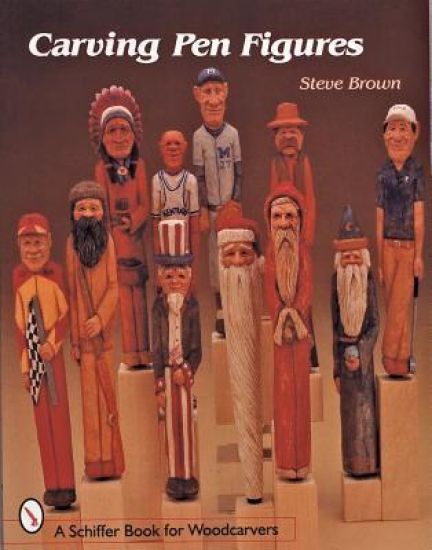
Carving Pen Figures

Carving Pen Figures

Steve Brown

Schiffer Publishing Ltd
1998
nidottu
Caricature carver Steve Brown puts his unique talent to work carving these conversational writing tools. Herein are 37 designs for unique pens portraying objects and people. There are basketball and baseball players, a golfer, a fisherman, a farmer, a plumber, a doctor, and a Nascar driver. He has a frontiersman, an Indian, an Uncle Sam, and a wizard, along with a bunch of new takes on the ever popular Santa Claus. And there are non-human (and fish) figures, too, including a baseball bat and a string of billiard balls. Steve demonstrates his technique step-by-step for beginners in more than a hundred color photographs, and a gallery of Brown's carvings will help to stimulate new ideas among beginning and seasoned carvers alike.
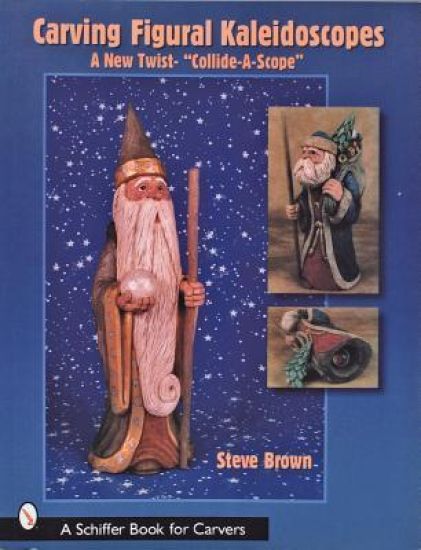
Carving Figural Kaleidoscopes

Carving Figural Kaleidoscopes

Steve Brown

Schiffer Publishing Ltd
2003
nidottu
Follow along with Steve Brown as he takes the traditional kaleidoscope to another level with these delightful "Collide-A-Scope" woodcarvings. Using over 250 color photographs, Steve provides thorough step-by-step instructions for creating a striking wizard figurine with an actual kaleidoscope installed inside. Woodcarvers will find valuable information on starting with a roughout, detailed carving and painting techniques, and installation of the kaleidoscope kit. Patterns and measurements for the wizard and other figurines are provided for those who wish to cut their own blanks. The patterns include an Old World Santa, Uncle Sam, Fireman Santa, and a Santa Rocket. All are shown in finished form in the gallery, along with a chip carved Collide-A-Scope. Put your imagination in gear and let's start creating new and wonderful kaleidoscope carvings!
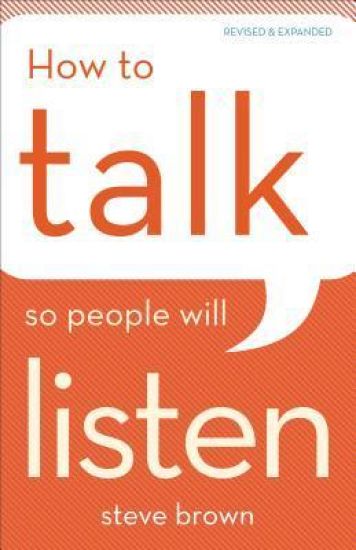
How to Talk So People Will Listen

How to Talk So People Will Listen

Steve Brown

Baker Books, a division of Baker Publishing Group
2014
nidottu
Words are powerful when they are used correctly. If readers want to motivate their kids or employees, convince bosses to give them a raise, speak with confidence to large groups of people, or give a report that won't leave people snoozing, How to Talk So People Will Listen is the classic resource they need. Expert communicator Steve Brown shows readers how to speak with authority, win an argument, overcome their fears of public speaking, and more.
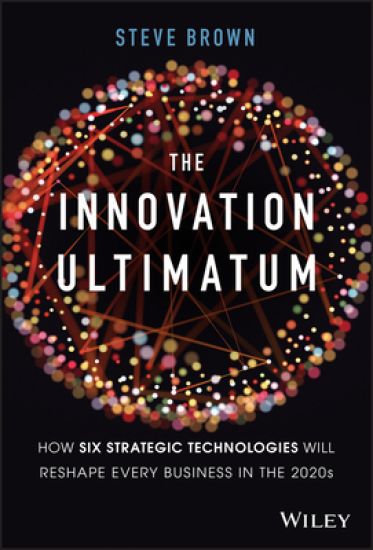
The Innovation Ultimatum

The Innovation Ultimatum

Steve Brown

John Wiley Sons Inc
2020
sidottu
Prepares leaders for the 2020s—an accessible guide to the key technologies that will reshape business in the coming decade Most businesses identify six key digital technologies—artificial intelligence (AI), distributed ledgers and blockchain, the Internet of Things (IoT), autonomous machines, virtual and augmented reality, and 5G communication—as critical to their relevance and growth over the coming ten years. These new disruptive technologies present significant opportunity for businesses in every industry. The first businesses to understand automation and these transformative technologies will be the ones to reap the greatest rewards in the marketplace. The Innovation Ultimatum helps leaders understand the key technologies poised to reshape business in the next decade and prepare their organizations for technology-enabled change. Using straightforward, jargon-free language, this important resource provides a set of strategic questions every leader will need to ask and answer in order to prepare for the impending changes to the business landscape. Author Steve Brown shares his insights to help leaders take full advantage of the next wave of digital transformation and describes compelling examples of how businesses are already embracing new technologies to optimize operations, create new value, and serve customers in new ways. Written for anyone that wants to understand how automation and new technology will fundamentally restructure business, this book enables readers to: Understand the implications of technology-driven change across industrial sectorsApply important insights to their own businessGain competitive advantage by implementing new technologiesPrepare for the future of work and understand the skills needed to thrive in a post-automation economyAdopt critical digital technologies in any organization Providing invaluable cutting-edge content, The Innovation Ultimatum is a much-needed source of guidance and inspiration for business leaders, board members, C-suite executives, and senior managers who need to prepare their businesses for the future.
Levi The Little Shepherd Boy

Levi The Little Shepherd Boy

Steve Brown

Elm Hill Books
2019
nidottu
Levi the shepherd boy is tired of watching sheep. Mostly he is tired of his older brothers pushing him around. A miraculous event one night causes Levi to wander off--will his brothers be angry that he left the flock unattended?
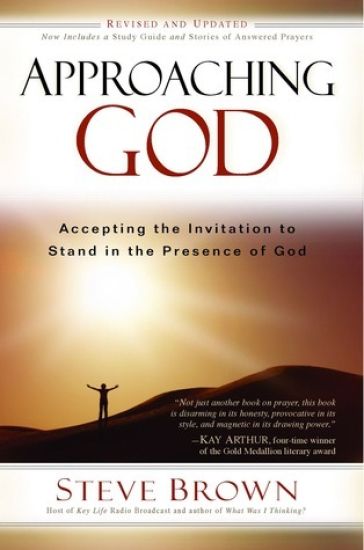
Approaching God

Approaching God

Steve Brown

Howard Books
2008
pokkari
A spiritual guide on how to pray cites the importance of focusing on God rather than on oneself, while it defines the basic theology of prayer and addresses such issues as unanswered prayers.
What Was I Thinking?

What Was I Thinking?

Steve Brown

Howard Books
2015
pokkari
Coming to terms that everything isn't always as it seems, Steve Brown shares the things he has discovered since learning that old ways of thinking aren't always the only way. Seminary professor, radio broadcaster, and former pastor Steve Brown is tired. He confesses, "I'm tired of glib answers to hard questions, irrelevant 'God words' and stark, cold foundations on which no house has ever been built." Setting out to revitalize his faith by reexamining his thoughts and his faith, Steve shares his invigorating discoveries with readers. A potent tonic for those whose faith feels flat, What Was I Thinking? fully engages the heart, mind, and soul.
The Golden Toilet

The Golden Toilet

Steve Brown

Roi Publishing
2020
pokkari
The last thing you need to invest in is yet another website rebuild. In fact, that fancy website of yours is nothing more than a beautiful, brand new, solid-gold toilet. If you're not convinced, at least be honest: how much have you spent on your website, thinking that this time you'll get the right design that will send the value of your business skyrocketing? It didn't move the needle, did it? That's because your website is The Golden Toilet, and you've flushed far too much money into it without a clear plan for growth.Let's get real: in the same way that every house needs a toilet, we only need a website so that we have a place to do our business. But a website alone isn't enough. It takes other complementary systems to create the holistic experience that customers expect (and reward).In this no-nonsense growth primer, Steve Brown delivers the inspiration and clarity you need to build the proper pipelines that will actually grow your business while your competitors continue to gild and rebuild their most utilitarian asset.
A Scadalous Freedom

A Scadalous Freedom

Steve Brown

Howard Books
2006
pokkari
Christians do not trust freedom. As author Steve Brown explains in this brave new book, they prefer the security of rules and self-imposed boundaries, which they tend to inflict on other Christians. Brown asserts that real freedom means the freedom to be wrong as well as right. Christianity often calls us to live beyond the boundaries, bolstered by the assurance that we cannot fall beyond God's love. Freedom is dangerous, but the alternative is worse -- boxing ourselves up where we cannot celebrate our unique gifts and express our joy in Christ. Each of the book's eleven chapters explores a common pharisaic, freedom-stifling tendency, then opens the door to the fresh air of a remedial liberty. A reader's delight, "A Scandalous Freedom" sometimes shocks with challenges to prevailing wisdom, but it follows up with compelling validations of our need to celebrate real, unstinted freedom in Christ.
Laughter and Lament: The Radical Freedom of Joy and Sorrow
What do we do with the sadness and the joy that living in a broken world brings to our lives? Most try to avoid the tears and focus on finding happiness, but does that really work? Denial might help to alleviate pain for the short run, but eventually lament must be faced and expressed. Learning to lament honestly to God is the surprising path to learning about real joy.When we experience or see tragedy, we expect tears, fear, and sometimes anger, and when we experience the good and pleasant, we expect joy and maybe even laughter. However, laughter and lament are often found together in unexpected places. How can we explain the opposite effect--laughter in the pain and tears in the joy?Steve Brown shares that speaking honestly about the ways we have been hurt and the ways we have hurt others opens the door to the joy of God's presence even as we grieve. Instead of pretending that everything is fine, going to God with all of our laments fills us with the freedom and joy of knowing his love and forgiveness. This is the surprising message of freedom that Christians have to share with a world where pain is almost always cursed and laughter is almost always cynical.
King George's Army: British Regiments and the Men Who Led Them 1793-1815 Volume 1: Administration and Cavalry
King George's Army: British Regiments and the Men who Led Them 1793-1815 will contain five volumes, with coverage given to cavalry regiments (Volume 1), infantry regiments (Volumes 2 and 3), ordnance (Volume 4) and foreign regiments (Volume 5). It is the natural extension to the web series of the same name by the same author which existed on the Napoleon Series from 2009 until 2019, but greatly expanded to include substantially more biographical information including biographies of leading political figures concerned with the administration of the army as well as commanders in chief of all major commands.Volume 1 covers in great detail the cavalry regiments that comprised the army of King George III for the period of the Great War with France, and the men who commanded them. Regimental data provided includes shortform regimental lineages, service locations and dispositions for the era, battle honors won, tables of authorized establishments, demographics of the field officer cohorts and of the men, even sources of recruits from the militia. But the book is essentially concerned with the field officers, the lieutenant colonels and majors commanded the regiments, and Volume 1 alone contains over 900 mini-biographies of men who commanded the regiments, including their dates of birth and death, parentage, education, career (including political), awards and honors, and places of residence. Volumes 2 to 5 will extend the coverage to ultimately record over 4,500 biographies across more than 200 regiments.These biographies will show the regimental system in action, officers routinely transferring between regiments for advancement or opportunity, captains who were also (brevet) colonels, many who retired early, some who stayed the distance to become major generals and beyond. Where it has been possible to accurately ascertain, advancement by purchase, exchange or promotion has also been noted.Readers with military ancestors will no doubt find much of interest within, and the author hopes that the work will allow readers to break down a few 'brick walls'; either through connecting to the officers recorded, or through an understanding of the movements of the regiments around the world, or from the volunteering patterns of the militia regiments into the regular army.Encyclopedic in scope, and aimed to be a lasting source of reference material for the British army that fought the French Revolution and Napoleon between 1793 and 1815, King George's Army: British Regiments and the Men who Led Them will hopefully be a necessary addition to every military and family history library for years to come.
King George’s Army - British Regiments and the Men Who Led Them 1793-1815 Volume 2
King George's Army -- British Regiments and the Men Who Led Them 1793-1815 Volume 2 is the second volume of an encyclopedic chronicle of the locations and actions of British regiments and the military administration of the army between 1793 and 1815, including detailed field officer biographies, demographics, establishments, monthly locations, and battle honors. Volume 2 covers in great detail the Foot Guards and 1st to 30th Regiments of Foot within the army of King George III during the Great War with France and the men who commanded them. It will appeal to both military and family historians looking for army ancestors.King George's Army -- British Regiments and the Men Who Led Them 1793-1815 will contain five volumes, with coverage given to army administration and cavalry regiments (Volume 1), infantry regiments (Volumes 2, 3 and 4), and ordnance (Volume 5). It is the natural extension to the web series of the same name by the same author, which existed on the Napoleon Series from 2009 until 2019 but greatly expanded to include substantially more biographical information as well as biographies of leading political figures concerned with the administration of the army as well as commanders in chief of all major commands.In Volume 2, regimental data is provided on the Foot Guards and 1st to 30th Regiments of Foot, including short-form regimental lineages, service locations and dispositions for the era, battle honors won, tables of authorized establishments, demographics of the field officer cohorts and of the men, even sources of recruits from the militia. But King George's Army is essentially concerned with the field officers, the lieutenant colonels and majors who commanded the regiments, and Volume 2 alone contains over 1,000 mini-biographies of men who exercised such command, including their dates of birth and death, parentage, education, career (including political), awards and honors, and places of residence. Volumes 3 to 5 will extend the coverage to ultimately record over 4,500 biographies across more than 200 regiments.These biographies will show the regimental system in action, officers routinely transferring between regiments for advancement or opportunity, captains who were also (brevet) colonels, many who retired early, some who stayed the distance to become major generals and beyond. Where it has been possible to accurately ascertain, advancement by purchase, exchange, or promotion has also been noted.Readers with military ancestors will no doubt find much of interest within. The author hopes that the work will allow readers to break down a few 'brick walls', either through connecting to the officers recorded or through an understanding of the movements of the regiments around the world or from the volunteering patterns of the militia regiments into the regular army.Encyclopedic in scope and aimed to be a lasting source of reference material for the British army that fought the French Revolution and Napoleon between 1793 and 1815, King George's Army -- British Regiments and the Men Who Led Them will hopefully be a necessary addition to every military and family history library for years to come.
King George's Army, British Regiments and the Men Who Led Them Volume 3
King George's Army: British Regiments and the Men who Led Them 1793-1815 will contain five volumes, with coverage given to army administration and cavalry regiments (Volume 1), infantry regiments (Volumes 2, 3 and 4), and ordnance (Volume 5). It is the natural extension to the web series of the same name by the same author which existed on The Napoleon Series website from 2009 until 2019, but it has been greatly expanded to include substantially more biographical information as well as biographies of leading political figures concerned with the administration of the army, as well as commanders in chief of all major commands.Volume 3 covers in great detail the 31st to 60th Regiments of Foot within the army of King George III for the period of the Great War with France; and the men who commanded them. Regimental data provided includes shortform regimental lineages, service locations and dispositions for the era, battle honours won, tables of authorised establishments, demographics of the field officer cohorts and the men, and even sources of recruits from the militia. But the book is essentially concerned with the field officers, the lieutenant colonels and majors who commanded the regiments, and Volume 3 alone contains around 1,000 mini-biographies of men who exercised such command, including their dates of birth and death, parentage, education, career (including political), awards and honours, and places of residence. Volumes 4 and 5 will extend the coverage to ultimately record over 4,500 biographies across more than 200 regiments.These biographies will show the regimental system in action, officers routinely transferring between regiments for advancement or opportunity, captains who were also (brevet) colonels, many who retired early, some who stayed the distance to become major generals and beyond. Where it has been possible to accurately ascertain, advancement by purchase, exchange or promotion has also been noted.Readers with military ancestors will no doubt find much of interest within, and the author hopes that the work will allow readers to break down a few 'brick walls'; either through connecting to the officers recorded, or through an understanding of the movements of the regiments around the world, or from the volunteering patterns of the militia regiments into the regular army.Encyclopaedic in scope and aimed to be a lasting source of reference material for the British army that fought the French Revolution and Napoleon between 1793 and 1815, King George's Army: British Regiments and the Men who Led Them will hopefully be a necessary addition to every military and family history library for years to come.
King George's Army - British Regiments and the Men Who Led Them 1793-1815 Volume 4
King George's Army: British Regiments and the Men who Led Them 1793-1815 will contain five volumes, with coverage given to army administration and cavalry regiments (Volume 1), infantry regiments (Volumes 2, 3 and 4), and ordnance (Volume 5). It is the natural extension to the web series of the same name by the same author which existed on the Napoleon Series from 2009 until 2019, but greatly expanded to include substantially more biographical information as well as biographies of leading political figures concerned with the administration of the army as well as commanders in chief of all major commands.Volume 4 covers in great detail the 61st to 104th Regiments of Foot within the army of King George the Third for the period of the Great War with France; and the men who commanded them. Regimental data provided includes shortform regimental lineages, service locations and dispositions for the era, battle honours won, tables of authorised establishments, demographics of the field officer cohorts and of the men, even sources of recruits from the militia. But the book is essentially concerned with the field officers, the lieutenant colonels and majors who commanded the regiments, and Volume 4 alone contains around 1,000 mini-biographies of men who exercised such command, including their dates of birth and death, parentage, education, career (including political), awards and honours, and places of residence. Volume 5 will extend the coverage to ultimately record over 4,500 biographies across more than 200 regiments.These biographies will show the regimental system in action, officers routinely transferring between regiments for advancement or opportunity, captains who were also (brevet) colonels, many who retired early, some who stayed the distance to become major generals and beyond. Where it has been possible to accurately ascertain, advancement by purchase, exchange or promotion has also been noted.Readers with military ancestors will no doubt find much of interest within, and the author hopes that the work will allow readers to break down a few 'brick walls'; either through connecting to the officers recorded, or through an understanding of the movements of the regiments around the world, or from the volunteering patterns of the militia regiments into the regular army.Encyclopaedic in scope, and aimed to be a lasting source of reference material for the British army that fought the French Revolution and Napoleon between 1793 and 1815, King George's Army: British Regiments and the Men who Led Them will hopefully be a necessary addition to every military and family history library for years to come.
King George's Army: British Regiments and the Men Who Led Them 1793-1815 Volume 5
King George's Army: British Regiments and the Men who Led Them 1793-1815 will contain five volumes, with coverage given to army administration and cavalry regiments (Volume 1), infantry regiments (Volumes 2, 3 and 4), and ordnance (Volume 5). It is the natural extension to the web series of the same name by the same author which existed on the Napoleon Series from 2009 until 2019, but greatly expanded to include substantially more biographical information as well as biographies of leading political figures concerned with the administration of the army as well as commanders in chief of all major commands.Volume 5 covers in great detail the ordnance (the Royal Artillery and Royal Engineers) within the army of King George the Third for the period of the Great War with France; and the men who commanded them. Unit data provided includes short-form lineages, service locations and dispositions for the era, tables of authorised establishments, demographics of the field officer cohorts and of the men. But the book is essentially concerned with the field officers, the lieutenant colonels and majors who commanded the units and Volume 5 alone contains around 800 mini-biographies of men who exercised such command, including their dates of birth and death, parentage, education, career (including political), awards and honours, and places of residence.
Autism Spectrum Disorder and De-escalation Strategies

Autism Spectrum Disorder and De-escalation Strategies

Steve Brown

Jessica Kingsley Publishers
2014
pokkari
This practical guide provides a complete picture of how non-physical and physical interventions can be used to manage behaviour and keep children with autism spectrum disorders or emotional, social and behavioural difficulties safe.With clear advice and strategies that can be easily implemented in practice, Steve Brown explores various options and interventions, and explains how professionals can manage the behaviour of children (aged 3-18) in the safest possible way, promoting assertiveness and confidence. He includes a range of de-escalation and behaviour management strategies, information on risk assessments and legalities, advice on how to create safe spaces, insight into non-verbal communication and positive listening, and an honest and open discussion about the important role of physical interventions and positive handling techniques.Providing clarity and insight into this complex subject, this book will allow professionals working with children and young people with ASD or ESBD to use non-physical interventions with confidence and understand the role of physical interventions as a last resort, within a legal framework.