Kirjojen hintavertailu. Mukana 11 699 587 kirjaa ja 12 kauppaa.

Kirjahaku

Etsi kirjoja tekijän nimen, kirjan nimen tai ISBN:n perusteella.

27 kirjaa tekijältä Steve Bruce

Conservative Protestant Politics

Conservative Protestant Politics

Steve Bruce

Oxford University Press
1998
sidottu
This timely new study examines the place and nature of religion in industrial societies through a comparative analysis of conservative Protestant politics in a variety of 'first world' societies. Rejecting the popular, but misleading, grouping of diverse movements under the heading of 'fundamentalism', Bruce presents a series of detailed case studies of the Christian Right in the United States, Protestant unionism in Northen Ireland, anti-Catholicism in Scotland, Afrikaner politics in South Africa, and Empire Loyalism in Australia, Canada, and New Zealand. He proceeds to examine the constraints that culturally diverse societies place on those who wish to promote political agendas based on religious ideas or on religiously informed ethnic identities.
Choice and Religion

Choice and Religion

Steve Bruce

Oxford University Press
1999
sidottu
The orthodox view is that the democracies of the western world have become increasingly secular over the twentieth century. Fewer and fewer people have chosen to believe, and the church has declined markedly as religion has changed from being part of an identity ascribed at birth to being a matter of personal choice. Choice and Religion provides a detailed critique of the 'rational choice' approach to religion to demonstrate that industrialisation has secularised the western world and that diversity, far from making religion more popular by allowing individuals to maximize their returns, undermines it. The claim that diversity and competition promote religion is refuted with evidence from a wide variety of western societies. Bruce examine the Nordic countries and the ex-communist states of eastern Europe to explore the consequences of different sorts of state regulation, and to show that ethnicity is a more powerful determinate of religious change than market structures. Where religion matters, it is not because individuals are maximising their returns, it is because it defines group identity and is heavily implicated in social conflict.
Religion in Modern Britain

Religion in Modern Britain

Steve Bruce

Oxford University Press
1995
nidottu
Covering a key topic in both sociology and religious studies, this book is a thorough and lively introduction to the character and place of religion in contemporary British society. A brief introduction places the major British churches in their historical context and explains our curious combination of religious freedom and state-supported churches. Subsequent chapters examine a wide array of evidence on the influence and popularity of the churches, and on religious beliefs and behaviour, and document the following trends: the decline in the mainstream churches; a shift to the `sectarian' right in Protestantism; the rise of non-Christian ethnic minority religions; and increasing interest in the occult and New Age spirituality. Particular attention is given to the issue of what sort of people remain religious and how their religious beliefs affect their lives. Throughout the book, Britain's religious life is compared with that of other European societies and the final chapter shows how recent changes can be understood as a response to fundamental features of modern industrial democracies. The book will be an invaluable introduction and point of reference for students of the social sciences and religious studies. The Oxford Modern Britain series comprises authoritative introductory books on all aspects of the social structure of modern Britain. Lively and accessible, the books will be the first point of reference for anyone interested in the state of contemporary Britain. They will be invaluable to those taking courses in the social sciences.
Religion in the Modern World

Religion in the Modern World

Steve Bruce

Oxford University Press
1996
nidottu
The people of the Middle Ages did what the Church told them God required. The sovereign consumers of the modern world `pick and mix' their own religions, Starting with the Reformation and ending with New Age spirituality, this book offers a comprehensive sociological description and explanation of the changes in the religious life of Western society that have accompanied modernization. This major new book from a leading sociologist of religion tracks the Church's changing role from monolith to Sect, to Denomination, and at the end of the twentieth century, to the Cult. What were the forces that brought about this change? What is the real role for the Church in the modern world? Professor Steve Bruce answers these questions in a clearly argued and accessible way. Including substantial chapters on religion in the USA, religion and ethnicity, and the New Age, Religion in the Modern World is an invaluable resource for students of sociology, religion or history and anyone with a real interest in looking behind the headlines for the place of religion in today's society.
Researching Religion

Researching Religion

Steve Bruce

Oxford University Press
2018
sidottu
Researching Religion: Why We Need Social Science establishes the relevance of social science for the study of religion and promotes a particular kind of social science. Even if we confine ourselves to academic disciplines, there are very many ways of viewing religion. Certain kinds of questions about religion can only be answered by the methods and approaches of social science: if one is interested in the social causes and consequences of religious belief and behaviour, then one has to do social science. Steve Bruce underlines the value of quantitative social research. He shows that while detailed ethnographies have enormous value in helping us get 'inside' religious belief and behaviour, they are severely limited by problems of scale and representativeness in their value for generating and testing explanations. While the primary focus is social research, the examples are drawn from studies of religious belief and behaviour, so it also presents a very large number of important observations about the nature of religion in the modern world. This book is an informative, concise reference for students trying to unpick quantitative religious research. It shows how to gather valuable research and avoid pitfalls.
Secular Beats Spiritual

Secular Beats Spiritual

Steve Bruce

Oxford University Press
2017
sidottu
The decline of the Christian churches in the West is undeniable but commentators differ in their understanding of what this represents. For some it shows a decline in interest in religion as such; for others, religion has not declined, it has only changed its shape. Possible candidates for Christianity's replacement are the new religious movements of the late 1960s and what is variously called New Age, alternative or contemporary spirituality. Secular Beats Spiritual offers a detailed study of the religious and spiritual innovations of the last 50 years. It assesses their popularity in the UK and concludes that the 'not decline-just change' view cannot be sustained. Serious interest in spirituality has grown far less quickly than has the number of us who have no religious or spiritual interest. The most popular and enduring movements have been the least religious ones and those that have survived have done so by becoming more 'this-worldly' and less patently religious or spiritual. Yoga is popular but as a secular exercise programme; Transcendental Meditation now markets its meditational technique as a purely secular therapy; British Buddhists now offer the secular Mindfulness; and the Findhorn Foundation (Europe's oldest New Age centre) is no longer the germ of a counter-cultural communalism but sells its expertise to major corporations. Steve Bruce also demonstrates that, although eastern religious themes (such as reincarnation and karma) have become more popular as the power of the Christian churches to stigmatise them has declined, such themes have also been significantly altered so that what superficially looks like the easternization of the West might better be described as the westernization of the easternization of the West.
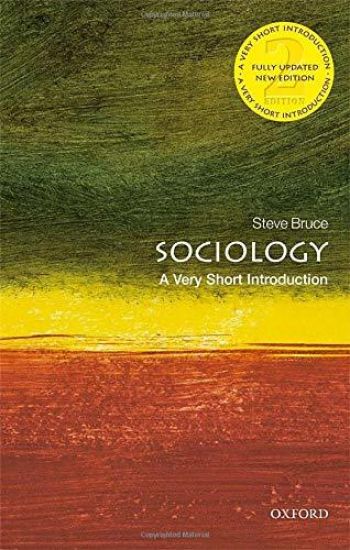
Sociology

Sociology

Steve Bruce

Oxford University Press
2018
nidottu
Drawing on studies of social class, crime and deviance, education, work in bureaucracies and changes in religious and political organizations, this Very Short Introduction explores the tension between the individual's place in society and society's role in shaping the individual, and demonstrates the value of sociology for understanding the modern world. In this new edition Steve Bruce discusses the continuing arguments for social egalitarianism, considering issues such as gay marriage, women in combat roles, and the 2010 Equality Act to debunk contemporary arguments against parity. As gender divisions are increasingly questioned he looks ahead to the likely consequences of this for society. Delving into the theory of sociology, Bruce also argues that the habit of dividing sociology into apparently competing 'sects' is misleading, and shows how a new understanding of the disciplinary background of many of the most famous theorists, which shows that much social theory is actually philosophy or literary theory, will prove useful to today's sociologists. ABOUT THE SERIES: The Very Short Introductions series from Oxford University Press contains hundreds of titles in almost every subject area. These pocket-sized books are the perfect way to get ahead in a new subject quickly. Our expert authors combine facts, analysis, perspective, new ideas, and enthusiasm to make interesting and challenging topics highly readable.
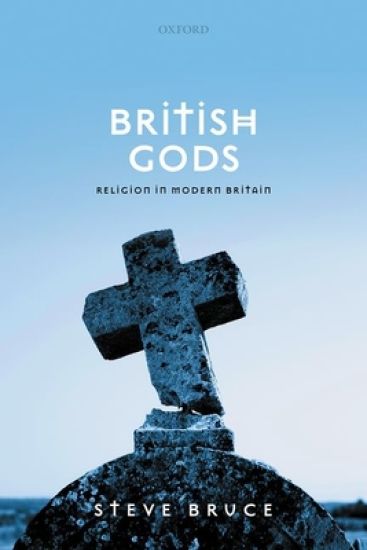
British Gods

British Gods

Steve Bruce

Oxford University Press
2020
sidottu
The big picture is well-known: over the last century, religion in Britain has lost power, popularity, and plausibility. Here, Steve Bruce charts the quantifiable changes in religious interest and observance over the last fifty years by returning to a number of towns and villages that were the subject of detailed community studies in the 1950s and 1960s, to see how the status and nature of religion has changed. Drawing on both detailed data on baptism rates, church weddings, church attendance and the like, and on his extensive fieldwork, he considers the broader picture of religion today: the status of the clergy, the churches' attempts to find new roles, links between religion and violence, and the impact of the charismatic movement. Along the way, Bruce encounters and engages with the contemporary rise of secularism, considering our everyday secular tensions with religion: arguments over moral issues such as abortion and gay rights, the effect of social class on belief, the impact of religion on British politics, and the ways that local social structures strengthen or weaken religion. Analysing the obstacles to any religious revival, he explores how the current stock of religious knowledge is so depleted, religion so unpopular, and committed believers so scarce that any significant reversal of religion's decline in Britain is unlikely.
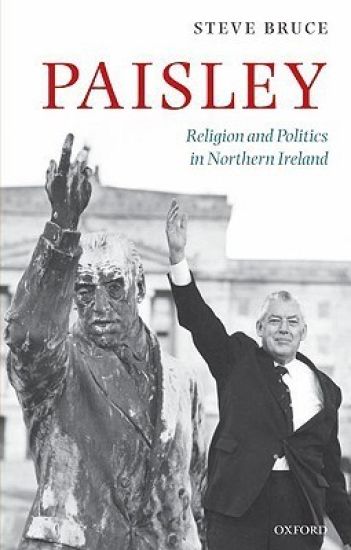
Paisley

Paisley

Steve Bruce

Oxford University Press
2007
sidottu
The career of the Revd Ian Paisley raises vital questions about the links between religion and politics in the modern world. Paisley is unique in having founded his own church and party and led both to success, so that he effectively has a veto over political developments in Northern Ireland. Steve Bruce draws on over 20 years of close acquaintance with Paisley's people to describe and explain Paisleyism. In this clearly written account, Bruce charts Paisley's movement from the maverick fringes to the centre of Ulster politics and discusses in detail the changes in his party that accompanied its rise. At the heart of this account are vital questions for modern societies. How can religion and politics mix? Do different religions produce different sorts of politics? What is clear is that Paisley's people are not jihadis intent on imposing their religion on the unGodly. For all that religion plays a vital part in Paisley's personal political drive and explains some of his success, he plays by the rules of liberal democracy.
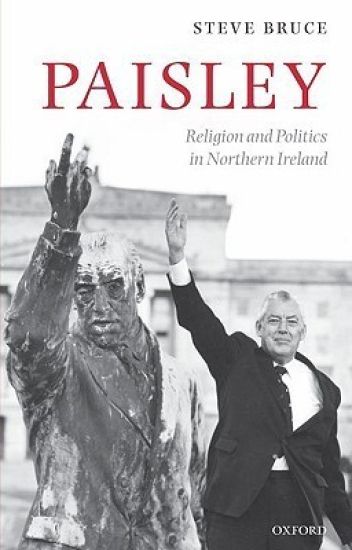
Paisley

Paisley

Steve Bruce

Oxford University Press
2009
nidottu
The career of the Revd Ian Paisley raises vital questions about the links between religion and politics in the modern world. Paisley is unique in having founded his own church and party and led both to success, so that he effectively has a veto over political developments in Northern Ireland. Steve Bruce draws on over 20 years of close acquaintance with Paisley's people to describe and explain Paisleyism. In this clearly written account, Bruce charts Paisley's movement from the maverick fringes to the centre of Ulster politics and discusses in detail the changes in his party that accompanied its rise. At the heart of this account are vital questions for modern societies. How can religion and politics mix? Do different religions produce different sorts of politics? What is clear is that Paisley's people are not jihadis intent on imposing their religion on the unGodly. For all that religion plays a vital part in Paisley's personal political drive and explains some of his success, he plays by the rules of liberal democracy. Newly published in paperback with an afterword discussing the achievement of the devolved executive and Paisley's period as First Minister in the new Assembly.
Secularization

Secularization

Steve Bruce

Oxford University Press
2011
sidottu
The decline in power, popularity and prestige of religion across the modern world is not a short-term or localized trend nor is it an accident. It is a consequence of subtle but powerful features of modernization. Renowned sociologist, Steve Bruce, elaborates the secularization paradigm and defends it against a wide variety of recent attempts at rebuttal and refutation. Using the best available statistical and qualitative evidence Bruce considers the implications for the secularization paradigm of the extent to which new religious movements or New Age spiritualities are replacing religion; changes in the nature and power of folk religion and superstition; rational choice alternatives to the secularization paradigm; the popularity and political influence of religion in the USA; religious change in the developing world; reactions to Islam in Europe; and the effects of recent controversies over the public place of religion. Bruce presents a robust defence of the secularization paradigm, clarifying its arguments for the benefit of all sides of the debate.
Secularization

Secularization

Steve Bruce

Oxford University Press
2013
nidottu
The decline in power, popularity and prestige of religion across the modern world is not a short-term or localized trend nor is it an accident. It is a consequence of subtle but powerful features of modernization. Renowned sociologist, Steve Bruce, elaborates the secularization paradigm and defends it against a wide variety of recent attempts at rebuttal and refutation. Using the best available statistical and qualitative evidence Bruce considers the implications for the
A House Divided

A House Divided

Steve Bruce

Routledge
2019
sidottu
The main concern of this study, first published in 1990, is the part played by Protestantism in the complex of social processes of ‘secularization’. The book deals with the way in which Protestant schism and dissent paved the way for the rise of religious pluralism and toleration; and it also looks at the fragility of the two major responses to religious pluralism – the accommodation of liberal Protestantism and the sectarian rejection of the conservative alternative. It examines the part played by social, economic and political changes in undermining the plausibility of religion in western Europe, and puts forward the argument that core Reformation ideas must not be overlooked, particularly the repercussions of different beliefs about authority in competing Christian traditions.
A House Divided

A House Divided

Steve Bruce

Routledge
2020
nidottu
The main concern of this study, first published in 1990, is the part played by Protestantism in the complex of social processes of ‘secularization’. The book deals with the way in which Protestant schism and dissent paved the way for the rise of religious pluralism and toleration; and it also looks at the fragility of the two major responses to religious pluralism – the accommodation of liberal Protestantism and the sectarian rejection of the conservative alternative. It examines the part played by social, economic and political changes in undermining the plausibility of religion in western Europe, and puts forward the argument that core Reformation ideas must not be overlooked, particularly the repercussions of different beliefs about authority in competing Christian traditions.
Pray TV

Pray TV

Steve Bruce

Routledge
2019
sidottu
In this book, first published in 1990, the significance of televangelism in America is examined in detail. This well-informed, measured analysis includes discussion of the place of televangelism in the history of American Protestantism; the styles of leading TV preachers and the televangelical star system; the relation of televangelism to conservatism and politics. It also answers the questions of televangelism’s organisation and audience, as well as providing an analysis over the wave of scandals which swept over Pray TV in the 1980s.
Pray TV

Pray TV

Steve Bruce

Routledge
2020
nidottu
In this book, first published in 1990, the significance of televangelism in America is examined in detail. This well-informed, measured analysis includes discussion of the place of televangelism in the history of American Protestantism; the styles of leading TV preachers and the televangelical star system; the relation of televangelism to conservatism and politics. It also answers the questions of televangelism’s organisation and audience, as well as providing an analysis over the wave of scandals which swept over Pray TV in the 1980s.
Politics and Religion in the United Kingdom
This important new volume seeks to provide significant contribution to our understanding of religion and politics, demonstrating through comparisons with other countries the unusually complex nature of the interaction of religion and politics in the United Kingdom. Bruce provides a detailed and comprehensive analysis of the field, covering key topics including: Religion and Violence in Northern Ireland A UK-US comparison of the relationship between the church and the nation state Links between Protestantism and the rise of modern democracy The relationship between Methodism and Socialism The impact that ethnic minority status and religious values have on political alignmentThis work will be of great interest to students and scholars of religion, politics and religious sociology.
Politics and Religion in the United Kingdom
This important new volume seeks to provide significant contribution to our understanding of religion and politics, demonstrating through comparisons with other countries the unusually complex nature of the interaction of religion and politics in the United Kingdom. Bruce provides a detailed and comprehensive analysis of the field, covering key topics including: Religion and Violence in Northern Ireland A UK-US comparison of the relationship between the church and the nation state Links between Protestantism and the rise of modern democracy The relationship between Methodism and Socialism The impact that ethnic minority status and religious values have on political alignmentThis work will be of great interest to students and scholars of religion, politics and religious sociology.
Politics and Religion

Politics and Religion

Steve Bruce

Polity Press
2003
sidottu
Islamic fundamentalists wreck the financial heart of New York; Hindus destroy a mosque at Ayodhya; Orthodox Jews battle Palestinians for possession of holy sites; in Egypt, Israel and India political leaders are murdered by religious zealots. In many parts of the world, religion combines with ethnic and national conflict to stimulate political militancy. The collapse of Communism and the failure of Western secular models of development have stimulated the revival of religiously inspired nationalisms. Even in stable affluent democracies, religion is a powerful influence on political preferences. It affects lifestyle concerns such as abortion, gender roles and gay rights. It influences economic attitudes. It shapes the alignments of political parties. Believers try to influence governments and, although most governments in principle tolerate religious diversity, many still attempt to regulate religious behaviour, particularly that of new religious movements. Steve Bruce draws on material from all over the world and from all religious traditions to explore the complex links between religion and politics. He shows that, while social, economic and political circumstances shape the political choices and actions of believers, religion still matters. Although the major world faiths have at times been associated with every conceivable political agenda, there remain important differences between Catholic, Protestant, Hindu, Jewish, Buddhist, Confucian, Shinto and Muslim politics.