Kirjojen hintavertailu. Mukana 11 342 296 kirjaa ja 12 kauppaa.

Kirjahaku

Etsi kirjoja tekijän nimen, kirjan nimen tai ISBN:n perusteella.

11 kirjaa tekijältä Steve Hoberman

See Steve See

See Steve See

Steve Hoberman

Technics Publications
2025
pokkari
What do sandcastles, road trips, and penguins have in common? They're just a few of the many topics in this collection of entertaining and reflective short stories from six years of Steve's life.As a data management professional, Steve has been consulting, training, and writing about data since 1990. For over 20 years, Steve has been sending out a monthly newsletter with currently more than 25,000 subscribers. The newsletter covers technology and ends with Steve sharing a personal story.After years of requests from newsletter subscribers, Steve has turned six years of stories (2019 to 2025) into a book. These short memoirs appear chronologically to present a unique picture of how we change and how world events impact our lives. These years definitely contained some goodies, including Covid, wars, inflation, AI, and the final episode of Game of Thrones. At a personal level, Steve turned 50, his family moved from New Jersey to Arizona, and his two daughters started college, leaving him and his wife as "empty nesters."Ten themes thread through the stories and appear in the last chapter as life tactics. Use these proven techniques to get more out of your days.Whether looking for a lighthearted read or seeking inspiration, these 72 memoirs and ten life tactics will make you smile and reflect. Dive into Steve's world, see Steve see, and discover humor, wisdom, and heart.
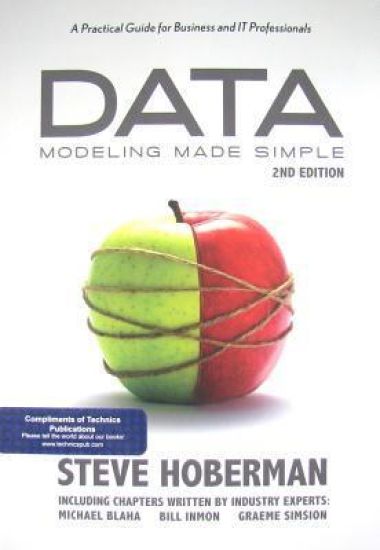
Data Modeling Made Simple

Data Modeling Made Simple

Steve Hoberman

Technics Publications LLC
2009
nidottu
Data Modeling Made Simple will provide the business or IT professional with a practical working knowledge of data modeling concepts and best practices. Master these ten objectives: 1.Know when a data model is needed and which type of data model is most effective for each situation 2.Read a data model of any size and complexity with the same confidence as reading a book 3.Build a fully normalized relational data model, as well as an easily navigatable dimensional model 4.Apply techniques to turn a logical data model into an efficient physical design 5.Leverage several templates to make requirements gathering more efficient and accurate 6.Explain all ten categories of the Data Model Scorecard 7.Learn strategies to improve your working relationships with others 8.Appreciate the impact unstructured data has, and will have, on our data modeling deliverables 9.Learn basic UML concepts 10.Put data modeling in context with XML, metadata, and agile development
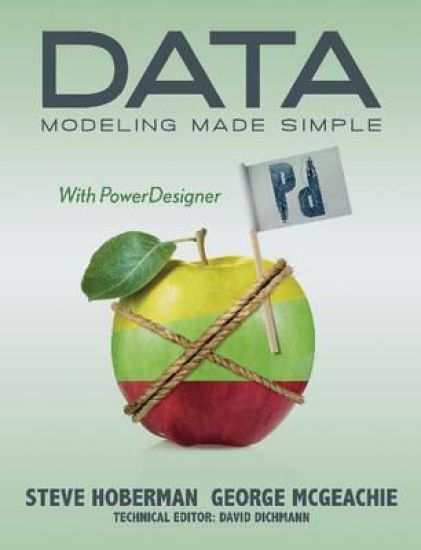
Data Modeling Made Simple with PowerDesigner

Data Modeling Made Simple with PowerDesigner

Steve Hoberman

Technics Publications LLC
2011
nidottu
Data Modeling Made Simple with PowerDesigner will provide the business or IT professional with a practical working knowledge of data modeling concepts and best practices, and how to apply these principles with PowerDesigner. You'll build many PowerDesigner data models along the way, increasing your skills first with the fundamentals and later with more advanced feature of PowerDesigner. This book combines real-world experience and best practices to help you master the following ten objectives: This book has ten key objectives for you, the reader: You will know when a data model is needed and which PowerDesigner models are the most appropriate for each situation You will be able to read a data model of any size and complexity with the same confidence as reading a book You will know when to apply and how to make use of all the key features of PowerDesigner You will be able to build, step-by-step in PowerDesigner, a pyramid of linked data models, including a conceptual data model, a fully normalized relational data model, a physical data model, and an easily navigable dimensional model You will be able to apply techniques such as indexing, transforms, and forward engineering to turn a logical data model into an efficient physical design You will improve data governance and modeling consistency within your organization by leveraging features such as PowerDesigner's reference models, Glossary, domains, and model comparison and model mapping techniques You will know how to utilize dependencies and traceability links to assess the impact of change You will know how to integrate your PowerDesigner models with externally-managed files, including the import and export of data using Excel and Requirements documents You will know where you can take advantage of the entire PowerDesigner model set, to increase the success rate of corporate-wide initiatives such as business intelligence and enterprise resource planning (ERP) You will understand the key differentiators between PowerDesigner and other data modeling tools you may have used before
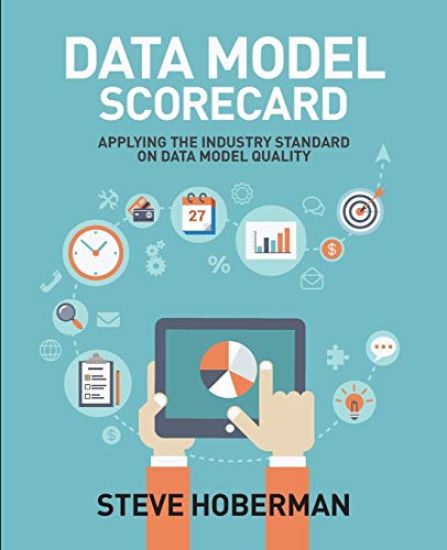
Data Model Scorecard

Data Model Scorecard

Steve Hoberman

Technics Publications LLC
2015
nidottu
Data models are the main medium used to communicate data requirements from business to IT, and within IT from analysts, modelers, and architects, to database designers and developers. Therefore it's essential to get the data model right. But how do you determine right? That's where the Data Model Scorecard comes in. The Data Model Scorecard is a data model quality scoring tool containing ten categories aimed at improving the quality of your organization's data models. Many of my consulting assignments are dedicated to applying the Data Model Scorecard to my client's data models I will show you how to apply the Scorecard in this book. This book, written for people who build, use, or review data models, contains the Data Model Scorecard template and an explanation along with many examples of each of the ten Scorecard categories.
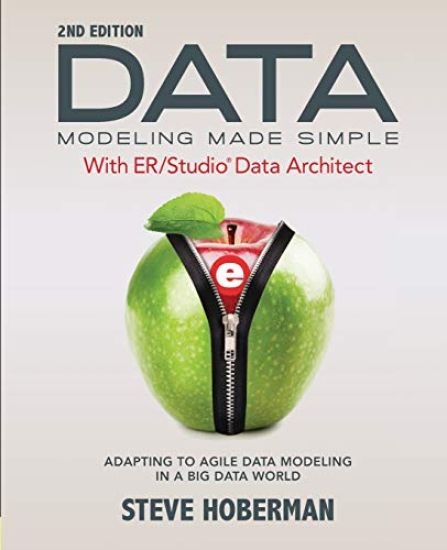
Data Modeling Made Simple with Embarcadero ER/Studio Data Architect
Build a working knowledge of data modeling concepts and best practices, along with how to apply these principles with ER/Studio. This second edition includes numerous updates and new sections including an overview of ER/Studio's support for agile development, as well as a description of some of ER/Studio's newer features for NoSQL, such as MongoDB's containment structure.
Blockchainopoly

Blockchainopoly

Steve Hoberman

Technics Publications LLC
2018
nidottu
Learn how blockchain works, where to use it within your organization, and how it will impact data management.This book contains three parts: Explanation. Part I will explain will explain the concepts underlying blockchain. A precise and concise definition is provided, distinguishing blockchain from blockchain architecture. Variations of blockchain are explored based upon the concepts of purpose and scope. Usage. Now that you understand blockchain, where do you use it? The reason for building a blockchain application must include at least one of these five drivers: transparency, streamlining, privacy, permanence, or distribution. Usages based upon these five drivers are shown for finance, insurance, government, manufacturing and retail, utilities, healthcare, nonprofit, and media. Process diagrams will illustrate each usage through inputs, guides, enablers, and outputs. Also examined are the risks of applying these usages, such as cooperation, incentives, and change. Impact. Now that you know where to use blockchain, how will it impact our existing IT (Information Technology) environment? Part III explores how blockchain will impact data management. The Data Management Body of Knowledge 2nd Edition (DAMA-DMBOK2) is an amazing book that defines the data management field along with the often complex relationships that exist between the various data management disciplines. Learn how blockchain will impact each of these 11 disciplines: Data Governance, Data Architecture, Data Modeling and Design, Data Storage and Operations, Data Security, Data Integration and Interoperability, Document and Content Management, Reference and Master Data, Data Warehousing and Business Intelligence, Metadata Management, and Data Quality Management. Once you understand blockchain concepts and principles, you can position yourself, department, and organization to leverage distributed ledger technology.
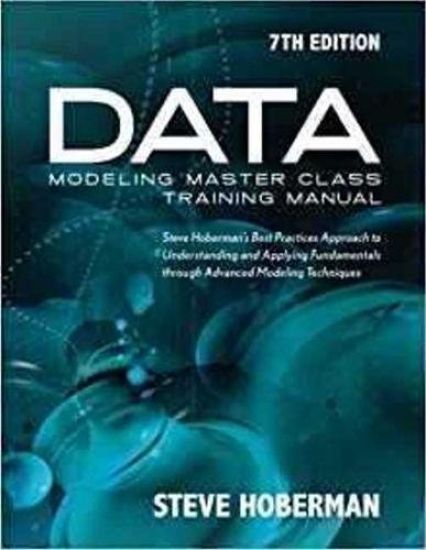
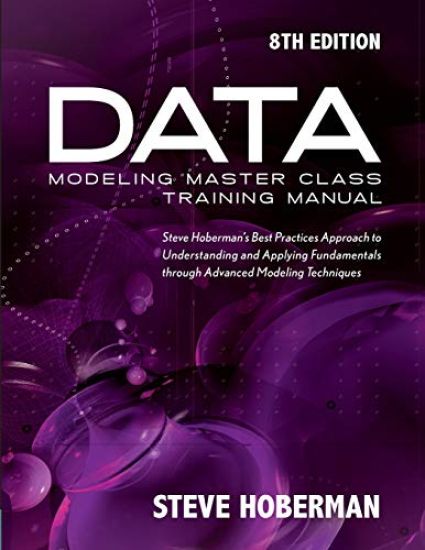
Data Modeling Master Class Training Manual

Data Modeling Master Class Training Manual

Steve Hoberman

Technics Publications
2019
nidottu
This is the eighth edition of the training manual for the Data Modeling Master Class that Steve Hoberman teaches onsite and through public classes. This text can be purchased prior to attending the Master Class, the latest course schedule and detailed description can be found on Steve Hoberman's website, stevehoberman.com.The Master Class is a complete data modeling course, containing three days of practical techniques for producing conceptual, logical, and physical relational and dimensional and NoSQL data models. After learning the styles and steps in capturing and modeling requirements, you will apply a best practices approach to building and validating data models through the Data Model Scorecard(R). You will know not just how to build a data model, but how to build a data model well. Three case studies and many exercises reinforce the material and will enable you to apply these techniques in your current projects.Top 5 Objectives Determine how and when to use each data modeling component Apply techniques to elicit data requirements as a prerequisite to building a data model Build relational and dimensional conceptual, logical, and physical data models Incorporate supportability and extensibility features into the data model Assess the quality of a data model.
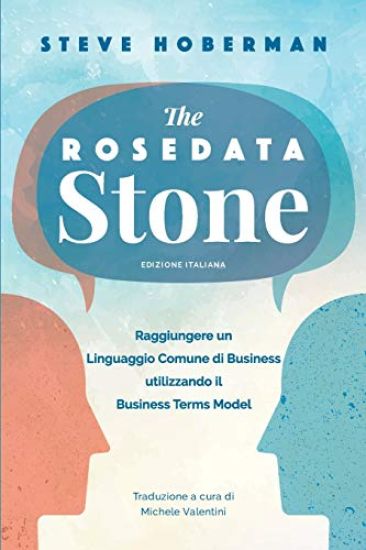
The Rosedata Stone Italian Version

The Rosedata Stone Italian Version

Steve Hoberman

Technics Publications LLC
2020
nidottu
Creare un diagramma preciso dei termini di business all'interno dei progetti uno strumento di comunicazione semplice, ma potente per i project manager, i professionisti di data governance e i business analyst.Come la Stele di Rosetta ha fornito uno strumento di comunicazione tra diversi linguaggi, cos la Rosedata Stone fornisce uno strumento di comunicazione tra I diversi linguaggi di business.La Rosedata Stone, chiamata Business Terms Model (BTM) o Conceptual Data Model, mostra un linguaggio di business comune per una particolare iniziativa di business.Con sempre pi dati creati e utilizzati, combinati con un'intensa concorrenza, normative severe e social media a rapida diffusione, la posta in gioco a livello economico, di responsabilit e di credibilit non mai stata cos alta e quindi la necessit di un Linguaggio di Business Comune non mai stata cos grande. Percorrendo i cinque capitoli del libro potrai apprezzare la Potenza del BTM e potrai seguire i passaggi pratici per costruirlo: 1. Sfide. Scoprirai che un Linguaggio di Business Comune oggi ancora pi importante in presenza di tecnologie come Cloud e NoSQL e normative come il GDPR.2. Requisiti. Comprenderai come identificare l'ambito di azione e pianificare visualizzazioni precise e minimali che possano racchiudere il Linguaggio Comune di Business.3. Soluzione. Sarai introdotto al BTM e ai suoi componenti, insieme alle differenze che caratterizzano i BTM relazionali e dimensionali. Scoprirai come diversi strumenti di modellazione dati visualizzano BTM, inclusi CaseTalk, ER/Studio, erwin DM e Hackolade.4. Costruzione. Potrai creare BTM operativi (relazionali) e analitici (dimensionali) per una catena di prodotti da forno.5. Pratica. Potrai rafforzare i concetti di BTM e creare BTM per due delle tue proprie iniziative grazie a un esempio reale.
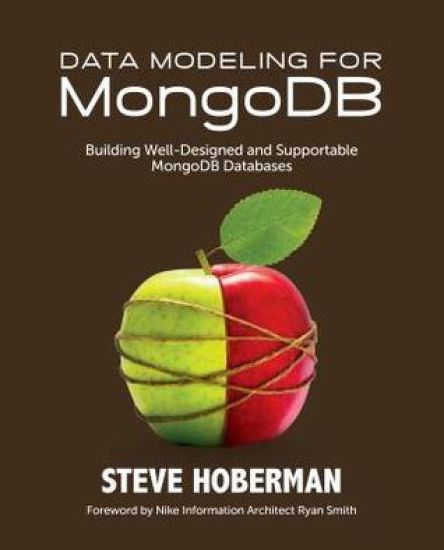
Data Modeling for MongoDB

Data Modeling for MongoDB

Steve Hoberman

Technics Publications LLC
2014
nidottu
Master how to data model MongoDB applications.Congratulations You completed the MongoDB application within the given tight timeframe and there is a party to celebrate your application's release into production. Although people are congratulating you at the celebration, you are feeling some uneasiness inside. To complete the project on time required making a lot of assumptions about the data, such as what terms meant and how calculations are derived. In addition, the poor documentation about the application will be of limited use to the support team, and not investigating all of the inherent rules in the data may eventually lead to poorly-performing structures in the not-so-distant future.Now, what if you had a time machine and could go back and read this book. You would learn that even NoSQL databases like MongoDB require some level of data modeling. Data modeling is the process of learning about the data, and regardless of technology, this process must be performed for a successful application. You would learn the value of conceptual, logical, and physical data modeling and how each stage increases our knowledge of the data and reduces assumptions and poor design decisions.Read this book to learn how to do data modeling for MongoDB applications, and accomplish these five objectives: Understand how data modeling contributes to the process of learning about the data, and is, therefore, a required technique, even when the resulting database is not relational. That is, NoSQL does not mean NoDataModeling Know how NoSQL databases differ from traditional relational databases, and where MongoDB fits. Explore each MongoDB object and comprehend how each compares to their data modeling and traditional relational database counterparts, and learn the basics of adding, querying, updating, and deleting data in MongoDB. Practice a streamlined, template-driven approach to performing conceptual, logical, and physical data modeling. Recognize that data modeling does not always have to lead to traditional data models Distinguish top-down from bottom-up development approaches and complete a top-down case study which ties all of the modeling techniques together.