Kirjojen hintavertailu. Mukana 11 699 587 kirjaa ja 12 kauppaa.

Kirjahaku

Etsi kirjoja tekijän nimen, kirjan nimen tai ISBN:n perusteella.

12 kirjaa tekijältä Steve Redhead

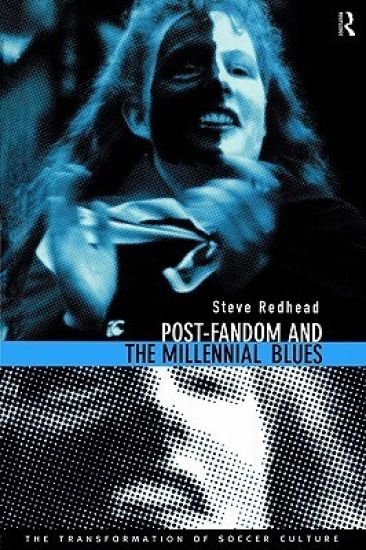
Post-Fandom and the Millennial Blues
Soccer fandom has traditionally been seen as an important part of adolescent, generally male, identity making. In Post-Fandom and the Millennial Blues , Steve Redhead shows how this tradition of youth culture of fandom has been eroded in the last years of the twentieth century by the more fleeting, style conscious allegiances inspired by television, films and music. The clubs that young people follow are determined by advertising and popular music; the games that they watch are brought to them by the globalized culture of television, as in the world cup staged in America; even their fears of so-called soccer hooliganism are determined by media-engendered moral panics at a time when the phenomenon itself seems to be dying away.
Paul Virilio

Paul Virilio

Steve Redhead

Edinburgh University Press
2004
sidottu
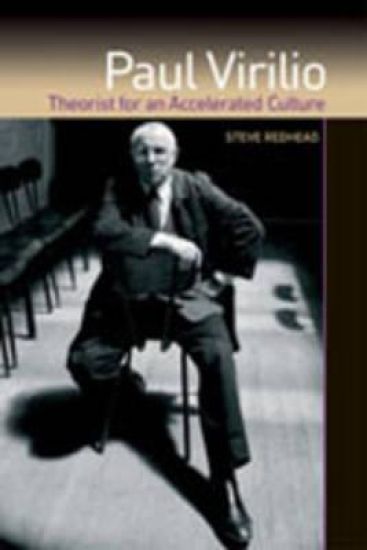
The first authoritative study of the life and work of French urban and cultural theorist Paul Virilio, this book sets out to explain and analyse what Virilio has actually said over the years and exactly when he said it, correcting many mistaken interpretations along the way. Paul Virilio recently retired from his Chair at the Ecole Speciale d'Architecture in Paris but remains an active political and cultural thinker and commentator with a major back catalogue of work stretching back to the 1950s. The book reviews the whole of his intellectual career, from his days hanging out in an architect's office in the 1960s to the creator of a major art foundation exhibition on 'the accident' in the wake of September 11. Virilio has become known as the high priest of speed and certainly his discourses on speed, military technology and modernity are central to an assessment of his writing, but he has contributed his 'logic bombs' to many other fields, too - media theory, international relations, art history, cultural politics, architecture and peace studies to name but a few.This book is a rigorous but accessible introduction to Virilio and places him in the pantheon of critical thinkers in today's accelerated culture. Features: *The first comprehensive study of the work of Paul Virilio *Accessibly written for a wide-ranging audience *Includes a bibliographical guide to reading Virilio.
Paul Virilio

Paul Virilio

Steve Redhead

Edinburgh University Press
2004
nidottu
The first authoritative study of the life and work of French urban and cultural theorist Paul Virilio, this book sets out to explain and analyse what Virilio has actually said over the years and exactly when he said it, correcting many mistaken interpretations along the way. Paul Virilio recently retired from his Chair at the Ecole Speciale d'Architecture in Paris but remains an active political and cultural thinker and commentator with a major back catalogue of work stretching back to the 1950s. The book reviews the whole of his intellectual career, from his days hanging out in an architect's office in the 1960s to the creator of a major art foundation exhibition on 'the accident' in the wake of September 11. Virilio has become known as the high priest of speed and certainly his discourses on speed, military technology and modernity are central to an assessment of his writing, but he has contributed his 'logic bombs' to many other fields, too - media theory, international relations, art history, cultural politics, architecture and peace studies to name but a few. This book is a rigorous but accessible introduction to Virilio and places him in the pantheon of critical thinkers in today's accelerated culture. Features: *The first comprehensive study of the work of Paul Virilio *Accessibly written for a wide-ranging audience *Includes a bibliographical guide to reading Virilio.
We Have Never Been Postmodern

We Have Never Been Postmodern

Steve Redhead

Edinburgh University Press
2011
sidottu
Is it possible that various disciplines, theorists and cultural commentators have been hurtling down a blind alley in the last thirty years, searching for the holy grail of the postmodern? What if, after all, we have never have been postmodern? Or what if we are, instead, now living 'after postmodernity'? As global culture rushes off the cliff of catastrophe with its neo-liberal, neo-conservative ideologies mangled in the process, this book provides theory at the speed of light designed to capture the fast flickering images of the real, gone before you can blink in today's accelerated culture. Key Features * Sets out a variety of reasons why we should move away from seeing the recent era as 'postmodern' and our culture as 'postmodernist' through a series of analyses of contemporary culture. * Highlights key theorists, such as Paul Virilio and Jean Baudrillard, who, despite the pitfalls of their work, chart a new route map out of the trajectories of the catastrophic. * Envisages a new object of knowledge for the contemporary world - mobile accelerated nonpostmodern culture (MANC). *Provides some of the building blocks and conceptual resources for a 'claustropolitan sociology' of the global future in order to better understand the catastrophic present, where claustropolis is rapidly replacing cosmopolis.
Paul Virilio

Paul Virilio

Steve Redhead

University of Toronto Press
2004
sidottu
Paul Virilio is known as the high priest of speed. His discourses on speed, military technology, and modernity are highly influential among urban and cultural theorists, but he has influenced the work of many in other fields as well, including media theory, international relations, art history, cultural politics, architecture, and peace studies, to name a few. The first authoritative study of the life and work of Virilio, Steve Redhead's Paul Virilio: Theorist for an Accelerated Culture explains and analyses Virilio's work, correcting many mistaken interpretations that have surfaced in the literature over the years. Although now retired from his position at the École Spéciale d'Architecture in Paris, Virilio remains an active political and cultural thinker and commentator with a significant catalogue of work stretching back to the 1950s. Redhead reviews Virilio's intellectual career, from his days hanging out in an architect's office in the 1960s to his recent creation of a major art foundation exhibition on 'the accident' in the wake of 11 September 2001. Paul Virilio: Theorist for an Accelerated Culture is a rigorous and accessible introduction to Virilio that places him in the pantheon of critical thinkers in today's accelerated culture.
Paul Virilio

Paul Virilio

Steve Redhead

University of Toronto Press
2004
pokkari
Paul Virilio is known as the high priest of speed. His discourses on speed, military technology, and modernity are highly influential among urban and cultural theorists, but he has influenced the work of many in other fields as well, including media theory, international relations, art history, cultural politics, architecture, and peace studies, to name a few. The first authoritative study of the life and work of Virilio, Steve Redhead's Paul Virilio: Theorist for an Accelerated Culture explains and analyses Virilio's work, correcting many mistaken interpretations that have surfaced in the literature over the years. Although now retired from his position at the École Spéciale d'Architecture in Paris, Virilio remains an active political and cultural thinker and commentator with a significant catalogue of work stretching back to the 1950s. Redhead reviews Virilio's intellectual career, from his days hanging out in an architect's office in the 1960s to his recent creation of a major art foundation exhibition on 'the accident' in the wake of 11 September 2001. Paul Virilio: Theorist for an Accelerated Culture is a rigorous and accessible introduction to Virilio that places him in the pantheon of critical thinkers in today's accelerated culture.
Football and Accelerated Culture

Football and Accelerated Culture

Steve Redhead

Routledge
2017
nidottu
In Football and Accelerated Culture, Steve Redhead offers a new and challenging theorisation of global football culture, exploring the relationship between sport and culture in a rapidly shifting world. Incorporating cutting-edge concepts, from accelerated culture and claustropolitanism to non-postmodernity, he reflects on the demise of working class football cultures and the rapid media globalisation of ‘the people’s game’.Drawing on international empirical research and a unique and ground-breaking study of football hooligan memoirs, the book delves into a wide array of disciplines, examining fascinating topics such as the relationship between music and football; hooligans and ultras; the rise of social media and anti-modern football movements; and ultra-realist criminology.Football and Accelerated Culture offers a new way of thinking about sporting cultures that expands the boundaries of physical cultural studies. As such, it is important reading for anybody with an interest in the culture of sport and leisure, social theory, communication studies, criminology or socio-legal studies.
Football and Accelerated Culture

Football and Accelerated Culture

Steve Redhead

Routledge
2015
sidottu
In Football and Accelerated Culture, Steve Redhead offers a new and challenging theorisation of global football culture, exploring the relationship between sport and culture in a rapidly shifting world. Incorporating cutting-edge concepts, from accelerated culture and claustropolitanism to non-postmodernity, he reflects on the demise of working class football cultures and the rapid media globalisation of ‘the people’s game’.Drawing on international empirical research and a unique and ground-breaking study of football hooligan memoirs, the book delves into a wide array of disciplines, examining fascinating topics such as the relationship between music and football; hooligans and ultras; the rise of social media and anti-modern football movements; and ultra-realist criminology.Football and Accelerated Culture offers a new way of thinking about sporting cultures that expands the boundaries of physical cultural studies. As such, it is important reading for anybody with an interest in the culture of sport and leisure, social theory, communication studies, criminology or socio-legal studies.
The End-Of-The-Century Party

The End-Of-The-Century Party

Steve Redhead

Manchester University Press
2019
nidottu
Madchester may have been born at the Haçienda in the summer of 1988, but the city had been in creative ferment for almost a decade prior to the rise of acid house. The end-of-the-century party is the definitive account of a generational shift in popular music and youth culture, what it meant and what it led to. First published right after the Second Summer of Love, it tells the story of the transition from new pop to the political pop of the mid-1980s and its deviant offspring, post-political pop. Resisting contemporary proclamations about the end of youth culture and the rise of a new, right-leaning conformism, the book draws on interviews with DJs, record company bosses, musicians, producers and fans to outline a clear transition in pop thinking, a move from an obsession with style, packaging and synthetic sounds to content, socially conscious lyrics and a new authenticity. This edition is framed by a prologue by Tara Brabazon, asking how we can reclaim the spirit, energy and authenticity of Madchester for a post-youth, post-pop generation. It is illustrated with iconic photographs by Kevin Cummins.
Theoretical Times

Theoretical Times

Steve Redhead

Emerald Publishing Limited
2017
nidottu
In Theoretical Times, Steve Redhead describes the post-crash economic, environmental, political and cultural condition we live in today. As the rise of the international right - Donald Trump, Brexit, Marine Le Pen - swarms the globe, a new global battle within the right is developing: the globalists and neo-liberals versus the economic nationalists and protectionists. What then are the prospects for a resurrected theoretical politics of the left? Theoretical Times considers the work of theorists such as Alain Badiou, Slavoj Žižek, Jean Baudrillard and Paul Virilio, in this innovative reinvention of theory and the politics of theory. After the global financial crash the world is being hollowed out and we find ourselves in what Žižek calls a desperate state of hopelessness, the “new dark ages”. Accelerated culture sees us digitally entertaining ourselves to death but leaves us exhausted and frightened waiting for World War Three. Theoretical Times offers new theoretical resources as a way out of the quicksand.