Kirjojen hintavertailu. Mukana 11 342 296 kirjaa ja 12 kauppaa.

Kirjahaku

Etsi kirjoja tekijän nimen, kirjan nimen tai ISBN:n perusteella.

5 kirjaa tekijältä Steve Scafidi

Sparks from a Nine-Pound Hammer

Sparks from a Nine-Pound Hammer

Steve Scafidi

Louisiana State University Press
2001
nidottu
Sometimes a fact swings down like a hammer and we are changed. The fact of loss, the fact of desire, and all the wild, unruly facts of history hammer down and sparks fly up. This, then, is a collection of facts. In a rushing, rolling style, poems sweep to the edge of falling apart, take great delight in defying that dissolution, and come upon a thing redemptive and clarifying: the fact of love. In a world that ""doesn't really care / whether we live or die,"" Steve Scafidi writes, ""tell it you do and why."" From the unthinkable to the quietly heroic, somehow we have emerged. Sparks from a Nine-Pound Hammer celebrates that fact most of all.
For Love of Common Words

For Love of Common Words

Steve Scafidi

Louisiana State University Press
2006
nidottu
The scariest sentence in the English language is brief, threatening, and hopeful. It is deceptive, simple, and as common as water: anything is possible. This second collection by Steve Scafidi is haunted by the possible and ""the bells of the verb to be"" that ""ring-a-ding-ding calling us / to the holy dark of this first / warm night of Spring."" When anything is possible, Scafidi finds, horror is as likely as delight. In poems both meditative and defiant he mourns the eventual loss of all that we love and finds consolation, wherever possible, in the rhythm of common words and ""the sacred guesswork"" of the imagination. Here is the dangerous world we all have in common. Here is a brief and hopeful book. Steve Scafidi is the author of the poetry collection Sparks from a Nine-Pound Hammer, winner of the Larry Levis Reading Prize. His poem ""The Egg Suckers"" received the 2005 James Boatwright Prize from Shenandoah literary magazine. He is a cabinetmaker and lives with his family in Summit Point, West Virginia.""Steve Scafidi's poem 'The Egg Suckers' made me laugh, fidget, and ponder my own path through this omnivorous world. It reminds us that things are constantly happening beneath our very feet, that a secret history is being forged that we'll never read about in the newspapers. Like Theodore Roethke, Scafidi describes a nature that is at least as nasty as it is nice and then lets us know that - oops! - we're on the menu, too. Re-reading 'The Egg Suckers,' I laughed again. And then I made breakfast."" - David Kirby
The Cabinetmaker's Window

The Cabinetmaker's Window

Steve Scafidi

Louisiana State University Press
2014
nidottu
Dying never / ends for us. It only slowly rearranges us, writes Steve Scafidi in his poignant new collection. Inspired by his own work as a cabinetmaker - defined by the peppery dust from the woodworker planing a walnut board, turning an oak spindle at the lathe, or honing chisels while gazing out a window - Scafidi's poems reveal both the tenuous and the everlasting nature of existence.
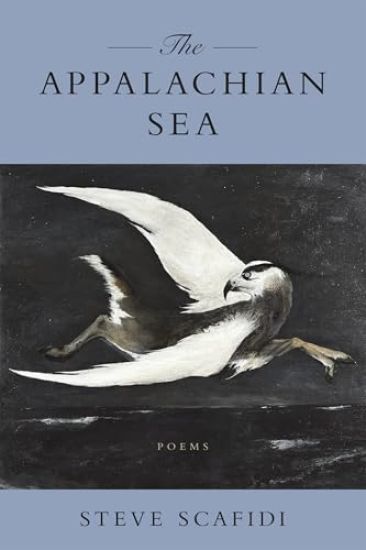
The Appalachian Sea

The Appalachian Sea

Steve Scafidi

LOUISIANA STATE UNIVERSITY PRESS
2025
pokkari
Steve Scafidi's The Appalachian Sea explores the eponymous place of mountains and story, of rivers and magic, as well as of mortality, where people work and live and die. What began as an homage to the American painter Miles Cleveland Goodwin became a celebration of the spectral qualities of place and home. The artist's gothic imagery of haints and dark orchards haunts the book, wherein the Shenandoah wends, old farmers toil, and ghosts wander a land where change comes on like a flood. There is no escape from this spilling river, the "Appalachian sea," yet for a while we get by and survive. These poems sing of the temporary persistence that makes what surrounds us beloved and strange.
To the Bramble and the Briar

To the Bramble and the Briar

Steve Scafidi

University of Arkansas Press
2014
nidottu
To the Bramble and the Briar is a magical biography that renders the development of Abraham Lincoln’s vision in all of its clumsiness and beauty. We see Lincoln as unromanticized, deeply human—whether reading Shakespeare out loud at the bottom of a well or sitting with a bucket over his head after Bull Run. We meet Frederick Douglass and Walt Whitman, as well as unnamed witnesses: a courtroom stenographer typing Lincoln’s words in Illinois; a teenage girl lifted out of slavery by a kite in the shape of a swordfish; and two anonymous workers charged with opening Lincoln’s grave. With young Tad Lincoln, we see—as a man is tarred and feathered, his two sons standing by—that ‘One day the world ends / right in front of you.’ Especially poignant—both funny and filled with sorrow—is the love story between Mary and Abraham, a husband who would come to his wife’s room “every night to kiss / at nine-thirty and then / at ten to undo her / some more.”