Kirjojen hintavertailu. Mukana 11 342 296 kirjaa ja 12 kauppaa.

Kirjahaku

Etsi kirjoja tekijän nimen, kirjan nimen tai ISBN:n perusteella.

7 kirjaa tekijältä Steven A. Epstein

An Economic and Social History of Later Medieval Europe, 1000–1500
This book examines the most important themes in European social and economic history from the beginning of growth around the year 1000 to the first wave of global exchange in the 1490s. These five hundred years witnessed the rise of economic systems, and the social theories that would have a profound influence on the rest of the world over the next five centuries. Surveying the full extent of Europe, from east to west and north to south, Steven Epstein illuminates family life, economic and social thought, war, technologies, and other major themes while giving equal attention to developments in trade, crafts, and agriculture. The great waves of famine and then plague in the fourteenth century provide the centerpiece of a book that seeks to explain the causes of Europe's uneven prosperity and its response to catastrophic levels of death.

An Economic and Social History of Later Medieval Europe, 1000–1500
This book examines the most important themes in European social and economic history from the beginning of growth around the year 1000 to the first wave of global exchange in the 1490s. These five hundred years witnessed the rise of economic systems, and the social theories that would have a profound influence on the rest of the world over the next five centuries. Surveying the full extent of Europe, from east to west and north to south, Steven Epstein illuminates family life, economic and social thought, war, technologies, and other major themes while giving equal attention to developments in trade, crafts, and agriculture. The great waves of famine and then plague in the fourteenth century provide the centerpiece of a book that seeks to explain the causes of Europe's uneven prosperity and its response to catastrophic levels of death.
Speaking of Slavery

Speaking of Slavery

Steven A. Epstein

Cornell University Press
2001
sidottu
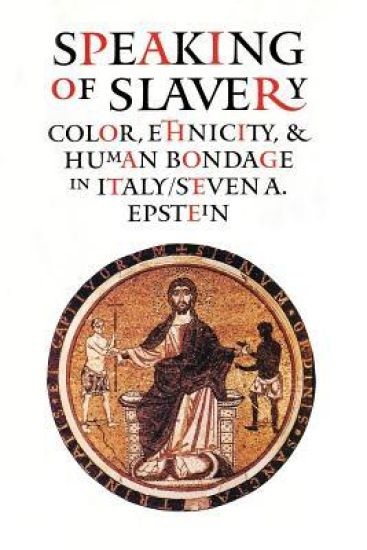
In this highly original work, Steven A. Epstein shows that the ways Italians employ words and think about race and labor are profoundly affected by the language used in medieval Italy to sustain a system of slavery. The author's findings about the surprising persistence of the "language of slavery" demonstrate the difficulty of escaping the legacy of a shameful past. For Epstein, language is crucial to understanding slavery, for it preserves the hidden conditions of that institution. He begins his book by discussing the words used to conduct and describe slavery in Italy, from pertinent definitions given in early dictionaries, to the naming of slaves by their masters, to the ways in which bondage has been depicted by Italian writers from Dante to Primo Levi and Antonio Gramsci. Epstein then probes Italian legal history, tracing the evolution of contracts for buying, selling, renting, and freeing people. Next he considers the behaviors of slaves and slave owners as a means of exploring how concepts of liberty and morality changed over time. He concludes by analyzing the language of the market, where medieval Italians used words to fix the prices of people they bought and sold. The first history of slavery in Italy ever published, Epstein's work has important implications for other societies, particularly America's. "For too long," Epstein notes, "Americans have studied their own slavery as it if were the only one ever to have existed, as if it were the archetype of all others." His book allows citizens of the United States and other former slave-holding nations a richer understanding of their past and present.
Purity Lost

Purity Lost

Steven A. Epstein

Johns Hopkins University Press
2007
sidottu
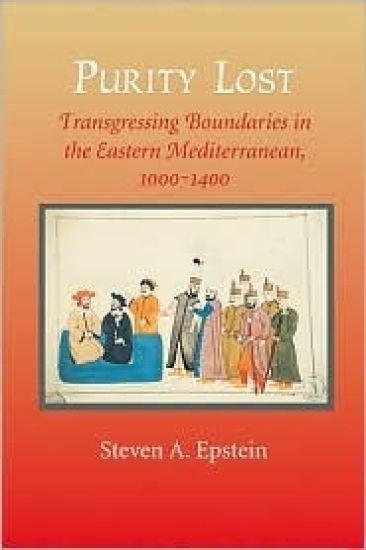
Purity Lost investigates the porous nature of social, political, and religious boundaries prevalent in the eastern Mediterranean-from the Black Sea to Egypt-during the Middle Ages. In this intriguing study, Steven A. Epstein finds that people consistently defied, overlooked, or transcended restrictions designed to preserve racial and cultural purity in order to establish relationships with those different from themselves. These mixed relationships-among people who did not share language, creed, or skin color-undermined the pervasive claims of purity. They forced people to reflect on their own identities and the bonds-whether social, political, religious, or racial-that defined their lives. Drawing on examples from daily life and interstate politics, Epstein takes a close look at the renegades and rule-breakers of this era. He explores race, master/slave relationships, diplomatic relations between Christian Italians and Muslim Turks, religious conversions from Christian to Muslim and vice versa, and religious boundaries of the human and the angelic. Epstein reveals the modern view of cultural, ethnic, and religious purity in the early modern Mediterranean as a mirage, and he offers new insights into how present-day conceptions about creed, color, ethnicity, and language originated.
The Medieval Discovery of Nature

The Medieval Discovery of Nature

Steven A. Epstein

Cambridge University Press
2012
sidottu
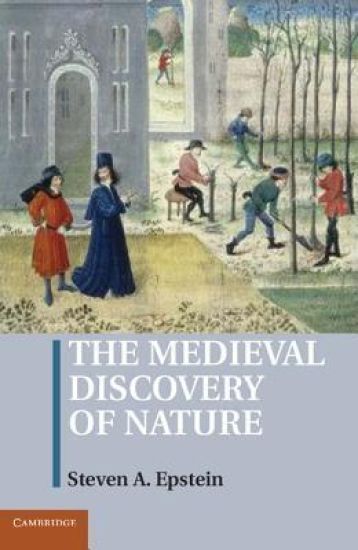
This book examines the relationship between humans and nature that evolved in medieval Europe over the course of a millennium. From the beginning, people lived in nature and discovered things about it. Ancient societies bequeathed to the Middle Ages both the Bible and a pagan conception of natural history. These conflicting legacies shaped medieval European ideas about the natural order and what economic, moral and biological lessons it might teach. This book analyzes five themes found in medieval views of nature – grafting, breeding mules, original sin, property rights and disaster – to understand what some medieval people found in nature and what their assumptions and beliefs kept them from seeing.
The Talents of Jacopo Da Varagine

The Talents of Jacopo Da Varagine

Steven A. Epstein

Cornell University Press
2015
sidottu
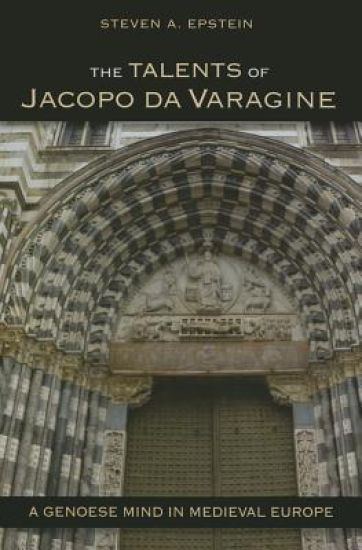
Jacopo da Varagine (c. 1228–1298) is remembered today primarily for his immensely popular work The Golden Legend, a massive collection of stories about the saints. Compiled over the years 1260–67, The Golden Legend quickly eclipsed earlier collections of saints' lives. One indication of its popularity is the fact that so many manuscript copies of the work have survived—more than one thousand according to some estimates. Despite the enduring influence of The Golden Legend, Jacopo remains an elusive figure because he left behind so little information about himself. In The Talents of Jacopo da Varagine, Steven A. Epstein sets out to remedy this situation through a careful study of all Jacopo's works, including many hundreds of sermons and his innovative chronicle of Genoese history. In Epstein's sure hands, Jacopo emerges as one of the most active and talented minds of his day. Indeed, Epstein argues that one needs to read all of Jacopo's books, in a Genoese context, in order to understand the original scope of his thinking, which greatly influenced the ways generations of people across Europe experienced their Christianity. The rich sources for Jacopo's sermons, saints' lives, and history illuminate the traditions that inspired him and shaped his imaginative and artistic powers. Jacopo was also one of the inventors of social history, and his writings reveal complex and new perspectives on family life as well as the histories of gay people, slaves, Jews, and the medieval economy. Filled with impressive insights into the intellectual life of the thirteenth century, The Talents of Jacopo da Varagine will be of interest to a wide range of medieval scholars and students of religious history, church history, and hagiography as well as intellectual history and Italian history.
Speaking of Slavery

Speaking of Slavery

Steven A. Epstein

Cornell University Press
2018
pokkari
In this highly original work, Steven A. Epstein shows that the ways Italians employ words and think about race and labor are profoundly affected by the language used in medieval Italy to sustain a system of slavery. The author's findings about the surprising persistence of the "language of slavery" demonstrate the difficulty of escaping the legacy of a shameful past. For Epstein, language is crucial to understanding slavery, for it preserves the hidden conditions of that institution. He begins his book by discussing the words used to conduct and describe slavery in Italy, from pertinent definitions given in early dictionaries, to the naming of slaves by their masters, to the ways in which bondage has been depicted by Italian writers from Dante to Primo Levi and Antonio Gramsci. Epstein then probes Italian legal history, tracing the evolution of contracts for buying, selling, renting, and freeing people. Next he considers the behaviors of slaves and slave owners as a means of exploring how concepts of liberty and morality changed over time. He concludes by analyzing the language of the market, where medieval Italians used words to fix the prices of people they bought and sold. The first history of slavery in Italy ever published, Epstein's work has important implications for other societies, particularly America's. "For too long," Epstein notes, "Americans have studied their own slavery as it if were the only one ever to have existed, as if it were the archetype of all others." His book allows citizens of the United States and other former slave-holding nations a richer understanding of their past and present.