Kirjojen hintavertailu. Mukana 11 244 527 kirjaa ja 12 kauppaa.

Kirjahaku

Etsi kirjoja tekijän nimen, kirjan nimen tai ISBN:n perusteella.

12 kirjaa tekijältä Steven B. Smith

Hegel's Critique of Liberalism

Hegel's Critique of Liberalism

Steven B. Smith

University of Chicago Press
1991
nidottu
In Hegel's Critique of Liberalism, Steven B. Smith examines Hegel's critique of rights-based liberalism and its relevance to contemporary political concerns. Smith argues that Hegel reformulated classic liberalism, preserving what was of value while rendering it more attentive to the dynamics of human history and the developmental structure of the moral personality. Hegel's goal, Smith suggests, was to find a way of incorporating both the ancient emphasis on the dignity and even architectonic character of political life with the modern concern for freedom, rights, and mutual recognition. Smith's insightful analysis reveals Hegel's relevance not only to contemporary political philosophers concerned with normative issues of liberal theory but also to political scientists who have urged a revival of the state as a central concept of political inquiry.
Reading Leo Strauss

Reading Leo Strauss

Steven B. Smith

University of Chicago Press
2007
nidottu
Interest in Leo Strauss is greater now than at any time since his death, mostly because of the purported link between his thought and the political movement known as neoconservatism. Steven B. Smith, though, surprisingly depicts Strauss not as the high priest of neoconservatism but as a friend of liberal democracy - perhaps the best defender democracy has ever had. Moreover, in "Reading Leo Strauss", Smith shows that Strauss' defense of liberal democracy was closely connected to his skepticism of both the extreme Left and extreme Right. It was as a skeptic, Smith argues, that Strauss considered the seemingly irreconcilable conflict between reason and revelation - a conflict Strauss dubbed the "theologico-political problem." Calling this problem "the theme of my investigations," Strauss asked the same fundamental question throughout his life: what is the relation of the political order to revelation in general and Judaism in particular? Smith bases his book on this question and assesses Strauss' attempt to direct the teaching of political science away from the examination of mass behavior and interest-group politics and toward the study of the philosophical principles on which politics are based. With his provocative, lucid study, Smith establishes a distinctive form of Straussian liberalism himself.
Reading Leo Strauss

Reading Leo Strauss

Steven B. Smith

University of Chicago Press
2006
sidottu
Interest in Leo Strauss is greater now than at any time since his death, mostly because of the purported link between his thought and the political movement known as neoconservatism. Steven B. Smith, though, surprisingly depicts Strauss not as the high priest of neoconservatism but as a friend of liberal democracy - perhaps the best defender democracy has ever had. Moreover, in "Reading Leo Strauss", Smith shows that Strauss's defense of liberal democracy was closely connected to his skepticism of both the extreme Left and the extreme Right. Smith asserts that this philosophical skepticism defined Strauss's thought. It was as a skeptic, Smith argues, that Strauss considered the seemingly irreconcilable conflict between reason and revelation - a conflict Strauss dubbed the "theologico-political problem". Calling this problem "the theme of my investigations," Strauss asked the same fundamental question throughout his life: what is the relation of the political order to revelation in general and Judaism in particular? Smith organizes his book with this question, first addressing Strauss's views on religion and then examining his thought on philosophical and political issues. In his investigation of these philosophical and political issues, Smith assesses Strauss's attempt to direct the teaching of political science away from the examination of mass behavior and interest group politics and toward the study of the philosophical principles on which politics are based. With his provocative, lucid essays, Smith goes a long way toward establishing a distinctive form of Straussian liberalism.
Spinoza, Liberalism, and the Question of Jewish Identity
Baruch de Spinoza (1632-1677)—often recognized as the first modern Jewish thinker—was also a founder of modern liberal political philosophy. This book is the first to connect systematically these two aspects of Spinoza's legacy. Steven B. Smith shows that Spinoza was a politically engaged theorist who both advocated and embodied a new conception of the emancipated individual, a thinker who decisively influenced such diverse movements as the Enlightenment, liberalism, and political Zionism.Focusing on Spinoza's Theologico-Political Treatise, Smith argues that Spinoza was the first thinker of note to make the civil status of Jews and Judaism (what later became known as the Jewish Question) an essential ingredient of modern political thought. Before Marx or Freud, Smith notes, Spinoza recast Judaism to include the liberal values of autonomy and emancipation from tradition. Smith examines the circumstances of Spinoza's excommunication from the Jewish community of Amsterdam, his skeptical assault on the authority of Scripture, his transformation of Mosaic prophecy into a progressive philosophy of history, his use of the language of natural right and the social contract to defend democratic political institutions, and his comprehensive comparison of the ancient Hebrew commonwealth and the modern commercial republic. According to Smith, Spinoza's Treatise represents a classic defense of religious toleration and intellectual freedom, showing them to be necessary foundations for political stability and liberal regimes. In this study Smith examines Spinoza's solution to the Jewish Question and asks whether a Judaism, so conceived, can long survive.
Spinoza’s Book of Life

Spinoza’s Book of Life

Steven B. Smith

Yale University Press
2003
sidottu
Most readers of Spinoza treat him as a pure metaphysician, a grim determinist, or a stoic moralist, but none of these descriptions captures the author of the Ethics, argues Steven B. Smith in this intriguing book. Offering a new reading of Spinoza’s masterpiece, Smith asserts that the Ethics is a celebration of human freedom and its attendant joys and responsibilities and should be placed among the great founding documents of the Enlightenment.Two aspects of Smith’s book distinguish it from other studies. It treats the famous “geometrical method” of the Ethics as a form of moral rhetoric, a model for the construction of individuality. And it presents the Ethics as a companion to Spinoza’s major work of political philosophy, the Theologico-Political Treatise, each work helping to explore the problem of freedom. Affirming Spinoza’s centrality for both critics and defenders of modernity, the book will be of value to students of political theory, philosophy, and intellectual history.
Political Philosophy

Political Philosophy

Steven B. Smith

Yale University Press
2012
pokkari
Who ought to govern? Why should I obey the law? How should conflict be controlled? What is the proper education for a citizen and a statesman? These questions probe some of the deepest and most enduring problems that every society confronts, regardless of time and place. Today we ask the same crucial questions about law, authority, justice, and freedom that Plato, Aristotle, Machiavelli, Hobbes, Locke, Rousseau, and Tocqueville faced in previous centuries. In this lively and enlightening book, Professor Steven B. Smith introduces the wide terrain of political philosophy through the classic texts of the discipline. Works by the greatest thinkers illuminate the permanent problems of political life, Smith shows, and while we may not accept all their conclusions, it would be a mistake to overlook the relevance of their insights.
Modernity and Its Discontents

Modernity and Its Discontents

Steven B. Smith

Yale University Press
2018
pokkari
Steven B. Smith examines the concept of modernity, not as the end product of historical developments but as a state of mind. He explores modernism as a source of both pride and anxiety, suggesting that its most distinctive characteristics are the self-criticisms and doubts that accompany social and political progress. Providing profiles of the modern project’s most powerful defenders and critics—from Machiavelli and Spinoza to Saul Bellow and Isaiah Berlin—this provocative work of philosophy and political science offers a novel perspective on what it means to be modern and why discontent and sometimes radical rejection are its inevitable by-products.
Reclaiming Patriotism in an Age of Extremes

Reclaiming Patriotism in an Age of Extremes

Steven B. Smith

Yale University Press
2021
sidottu
A rediscovery of patriotism as a virtue in line with the core values of democracy in an extremist age “Like you perhaps, I still regard myself as an extremely patriotic person. Which is why I so admired [this book]. . . . It explained my emotion to me, as it might yours to you." —David Brooks, New York Times “Smith superbly illuminates the distinctiveness of the American idea of patriotism and reminds us of how important patriotism is, and how essential to making America better.”—Leslie Lenkowsky, Wall Street Journal The concept of patriotism has fallen on hard times. What was once a value that united Americans has become so politicized by both the left and the right that it threatens to rip apart the social fabric. On the right, patriotism has become synonymous with nationalism and an “us versus them” worldview, while on the left it is seen as an impediment to acknowledging important ethnic, religious, or racial identities and a threat to cosmopolitan globalism. Steven B. Smith reclaims patriotism from these extremist positions and advocates for a patriotism that is broad enough to balance loyalty to country with other loyalties. Describing how it is a matter of both the head and the heart, Smith shows how patriotism can bring the country together around the highest ideals of equality and is a central and ennobling disposition that democratic societies cannot afford to do without.
Reclaiming Patriotism in an Age of Extremes

Reclaiming Patriotism in an Age of Extremes

Steven B. Smith

YALE UNIVERSITY PRESS
2023
pokkari
A rediscovery of patriotism as a virtue in line with the core values of democracy in an extremist age “Like you perhaps, I still regard myself as an extremely patriotic person. Which is why I so admired [this book]. . . . It explained my emotion to me, as it might yours to you." —David Brooks, New York Times “Smith superbly illuminates the distinctiveness of the American idea of patriotism and reminds us of how important patriotism is, and how essential to making America better.”—Leslie Lenkowsky, Wall Street Journal The concept of patriotism has fallen on hard times. What was once a value that united Americans has become so politicized by both the left and the right that it threatens to rip apart the social fabric. On the right, patriotism has become synonymous with nationalism and an “us versus them” worldview, while on the left it is seen as an impediment to acknowledging important ethnic, religious, or racial identities and a threat to cosmopolitan globalism. Steven B. Smith reclaims patriotism from these extremist positions and advocates for a patriotism that is broad enough to balance loyalty to country with other loyalties. Describing how it is a matter of both the head and the heart, Smith shows how patriotism can bring the country together around the highest ideals of equality and is a central and ennobling disposition that democratic societies cannot afford to do without.
On Statesmanship

On Statesmanship

Steven B. Smith

YALE UNIVERSITY PRESS
2026
sidottu
What true statecraft consists of, and how to know a statesman when we see one In the modern world we yearn for great leaders but resist them when they come along. In this much-needed essay, Steven B. Smith tells us that a statesman is something far different from a demagogue or a technocrat; he or she incorporates many qualities of leadership--persuasiveness, courage, foresight, judgment--to take people where they need to go while hardly seeming to lead them at all. A true statesman is focused not on amassing power but on finding the best way to use power toward responsible ends. Above all else, Smith argues, the statesman is an educator who, through language and argument, helps shape a people's civic understanding. This book is a timely reminder of a set of qualities we desperately need in our political leaders but have forgotten how to talk about.
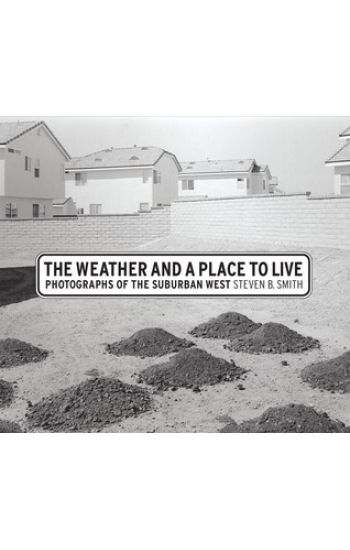
The Weather and a Place to Live

The Weather and a Place to Live

Steven B. Smith

Duke University Press
2005
sidottu
In compelling, often stunning black-and-white photographs, The Weather and a Place to Live portrays the manmade landscape of the western United States. Here we come face to face with the surreal intersection of the American appetite for suburban development and the resistant, rolling, arid country of the desert West. Steven B. Smith’s extraordinary photographs take us into the contemporary reality of sprawling suburbs reconfiguring what was once vast, unpopulated territory. With arresting concision and an unblinking eye, Smith shows how a new frontier is being won, and suggests too how it may be lost in its very emergence. Since the early 1990s Smith has been making large-format photographs in California, Utah, Nevada, and Colorado. Based on this body of work, he was chosen as winner of the biennial Center for Documentary Studies/Honickman First Book Prize in Photography. The power of these photographs lies in part in Smith’s unusual knowledge of the places he portrays. Raised in Utah, Smith has worked on construction crews, and he was a contractor in California after living on the East Coast for a few years. When he moved to Los Angeles in 1991, he writes, “I was so astounded by what I saw happening to the landscape as it was being developed that I started photographing it immediately. The landscapes I saw were scraped bare, re-sculpted, sealed, and then covered so as not to erode away before the building process could be completed.”Smith’s photographs offer a disturbing vision of the future of our planet, where the desire for home ownership is pitted against the costs of development in epic proportions. These altered landscapes force us to consider the consequences of human design battling natural forces across great expanses, a fragile balancing act and a contorted equation in which nature becomes both inspiration and invisible adversary. Smith’s elegant photographs of this constructed universe confront us with the beauty of images as images, yet push us to reflect on the devastation possible in the simple act of choosing a place to live.