Kirjojen hintavertailu. Mukana 11 451 815 kirjaa ja 12 kauppaa.

Kirjahaku

Etsi kirjoja tekijän nimen, kirjan nimen tai ISBN:n perusteella.

9 kirjaa tekijältä Steven Beller

Antisemitism

Antisemitism

Steven Beller

Oxford University Press
2015
nidottu
Antisemitism, as hatred of Jews and Judaism, has been a central problem of Western civilization for millennia, and its history continues to invite debate. This Very Short Introduction untangles the history of the phenomenon, from ancient religious conflict to 'new' antisemitism in the 21st century. Steven Beller reveals how Antisemitism grew as a political and ideological movement in the 19th century, how it reached its dark apogee in the worst genocide in modern history - the Holocaust - and how Antisemitism still persists around the world today. In the new edition of this thought-provoking Very Short Introduction, Beller brings his examination of this complex and still controversial issue up to date with a discussion of Antisemitism in light of the 2008 financial crash, the Arab Spring, and the on-going crisis between Israel and Palestine. ABOUT THE SERIES: The Very Short Introductions series from Oxford University Press contains hundreds of titles in almost every subject area. These pocket-sized books are the perfect way to get ahead in a new subject quickly. Our expert authors combine facts, analysis, perspective, new ideas, and enthusiasm to make interesting and challenging topics highly readable.

Vienna and the Jews, 1867–1938

Vienna and the Jews, 1867–1938

Steven Beller

Cambridge University Press
1991
pokkari
This book studies the role played by Jews in the explosion of cultural innovation in Vienna at the turn of the century, which had its roots in the years following the Ausgleich of 1867 and its demise in the sweeping events of the 1930s. Dr Beller shows that, among the personnel of leading society, Jews were predominant throughout most of Viennese modern high culture. Thus any attempts to dismiss the ‘Jewish aspect’ of the intelligentsia are necessarily refuted. The book then goes on to explain this ‘Jewish aspect’, disclaiming any unitary, static model, but adopting an historical approach which sees the ‘Jewishness’ of Viennese modern culture as a result of the specific Jewish backgrounds of most the of leading cultural figures and their own reactions to being Jewish. The culture of fin-de-siècle Vienna, it is claimed finally, was born out of the vivid encounter between the Jewish background and the Viennese context.
A Concise History of Austria

A Concise History of Austria

Steven Beller

Cambridge University Press
2007
sidottu
For a small, prosperous country in the middle of Europe, modern Austria has a very large and complex history, extending far beyond its current borders. Today's Austrians have a problematic relationship with that history, whether with the multi-national history of the Habsburg Monarchy, or with the time between 1938 and 1945 when Austrians were Germans in Hitler's Third Reich. Steven Beller's gripping and comprehensive account traces the remarkable career of Austria through its many transformations, from German borderland, to dynastic enterprise, imperial house, Central European great power, failed Alpine republic, German province, and then successful Alpine republic, building up a picture of the layers of Austrian identity and heritage and their diverse sources. It is a story full of anomalies and ironies, a case study of the other side of European history, without the easy answers of more clearly national narratives, and hence far more relevant to today's world.
A Concise History of Austria

A Concise History of Austria

Steven Beller

Cambridge University Press
2007
pokkari
For a small, prosperous country in the middle of Europe, modern Austria has a very large and complex history, extending far beyond its current borders. Today's Austrians have a problematic relationship with that history, whether with the multi-national history of the Habsburg Monarchy, or with the time between 1938 and 1945 when Austrians were Germans in Hitler's Third Reich. Steven Beller's gripping and comprehensive account traces the remarkable career of Austria through its many transformations, from German borderland, to dynastic enterprise, imperial house, Central European great power, failed Alpine republic, German province, and then successful Alpine republic, building up a picture of the layers of Austrian identity and heritage and their diverse sources. It is a story full of anomalies and ironies, a case study of the other side of European history, without the easy answers of more clearly national narratives, and hence far more relevant to today's world.
The Habsburg Monarchy 1815–1918

The Habsburg Monarchy 1815–1918

Steven Beller

Cambridge University Press
2018
sidottu
This clear and compelling account of the Habsburg Monarchy in its last century explains why, a century after its disappearance, it has never been more relevant. With extensive discussion of recent historiographic controversies about the Monarchy's character and viability, Steven Beller presents a detailed account of the main strands of the Monarchy's political history and how its economic, social and cultural development interacted with this main narrative. While recognizing the importance of these larger trends, readers will learn how the historical accident of personality and the complexities of high politics and diplomacy still had a central impact on the Monarchy's fate. Although some would see the Monarchy as an atavistic irrelevance in the modern age, its multicultural, multinational experience and inclusive 'logic' was in many ways more relevant to our modernity than the nationalism that did so much to bring about its demise.
The Habsburg Monarchy 1815–1918

The Habsburg Monarchy 1815–1918

Steven Beller

Cambridge University Press
2018
pokkari
This clear and compelling account of the Habsburg Monarchy in its last century explains why, a century after its disappearance, it has never been more relevant. With extensive discussion of recent historiographic controversies about the Monarchy's character and viability, Steven Beller presents a detailed account of the main strands of the Monarchy's political history and how its economic, social and cultural development interacted with this main narrative. While recognizing the importance of these larger trends, readers will learn how the historical accident of personality and the complexities of high politics and diplomacy still had a central impact on the Monarchy's fate. Although some would see the Monarchy as an atavistic irrelevance in the modern age, its multicultural, multinational experience and inclusive 'logic' was in many ways more relevant to our modernity than the nationalism that did so much to bring about its demise.
Herzl

Herzl

Steven Beller

Peter Halban Publishers Ltd
2004
pokkari
At the beginning of June 1895, Theodor Herzl (1860-1904), the Paris correspondent of the Austrian Neue Freie Presse, made a momentous decision - he would bring about the creation of a state for the Jews. In his attempt to realise this dream, he became the greatest figure of modern Jewish history and is today seen as the father of the State of Israel.
Geschichte Osterreichs

Geschichte Osterreichs

Steven Beller

Bohlau Verlag
2007
sidottu
"Steven Bellers Geschichte Österreichs ist nicht nur kurz und prägnant -, sie ist auch scharfsinnig, witzig und mitreißend. Realistisch und aufrichtig, aber nie langweilig nostalgisch in seinen Einschätzungen der Erfahrungen Österreichs gelingt es Beller, die paradoxe und mehrdeutige Rolle des Landes sowohl als Hintergrund wie auch als Wesen der umfassenderen Muster der europäischen Geschichte zu beleuchten." (Aviel Roshwald, Georgetown University). Für ein kleines, wohlhabendes Land in der Mitte Europas verfügt das moderne Österreich über eine sehr lange und komplexe Geschichte, die weit über die gegenwärtigen Grenzen des Landes hinausgeht. Das heutige Österreich hat eine problematische Beziehung zu dieser Geschichte, sei es zur Vielvölkergeschichte des Habsburgerreiches, sei es zur Zeit von 1938 bis 1945, als die Österreicher Deutsche in Hitlers Drittem Reich waren. Steven Bellers packende und umfassende Darstellung zeigt den Verlauf dieser bemerkenswerten Geschichte in all ihren vielen Wandlungen auf, vom deutschen Grenzland zum dynastischen Unterfangen, zum Kaiserhaus, zur mitteleuropäischen Großmacht, zur gescheiterten Alpenrepublik, zu einem Teil Deutschlands und schließlich zur erfolgreichen Alpenrepublik. Er zeichnet dabei ein Bild der verschiedenen Schichten der österreichischen Identität und des österreichischen Erbes sowie ihrer unterschiedlichen Quellen. Es ist eine Geschichte voll der Ungewöhnlichkeiten und Ironien, eine Fallstudie der anderen Seite der europäischen Geschichte, ohne die einfachen Antworten eindeutigerer nationaler Geschichten, und daher von umso größerer Bedeutung für die Welt von heute.
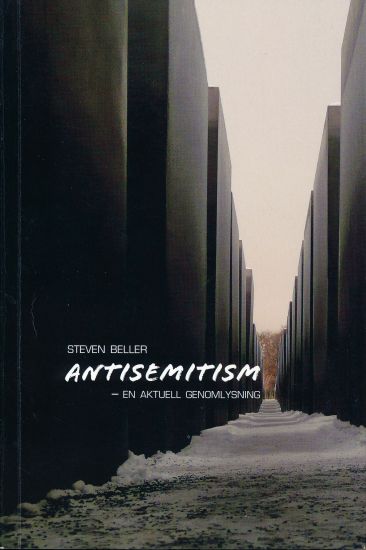
Antisemitism : en aktuell genomlysning

Antisemitism : en aktuell genomlysning

Steven Beller

Hillelförlaget
2009
nidottu
I stället för en minskning av antisemitiska vanföreställningar, och trots ett alltmer inkluderande och pluralistiskt Europa, har på senare tid en rad samverkande faktorer skapat en situation som judar och många andra, uppfattar som hotfull. Hur kunde det bli så? I denna kortfattade bok lyckas Steven Beller på ett överskådligt sätt placera den moderna antisemitismen i dess historiska kontext, förklara processerna och samtidigt visa hur vi alla kan motarbeta antisemitism i alla dess former.