Kirjojen hintavertailu. Mukana 11 717 486 kirjaa ja 12 kauppaa.

Kirjahaku

Etsi kirjoja tekijän nimen, kirjan nimen tai ISBN:n perusteella.

4 kirjaa tekijältä Steven Blakemore

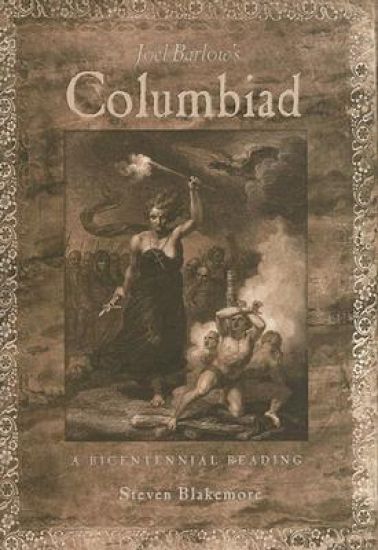
Joel Barlow's Columbiad

Joel Barlow's Columbiad

Steven Blakemore

University of Tennessee Press
2007
sidottu
The year 2007 marks the two-hundredth anniversary since Joel Barlow, an American poet and diplomat, first published his controversial and lengthy poem, The Columbiad. Grandiose in its ambition, Barlow framed the poem as an epic for the New World, a nationalist primer to teach republican citizens the history of the relatively new nation culminating in the American Revolution and the promise of a future utopia stimulated by the United States' republican ideas and institutions.Unfortunately, history has not been kind to Barlow's work. Literary critics have long dismissed it for its obscure references and allusions to historical and mythic events, to individuals and characters that a select few would know or care about. Indeed, as Joseph Buckminister, an acquaintance of Barlow, noted, “[This poem] requires an amazing universal knowledge . . . . A man must be not only a poet and a man of letters, but a lawyer, politician, physician, divine, chemist, natural historian, and adept in all the fine arts.”But this work does matter, argues Steven Blakemore, and Joel Barlow's Columbiad is the first full-length study of poem. Blakemore shows that Barlow crafted a historically relevant New World epic- a literary foundation myth for America as ambitious as those created by Homer and Virgil for Greece and Rome-an epic that is the most significant American narrative poem of the nineteenth century. Blakemore offers a close reading of The Columbiad within the context of contemporary national debates over the significance of America. In doing so, he helps the reader understand the variety of national discourses that Barlow was promoting, challenging, or subverting. Long neglected, The Columbiad fundamentally engages the core issues and strategies of national self-definition and the creation of a vital republican culture. This book will appeal to all those interested in early American literature, the literature of the early Republic, and American literary nationalism.Steven Blakemore is associate professor of English at Florida Atlantic University. He has published on a variety of topics in English and American literature and is the author of three recent books dealing with the Anglo-American debate on the French Revolution.
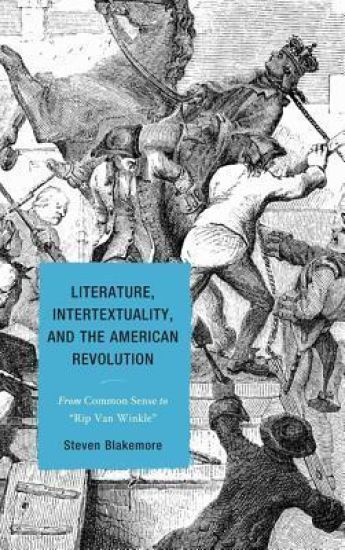
Literature, Intertextuality, and the American Revolution

Literature, Intertextuality, and the American Revolution

Steven Blakemore

Fairleigh Dickinson University Press
2012
sidottu
Dealing with Thomas Paine's Common Sense (1776), John Trumbull's M'Fingal (1776–82), Philip Freneau's "The British-Prison Ship" (1781), J. Hector St. John de Crèvecoeur's Letters from an American Farmer (1782), and Washington Irving's "Rip Van Winkle" (1819–20), Steven Blakemore breaks new ground in assessing the strategies of subversion and intertextuality used during the American Revolution. Blakemore also crystallizes the historical contexts that link these works together – contexts that have been missed or overlooked by critics and scholars. The five works additionally illuminate issues of history (The Norman Conquest, the English Civil War, and the French Revolution) and gender as they impinge on American-revolutionary discourse. The result is five new readings of significant revolutionary-era works that suggest fruitful entries into other literatures of the Revolution. Blakemore demonstrates the nexus between literature and history in the revolutionary era and how it created an intertextual dialogue in the formation of the first postcolonial critiques of the British Empire.
Literature, Intertextuality, and the American Revolution

Literature, Intertextuality, and the American Revolution

Steven Blakemore

Fairleigh Dickinson University Press
2014
nidottu
Dealing with Thomas Paine's Common Sense (1776), John Trumbull's M'Fingal (1776–82), Philip Freneau's "The British-Prison Ship" (1781), J. Hector St. John de Crèvecoeur's Letters from an American Farmer (1782), and Washington Irving's "Rip Van Winkle" (1819–20), Steven Blakemore breaks new ground in assessing the strategies of subversion and intertextuality used during the American Revolution. Blakemore also crystallizes the historical contexts that link these works together – contexts that have been missed or overlooked by critics and scholars. The five works additionally illuminate issues of history (The Norman Conquest, the English Civil War, and the French Revolution) and gender as they impinge on American-revolutionary discourse. The result is five new readings of significant revolutionary-era works that suggest fruitful entries into other literatures of the Revolution. Blakemore demonstrates the nexus between literature and history in the revolutionary era and how it created an intertextual dialogue in the formation of the first postcolonial critiques of the British Empire.
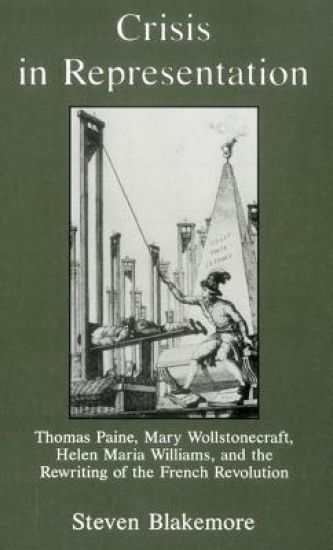
Crisis in Representation

Crisis in Representation

Steven Blakemore

Fairleigh Dickinson University Press
1997
sidottu
The revisions of the French Revolution by three prominent eighteenth- century writers are focused on in this book. The implication in the OtraditionO these writers rebelled against raises fundamental questions about the representations of rebels and Romantics as well as our canonical readings of eighteenth- and nineteenth-century texts.