Kirjojen hintavertailu. Mukana 11 717 486 kirjaa ja 12 kauppaa.

Kirjahaku

Etsi kirjoja tekijän nimen, kirjan nimen tai ISBN:n perusteella.

7 kirjaa tekijältä Steven C. Roach

South Sudan's Fateful Struggle

South Sudan's Fateful Struggle

Steven C. Roach

OXFORD UNIVERSITY PRESS INC
2024
sidottu
The Comprehensive Peace Agreement marked the end of Sudan's second civil war between the North and South. But in creating an autonomous southern region and a pathway toward statehood, it failed to resolve the effects of rebel factionalism, party infighting, and corruption in the South. In South Sudan's Fateful Struggle, Steven C. Roach analyzes these persistent effects of the South-South war, showing how they disrupted the transition to statehood and divided the transitional government of national unity in South Sudan. Throughout, he stresses the centrality of elite mismanagement and the durable dynamics of war which have shaped the country's troubled political destiny. The government, plagued by patronage-fueled corruption and patrimonialism, continues to rely on the threat of violence to govern the country and to delay the transition to a new government of national unity. Roach argues that in naturally sowing division and distrust, government elites must ultimately learn to engage civil society to achieve long-term peace, accountability, and justice. Along with providing an overview of the country's trajectory in this century, Roach traces its state of war to colonial times and uses the notion of militarized patronage to describe the distinct nature of South Sudan's patronage networks. He shows how the Sudan People's Liberation Movement came to dominate the country's affairs to become a powerful deterrent to democracy, security, justice, and national unity. He then discusses the promising efforts by civil society actors to advance hybrid justice by pressuring the government to implement a truth commission, a war crimes court, and reparations commission. Comprehensive in scope, the book represents the first systematic examination of South Sudan's quandary both before and after its civil war.
Critical Theory of International Politics
Critical international theory encompasses several distinct, radical approaches that focus on identity, difference, hegemonic power, and order. As an applied theory, critical international theory draws on critical social theories to shed light on international processes and global transformations. While this approach has led to increasing interest in formulating an empirically relevant critical international theory, it has also revealed the difficulties of applying critical theory to international politics. What are these difficulties and problems? And how can we move beyond them? This book addresses these questions by investigating the intellectual currents and key debates of critical theory, from Kant and Hegel to Habermas and Derrida, and the recent work of critical international theory, including Robert Cox and Andrew Linklater. By drawing on these debates, the book formulates an original theory of complementarity that brings together critical theory and critical international theory. It argues that complementarity—a governing principle in international law and politics—offers a conceptual framework for working toward two goals: engaging the changing contexts and forms of resistance and redressing some of the difficulties of applying critical theory to international relations.In adopting three critical perspectives on complementarity to analyze the evolving social and political contexts of global justice, this book provides an essential resource for undergraduate and graduate students and scholars interested in the application of critical theory to international relations.
Critical Theory of International Politics
Critical international theory encompasses several distinct, radical approaches that focus on identity, difference, hegemonic power, and order. As an applied theory, critical international theory draws on critical social theories to shed light on international processes and global transformations. While this approach has led to increasing interest in formulating an empirically relevant critical international theory, it has also revealed the difficulties of applying critical theory to international politics. What are these difficulties and problems? And how can we move beyond them? This book addresses these questions by investigating the intellectual currents and key debates of critical theory, from Kant and Hegel to Habermas and Derrida, and the recent work of critical international theory, including Robert Cox and Andrew Linklater. By drawing on these debates, the book formulates an original theory of complementarity that brings together critical theory and critical international theory. It argues that complementarity—a governing principle in international law and politics—offers a conceptual framework for working toward two goals: engaging the changing contexts and forms of resistance and redressing some of the difficulties of applying critical theory to international relations.In adopting three critical perspectives on complementarity to analyze the evolving social and political contexts of global justice, this book provides an essential resource for undergraduate and graduate students and scholars interested in the application of critical theory to international relations.
Politicizing the International Criminal Court

Politicizing the International Criminal Court

Steven C. Roach

Rowman Littlefield Publishers
2006
sidottu
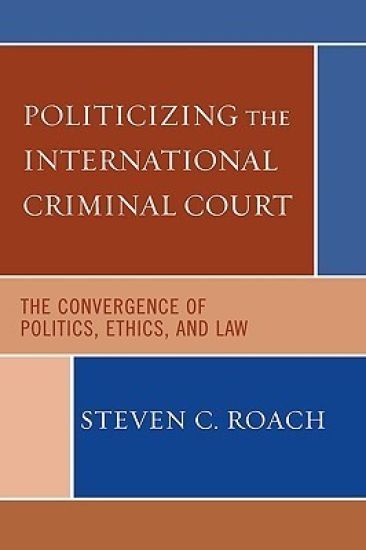
The establishment of the International Criminal Court (ICC) in July 1998 has attracted growing interest in the evolving role of politics in international law. Steven C. Roach's innovative and systematic work on the political and ethical dimensions of the ICC is the first comprehensive attempt to situate the politics of the ICC both theoretically and practically. Linking the ICC's internal politicization with its formative development, Roach provides a unique understanding of this institution's capacity to play a constructive role in global politics. He argues that an internal form of politicization will allow the ICC to counter outside efforts to politicize it, whether this involves the political agenda of a state hegemon or the geopolitical interests of U. N. Security Council permanent members. Steering a new path between conventional approaches that stress the formal link between legitimacy and legal neutrality, and unconventional approaches that treat legitimacy and politics as inextricable elements of a repressive international legal order, Roach formulates the concept of political legalism, which calls for a self-directed and engaged application of the legal rules and principles of the ICC Statute. Politicizing the International Criminal Court is a must-read for scholars, students, and policymakers interested in the dynamics of this important international institution.
Politicizing the International Criminal Court

Politicizing the International Criminal Court

Steven C. Roach

Rowman Littlefield Publishers
2006
nidottu
The establishment of the International Criminal Court (ICC) in July 1998 has attracted growing interest in the evolving role of politics in international law. Steven C. Roach's innovative and systematic work on the political and ethical dimensions of the ICC is the first comprehensive attempt to situate the politics of the ICC both theoretically and practically. Linking the ICC's internal politicization with its formative development, Roach provides a unique understanding of this institution's capacity to play a constructive role in global politics. He argues that an internal form of politicization will allow the ICC to counter outside efforts to politicize it, whether this involves the political agenda of a state hegemon or the geopolitical interests of U. N. Security Council permanent members. Steering a new path between conventional approaches that stress the formal link between legitimacy and legal neutrality, and unconventional approaches that treat legitimacy and politics as inextricable elements of a repressive international legal order, Roach formulates the concept of political legalism, which calls for a self-directed and engaged application of the legal rules and principles of the ICC Statute. Politicizing the International Criminal Court is a must-read for scholars, students, and policymakers interested in the dynamics of this important international institution.
Cultural Autonomy, Minority Rights and Globalization
This insightful and timely book analyzes the role of cultural autonomy in advancing minority rights protection on the national and global level. It assesses the historical and legal limits of the right to self-determination and autonomy and draws on Marxist internationalism, liberal nationalism and EU integrationist studies to examine the relationship between cultural autonomy and globalization. As such, emphasis is placed on the sociological and historical value of cultural autonomy, with the aim of working beyond formalistic and utilitarian approaches to cultural autonomy. The volume will appeal primarily to upper-level undergraduate and graduate level students of political science and international law interested in rethinking the role of cultural autonomy in an age of globalization.
Cultural Autonomy, Minority Rights and Globalization
This insightful and timely book analyzes the role of cultural autonomy in advancing minority rights protection on the national and global level. It assesses the historical and legal limits of the right to self-determination and autonomy and draws on Marxist internationalism, liberal nationalism and EU integrationist studies to examine the relationship between cultural autonomy and globalization. As such, emphasis is placed on the sociological and historical value of cultural autonomy, with the aim of working beyond formalistic and utilitarian approaches to cultural autonomy. The volume will appeal primarily to upper-level undergraduate and graduate level students of political science and international law interested in rethinking the role of cultural autonomy in an age of globalization.