Kirjojen hintavertailu. Mukana 11 342 296 kirjaa ja 12 kauppaa.

Kirjahaku

Etsi kirjoja tekijän nimen, kirjan nimen tai ISBN:n perusteella.

8 kirjaa tekijältä Steven C. Smith

Music by Max Steiner

Music by Max Steiner

Steven C. Smith

Oxford University Press Inc
2020
sidottu
During a seven-decade career that spanned from 19th century Vienna to 1920s Broadway to the golden age of Hollywood, three-time Academy Award winner Max Steiner did more than any other composer to introduce and establish the language of film music. Indeed, revered contemporary film composers like John Williams and Danny Elfman use the same techniques that Steiner himself perfected in his iconic work for such classics as Casablanca, King Kong, Gone with the Wind, The Searchers, Now, Voyager, the Astaire-Rogers musicals, and over 200 other titles. And Steiner's private life was a drama all its own. Born into a legendary Austrian theatrical dynasty, he became one of Hollywood's top-paid composers. But he was also constantly in debt--the inevitable result of gambling, financial mismanagement, four marriages, and the actions of his emotionally troubled son. Throughout his chaotic life, Steiner was buoyed by an innate optimism, a quick wit, and an instinctive gift for melody, all of which would come to the fore as he met and worked with luminaries like Richard Strauss, George Gershwin, Irving Berlin, the Warner Bros., David O. Selznick, Bette Davis, Frank Sinatra, and Frank Capra. In Music by Max Steiner, the first full biography of Steiner, author Steven C. Smith interweaves the dramatic incidents of Steiner's personal life with an accessible exploration of his composing methods and experiences, bringing to life the previously untold story of a musical pioneer and master dramatist who helped create a vital new art with some of the greatest film scores in cinema history.
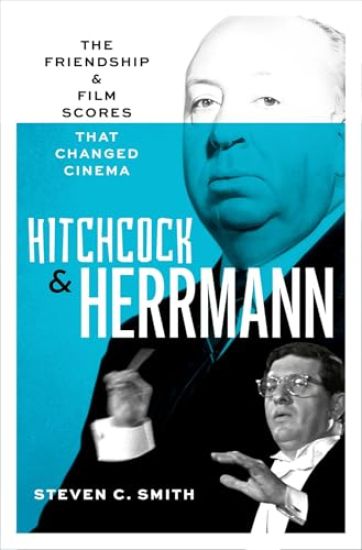
Hitchcock and Herrmann

Hitchcock and Herrmann

Steven C. Smith

OXFORD UNIVERSITY PRESS INC
2026
sidottu
This is the story of the game-changing collaboration between director Alfred Hitchcock and composer Bernard Herrmann, who channelled their inner fears and desires into films that would become the nightmarish narratives and soundtracks of our lives. The 11-year collaboration between Alfred Hitchcock and Bernard Herrmann is often called the greatest director-composer partnership in cinema history. Their eight films together include such classic thrillers as Vertigo, The Man Who Knew Too Much, North by Northwest, Psycho, and The Birds. In Hitchcock and Herrmann: The Friendship and Film Scores that Changed Cinema, Steven C. Smith delivers an intimate account of how the reserved, but deeply anxious, Hitchcock found his ideal creative partner in the cantankerous, but deeply romantic, Herrmann. Smith draws on four decades of research, including previously unpublished documents and new interviews, to deliver a riveting account of what made the teaming of "Benny and Hitch" so memorable and influential -- and why it came to a bitter end. Their story involves the tumultuous changes in Hollywood from the mid-1950s to mid-1960s, as the collapsing studio system gave way to independent, counterculture filmmaking. It also involves the key figures in Hitchcock and Herrmann's inner circle including the director's gifted wife and most valued critic, Alma Reville; Herrmann's beautiful, put-upon spouse, Lucy Anderson; and talent agent-turned-studio mogul Lew Wasserman. Wasserman's negotiations made Hitchcock's greatest filmmaking period possible, but over time Lew's commercial instincts as head of Universal Studios clashed with Herrmann's pure artistic vision. Hitchcock and Herrmann is both a deeply researched historical study and a fast-moving, cinematic narrative -- one that puts readers on the film sets and scoring stages of Hitchcock masterworks. Their collaboration ended in a bitter break; but today Herrmann's pulse-quickening music has become the soundtrack of our own anxious times. The music from their movies is more popular than ever, heard in Quentin Tarantino blockbusters and Lady Gaga music videos. In Smith's expert telling, readers get an an intimate look at two legendary creators who, despite seemingly opposite personalities, found in each other artistic completion.
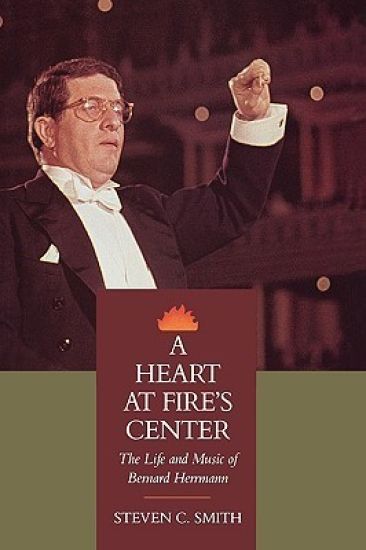
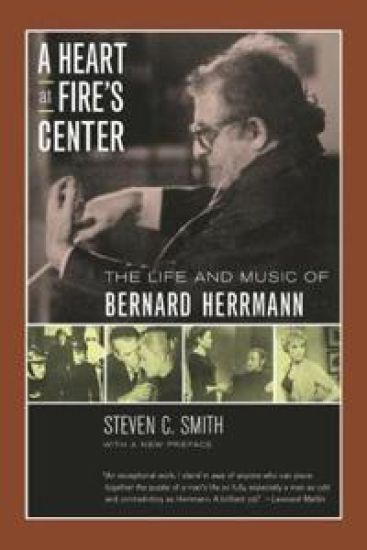
A Heart at Fire's Center

A Heart at Fire's Center

Steven C. Smith

University of California Press
2002
pokkari
No composer contributed more to film than Bernard Herrmann, who in over 40 scores enriched the work of such directors as Orson Welles, Alfred Hitchcock, Francois Truffaut, and Martin Scorsese. In this first major biography of the composer, Steven C. Smith explores the interrelationships between Herrmann's music and his turbulent personal life, using much previously unpublished information to illustrate Herrmann's often outrageous behavior, his working methods, and why his music has had such lasting impact. From his first film ("Citizen Kane") to his last ("Taxi Driver"), Herrmann was a master of evoking psychological nuance and dramatic tension through music, often using unheard-of instrumental combinations to suit the dramatic needs of a film. His scores are among the most distinguished ever written, ranging from the fantastic ("Fahrenheit 451", "The Day the Earth Stood Still") to the romantic ("Obsession", "The Ghost and Mrs. Muir") to the terrifying ("Psycho"). Film was not the only medium in which Herrmann made a powerful mark. His radio broadcasts included Orson Welles' "Mercury Theatre on the Air" and "The War of the Worlds". His concert music was commissioned and performed by the New York Philharmonic, and he was chief conductor of the CBS Symphony. Almost as celebrated as these achievements are the enduring legends of Herrmann's combativeness and volatility. Smith separates myth from fact and draws upon heretofore unpublished material to illuminate Herrmann's life and influence. Herrmann remains as complex as any character in the films he scored - a creative genius, an indefatigable musicologist, an explosive bully, a generous and compassionate man who desperately sought friendship and love. The films scored by Bernard Herrmann include "Citizen Kane", "The Ghost and Mrs. Muir", "Vertigo", "Psycho", "Fahrenheit 451", "Taxi Driver", "The Magnificent Ambersons", "The Man Who Knew Too Much", "North By Northwest", "The Birds", "The Snows of Kilimanjaro", "Cape Fear", "Marnie", "Torn Curtain", among others.
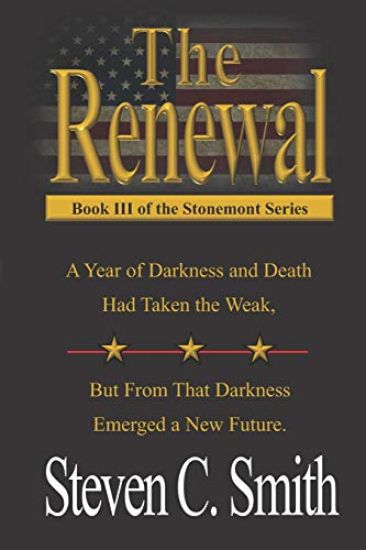
The Renewal

The Renewal

Steven C. Smith

Independently Published
2019
nidottu
In his first novel, The Reversion, Steven Smith took the modern post-apocalyptic genre to a new level of general fiction, introducing us to a world after a cataclysmic collapse and taking us into the lives of those who survive and begin to rebuild.In his second novel, The Revival, he once again broke a barrier into adventure fiction, mixing humor and intense action with social commentary, political philosophy and in-depth examinations of comparative justice and cultural constructs - all skillfully woven into a compelling story of personal and societal survival so as to be both powerful yet comfortable to the reader. It was, in essence, an examination of relative societal design wrapped in a story of survival, love, loyalty, perseverance, responsibility and the desire of people to live peacefully if possible while remaining ready to respond to violent, existential threats when necessary.In this, his third novel and the third installment of the Stonemont series, Smith takes us a step farther - or perhaps several steps.The worst of the die-off is over. Over ninety percent of the continental population has perished due to starvation, disease, the violence accompanying societal collapse and the general inability of most to provide for themselves. Those who remain have come together in communities of various types and have learned to survive - some in cooperative fashion, some under the authority of strong leaders and some under the savage control of fanatical tyrants. Survival, however, is not enough for the people of Stonemont, and in them we see the renewal of industry, inter-community commerce and societal interaction, and a desire to rebuild a world that is better than the one in which they had previously lived.Civilization is returning, but in the world around them lurk difficulties and dangers of which they are not yet aware. The question is what comes next - and Smith takes us there in a way no one has before. His approach is original and his style unique, having been described as a combination of Jack London, Robert Heinlein, Stephen King and Louis L'Amour. And perhaps only this combination could have brought forth a vision and a series like this.Many have said, after reading the first two books, that they would rather live in the new world of Stonemont than in their current world. I have come to agree. And after The Renewal, you will want to as well.
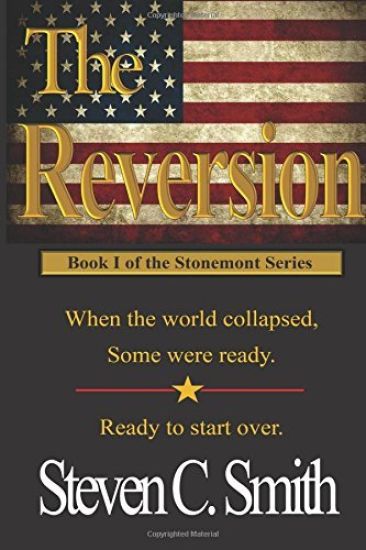
The Reversion

The Reversion

Steven C. Smith

Createspace Independent Publishing Platform
2017
nidottu
Jim Wyatt had always said that if everything fell apart, he didn't want to just survive - he didn't want to notice. When the world did crash, his family's home of Stonemont became not only a refuge, but a place where it might be possible to start over again, and reclaim the American ideal. Among the many novels in the SHTF/TEOTWAWKI genre, The Reversion stands apart - and, perhaps, alone. It does not follow the survival learning curve of the unprepared or minimally-prepared, as so many excellent books have already done so well. Rather, it is the story of a man who was prepared, and of how his preparation and foresight provided not only a safe haven for him and his family, but a re-start point for those who come together to survive the collapse of the world around them. As such, it is an unbelievably positive book about an unbelievably negative circumstance, and carries within it the lessons of preparedness and survival that every person should strive to learn. Tightly woven into the story are threads of history, morality, politics, economics, philosophy and comparative justice - the kind America was founded on, the kind they had devolved to under the weight of an increasingly liberal and socialist society, and the kind that might re-establish a society reflective of America's original ideals. As these threads are woven into the fabric of the larger story of survival, the realization emerges that a great catastrophe enabled the return of what makes us, as human beings, truly happy and fulfilled, and that, perhaps, only a great catastrophe could. The Reversion, written by an expert in survival and preparedness with an interesting government and non-government background, is destined to be an instant classic in the preparedness/survival genre. More than a good story, it is a manual and a resource for all who are interested in these fields, and deserves to be kept on your desk or chair-side table where it can be read, re-read and referred to often.
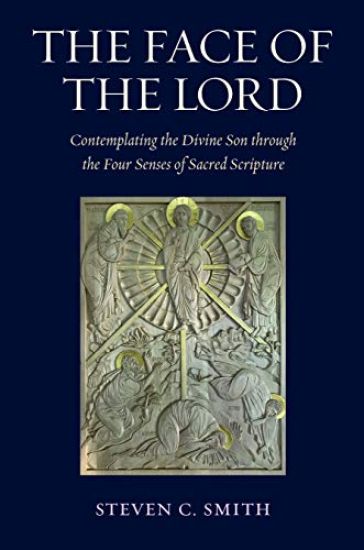
The Face of the Lord

The Face of the Lord

Steven C. Smith

Franciscan Academic Press
2020
sidottu
Is it possible to “see God”? A close examination of the Bible suggests that answering this question is more complex—and interesting—than one might imagine. Following The Word of the Lord and The House of the Lord, this sweeping conclusion to Steven C. Smith’s trilogy asks whether it is possible to see God. After properly framing the question and citing scriptural examples, Smith takes the reader on an epic journey into the literal and spiritual meanings of biblical interpretation.Smith’s thesis is that the multiplicity of “senses” is a pathway and progression toward the face of the Lord. He leads the reader through five Old Testament theophany scenes, beginning with the patriarch Jacob “wrestling” with God and concluding with Job’s contending with the Voice from the Whirlwind. These five encounters span all three parts of the Old Testament: the Law, the Prophets, and the Writings.A tour de force much like Smith’s previous books, The Face of the Lord thoroughly examines each biblical episode from the standpoint of the Literal, Allegorical, Tropological (Moral), and Anagogical (Heavenly) senses. Smith engages all of the relevant literature—from ancient Jewish sources to Christian medieval masters to present-day theologians—without taking his eye off the central question: Can we see God? The result is a fresh, robust exploration of Sacred Scripture, drawing upon ancient, medieval, and contemporary exegesis in pursuit of this fascinating biblical question.