Kirjojen hintavertailu. Mukana 11 224 866 kirjaa ja 12 kauppaa.

Kirjahaku

Etsi kirjoja tekijän nimen, kirjan nimen tai ISBN:n perusteella.

11 kirjaa tekijältä Steven Cohan

Hollywood by Hollywood

Hollywood by Hollywood

Steven Cohan

Oxford University Press Inc
2018
nidottu
The backstudio picture, or the movie about movie-making, is a staple of Hollywood film production harking back to the silent era and extending to the present day. What gives backstudios their coherence as a distinctive genre, Steven Cohan argues in Hollywood by Hollywood, is their fascination with the mystique of Hollywood as a geographic place, a self-contained industry, and a fantasy of fame, leisure, sexual freedom, and modernity. Yet by the same token, if backstudio pictures have rarely achieved blockbuster box-office success, what accounts for the film industry's interest in continuing to produce them? The backstudio picture has been an enduring genre because, aside from offering a director or writer a chance to settle old scores, in branding filmmaking with the Hollywood mystique, the genre solicits consumers' strong investment in the movies. Whether inspiring the "movie crazy" fan girls of the early teens and twenties or the wannabe filmmakers of this century heading to the West Coast after their college graduations, backstudios have given emotional weight and cultural heft to filmmaking as the quintessential American success story. But more than that, a backstudio picture is concerned with shaping perceptions of how the film industry works, with masking how its product depends upon an industrial labor force, including stardom, and with determining how that work's value accrues from the Hollywood brand stamped onto the product. Cohan supports his well theorized and well researched claims with nuanced discussions of over fifty backstudios, some canonical and well-known, and others obscure and rarely seen. Covering the hundred-year timespan of feature length film production, Hollywood by Hollywood offers an illuminating perspective for considering anew the history of American movies.
Hollywood by Hollywood

Hollywood by Hollywood

Steven Cohan

Oxford University Press Inc
2018
sidottu
The backstudio picture, or the movie about movie-making, is a staple of Hollywood film production harking back to the silent era and extending to the present day. What gives backstudios their coherence as a distinctive genre, Steven Cohan argues in Hollywood by Hollywood, is their fascination with the mystique of Hollywood as a geographic place, a self-contained industry, and a fantasy of fame, leisure, sexual freedom, and modernity. Yet by the same token, if backstudio pictures have rarely achieved blockbuster box-office success, what accounts for the film industry's interest in continuing to produce them? The backstudio picture has been an enduring genre because, aside from offering a director or writer a chance to settle old scores, in branding filmmaking with the Hollywood mystique, the genre solicits consumers' strong investment in the movies. Whether inspiring the "movie crazy" fan girls of the early teens and twenties or the wannabe filmmakers of this century heading to the West Coast after their college graduations, backstudios have given emotional weight and cultural heft to filmmaking as the quintessential American success story. But more than that, a backstudio picture is concerned with shaping perceptions of how the film industry works, with masking how its product depends upon an industrial labor force, including stardom, and with determining how that work's value accrues from the Hollywood brand stamped onto the product. Cohan supports his well theorized and well researched claims with nuanced discussions of over fifty backstudios, some canonical and well-known, and others obscure and rarely seen. Covering the hundred-year timespan of feature length film production, Hollywood by Hollywood offers an illuminating perspective for considering anew the history of American movies.
On Audrey Hepburn

On Audrey Hepburn

Steven Cohan

OXFORD UNIVERSITY PRESS INC
2024
sidottu
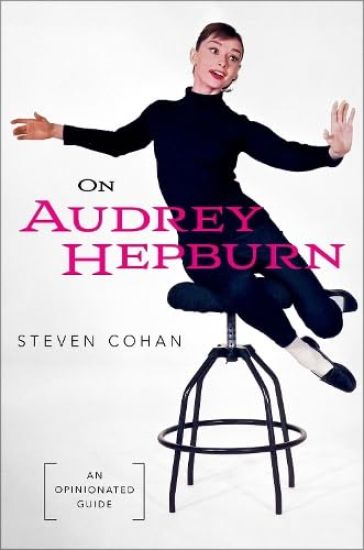
Why should Audrey Hepburn matter today? This lively and engaging book revises the contemporary view of Hepburn that sees her primarily as a fashion icon and style guru, frozen in images from Breakfast at Tiffany's and My Fair Lady. Author Steven Cohan argues that her films, more than her biography or her likeness in stock images and magazine photos, are essential to understanding both her importance as one of the all-time major stars to emerge in Hollywood after World War II and her lasting fame in the 21st century. On Audrey Hepburn examines the key elements--her expressive face, her distinctive voice, her unorthodox body-that contributed to her persona and led to her charismatic presence onscreen. While pointing to the many contradictions inhering in her star image, Cohan emphasizes the liminality Hepburn represented, demonstrating how her characters' mischief, intelligence, and desiring supplied the primary motor for the Cinderella plots, resisted the films' patriarchal template and closures, and complicated her asymmetrical casting opposite older male stars. Similarly, Hepburn's close relation with designer Hubert de Givenchy, which established her identification with haute couture, enhanced her movement onscreen, offering a pathway through spectacle for viewer identification with her energy and agency. With Hepburn in Givenchy on screen, Cohan argues, fashion worked as a transformative event for her characters. On Audrey Hepburn further looks at how, playing a woman threatened with deception and murder in thrillers, Hepburn reversed the conventional role of women in this genre through her strong female characters who confront and deal with danger on their own terms. Finally, the book examines Hepburn's skill as actress, considering her expert timing, use of props, facial and vocal expressions, interaction with other actors in an ensemble, and the overall nuance with which she developed complex characterizations. On Audrey Hepburn is an entertaining and insightful guide to this star through her films, reminding readers why she was so immediately popular after her breakout roles in Roman Holiday and Sabrina, why she had such a crucial influence on women's fashions, and why she received so much acclaim and award recognition as an actress in the US and abroad.
Business Principles for Landscape Contracting
Business Principles for Landscape Contracting, fully revised and updated in its third edition, is an introduction to the application of business principles of financial management involved in setting up your own landscape contracting business and beginning your professional career. Appealing to students and professionals alike, it will build your knowledge of financial management tools and enable you to relate their applications to real-life business scenarios. Focusing on the importance of proactive financial management, the book serves as a primer for students in landscape architecture, contracting, and management courses and entrepreneurs within the landscape industry preparing to use business principles in practice. Topics covered include: Financial management and accountabilityBudget developmentProfitable pricing and estimatingProject managementCreating a lean culturePersonnel management and employee productivityProfessional developmentEconomic sustainability.
Business Principles for Landscape Contracting
Business Principles for Landscape Contracting, fully revised and updated in its third edition, is an introduction to the application of business principles of financial management involved in setting up your own landscape contracting business and beginning your professional career. Appealing to students and professionals alike, it will build your knowledge of financial management tools and enable you to relate their applications to real-life business scenarios. Focusing on the importance of proactive financial management, the book serves as a primer for students in landscape architecture, contracting, and management courses and entrepreneurs within the landscape industry preparing to use business principles in practice. Topics covered include: Financial management and accountabilityBudget developmentProfitable pricing and estimatingProject managementCreating a lean culturePersonnel management and employee productivityProfessional developmentEconomic sustainability.
Incongruous Entertainment

Incongruous Entertainment

Steven Cohan

Duke University Press
2005
sidottu
With their lavish costumes and sets, ebullient song and dance numbers, and iconic movie stars, the musicals that mgm produced in the 1940s seem today to epitomize camp. Yet they were originally made to appeal to broad, mainstream audiences. In this lively, nuanced, and provocative reassessment of the mgm musical, Steven Cohan argues that this seeming incongruity-between the camp value and popular appreciation of these musicals-is not as contradictory as it seems. He demonstrates that the films’ extravagance and queerness were deliberate elements and keys to their popular success. In addition to examining the spectatorship of the mgm musical, Cohan investigates the genre’s production and marketing, paying particular attention to the studio’s employment of a largely gay workforce of artists and craftspeople. He reflects on the role of the female stars-including Judy Garland, Debbie Reynolds, Esther Williams, and Lena Horne-and he explores the complex relationship between Gene Kelley’s dancing and his masculine persona. Cohan looks at how, in the decades since the 1950s, the marketing and reception of the mgm musical have negotiated the more publicly recognized camp value attached to the films. He considers the status of Singin’ in the Rain as perhaps the first film to be widely embraced as camp; the repackaging of the musicals as nostalgia and camp in the That’s Entertainment! series as well as on home video and cable; and the debates about Garland’s legendary gay appeal among her fans on the Internet. By establishing camp as central to the genre, Incongruous Entertainment provides a new way of looking at the musical.
Incongruous Entertainment

Incongruous Entertainment

Steven Cohan

Duke University Press
2005
pokkari
With their lavish costumes and sets, ebullient song and dance numbers, and iconic movie stars, the musicals that mgm produced in the 1940s seem today to epitomize camp. Yet they were originally made to appeal to broad, mainstream audiences. In this lively, nuanced, and provocative reassessment of the mgm musical, Steven Cohan argues that this seeming incongruity-between the camp value and popular appreciation of these musicals-is not as contradictory as it seems. He demonstrates that the films’ extravagance and queerness were deliberate elements and keys to their popular success. In addition to examining the spectatorship of the mgm musical, Cohan investigates the genre’s production and marketing, paying particular attention to the studio’s employment of a largely gay workforce of artists and craftspeople. He reflects on the role of the female stars-including Judy Garland, Debbie Reynolds, Esther Williams, and Lena Horne-and he explores the complex relationship between Gene Kelley’s dancing and his masculine persona. Cohan looks at how, in the decades since the 1950s, the marketing and reception of the mgm musical have negotiated the more publicly recognized camp value attached to the films. He considers the status of Singin’ in the Rain as perhaps the first film to be widely embraced as camp; the repackaging of the musicals as nostalgia and camp in the That’s Entertainment! series as well as on home video and cable; and the debates about Garland’s legendary gay appeal among her fans on the Internet. By establishing camp as central to the genre, Incongruous Entertainment provides a new way of looking at the musical.
Hollywood Musicals

Hollywood Musicals

Steven Cohan

Routledge
2019
sidottu
Hollywood Musicals offers an insightful account of a genre that was once a mainstay of twentieth-century film production and continues to draw audiences today.What is a film musical? How do musicals work, formally and culturally? Why have they endured since the introduction of sound in the late 1920s? What makes them more than glittery surfaces or escapist fare? In answering such questions, this guidebook by Steven Cohan takes new and familiar viewers on a tour of Hollywood musicals. Chapters discuss definitions of the genre, its long history, different modes of analyzing it, the great stars of the classic era, and auteur directors. Highlights include extended discussions of such celebrated musicals from the studio era as The Love Parade, Top Hat, Holiday Inn, Stormy Weather, The Gang’s All Here, Meet Me in St. Louis, Cover Girl, Mother Wore Tights, Singin’ in the Rain, Gentlemen Prefer Blondes, The Band Wagon, Seven Brides for Seven Brothers, and Jailhouse Rock as well as later films such as Cabaret, All that Jazz, Beauty and the Beast, and La La Land. Cohan brings in numerous other examples that amplify and extend to the present day his claims about the musical, its generic coherence and flexibility, its long and distinguished history, its special appeal, and its cultural significance.Clear and accessible, this guide provides students of film and culture with a succinct but substantial overview that provides both analysis and intersectional context to one of Hollywood’s most beloved genres.
Hollywood Musicals

Hollywood Musicals

Steven Cohan

Routledge
2019
nidottu
Hollywood Musicals offers an insightful account of a genre that was once a mainstay of twentieth-century film production and continues to draw audiences today.What is a film musical? How do musicals work, formally and culturally? Why have they endured since the introduction of sound in the late 1920s? What makes them more than glittery surfaces or escapist fare? In answering such questions, this guidebook by Steven Cohan takes new and familiar viewers on a tour of Hollywood musicals. Chapters discuss definitions of the genre, its long history, different modes of analyzing it, the great stars of the classic era, and auteur directors. Highlights include extended discussions of such celebrated musicals from the studio era as The Love Parade, Top Hat, Holiday Inn, Stormy Weather, The Gang’s All Here, Meet Me in St. Louis, Cover Girl, Mother Wore Tights, Singin’ in the Rain, Gentlemen Prefer Blondes, The Band Wagon, Seven Brides for Seven Brothers, and Jailhouse Rock as well as later films such as Cabaret, All that Jazz, Beauty and the Beast, and La La Land. Cohan brings in numerous other examples that amplify and extend to the present day his claims about the musical, its generic coherence and flexibility, its long and distinguished history, its special appeal, and its cultural significance.Clear and accessible, this guide provides students of film and culture with a succinct but substantial overview that provides both analysis and intersectional context to one of Hollywood’s most beloved genres.
Sunset Boulevard

Sunset Boulevard

Steven Cohan

BLOOMSBURY PUBLISHING PLC
2022
nidottu
Billy Wilder's Sunset Boulevard was a critical and commercial success on its release in 1950 and remains a classic of film noir and one of the best-known Hollywood films about Hollywood. Both its opening, with William Holden as the screenwriter Joe Gillis floating facedown in ageing star Norma Desmond's (Gloria Swanson) pool, and lines such as 'I am big, it's the pictures that got small' are some of the most memorable in Classical Hollywood cinema.Steven Cohan's study of the film draws on original archival research to shed new light on the film's production history, and the contribution to the film's success and meanings of director Wilder, stars Holden and Swanson but also supporting actors Erich von Stroheim, Nancy Olson (who plays Betty Schaefer), Cecil B. DeMille, and Hedda Hopper, as well as costumier Edith Head, and composer Franz Waxman. Cohan considers the film both as a 'backstudio' picture (a movie about Hollywood) and as a film noir, and in the context of McCarthyism, blacklisting and the Hollywood Ten. Cohan explores how the film was marketed, its reception and afterlife, tracing how the film is at once a product of its own particular historical moment as the movie industry was transitioning out of the studio era, yet one that still speaks powerfully to contemporary audiences, and speculates on the reasons for its enduring appeal.
Some Like It Hot

Some Like It Hot

Steven Cohan

BLOOMSBURY PUBLISHING PLC
2025
nidottu
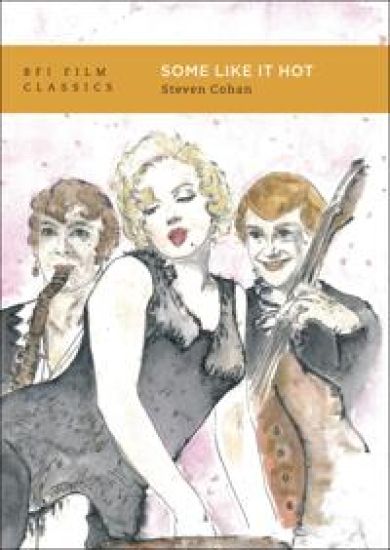
Billy Wilder's classic screwball comedy Some Like it Hot (1959), starring Jack Lemmon, Tony Curtis and Marilyn Monroe, tells the story of two struggling Jazz musicians who accidentally witness a mob massacre in Chicago who then, disguised as women, join a female band to escape the gangsters' pursuit. Despite the film's popular reception, with Academy Award nominations for Wilder and star Jack Lemmon, the film gained notoriety for its crossdressing plot and gender-bending comedy. Steven Cohan's study of the film disentangles its production history and subsequent notoriety from the film itself, reconsidering the ways in which it playfully challenged generic and gender conventions of the 1950s. He provides an in depth analysis of the film's near perfect comedic structure, Wilder's aesthetic choices and self-reflexive star performances by Curtis, Lemmon and Monroe. He goes on to consider the film's queerness, as well as its promotion and reception in 1959. Contextualizing the film within its contemporary moment, he argues its textual richness, one that allows it to be viewed differently across generations, securing its lasting influence in popular culture.