Kirjojen hintavertailu. Mukana 11 244 527 kirjaa ja 12 kauppaa.

Kirjahaku

Etsi kirjoja tekijän nimen, kirjan nimen tai ISBN:n perusteella.

9 kirjaa tekijältä Steven Conn

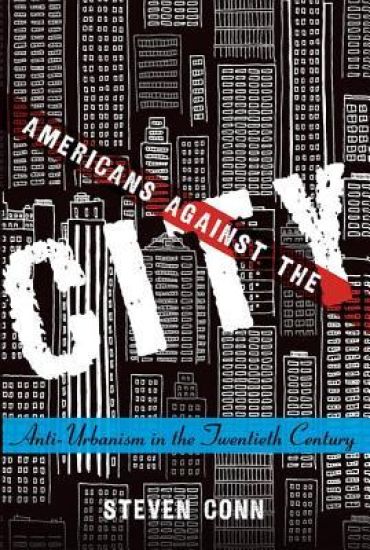
Americans Against the City

Americans Against the City

Steven Conn

Oxford University Press Inc
2016
nidottu
It is a paradox of American life that we are a highly urbanized nation filled with people deeply ambivalent about urban life. An aversion to urban density and all that it contributes to urban life, and a perception that the city was the place where "big government" first took root in America fostered what historian Steven Conn terms the "anti-urban impulse." In response, anti-urbanists called for the decentralization of the city, and rejected the role of government in American life in favor of a return to the pioneer virtues of independence and self-sufficiency. In this provocative and sweeping book, Conn explores the anti-urban impulse across the 20th century, examining how the ideas born of it have shaped both the places in which Americans live and work, and the anti-government politics so strong today. Beginning in the booming industrial cities of the Progressive era at the turn of the 20th century, where debate surrounding these questions first arose, Conn examines the progression of anti-urban movements. : He describes the decentralist movement of the 1930s, the attempt to revive the American small town in the mid-century, the anti-urban basis of urban renewal in the 1950s and '60s, and the Nixon administration's program of building new towns as a response to the urban crisis, illustrating how, by the middle of the 20th century, anti-urbanism was at the center of the politics of the New Right. Concluding with an exploration of the New Urbanist experiments at the turn of the 21st century, Conn demonstrates the full breadth of the anti-urban impulse, from its inception to the present day. Engagingly written, thoroughly researched, and forcefully argued, Americans Against the City is important reading for anyone who cares not just about the history of our cities, but about their future as well.
Museums and American Intellectual Life, 1876-1926

Museums and American Intellectual Life, 1876-1926

Steven Conn

University of Chicago Press
2000
nidottu
During the last half of the 19th century, Americans built many of the country's most celebrated museums, such as the American Museum of Natural History in New York, the Philadelphia Museum of Art, and Chicago's Field Museum. This text argues that Americans built these institutions with the confidence that they could collect, organize, and display the sum of the world's knowledge. Examining various kinds of museums, the author discovers how museums gave definition to different bodies of knowledge and how they presented that knowledge - the world in miniature - to the visiting public. The study includes familiar places like the Metropolitan Museum of Art and the Academy of Natural Sciences, but also draws attention to forgotten ones, like the Philadelphia Commercial Museum, once the repository for objects from many turn-of-the-century world's fairs. What emerges from the analysis is that museums of all kinds shared a belief that knowledge resided in the objects themselves. Using what Steven Conn has termed an "object-based epistemology," museums of the late 19th century were on the cutting edge of American intellectual life. By the first quarter of the 20th century, however, museums had largely been replaced by research-oriented universities as places where new knowledge was produced. According to Conn, not only did this mean a change in the way knowledge was conceived, but also, and perhaps more importantly, who would have access to it.
History's Shadow

History's Shadow

Steven Conn

University of Chicago Press
2006
nidottu
Who were the Native Americans? Where did they come from and how long ago? Did they have a history, and would they have a future? Questions such as these dominated intellectual life in the United States during the nineteenth century. And for many Americans, such questions about the original inhabitants of their homeland inspired a flurry of historical investigation, scientific inquiry, and heated political debate.History's Shadow traces the struggle of Americans trying to understand the people who originally occupied the continent claimed as their own. Steven Conn considers how the question of the Indian compelled Americans to abandon older explanatory frameworks for sovereignty like the Bible and classical literature and instead develop new ones. Through their engagement with Native American language and culture, American intellectuals helped shape and define the emerging fields of archaeology, ethnology, linguistics, and art. But more important, the questions posed by the presence of the Indian in the United States forced Americans to confront the meaning of history itself, both that of Native Americans and their own: how it should be studied, what drove its processes, and where it might ultimately lead. The encounter with Native Americans, Conn argues, helped give rise to a distinctly American historical consciousness.A work of enormous scope and intellect, History's Shadow will speak to anyone interested in Native Americans and their profound influence on our cultural imagination. “History’s Shadow is an intelligent and comprehensive look at the place of Native Americans in Euro-American’s intellectual history. . . . Examining literature, painting, photography, ethnology, and anthropology, Conn mines the written record to discover how non-Native Americans thought about Indians.” —Joy S. Kasson, Los Angeles Times
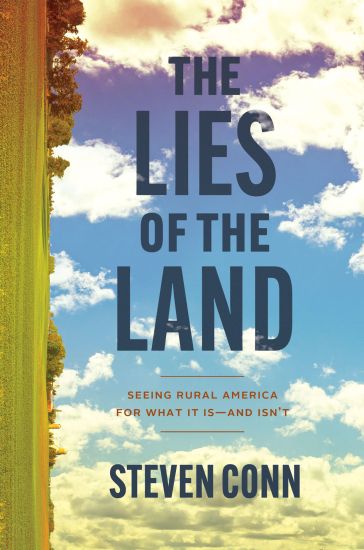
The Lies of the Land

The Lies of the Land

Steven Conn

THE UNIVERSITY OF CHICAGO PRESS
2023
sidottu
A "piercing, unsentimental" (New Yorker) history that boldly challenges the idea of a rural American crisis. It seems everyone has an opinion about rural America. Is it gripped in a tragic decline? Or is it on the cusp of a glorious revival? Is it the key to understanding America today? Steven Conn argues that we’re missing the real question: Is rural America even a thing? No, says Conn, who believes we see only what we want to see in the lands beyond the suburbs—fantasies about moral (or backward) communities, simpler (or repressive) living, and what it means to be authentically (or wrongheadedly) American. If we want to build a better future, Conn argues, we must accept that these visions don’t exist and never did. In The Lies of the Land, Conn shows that rural America—so often characterized as in crisis or in danger of being left behind—has actually been at the center of modern American history, shaped by the same forces as everywhere else in the country: militarization, industrialization, corporatization, and suburbanization. Examining each of these forces in turn, Conn invites us to dispense with the lies and half-truths we’ve believed about rural America and to pursue better solutions to the very real challenges shared all across our nation.
The Lies of the Land

The Lies of the Land

Steven Conn

THE UNIVERSITY OF CHICAGO PRESS
2025
nidottu
A "piercing, unsentimental" (New Yorker) history that boldly challenges the idea of a rural American crisis. It seems everyone has an opinion about rural America. Is it gripped in a tragic decline? Or is it on the cusp of a glorious revival? Is it the key to understanding America today? Steven Conn argues that we’re missing the real question: Is rural America even a thing? No, says Conn, who believes we see only what we want to see in the lands beyond the suburbs—fantasies about moral (or backward) communities, simpler (or repressive) living, and what it means to be authentically (or wrongheadedly) American. If we want to build a better future, Conn argues, we must accept that these visions don’t exist and never did. In The Lies of the Land, Conn shows that rural America—so often characterized as in crisis or in danger of being left behind—has actually been at the center of modern American history, shaped by the same forces as everywhere else in the country: militarization, industrialization, corporatization, and suburbanization. Examining each of these forces in turn, Conn invites us to dispense with the lies and half-truths we’ve believed about rural America and to pursue better solutions to the very real challenges shared all across our nation.
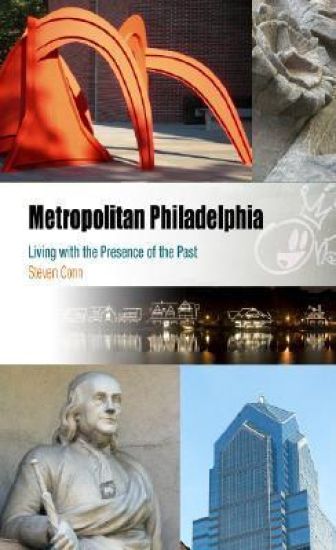
Metropolitan Philadelphia

Metropolitan Philadelphia

Steven Conn

University of Pennsylvania Press
2006
pokkari
As America's fifth largest city and fourth largest metropolitan region, Philadelphia is tied to its surrounding counties and suburban neighborhoods. It is this vital relationship, suggests Steven Conn, that will make or break greater Philadelphia. The Philadelphia region has witnessed virtually every major political, economic, and social transformation of American life. Having once been an industrial giant, the region is now struggling to fashion a new identity in a postindustrial world. On the one hand, Center City has been transformed into a vibrant hub with its array of restaurants, shops, cultural venues, and restored public spaces. On the other, unchecked suburban sprawl has generated concerns over rising energy costs and loss of agriculture and open spaces. In the final analysis, the region will need a dynamic central city for its future, while the city will also need a healthy sustainable region for its long-term viability. Central to the identity of a twenty-first century Metropolitan Philadelphia, Conn argues, is the deep and complicated interplay of past and present. Looking at the region through the wide lens of its culture and history, Metropolitan Philadelphia moves seamlessly between past and present. Displaying a specialist's knowledge of the area as well as a deep personal connection to his subject, Conn examines the shifting meaning of the region's history, the utopian impulse behind its founding, the role of the region in creating the American middle class, the regional watershed, and the way art and cultural institutions have given shape to a resident identity. Impressionistic and beautifully written, Metropolitan Philadelphia will be of great interest to urbanists and at the same time accessible to the wider public intrigued in the rich history and cultural dynamics of this fascinating region. What emerges from the book is a wide-ranging understanding of what it means to say, "I'm from Philadelphia."
Do Museums Still Need Objects?

Do Museums Still Need Objects?

Steven Conn

University of Pennsylvania Press
2010
pokkari
"We live in a museum age," writes Steven Conn in Do Museums Still Need Objects? And indeed, at the turn of the twenty-first century, more people are visiting museums than ever before. There are now over 17,500 accredited museums in the United States, averaging approximately 865 million visits a year, more than two million visits a day. New museums have proliferated across the cultural landscape even as older ones have undergone transformational additions: from the Museum of Modern Art and the Morgan in New York to the High in Atlanta and the Getty in Los Angeles. If the golden age of museum-building came a century ago, when the Metropolitan Museum of Art, the American Museum of Natural History, the Philadelphia Museum of Art, the Field Museum of Natural History, and others were created, then it is fair to say that in the last generation we have witnessed a second golden age. By closely observing the cultural, intellectual, and political roles that museums play in contemporary society, while also delving deeply into their institutional histories, historian Steven Conn demonstrates that museums are no longer seen simply as houses for collections of objects. Conn ranges across a wide variety of museum types-from art and anthropology to science and commercial museums-asking questions about the relationship between museums and knowledge, about the connection between culture and politics, about the role of museums in representing non-Western societies, and about public institutions and the changing nature of their constituencies. Elegantly written and deeply researched, Do Museums Still Need Objects? is essential reading for historians, museum professionals, and those who love to visit museums.
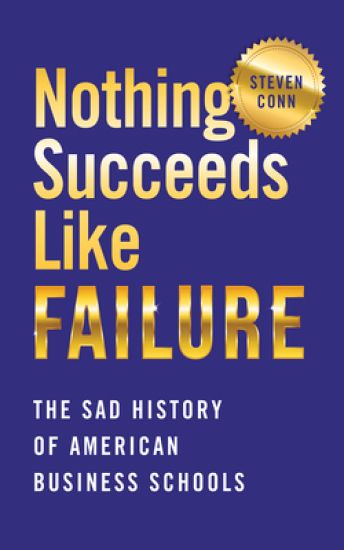
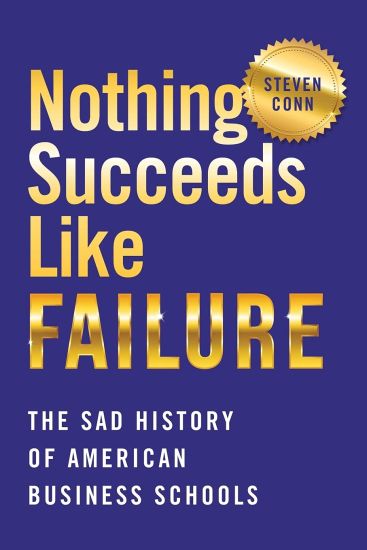
Nothing Succeeds Like Failure

Nothing Succeeds Like Failure

Steven Conn

Cornell University Press
2019
sidottu
Do business schools actually make good on their promises of "innovative," "outside-the-box" thinking to train business leaders who will put society ahead of money-making? Do they help society by making better business leaders? No, they don't, Steven Conn asserts, and what's more they never have. In throwing down a gauntlet on the business of business schools, Conn's Nothing Succeeds Like Failure examines the frictions, conflicts, and contradictions at the heart of these enterprises and details the way business schools have failed to resolve them. Beginning with founding of the Wharton School in 1881, Conn measures these schools' aspirations against their actual accomplishments and tells the full and disappointing history of missed opportunities, unmet aspirations, and educational mistakes. Conn then poses a set of crucial questions about the role and function of American business schools. The results aren't pretty. Posing a set of crucial questions about the function of American business schools, Nothing Succeeds Like Failure is pugnacious and controversial. Deeply researched and fun to read, Nothing Succeeds Like Failure argues that the impressive façades of business school buildings resemble nothing so much as collegiate versions of Oz. Conn pulls back the curtain to reveal a story of failure to meet the expectations of the public, their missions, their graduates, and their own lofty aspirations of producing moral and ethical business leaders.
Nothing Succeeds Like Failure

Nothing Succeeds Like Failure

Steven Conn

Cornell University Press
2021
pokkari
Do business schools actually make good on their promises of "innovative," "outside-the-box" thinking to train business leaders who will put society ahead of money-making? Do they help society by making better business leaders? No, they don't, Steven Conn asserts, and what's more they never have. In throwing down a gauntlet on the business of business schools, Conn's Nothing Succeeds Like Failure examines the frictions, conflicts, and contradictions at the heart of these enterprises and details the way business schools have failed to resolve them. Beginning with founding of the Wharton School in 1881, Conn measures these schools' aspirations against their actual accomplishments and tells the full and disappointing history of missed opportunities, unmet aspirations, and educational mistakes. Conn then poses a set of crucial questions about the role and function of American business schools. The results aren't pretty. Posing a set of crucial questions about the function of American business schools, Nothing Succeeds Like Failure is pugnacious and controversial. Deeply researched and fun to read, Nothing Succeeds Like Failure argues that the impressive façades of business school buildings resemble nothing so much as collegiate versions of Oz. Conn pulls back the curtain to reveal a story of failure to meet the expectations of the public, their missions, their graduates, and their own lofty aspirations of producing moral and ethical business leaders.