Kirjojen hintavertailu. Mukana 11 244 527 kirjaa ja 12 kauppaa.

Kirjahaku

Etsi kirjoja tekijän nimen, kirjan nimen tai ISBN:n perusteella.

10 kirjaa tekijältä Steven E. Aschheim

Scholem, Arendt, Klemperer

Scholem, Arendt, Klemperer

Steven E. Aschheim

Indiana University Press
2001
sidottu
Scholem, Arendt, Klemperer Intimate Chronicles in Turbulent Times Steven E. Aschheim The way three prominent German-Jewish intellectuals confronted Nazism, as revealed by their intimate writings. Through an examination of the remarkable diaries and letters of three extraordinary and distinctive German-Jewish thinkers—Gershom Scholem, Hannah Arendt, and Victor Klemperer—Steven E. Aschheim illuminates what these intimate writings reveal about their evolving identities and world views as they wrestled with the meaning of being both German and Jewish in Hitler's Third Reich. In recounting how their personal and private selves responded to the public experiences these writers faced, their letters and diaries provide a striking composite portrait. Scholem, a scholar of Jewish mysticism and the spiritual traditions of Judaism; Arendt, a political and social philosopher; and Klemperer, a professor of literature and philology, were all highly articulate German-Jewish intellectuals, shrewd observers, and acute analysts of the pathologies and special contours of their times. From their intimate writings Aschheim constructs a revealing "history from within" that sheds new light on the complexity and drama of the 20th-century European and Jewish experience. Steven E. Aschheim holds the Vigevani Chair of European Studies and teaches in the Department of History at the Hebrew University, Jerusalem. He is author of Brothers and Strangers: The East European Jew in German and German-Jewish Consciousness, 1800–1923; The Nietzsche Legacy in Germany, 1890–1990; and Culture and Catastrophe: German and Jewish Confrontations with National Socialism and Other Crises. Published in association with Hebrew Union College–Jewish Institute of Religion, Cincinnati May 2001 120 pages, 5 1/2 x 8 1/2, index cloth0-253-33891-3$19.95 s / £15.50

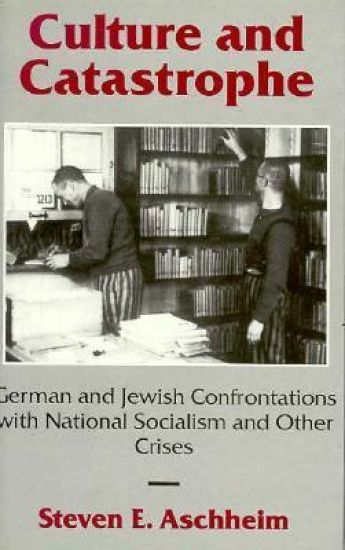
Culture and Catastrophe

Culture and Catastrophe

Steven E. Aschheim

Palgrave Macmillan
1995
nidottu
This book revolves around the intricate interplay between culture and catastrophe. It seeks to engage the various permutations, the complexity and the unresolved dimensions of this connection, especially as it relates to the origins, disposition and aftermath of National Socialism. It examines various German and Jewish responses to Nazism and its roots, and demonstrates the ongoing relevance of that experience to contemporary culture and collective and individual self-definitions.
The Nietzsche Legacy in Germany

The Nietzsche Legacy in Germany

Steven E. Aschheim

University of California Press
1994
pokkari
Countless attempts have been made to appropriate the ideas of Friedrich Nietzsche for diverse cultural and political ends, but nowhere have these efforts been more sustained and of greater consequence than in Germany. Aschheim offers a magisterial chronicle of the philosopher's presence in German life and politics.
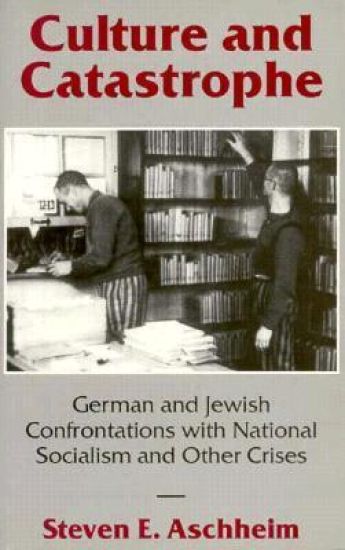
Culture and Catastrophe

Culture and Catastrophe

Steven E. Aschheim

New York University Press
1996
sidottu
Our understandings of culture and of the catastrophe unleashed by National Socialism have always been regarded as interrelated. For all its brutality, Nazism always spoke in the name of the great German tradition, often using such high culture to justify atrocities committed. Were not such actions necessary for the defense of classical cultural values and ideal images against the polluted, degenerate groups who sought to sully and defile them? Ironically, some of National Socialism's victims confronted and interpreted their experiences precisely through this prism of culture and catastrophe. Many of these victims had traditionally regarded Germany as a major civilizing force. In fact, from the late eighteenth century on, German Jews had constructed themselves in German culture's image. Many of the German-speaking Jewish intellectuals who became victims of National Socialism had been raised and completely absorbed in the German humanistic tradition. Steven E.Aschheim here engages the multiple aspects of German and German-Jewish cultural history which touch upon the intricate interplay between culture and catastrophe, providing insights into the relationship between German culture and the origins, dispositions, and aftermath of National Socialism. He analyzes the designation of Nazism as part of the West's cultural code representing an absolute standard of evil, and sheds light on the problematics of current German, Jewish, and Israeli inscriptions of Nazism and its atrocities.
Culture and Catastrophe

Culture and Catastrophe

Steven E. Aschheim

New York University Press
1997
pokkari
Our understandings of culture and of the catastrophe unleashed by National Socialism have always been regarded as interrelated. For all its brutality, Nazism always spoke in the name of the great German tradition, often using such high culture to justify atrocities committed. Were not such actions necessary for the defense of classical cultural values and ideal images against the polluted, degenerate groups who sought to sully and defile them? Ironically, some of National Socialism's victims confronted and interpreted their experiences precisely through this prism of culture and catastrophe. Many of these victims had traditionally regarded Germany as a major civilizing force. In fact, from the late eighteenth century on, German Jews had constructed themselves in German culture's image. Many of the German-speaking Jewish intellectuals who became victims of National Socialism had been raised and completely absorbed in the German humanistic tradition. Steven E.Aschheim here engages the multiple aspects of German and German-Jewish cultural history which touch upon the intricate interplay between culture and catastrophe, providing insights into the relationship between German culture and the origins, dispositions, and aftermath of National Socialism. He analyzes the designation of Nazism as part of the West's cultural code representing an absolute standard of evil, and sheds light on the problematics of current German, Jewish, and Israeli inscriptions of Nazism and its atrocities.
Fragile Spaces

Fragile Spaces

Steven E. Aschheim

De Gruyter
2018
sidottu
This book consists of a range of essays covering the complex crises, tensions and dilemmas but also the positive potential in the meeting of Jews with Western culture. In numerous contexts and through the work of fascinating individuals and thinkers, the work examines some of the consequences of political, cultural and personal rupture, as well as the manifold ways in which various Jewish intellectuals, politicians (and occasionally spies!) sought to respond to these ruptures and carve out new, sometimes profound, sometimes fanciful, options of thought and action. It also delves critically into the attacks on liberal and Enlightenment humanism. In almost all the essays the fragility of things is palpably present and the book touches on some of the ironies, problematics and functions of responses to that condition. The work mirrors the author's ongoing fascination with the always fraught, fragile and creatively fecund confrontation of Jews (and others) with European modernity, its history, politics, culture and self-definition. In a time of increasing anxiety and feelings of fragility, this work may be helpful in understanding how people at an earlier (and sometimes contemporary) period sought to come to terms with a similar predicament.
Fragile Spaces

Fragile Spaces

Steven E. Aschheim

De Gruyter
2020
isokokoinen pokkari
This book consists of a range of essays covering the complex crises, tensions and dilemmas but also the positive potential in the meeting of Jews with Western culture. In numerous contexts and through the work of fascinating individuals and thinkers, the work examines some of the consequences of political, cultural and personal rupture, as well as the manifold ways in which various Jewish intellectuals, politicians (and occasionally spies!) sought to respond to these ruptures and carve out new, sometimes profound, sometimes fanciful, options of thought and action. It also delves critically into the attacks on liberal and Enlightenment humanism. In almost all the essays the fragility of things is palpably present and the book touches on some of the ironies, problematics and functions of responses to that condition. The work mirrors the author's ongoing fascination with the always fraught, fragile and creatively fecund confrontation of Jews (and others) with European modernity, its history, politics, culture and self-definition. In a time of increasing anxiety and feelings of fragility, this work may be helpful in understanding how people at an earlier (and sometimes contemporary) period sought to come to terms with a similar predicament.