Kirjojen hintavertailu. Mukana 12 016 292 kirjaa ja 12 kauppaa.

Kirjahaku

Etsi kirjoja tekijän nimen, kirjan nimen tai ISBN:n perusteella.

12 kirjaa tekijältä Steven E. Jones

The Emergence of the Digital Humanities
The past decade has seen a profound shift in our collective understanding of the digital network. What was once understood to be a transcendent virtual reality is now experienced as a ubiquitous grid of data that we move through and interact with every day, raising new questions about the social, locative, embodied, and object-oriented nature of our experience in the networked world. In The Emergence of the Digital Humanities, Steven E. Jones examines this shift in our relationship to digital technology and the ways that it has affected humanities scholarship and the academy more broadly. Based on the premise that the network is now everywhere rather than merely "out there," Jones links together seemingly disparate cultural events—the essential features of popular social media, the rise of motion-control gaming and mobile platforms, the controversy over the "gamification" of everyday life, the spatial turn, fabrication and 3D printing, and electronic publishing—and argues that cultural responses to changes in technology provide an essential context for understanding the emergence of the digital humanities as a new field of study in this millennium.The Open Access version of this book, available at https://doi.org/10.4324/9780203093085, has been made available under a Creative Commons Attribution-Non Commercial-No Derivatives 4.0 license.

The Emergence of the Digital Humanities
The past decade has seen a profound shift in our collective understanding of the digital network. What was once understood to be a transcendent virtual reality is now experienced as a ubiquitous grid of data that we move through and interact with every day, raising new questions about the social, locative, embodied, and object-oriented nature of our experience in the networked world. In The Emergence of the Digital Humanities, Steven E. Jones examines this shift in our relationship to digital technology and the ways that it has affected humanities scholarship and the academy more broadly. Based on the premise that the network is now everywhere rather than merely "out there," Jones links together seemingly disparate cultural events—the essential features of popular social media, the rise of motion-control gaming and mobile platforms, the controversy over the "gamification" of everyday life, the spatial turn, fabrication and 3D printing, and electronic publishing—and argues that cultural responses to changes in technology provide an essential context for understanding the emergence of the digital humanities as a new field of study in this millennium.The Open Access version of this book, available at https://doi.org/10.4324/9780203093085, has been made available under a Creative Commons Attribution-Non Commercial-No Derivatives 4.0 license.

The Meaning of Video Games

The Meaning of Video Games

Steven E. Jones

Routledge
2008
sidottu
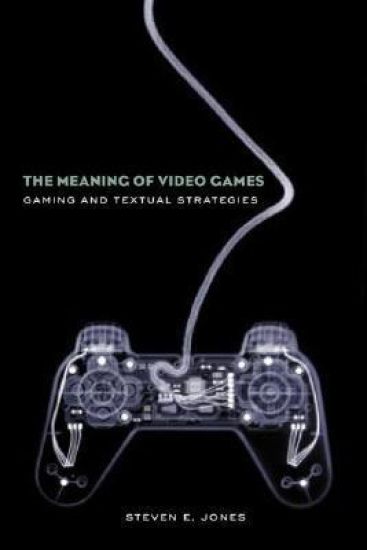
The Meaning of Video Games takes a textual studies approach to an increasingly important form of expression in today’s culture. It begins by assuming that video games are meaningful–not just as sociological or economic or cultural evidence, but in their own right, as cultural expressions worthy of scholarly attention. In this way, this book makes a contribution to the study of video games, but it also aims to enrich textual studies.Early video game studies scholars were quick to point out that a game should never be reduced to merely its "story" or narrative content and they rightly insist on the importance of studying games as games. But here Steven E. Jones demonstrates that textual studies–which grows historically out of ancient questions of textual recension, multiple versions, production, reproduction, and reception–can fruitfully be applied to the study of video games. Citing specific examples such as Myst and Lost, Katamari Damacy, Halo, Façade, Nintendo’s Wii, and Will Wright’s Spore, the book explores the ways in which textual studies concepts–authorial intention, textual variability and performance, the paratext, publishing history and the social text–can shed light on video games as more than formal systems. It treats video games as cultural forms of expression that are received as they are played, out in the world, where their meanings get made.
The Meaning of Video Games

The Meaning of Video Games

Steven E. Jones

Routledge
2008
nidottu
The Meaning of Video Games takes a textual studies approach to an increasingly important form of expression in today’s culture. It begins by assuming that video games are meaningful–not just as sociological or economic or cultural evidence, but in their own right, as cultural expressions worthy of scholarly attention. In this way, this book makes a contribution to the study of video games, but it also aims to enrich textual studies.Early video game studies scholars were quick to point out that a game should never be reduced to merely its "story" or narrative content and they rightly insist on the importance of studying games as games. But here Steven E. Jones demonstrates that textual studies–which grows historically out of ancient questions of textual recension, multiple versions, production, reproduction, and reception–can fruitfully be applied to the study of video games. Citing specific examples such as Myst and Lost, Katamari Damacy, Halo, Façade, Nintendo’s Wii, and Will Wright’s Spore, the book explores the ways in which textual studies concepts–authorial intention, textual variability and performance, the paratext, publishing history and the social text–can shed light on video games as more than formal systems. It treats video games as cultural forms of expression that are received as they are played, out in the world, where their meanings get made.
Against Technology

Against Technology

Steven E. Jones

Routledge
2006
sidottu
This book addresses the question of what it might mean today to be a Luddite--that is, to take a stand against technology. Steven Jones here explains the history of the Luddites, British textile works who, from around 1811, proclaimed themselves followers of "Ned Ludd" and smashed machinery they saw as threatening their trade. Against Technology is not a history of the Luddites, but a history of an idea: how the activities of a group of British workers in Yorkshire and Nottinghamshire came to stand for a global anti-technology philosophy, and how an anonymous collective movement came to be identified with an individualistic personal conviction. Angry textile workers in the early nineteenth century became romantic symbols of a desire for a simple life--certainly not the original goal of the actions for which they became famous. Against Technology is, in other words, a book about representations, about the image and the myth of the Luddites and how that myth was transformed over time into modern neo-Luddism.
Against Technology

Against Technology

Steven E. Jones

Routledge
2006
nidottu
This book addresses the question of what it might mean today to be a Luddite--that is, to take a stand against technology. Steven Jones here explains the history of the Luddites, British textile works who, from around 1811, proclaimed themselves followers of "Ned Ludd" and smashed machinery they saw as threatening their trade. Against Technology is not a history of the Luddites, but a history of an idea: how the activities of a group of British workers in Yorkshire and Nottinghamshire came to stand for a global anti-technology philosophy, and how an anonymous collective movement came to be identified with an individualistic personal conviction. Angry textile workers in the early nineteenth century became romantic symbols of a desire for a simple life--certainly not the original goal of the actions for which they became famous. Against Technology is, in other words, a book about representations, about the image and the myth of the Luddites and how that myth was transformed over time into modern neo-Luddism.
Roberto Busa, S. J., and the Emergence of Humanities Computing
It’s the founding myth of humanities computing and digital humanities: In 1949, the Italian Jesuit scholar, Roberto Busa, S.J., persuaded IBM to offer technical and financial support for the mechanized creation of a massive lemmatized concordance to the works of St. Thomas Aquinas. Using Busa’s own papers, recently accessioned in Milan, as well as IBM archives and other sources, Jones illuminates this DH origin story. He examines relationships between the layers of hardware, software, human agents, culture, and history, and answers the question of how specific technologies afford and even constrain cultural practices, including in this case the academic research agendas of humanities computing and, later, digital humanities.
Roberto Busa, S. J., and the Emergence of Humanities Computing
It’s the founding myth of humanities computing and digital humanities: In 1949, the Italian Jesuit scholar, Roberto Busa, S.J., persuaded IBM to offer technical and financial support for the mechanized creation of a massive lemmatized concordance to the works of St. Thomas Aquinas. Using Busa’s own papers, recently accessioned in Milan, as well as IBM archives and other sources, Jones illuminates this DH origin story. He examines relationships between the layers of hardware, software, human agents, culture, and history, and answers the question of how specific technologies afford and even constrain cultural practices, including in this case the academic research agendas of humanities computing and, later, digital humanities.
Cell Tower

Cell Tower

Steven E. Jones

Bloomsbury Academic USA
2020
nidottu
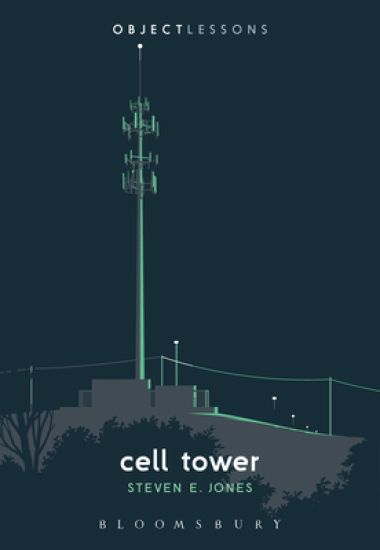
Object Lessons is a series of short, beautifully designed books about the hidden lives of ordinary things. Cropping up everywhere, whether steel latticework or tapered monopoles, encrusted with fiberglass antennas, cell towers raise up high into the air the communications equipment that channels our calls, texts, and downloads. For security reasons, their locations are never advertised. But it’s our romantic notions of connectivity that hide them in plain sight. We want the network to be invisible, ethereal, and ubiquitous. The cell tower stands as a challenge to these desires. Object Lessons is published in partnership with an essay series in The Atlantic.
The Hidden Buffalo

The Hidden Buffalo

Steven E. Jones

Createspace Independent Publishing Platform
2018
nidottu
Brandon lives with his Grandpa in a cozy house, in a friendly neighborhood. HIs large bedroom is filled with fun things like toys and stuffed animals. But lately Brandon has been afraid, especially at night. When it's time for bed, he keeps the light on in his room and cannot sleep. His Grandpa is worried and wonders what is making Brandon so fearful. Can Grandpa find a way to help Brandon overcome his fear?Author and illustrator Steve Jones addresses children's basic fears with insight and sensitivity. As one of six siblings, he has drawn on his own childhood experience, his years of teaching in the New York City school system and a lifetime dedication to illustrative art.Steve Jones' extraordinary illustrations perfectly enhance his story, creating an evocative book, especially suited for elementary school grades. The Hidden Buffalo(c) engages and amuses, as it allows children to reflect upon and explore their own fears and solutions.
Everything Is Everything

Everything Is Everything

Steven E. Jones

STANFORD UNIVERSITY PRESS
2026
sidottu
Pop art. Plastic go-go boots. Diversifying radio formats, including the emergence of "underground" FM. Electric guitars and other instruments, distortion pedals, synthesizers, and tape effects. Mind-altering drugs. Immersive lightshows and high-volume performances. The multiplication of musical genres. A transformation in pop music came to a head during the pivotal year 1966. So did the fervent pursuit of authentic expression. Indeed, the idea of authenticity mattered more than ever in the year dominated by Batman, Andy Warhol, and The Monkees. In this energetic work of music history and criticism, Steven E. Jones examines a diverse group of albums released in 1966 from the influential Black producer, Tom Wilson, by artists from the Blues Project to Sun Ra, the Velvet Underground to Frank Zappa, Hugh Masekela to The Animals. Wilson's genre eclecticism was a response to the times, as was his engagement with the music industry as a whole and with the low and the high in pop culture. It was all part of making pop music in what he called "an era of complex mixed media," and what he meant by his often-repeated catchphrase, "everything is everything."
Everything Is Everything

Everything Is Everything

Steven E. Jones

STANFORD UNIVERSITY PRESS
2026
pokkari
Pop art. Plastic go-go boots. Diversifying radio formats, including the emergence of "underground" FM. Electric guitars and other instruments, distortion pedals, synthesizers, and tape effects. Mind-altering drugs. Immersive lightshows and high-volume performances. The multiplication of musical genres. A transformation in pop music came to a head during the pivotal year 1966. So did the fervent pursuit of authentic expression. Indeed, the idea of authenticity mattered more than ever in the year dominated by Batman, Andy Warhol, and The Monkees. In this energetic work of music history and criticism, Steven E. Jones examines a diverse group of albums released in 1966 from the influential Black producer, Tom Wilson, by artists from the Blues Project to Sun Ra, the Velvet Underground to Frank Zappa, Hugh Masekela to The Animals. Wilson's genre eclecticism was a response to the times, as was his engagement with the music industry as a whole and with the low and the high in pop culture. It was all part of making pop music in what he called "an era of complex mixed media," and what he meant by his often-repeated catchphrase, "everything is everything."