Kirjojen hintavertailu. Mukana 11 244 527 kirjaa ja 12 kauppaa.

Kirjahaku

Etsi kirjoja tekijän nimen, kirjan nimen tai ISBN:n perusteella.

5 kirjaa tekijältä Steven Grosby

Nationalism

Nationalism

Steven Grosby

Oxford University Press
2005
nidottu
This book examines the political and moral challenges that face the vast majority of human beings who consider themselves to be members of various nations. It explores nationality through the difficulties and conflicts that have arisen throughout history, and discusses nations and nationalism from social, philosophical, and anthropological perspectives. In this fascinating Very Short Introduction, Steven Grosby looks at the nation in history, the territorial element in nationality, and the complex ways nationality has co-existed with religion, and shows how closely linked the concept of nationalism is with being human. ABOUT THE SERIES: The Very Short Introductions series from Oxford University Press contains hundreds of titles in almost every subject area. These pocket-sized books are the perfect way to get ahead in a new subject quickly. Our expert authors combine facts, analysis, perspective, new ideas, and enthusiasm to make interesting and challenging topics highly readable.
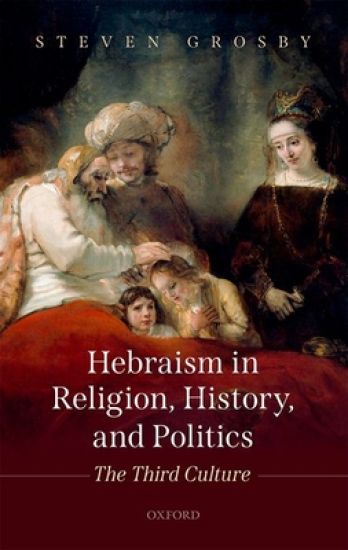
Hebraism in Religion, History, and Politics

Hebraism in Religion, History, and Politics

Steven Grosby

Oxford University Press
2021
sidottu
Hebraism in Religion, History, and Politics is an investigation into Hebraism as a category of cultural analysis within the history of Christendom. Its aim is to determine what Hebraism means or should mean when it is used. The characteristics of Hebraism indicate a changing relation between the Old and New Testaments that arose in Medieval and early modern Europe, between on the one hand a doctrinally universal Christianity, and on the other various Christian nations that were understood as being a 'new Israel'. Thus, Hebraism refers to the development of a paradoxically intriguing 'Jewish Christianity' or an 'Old Testament Christianity'. It represents a 'third culture' in contrast to the culture of Roman or Hellenistic empire and Christian universalism. There were attempts, with varying success, during the twentieth century to clarify Hebraism as a category of cultural history and religious history. Steven Grosby expertly contributes to that clarification. In so doing, the possibility arises that Hebraism and Hebraic culture offer a different way to look at religion, its history, and the history of the West.
Nations and Nationalism in World History
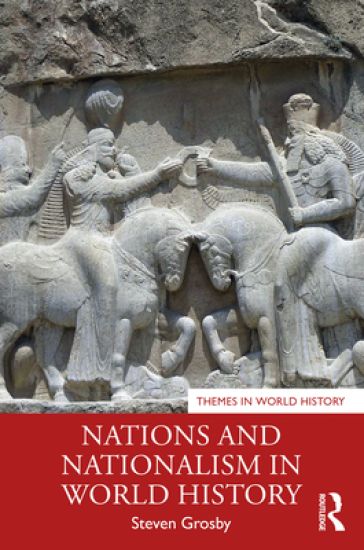
Nations and Nationalism in World History challenges the commonly accepted understanding of nations as being exclusively modern and European in origin by drawing attention to evidence that indicates that nations are found in antiquity and the Middle Ages, and throughout the world.Locating the concept of nations at all periods of history and around the world, Steven Grosby discusses a diverse array of manifestations of nations throughout history, drawing upon its complex intersections with religion, ethnicity, law, politics, and warfare. Among the societies discussed throughout the text are ancient Israel, Sasanian Iran, medieval Sri Lanka, Korea, Vietnam, and Scotland. Grosby analyzes how the category nation can be used for historical comparison, indicating both the ways ancient and medieval nations differ from modern nations, and the different relations over time between nation and civilization. This analysis leads students to re-examine the assumptions of the historical periodization of antiquity, the Middle Ages, and modern times. It further distinguishes nation and the patriotic attachment to it from the uncivil ideology of nationalism.This book will benefit students in world history and political science courses, as well as ethnic studies or peace and conflict studies courses that wish to provide some historical context.
Nations and Nationalism in World History
Nations and Nationalism in World History challenges the commonly accepted understanding of nations as being exclusively modern and European in origin by drawing attention to evidence that indicates that nations are found in antiquity and the Middle Ages, and throughout the world.Locating the concept of nations at all periods of history and around the world, Steven Grosby discusses a diverse array of manifestations of nations throughout history, drawing upon its complex intersections with religion, ethnicity, law, politics, and warfare. Among the societies discussed throughout the text are ancient Israel, Sasanian Iran, medieval Sri Lanka, Korea, Vietnam, and Scotland. Grosby analyzes how the category nation can be used for historical comparison, indicating both the ways ancient and medieval nations differ from modern nations, and the different relations over time between nation and civilization. This analysis leads students to re-examine the assumptions of the historical periodization of antiquity, the Middle Ages, and modern times. It further distinguishes nation and the patriotic attachment to it from the uncivil ideology of nationalism.This book will benefit students in world history and political science courses, as well as ethnic studies or peace and conflict studies courses that wish to provide some historical context.
Biblical Ideas of Nationality, Ancient and Modern
In this collection of essays, drawn from more than a decade of study and publication, Steven Grosby investigates ancient texts (biblical and other) from within a methodology that is founded on philosophical anthropology. His goal is to examine the ways in which the ancients defined themselves, particularly in terms of kinship, territoriality, and boundaries, and how these relate to concepts of nationality. Grosby denies that modern historicists have it right when they claim that only imprecise frontiers existed in antiquity, or that nationality is a primarily modern concept. Instead, despite differences between our times and ancient times, he believes that significant similarities permit the application of anthropological theory to the study of the self-perception of ancient peoples. In this respect, his researches break new ground. But Grosby is not content with an analysis of the past. He goes on to draw implications from it with regard to modern issues related to nationalism. Thus, he writes, “Moreover, if we learn anything from the experience of the bellicose twentieth century, it is that we, in fact, live primarily in monolatrous societies; that modern man attributes a common kinship to those who, like himself, are born in the territory in which he was born and inhabits—to those who are “native in the land” . . . and that the god of the land and lineage, and its representatives in the “center,” continue to receive our deference, albeit in an age of monotheism, reformulated as patriotism or, when taken to ideological extremes, nationalism.’” (from the introduction) Grosby’s forays into the application of anthropology and sociology to this area of study will be recognized as pioneering and provocative, and as pointing the way to further research on the idea of nationality in ancient times.