Kirjojen hintavertailu. Mukana 11 342 296 kirjaa ja 12 kauppaa.

Kirjahaku

Etsi kirjoja tekijän nimen, kirjan nimen tai ISBN:n perusteella.

9 kirjaa tekijältä Steven Hahn

A Nation Without Borders

A Nation Without Borders

Steven Hahn

Penguin USA
2017
nidottu
A Pulitzer Prize-winning historian's "breathtakingly original" (Junot Diaz) reinterpretation of the eight decades surrounding the Civil War. "Capatious and] buzzing with ideas." --The Boston Globe Volume 3 in the Penguin History of the United States, edited by Eric Foner In this ambitious story of American imperial conquest and capitalist development, Pulitzer Prize-winning historian Steven Hahn takes on the conventional histories of the nineteenth century and offers a perspective that promises to be as enduring as it is controversial. It begins and ends in Mexico and, throughout, is internationalist in orientation. It challenges the political narrative of "sectionalism," emphasizing the national footing of slavery and the struggle between the northeast and Mississippi Valley for continental supremacy. It places the Civil War in the context of many domestic rebellions against state authority, including those of Native Americans. It fully incorporates the trans-Mississippi west, suggesting the importance of the Pacific to the imperial vision of political leaders and of the west as a proving ground for later imperial projects overseas. It reconfigures the history of capitalism, insisting on the centrality of state formation and slave emancipation to its consolidation. And it identifies a sweeping era of "reconstructions" in the late-nineteenth and early twentieth centuries that simultaneously laid the foundations for corporate liberalism and social democracy. The era from 1830 to 1910 witnessed massive transformations in how people lived, worked, thought about themselves, and struggled to thrive. It also witnessed the birth of economic and political institutions that still shape our world. From an agricultural society with a weak central government, the United States became an urban and industrial society in which government assumed a greater and greater role in the framing of social and economic life. As the book ends, the United States, now a global economic and political power, encounters massive warfare between imperial powers in Europe and a massive revolution on its southern border―the remarkable Mexican Revolution―which together brought the nineteenth century to a close while marking the important themes of the twentieth.
The Roots of Southern Populism

The Roots of Southern Populism

Steven Hahn

Oxford University Press Inc
2006
nidottu
Despite the vast changes in plantation agriculture following the Civil War and Reconstruction, the lot of small farmers was little improved. Examining the nonplantation region of upcountry Georgia as a microcosm of the South, Steven Hahn showed how farmers were buffeted by such forces as the unravelling of antebellum household economy, the development of market forces, the growth of a new class of merchants-landlords, and rising tensions between town and countryside--and how their resentments fueld the Populist movement at the end of the 19th century. For this updated edition, Hahn will add new material to discuss how the book has stood up since it was published over twenty years ago, how the arguments and questions were received, and what influence they may have had on scholarship. He will also consider what has happened to historical interest in Populism, poor white people and populist politics, as well as why he thinks it likely that interest may revive and what sort of questions and arguments may drive it.
Forging America: Volume One to 1877

Forging America: Volume One to 1877

Steven Hahn

OXFORD UNIVERSITY PRESS INC
2024
nidottu
Forging America speaks to both the complexities of historical experience and the meanings of the past for our present-day lives. Warning against the assumption of pre-ordained outcomes, Pulitzer-Prize winning historian Steve Hahn focuses the reader's attention on those moments when historical change occurs. He weaves a history that is continental and transnational, a history of the many peoples whose experiences and aspirations-oftentimes involving struggle and conflict-went into the forging of a nation.
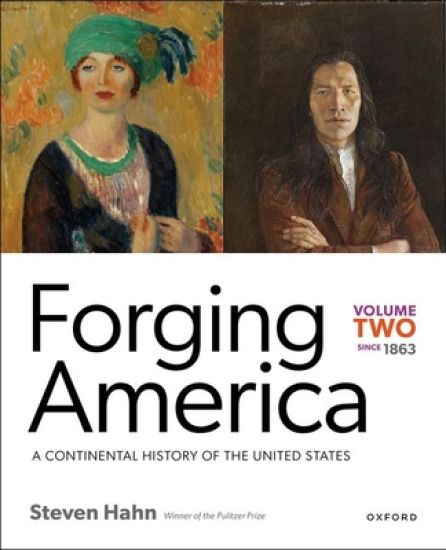
Forging America: Volume Two since 1863

Forging America: Volume Two since 1863

Steven Hahn

OXFORD UNIVERSITY PRESS INC
2024
nidottu
Forging America speaks to both the complexities of historical experience and the meanings of the past for our present-day lives. Warning against the assumption of pre-ordained outcomes, Pulitzer-Prize winning historian Steve Hahn focuses the reader's attention on those moments when historical change occurs. He weaves a history that is continental and transnational, a history of the many peoples whose experiences and aspirations-oftentimes involving struggle and conflict-went into the forging of a nation.
Sources for Forging America Volume One

Sources for Forging America Volume One

Steven Hahn

OXFORD UNIVERSITY PRESS INC
2023
nidottu
Designed to accompany Forging America by Steven Hahn, this sourcebook provides a diverse set of documents that situates U.S. History within a continental framework. Covering political, social, and cultural history, the nearly 100 selections--including thirty-three visual documents--are intended to spark discussion in the classroom and give students a deeper understanding of America's history. A general introduction on how to read primary sources provides students with guidance for working with documents. Headnotes and reading questions provide context and thinking prompts.
Illiberal America: A History

Illiberal America: A History

Steven Hahn

W. W. Norton Company
2024
sidottu
A storm of illiberalism, building in the United States for years, unleashed its destructive force in the Capitol insurrection of January 6, 2021. The attack on American democracy and images of mob violence led many to recoil, thinking "That's not us." But now we must think again, for Steven Hahn shows in his startling new history that illiberalism has deep roots in our past. To those who believe that the ideals announced in the Declaration of Independence set us apart as a nation, Hahn shows that Americans have long been animated by competing values, equally deep-seated, in which the illiberal will of the community overrides individual rights, and often protects itself by excluding perceived threats, whether on grounds of race, religion, gender, economic status, or ideology.Driven by popular movements and implemented through courts and legislation, illiberalism is part of the American bedrock. The United States was born a republic of loosely connected states and localities that demanded control of their domestic institutions, including slavery. As white settlement expanded west and immigration exploded in eastern cities, the democracy of the 1830s fueled expulsions of Blacks, Native Americans, Catholics, Mormons, and abolitionists. After the Civil War, southern states denied new constitutional guarantees of civil rights and enforced racial exclusions in everyday life. Illiberalism was modernized during the Progressive movement through advocates of eugenics who aimed to reduce the numbers of racial and ethnic minorities as well as the poor. The turmoil of the 1960s enabled George Wallace to tap local fears of unrest and build support outside the South, a politics adopted by Richard Nixon in 1968. Today, with illiberalism shaping elections and policy debates over guns, education, and abortion, it is urgent to understand its long history, and how that history bears on the present crisis.
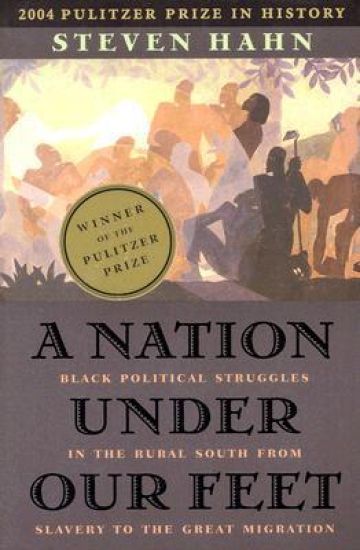
A Nation under Our Feet

A Nation under Our Feet

Steven Hahn

The Belknap Press
2005
nidottu
This is the epic story of how African-Americans, in the six decades following slavery, transformed themselves into a political people—an embryonic black nation. As Steven Hahn demonstrates, rural African-Americans were central political actors in the great events of disunion, emancipation, and nation-building. At the same time, Hahn asks us to think in more expansive ways about the nature and boundaries of politics and political practice.Emphasizing the importance of kinship, labor, and networks of communication, A Nation under Our Feet explores the political relations and sensibilities that developed under slavery and shows how they set the stage for grassroots mobilization. Hahn introduces us to local leaders, and shows how political communities were built, defended, and rebuilt. He also identifies the quest for self-governance as an essential goal of black politics across the rural South, from contests for local power during Reconstruction, to emigrationism, biracial electoral alliances, social separatism, and, eventually, migration.Hahn suggests that Garveyism and other popular forms of black nationalism absorbed and elaborated these earlier struggles, thus linking the first generation of migrants to the urban North with those who remained in the South. He offers a new framework—looking out from slavery—to understand twentieth-century forms of black political consciousness as well as emerging battles for civil rights. It is a powerful story, told here for the first time, and one that presents both an inspiring and a troubling perspective on American democracy.
The Political Worlds of Slavery and Freedom

The Political Worlds of Slavery and Freedom

Steven Hahn

Harvard University Press
2009
sidottu
Pulitzer Prize–winner Steven Hahn’s provocative new book challenges deep-rooted views in the writing of American and African-American history. Moving from slave emancipations of the eighteenth century through slave activity during the Civil War and on to the black power movements of the twentieth century, he asks us to rethink African-American history and politics in bolder, more dynamic terms.Historians have offered important new perspectives and evidence concerning the geographical expanse of slavery in the United States and the protracted process of abolishing it. They have also uncovered a wealth of new material on the political currents running through black communities from enslavement to the present day. Yet their scholarship has failed to dislodge familiar interpretive frameworks that may no longer make much sense of the past.Based on the Nathan I. Huggins Lectures at Harvard University, The Political Worlds of Slavery and Freedom asks why this may be so and offers sweeping reassessments. It defines new chronological and spatial boundaries for American and African-American politics during the first half of the nineteenth century. It suggests, with historical comparisons, that we may have missed a massive slave rebellion during the Civil War. And it takes a serious look at the development and appeal of Garveyism and the hidden history of black politics it may help to reveal. Throughout, it presents African Americans as central actors in the arenas of American politics, while emphasizing traditions of self-determination, self-governance, and self-defense among them.
Illiberal America: A History

Illiberal America: A History

Steven Hahn

W. W. Norton Company
2025
nidottu
A storm of illiberalism, building in the United States for years, unleashed its destructive force in the Capitol insurrection of January 6, 2021. The attack on American democracy and images of mob violence led many to recoil, thinking "That's not us." But now we must think again, for Steven Hahn shows in his startling new history that illiberalism has deep roots in our past. To those who believe that the ideals announced in the Declaration of Independence set us apart as a nation, Hahn shows that Americans have long been animated by competing values, equally deep-seated, in which the illiberal will of the community overrides individual rights, and often protects itself by excluding perceived threats, whether on grounds of race, religion, gender, economic status, or ideology.Driven by popular movements and implemented through courts and legislation, illiberalism is part of the American bedrock. The United States was born a republic of loosely connected states and localities that demanded control of their domestic institutions, including slavery. As white settlement expanded west and immigration exploded in eastern cities, the democracy of the 1830s fueled expulsions of Blacks, Native Americans, Catholics, Mormons, and abolitionists. After the Civil War, southern states denied new constitutional guarantees of civil rights and enforced racial exclusions in everyday life. Illiberalism was modernized during the Progressive movement through advocates of eugenics who aimed to reduce the numbers of racial and ethnic minorities as well as the poor. The turmoil of the 1960s enabled George Wallace to tap local fears of unrest and build support outside the South, a politics adopted by Richard Nixon in 1968. Today, with illiberalism shaping elections and policy debates over guns, education, and abortion, it is urgent to understand its long history, and how that history bears on the present crisis.