Kirjojen hintavertailu. Mukana 11 244 527 kirjaa ja 12 kauppaa.

Kirjahaku

Etsi kirjoja tekijän nimen, kirjan nimen tai ISBN:n perusteella.

26 kirjaa tekijältä Steven Heine

From Chinese Chan to Japanese Zen

From Chinese Chan to Japanese Zen

Steven Heine

Oxford University Press Inc
2017
sidottu
This work provides a survey and critical investigation of the remarkable century that lasted from 1225 to 1325, during which the transformation of the Chinese Chan school of Buddhism into the Japanese Zen sect was successfully completed. The cycle of transfer began with a handful of Japanese pilgrims, including Eisai, Dogen and Enni, who traveled to China in order to discover authentic Buddhism. They quickly learned that Chan, with the strong support of the secular elite, was well organized in terms of the intricate teaching techniques of various temple lineages. After receiving Dharma transmission through face-to-face meetings with prominent Chinese teachers, the Japanese monks returned home with many spiritual resources. Foreign rituals and customs met with resistance, however, and by the end of the thirteenth century it was difficult to imagine the success Zen would soon achieve. Following the arrival of a series of émigré monks, who gained the strong support of the shoguns for their continental teachings, Zen became the mainstream religious tradition in Japan. The transmission culminated in the 1320s when prominent leaders Daito and Muso learned enough Chinese to overcome challenges from other sects with their Zen methods. The book examines the transcultural conundrum: How did this school of Buddhism, which started half a millennium earlier as a mystical utopian cult for reclusive monks, gain a broad following among influential lay followers in both China and Japan? It answers this question by a focusing on the mythical elements that contributed to the effectiveness of this transition, especially the Legend of Living Buddhas.
From Chinese Chan to Japanese Zen

From Chinese Chan to Japanese Zen

Steven Heine

Oxford University Press Inc
2017
nidottu
This work provides a survey and critical investigation of the remarkable century that lasted from 1225 to 1325, during which the transformation of the Chinese Chan school of Buddhism into the Japanese Zen sect was successfully completed. The cycle of transfer began with a handful of Japanese pilgrims, including Eisai, Dogen and Enni, who traveled to China in order to discover authentic Buddhism. They quickly learned that Chan, with the strong support of the secular elite, was well organized in terms of the intricate teaching techniques of various temple lineages. After receiving Dharma transmission through face-to-face meetings with prominent Chinese teachers, the Japanese monks returned home with many spiritual resources. Foreign rituals and customs met with resistance, however, and by the end of the thirteenth century it was difficult to imagine the success Zen would soon achieve. Following the arrival of a series of émigré monks, who gained the strong support of the shoguns for their continental teachings, Zen became the mainstream religious tradition in Japan. The transmission culminated in the 1320s when prominent leaders Daito and Muso learned enough Chinese to overcome challenges from other sects with their Zen methods. The book examines the transcultural conundrum: How did this school of Buddhism, which started half a millennium earlier as a mystical utopian cult for reclusive monks, gain a broad following among influential lay followers in both China and Japan? It answers this question by a focusing on the mythical elements that contributed to the effectiveness of this transition, especially the Legend of Living Buddhas.
Flowers Blooming on a Withered Tree

Flowers Blooming on a Withered Tree

Steven Heine

Oxford University Press Inc
2020
sidottu
This book provides a translation and critical bilingual edition on the Verse Comments on the Treasury of the True Dharma Eye. The Verse Comments by Giun (1253-1333), the fifth abbot of Eiheiji temple, is an important early medieval Japanese commentary on the 60-chapter edition of the Treasury of the True Dharma Eye (Shobogenzo), one of the main versions of the masterwork written by Eihei Dogen (1200-1253), the founder of the Soto Zen sect in Japan who established Eiheiji in the mid-1240s. Giun's Verse Comments was one of only two commentaries of the Treasury written during the Kamakura era, with the other being a prose analysis of the 75-chapter edition, called Prose Comments on the Treasury of the True Dharma Eye, often abbreviated to Distinguished Comments (Gosho). While Distinguished Comments fell into disuse rather quickly and was only revived nearly three hundred years later, the Verse Comments was circulated widely from the time of its composition and read by many Soto monks over the next couple of centuries. Offering poems and cryptic expressions that seek to capture the spiritual flavor and essential meaning of Dogen's thought as suggested in each chapter, the Verse Comments is crucial for understanding how Dogen's Treasury was received and appropriated in the religious and literary context of medieval Japan. In this book, Steven Heine's careful interpretations, historical investigations, and theoretical reflections demonstrate the significance of Giun's writings in light of the history of pre-modern and modern commentaries on Dogen's masterwork, the Treasury of the True Dharma Eye.
White Collar Zen

White Collar Zen

Steven Heine

Oxford University Press Inc
2005
sidottu
It is said that in traditional Japan the samurai embraced Zen because it helped them to be fearless in adversity, to act quickly and decisively, and to keep focused on their ultimate goal. In White Collar Zen, Steven Heine shows how, by applying Zen principles in our working lives, we can achieve the same results for ourselves. Heine describes the way Zen embraces two different yet harmonious paths. The Way of the Hermit teaches detachment--the mental clarity you need to view your situation dispassionately and impartially, to perceive who is an ally and who is a competitor, to understand what is possible and what is not. The Way of the Warrior teaches the ability to act without hesitation at the proper moment. Together, they can prepare you to meet the challenges of the modern professional world. Heine offers a step-by-step approach to attaining these skills and applying them in daily life. Using real-world examples interwoven with sayings and stories from the Zen tradition, he shows how Zen can help in situations ranging from gaining a deserved promotion to overcoming obstacles that arise from a breakdown in teamwork. He makes it clear that in Zen the path to personal success must be one that values integrity, respects every individual, emphasizes cooperation, and serves the goals of the larger group. Replete with practical advice, White Collar Zen will appeal to many of the same readers who have made The Art of War and The Book of Five Rings so successful. It will certainly fascinate anyone interested in applying Zen principles to achieving professional excellence.
Opening a Mountain

Opening a Mountain

Steven Heine

Oxford University Press Inc
2004
nidottu
With the growing popularity of Zen Buddhism in the West, virtually everyone knows, or thinks they know, what a koan is: a brief and baffling question or statement that cannot be solved by the logical mind and which, after sustained concentration, can lead to sudden enlightenment. But the truth about koans is both simpler--and more complicated--than this. In Opening a Mountain, Steven Heine shows that koans, and the questions we associate with them--such as "What is the sound of one hand clapping?"--are embedded in larger narratives and belong to an ancient Buddhist tradition of "encounter dialogues." These dialogues feature dramatic and often inscrutable contests between masters and disciples, or between masters and an array of natural and supernatural forces: rouge priests, "wild foxes," hermits, wizards, shapeshifters, magical animals, and dangerous women. To establish a new monastery, "to open a mountain," the Zen master had to tame these wild forces in regions most remote from civilization. In these extraordinary encounters, fingers and arms are cut off, pitchers are kicked over, masters appear in and interpret each other's dreams, and seemingly absurd statements are shown to reveal the deepest insights. Heine restores these koans to their original traditions, allowing readers to see both the complex elements of Chinese culture and religion that they reflect and the role they played in Zen's transformation of local superstitions into its own teachings. Offering a fresh approach to one of the most crucial elements of Zen Buddhism, Opening a Mountain is essential reading for anyone seeking to understand the full story behind koans and the mysterious worlds they come from.
Did Dogen Go to China?

Did Dogen Go to China?

Steven Heine

Oxford University Press Inc
2006
sidottu
Dogen (1200-1253) was the founder of Soto Zen Buddhism in Japan, and as such one of the most notable figures in Japanese religious history. In this book, Steven Heine attempts to clarify how and when Dogen's various works were composed and compiled in relation to the unfolding of Dogen's career. In addition to presenting Heine's own innovative interpretation of Dogen's life and work, this book performs a valuable service by bringing cutting edge Japanese scholarship on Dogen to the attention of of Western scholars of Buddhism.
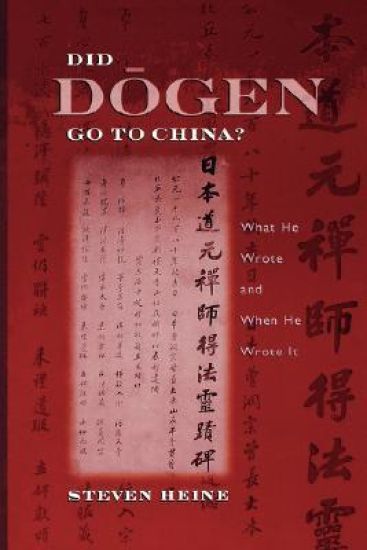
Did Dogen Go to China?

Did Dogen Go to China?

Steven Heine

Oxford University Press Inc
2006
nidottu
Dogen (1200-1253), the founder of the Soto Zen sect in Japan, is especially known for introducing to Japanese Buddhism many of the texts and practices that he discovered in China. Heine reconstructs the context of Dogen's travels to and reflections on China by means of a critical look at traditional sources both by and about Dogen in light of recent Japanese scholarship. While many studies emphasize the unique features of Dogen's Japanese influences, this book calls attention to the way Chinese and Japanese elements were fused in Dogen's religious vision. It reveals many new materials and insights into Dogen's main writings, including the multiple editions of the Shobogenzo, and how and when this seminal text was created by Dogen and was edited and interpreted by his disciples. This book is the culmination of the author's thirty years of research on Dogen and provides the reader with a comprehensive approach to the master's life works and an understanding of the overall career trajectory of one of the most important figures in the history of Buddhism and Asian religious thought.
Zen Skin, Zen Marrow

Zen Skin, Zen Marrow

Steven Heine

Oxford University Press Inc
2008
sidottu
Since Zen Buddhism first captivated the attention of Western seekers the dominant discourse about this sect has been romantic, idealistic, and utopian. The essence of Zen has been described as ineffable, wholistic, and promoting social harmony. In recent years, however, some scholars have begun to examine Zen through the lenses of historical and cultural criticism, producing a sharp challenge to the traditional view. These clashing viewpoints are now entrenched in two warring camps, and their exponents talk past each other with virtually no constructive interaction. In this book, Steven Heine argues that a constructive compromise is possible. He focuses on three principal areas of disagreement: (1) the role of language and discourse in a tradition that claims to be 'outside words and letters,' yet has produced a voluminous body of texts, (2) the function of rituals and objects of worship to gain world benefit in a tradition supposedly founded on unmediated experience attained in an iconoclastic and ascetic environment, (3) the impact of a tradition that espouses peace and harmony on social issues such as class and gender discrimination and on nationalism and imperialism in Japan. Avoiding the stagnant polarization that characterizes most encounters between Zen traditionalists and their critics, he suggests ways in which these two perspectives can complement each other in a more balanced and nuanced alternative position.
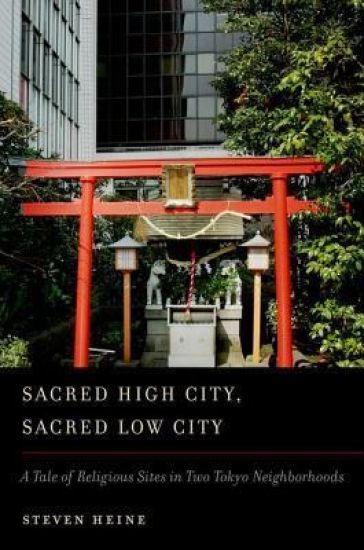
Sacred High City, Sacred Low City

Sacred High City, Sacred Low City

Steven Heine

Oxford University Press Inc
2011
sidottu
In Sacred High City, Sacred Low City, Steven Heine argues that lived religion in Japan functions as an integral part of daily life; any apparent lack of interest masks a fundamental commitment to participating regularly in diverse, though diffused, religious practices. The book uses case studies of religious sites at two representative but contrasting Tokyo neighborhoods as a basis for reflecting on this apparently contradictory quality. In what ways does Japan continue to carry on and adapt tradition, and to what extent has modern secular society lost touch with the traditional elements of religion? Or does Japanese religiosity reflect another, possibly postmodern, alternative beyond the dichotomy of sacred and secular, in which religious differences as well as a seeming indifference to religion are encompassed as part of a contemporary lifestyle?
Wisdom within Words

Wisdom within Words

Steven Heine

OXFORD UNIVERSITY PRESS INC
2022
sidottu
Wisdom within Words is the first complete bilingual edition and annotated translation of the poetry collection entitled Kuchugen, which features 150 Chinese-style verses (kanshi) written by Dogen Zenji (1200-1253), founder of the Soto Zen sect in early medieval Japan, and compiled in the eighteenth century by Menzan Zuiho. These poems are essential in highlighting several key aspects of Dogen's manner of thinking and process of writing creatively while transmitting the Chan/Zen tradition from China to Japan in the first half of the thirteenth century. Dogen learned the Chinese style of writing poetry--featuring four rhyming lines with seven characters each--when he travelled to the mainland in the 1220s. It was there that he first composed 50 verses, the only texts available from this career stage. He continued to write Sinitic poetry throughout his career at both Koshoji temple in Kyoto and Eiheiji temple in the remote mountains. Dogen's poems had various aims, including reflecting on meditation during periods of reclusion, commenting on cryptic koan cases, eulogizing deceased patriarchs, celebrating festivals and seasonal occasions, welcoming new administrative appointees at the temple, remarking on the life of the Buddha and other aspects of attaining enlightenment, and highlighting various teachings or instructions. Although Dogen's poetry has often been overlooked by the sectarian tradition, these writings have played valuable roles in the development of East Asian Buddhist contemplative life.
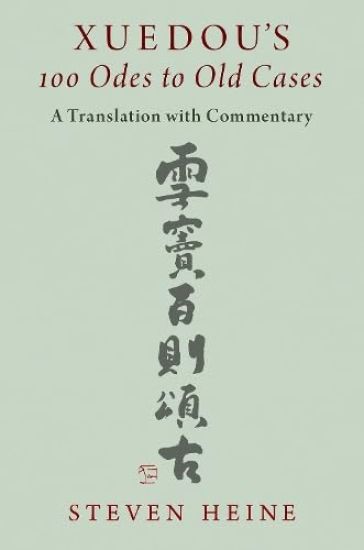
Xuedou's 100 Odes to Old Cases

Xuedou's 100 Odes to Old Cases

Steven Heine

OXFORD UNIVERSITY PRESS INC
2024
nidottu
Xuedou's 100 Odes to Old Cases is recognized as the seminal discourse in Chan Buddhism, one that has exerted significant influence on the way stories of former teachers (guze) have been appreciated and appropriated for the past thousand years. In this volume, Steven Heine offers a much-needed translation of this pivotal work along with extensive background and commentary. Heine brings important perspective to a 1000-year old text that became the basis for the Blue Cliff Record, which continues to have a profound impact on the overall legacy of East Asian Buddhist intellectual history and religious literature. Xuedou's verses reflect the author's unique capacity for taming through elegance the undisciplined and deluded minds of followers struggling with self-imposed obstacles to discern reality and thereby discover inner peace. Xuedou cites multiple Chan sources, uses irregular meter to disrupt the reader's expectations, and evokes unusual allusions to Chinese lore while often interjecting personal comments or lyrical imagery that goes beyond a reliance on doctrine. Xuedou's work is timeless, informative, and extremely influential. Heine offers us a glimpse into his mind and work, as we are taken back in time to the birth of the most essential aesthetic qualities of Chan and Zen Buddhist discourse.
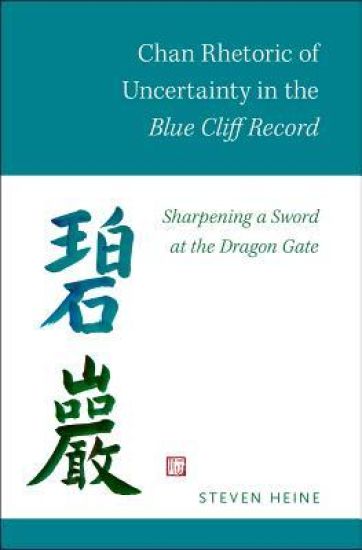
Chan Rhetoric of Uncertainty in the Blue Cliff Record

Chan Rhetoric of Uncertainty in the Blue Cliff Record

Steven Heine

Oxford University Press Inc
2016
sidottu
This book provides an in-depth textual and literary analysis of the Blue Cliff Record (Chinese Biyanlu, Japanese Hekiganroku), a seminal Chan/Zen Buddhist collection of commentaries on one hundred gongan/koan cases, considered in light of historical, cultural, and intellectual trends from the Song dynasty (960-1279). Compiled by Yuanwu Keqin in 1128, the Blue Cliff Record is considered a classic of East Asian literature for its creative integration of prose and verse as well as hybrid or capping-phrase interpretations of perplexing cases. The collection employs a variety of rhetorical devices culled from both classic and vernacular literary sources and styles and is particularly notable for its use of indirection, allusiveness, irony, paradox, and wordplay, all characteristic of the approach of literary or lettered Chan. However, as instrumental and influential as it is considered to be, the Blue Cliff Record has long been shrouded in controversy. The collection is probably best known today for having been destroyed in the 1130s at the dawn of the Southern Song dynasty (1127-1279) by Dahui Zonggao, Yuanwu's main disciple and harshest critic. It was out of circulation for nearly two centuries before being revived and partially reconstructed in the early 1300s. In this book, Steven Heine examines the diverse ideological connections and disconnections behind subsequent commentaries and translations of the Blue Cliff Record, thereby shedding light on the broad range of gongan literature produced in the eleventh to thirteenth centuries and beyond.
Chan Rhetoric of Uncertainty in the Blue Cliff Record

Chan Rhetoric of Uncertainty in the Blue Cliff Record

Steven Heine

Oxford University Press Inc
2016
nidottu
This book provides an in-depth textual and literary analysis of the Blue Cliff Record (Chinese Biyanlu, Japanese Hekiganroku), a seminal Chan/Zen Buddhist collection of commentaries on one hundred gongan/koan cases, considered in light of historical, cultural, and intellectual trends from the Song dynasty (960-1279). Compiled by Yuanwu Keqin in 1128, the Blue Cliff Record is considered a classic of East Asian literature for its creative integration of prose and verse as well as hybrid or capping-phrase interpretations of perplexing cases. The collection employs a variety of rhetorical devices culled from both classic and vernacular literary sources and styles and is particularly notable for its use of indirection, allusiveness, irony, paradox, and wordplay, all characteristic of the approach of literary or lettered Chan. However, as instrumental and influential as it is considered to be, the Blue Cliff Record has long been shrouded in controversy. The collection is probably best known today for having been destroyed in the 1130s at the dawn of the Southern Song dynasty (1127-1279) by Dahui Zonggao, Yuanwu's main disciple and harshest critic. It was out of circulation for nearly two centuries before being revived and partially reconstructed in the early 1300s. In this book, Steven Heine examines the diverse ideological connections and disconnections behind subsequent commentaries and translations of the Blue Cliff Record, thereby shedding light on the broad range of gongan literature produced in the eleventh to thirteenth centuries and beyond.
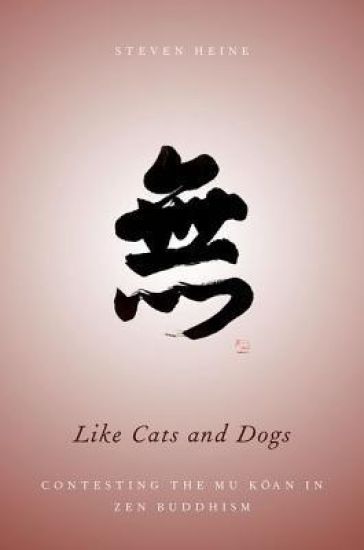
Like Cats and Dogs

Like Cats and Dogs

Steven Heine

Oxford University Press Inc
2013
sidottu
A koan is a narrative or dialogue used to provoke the "great doubt" and test a student's progress in Zen practice. The Mu Koan consists of a brief conversation in which a monk asks master Zhaozhou Congshen whether or not a dog has Buddha-nature. The reply is Mu: literally, ''No.'' This case is widely considered to be the single best known and most widely circulated and transmitted koan record of the Zen school of Buddhism. The Mu Koan is especially well known for the intense personal experiences it offers those seeking an existential transformation from anxiety to spiritual illumination. Steven Heine demonstrates that the Gateless Gate version, preferred by Dahui and so many other key-phrase advocates, does not by any means constitute the final word concerning the meaning and significance of the Mu Koan. Another impact version has been the Dual Version, which is the ''Yes-No'' rendition to the Mu Koan. Like Cats and Dogs offers critical insight and a new historical perspective on ''the koan of koans.''
Like Cats and Dogs

Like Cats and Dogs

Steven Heine

Oxford University Press Inc
2013
nidottu
A koan is a narrative or dialogue used to provoke the "great doubt" and test a student's progress in Zen practice. The Mu Koan consists of a brief conversation in which a monk asks master Zhaozhou Congshen whether or not a dog has Buddha-nature. The reply is Mu: literally, ''No.'' This case is widely considered to be the single best known and most widely circulated and transmitted koan record of the Zen school of Buddhism. The Mu Koan is especially well known for the intense personal experiences it offers those seeking an existential transformation from anxiety to spiritual illumination. Steven Heine demonstrates that the Gateless Gate version, preferred by Dahui and so many other key-phrase advocates, does not by any means constitute the final word concerning the meaning and significance of the Mu Koan. Another impact version has been the Dual Version, which is the ''Yes-No'' rendition to the Mu Koan. Like Cats and Dogs offers critical insight and a new historical perspective on ''the koan of koans.''
Sacred High City, Sacred Low City

Sacred High City, Sacred Low City

Steven Heine

Oxford University Press Inc
2011
nidottu
In Sacred High City, Sacred Low City, Steven Heine argues that lived religion in Japan functions as an integral part of daily life; any apparent lack of interest masks a fundamental commitment to participating regularly in diverse, though diffused, religious practices. The book uses case studies of religious sites at two representative but contrasting Tokyo neighborhoods as a basis for reflecting on this apparently contradictory quality. In what ways does Japan continue to carry on and adapt tradition, and to what extent has modern secular society lost touch with the traditional elements of religion? Or does Japanese religiosity reflect another, possibly postmodern, alternative beyond the dichotomy of sacred and secular, in which religious differences as well as a seeming indifference to religion are encompassed as part of a contemporary lifestyle?
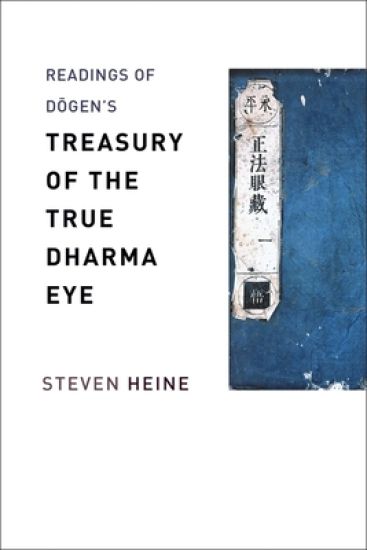
Readings of Dogen's "Treasury of the True Dharma Eye"

Readings of Dogen's "Treasury of the True Dharma Eye"

Steven Heine

Columbia University Press
2020
sidottu
The Treasury of the True Dharma Eye (Shobogenzo) is the masterwork of Dogen (1200–1253), founder of the Soto Zen Buddhist sect in Kamakura-era Japan. It is one of the most important Zen Buddhist collections, composed during a period of remarkable religious diversity and experimentation. The text is complex and compelling, famed for its eloquent yet perplexing manner of expressing the core precepts of Zen teachings and practice.This book is a comprehensive introduction to this essential Zen text, offering a textual, historical, literary, and philosophical examination of Dogen’s treatise. Steven Heine explores the religious and cultural context in which the Treasury was composed and provides a detailed study of the various versions of the medieval text that have been compiled over the centuries. He includes nuanced readings of Dogen’s use of inventive rhetorical flourishes and the range of East Asian Buddhist textual and cultural influences that shaped the work. Heine explicates the philosophical implications of Dogen’s views on contemplative experience and attaining and sustaining enlightenment, showing the depth of his distinctive understanding of spiritual awakening. Readings of Dogen’s Treasury of the True Dharma Eye will give students and other readers a full understanding of this fundamental work of world religious literature.
Readings of Dogen's "Treasury of the True Dharma Eye"

Readings of Dogen's "Treasury of the True Dharma Eye"

Steven Heine

Columbia University Press
2020
pokkari
The Treasury of the True Dharma Eye (Shobogenzo) is the masterwork of Dogen (1200–1253), founder of the Soto Zen Buddhist sect in Kamakura-era Japan. It is one of the most important Zen Buddhist collections, composed during a period of remarkable religious diversity and experimentation. The text is complex and compelling, famed for its eloquent yet perplexing manner of expressing the core precepts of Zen teachings and practice.This book is a comprehensive introduction to this essential Zen text, offering a textual, historical, literary, and philosophical examination of Dogen’s treatise. Steven Heine explores the religious and cultural context in which the Treasury was composed and provides a detailed study of the various versions of the medieval text that have been compiled over the centuries. He includes nuanced readings of Dogen’s use of inventive rhetorical flourishes and the range of East Asian Buddhist textual and cultural influences that shaped the work. Heine explicates the philosophical implications of Dogen’s views on contemplative experience and attaining and sustaining enlightenment, showing the depth of his distinctive understanding of spiritual awakening. Readings of Dogen’s Treasury of the True Dharma Eye will give students and other readers a full understanding of this fundamental work of world religious literature.
A Dream Within a Dream

A Dream Within a Dream

Steven Heine

Peter Lang Publishing Inc
1991
sidottu
This book is a collection of articles by one of the leading scholars in Japanese thought dealing with three areas of Japanese philosophy and religion: Dogen's Zen view of liberation, including the key doctrines of casting off body-mind, being-time, and spontaneous manifestation of the koan; the relation between Buddhism, literary aesthetics, and folk religion; and a comparison of Japanese and Western thought, particularly Heidegger, on science, language, and death. The central theme throughout these essays is the meaning of time and impermanence in Japanese religion and culture based on Buddhist contemplation. The book's title refers to a phrase used by Dogen, the dramatist Chikamatsu, and others that plays on the twofold image of -dream- representing either the fleeting world of illusion or the nonsubstantial realm of ultimate reality. One of the articles is a new annotated translation of Dogen's "Shobogenzo" -Muchu setsumu- (-Disclosing a Dream Within a Dream-) fascicle. Other essays offer novel interpretations of Chikamatsu and Kyoto-school thinkers Kuki Shuzo and Nishitani Keiji in addition to Japanese folk religion."
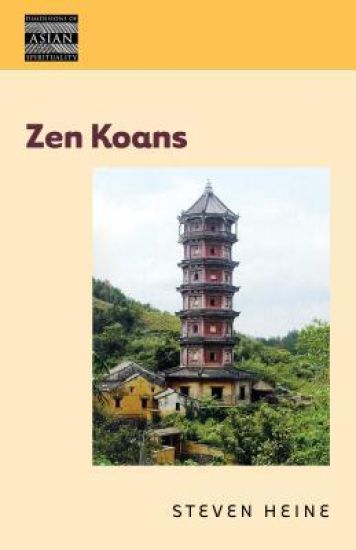
Zen Koans

Zen Koans

Steven Heine

University of Hawai'i Press
2014
sidottu
“What is the sound of one hand clapping?” “Does a dog have Buddha-nature?” These cryptic expressions are among the best-known examples of koans, the confusing, often contradictory sayings that form the centrepiece of Zen Buddhist learning and training. Viewed as an ideal method for attaining and transmitting an unimpeded experience of enlightenment, they became the main object of study in Zen meditation, where their contemplation was meant to exhaust the capacity of the rational mind and the expressiveness of speech. Koan compilations, which include elegant poetic and eloquent prose commentaries on cryptic dialogues, are part of a great literary tradition in China, Japan, and Korea that appealed to intellectuals who sought spiritual fulfilment through interpreting elaborate rhetoric related to mysterious metaphysical exchanges.In this compact volume, Steven Heine, who has written extensively on Zen Buddhism and koans, introduces and analyses the classic background of texts and rites and explores the contemporary significance of koans to illuminate the full implications of this ongoing tradition. He delves deeply into the inner structure of koan literature to uncover and interpret profound levels of metaphorical significance. At the same time, he takes the reader beyond the veil of vagueness and inscrutability to an understanding of how koan writings have been used in pre-modern East Asia and are coming to be evoked and implemented in modern American practice of Zen.By focusing on two main facets of the religious themes expressed in koan records—individual religious attainment and the role dialogues play in maintaining order in the monastic system—Zen Koans reveals the distinct yet interlocking levels of meaning reflected in different koan case records and helps make sense of the seemingly nonsensical. It is a book for anyone interested in untangling the web of words used in Zen exchanges and exploring their important place in the vast creative wellspring of East Asian religion and culture.