Kirjojen hintavertailu. Mukana 11 224 866 kirjaa ja 12 kauppaa.

Kirjahaku

Etsi kirjoja tekijän nimen, kirjan nimen tai ISBN:n perusteella.

7 kirjaa tekijältä Steven Herrmann

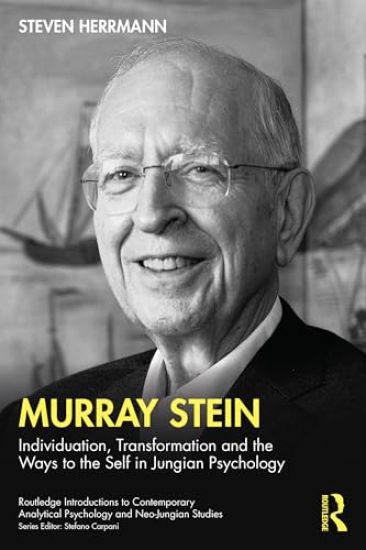
Murray Stein

Murray Stein

Steven Herrmann

TAYLOR FRANCIS LTD
2025
nidottu
This book provides a comprehensive introduction and overview of the work of Murray Stein, beginning with a unique psychobiography of Stein’s life, followed by a systematic, chapter-by-chapter presentation of all of Stein’s seminal contributions to the field of analytical psychology.Herrmann offers an in-depth examination of all nine volumes of Stein’s Collected Writings, including his most recent contributions to the Jungian field, his books, plays and literary works, which brings his review up to date. Each chapter is dedicated to a specific topic area of Stein's varied theories, including Solar/Lunar conscience, Jung’s treatment of Christianity, the psychology of men, four pillars of analytical psychology, individuation, transformation, analytical training, and Jung’s Red Book, all of which provide a foundation for a psychology of the present and future.Providing readers with an accessible and holistic understanding of Stein's impact on Jungian psychology, this will be of interest to Jungian scholars, students, and all who want a better understanding of Jung's psychology from a unique perspective.
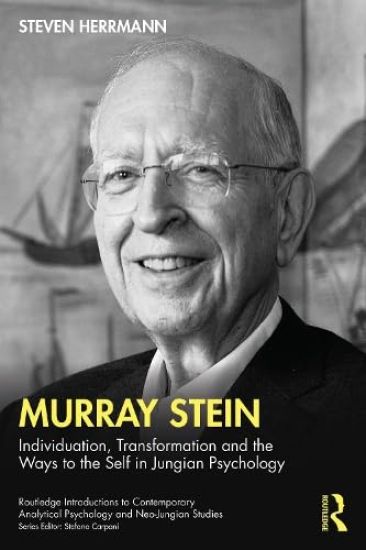
Murray Stein

Murray Stein

Steven Herrmann

TAYLOR FRANCIS LTD
2025
sidottu
This book provides a comprehensive introduction and overview of the work of Murray Stein, beginning with a unique psychobiography of Stein’s life, followed by a systematic, chapter-by-chapter presentation of all of Stein’s seminal contributions to the field of analytical psychology.Herrmann offers an in-depth examination of all nine volumes of Stein’s Collected Writings, including his most recent contributions to the Jungian field, his books, plays and literary works, which brings his review up to date. Each chapter is dedicated to a specific topic area of Stein's varied theories, including Solar/Lunar conscience, Jung’s treatment of Christianity, the psychology of men, four pillars of analytical psychology, individuation, transformation, analytical training, and Jung’s Red Book, all of which provide a foundation for a psychology of the present and future.Providing readers with an accessible and holistic understanding of Stein's impact on Jungian psychology, this will be of interest to Jungian scholars, students, and all who want a better understanding of Jung's psychology from a unique perspective.
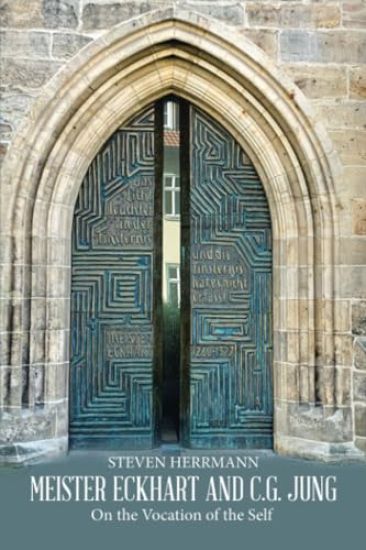
Meister Eckhart and C.G. Jung

Meister Eckhart and C.G. Jung

Steven Herrmann

Iuniverse
2024
pokkari
Most Christian readers today have been taught by Church theologians of many different creeds that one must have faith in Christ above everything else. Meister Eckhart and C.G. Jung taught us to have trust in ourselves, in our own inner images of God, or the Self first. Eckhart was a man of the earth who came after Christ. By birth of the Holy Spirit in humanity, Herrmann means in this book the birth of the Self in Eckhart and Jung and also in you, the reader. We are all after Christs and are therefore incarnating the Holy Spirit through our callings to individuate from the Imprinter, which is beyond God, not the traditional God of theology. One of the good things that comes with being a postmodern Jungian analyst, and not a member of the Catholic Church as an institution, is the freedom and liberty granted to spiritually democratic people who can speak their own truths from conscience. Herrmann's book adds something new and significant to the gendered language in theology: God is beyond gender. The book remains true to what Eckhart said about God and Sophia, or Wisdom; for as everyone knows today who has made a deep reading of the Master's works, he was in essence talking about men and women, about all people. God could be a she or an it in postmodernity. In fact, for Eckhart and Jung, the origin of God is the feminine Godhead, or primal Ground of all metaphysical and empirical being. Both theologically and psychologically speaking, the Self, or Holy Spirit is essentially trans-dual, above all duality of male or female. For Eckhart and Jung, the vocation of the Self includes the archetypal feminine, the soul or anima and animus, above all categories of thought, transcendent of time and above gender.
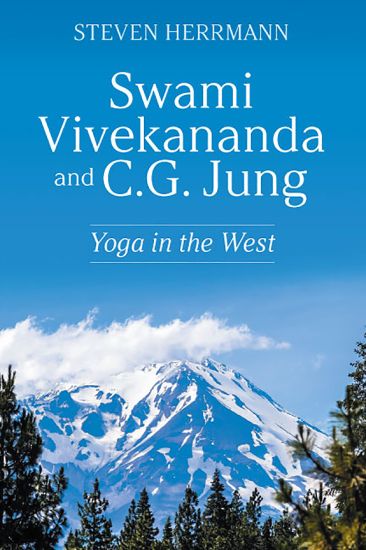
Swami Vivekananda and C.G. Jung

Swami Vivekananda and C.G. Jung

Steven Herrmann

Strategic Book Publishing
2022
pokkari
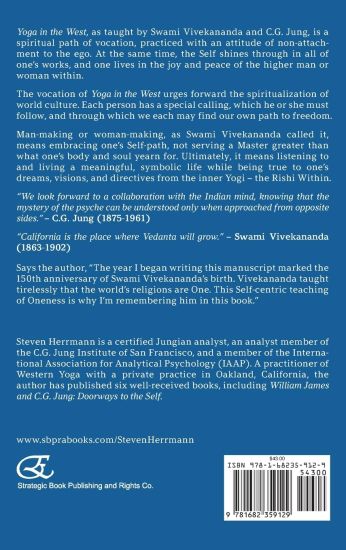
Yoga in the West, as taught by Swami Vivekananda and C.G. Jung, is a spiritual path of vocation, practiced with an attitude of non-attachment to the ego. At the same time, the Self shines through in all of one's works, and one lives in the joy and peace of the higher man or woman within.The vocation of Yoga in the West urges forward the spiritualization of world culture. Each person has a special calling, which he or she must follow, and through which we each may find our own path to freedom.Man-making or woman-making, as Swami Vivekananda called it, means embracing one's Self-path, not serving a Master greater than what one's body and soul yearn for. Ultimately, it means listening to and living a meaningful, symbolic life while being true to one's dreams, visions, and directives from the inner Yogi - the Rishi Within."We look forward to a collaboration with the Indian mind, knowing that the mystery of the psyche can be understood only when approached from opposite sides." - C.G. Jung (1875-1961)"California is the place where Vedanta will grow." - Swami Vivekananda (1863-1902)Says the author, "The year I began writing this manuscript marked the 150th anniversary of Swami Vivekananda's birth. Vivekananda taught tirelessly that the world's religions are One. This Self-centric teaching of Oneness is why I'm remembering him in this book."(About the Author)Steven Herrmann is a certified Jungian analyst, an analyst member of the C.G. Jung Institute of San Francisco, and a member of the International Association for Analytical Psychology (IAAP). A practitioner of Western Yoga with a private practice in Oakland, California, the author has published six well-received books, including William James and C.G. Jung: Doorways to the Self.
Swami Vivekananda and C.G. Jung

Swami Vivekananda and C.G. Jung

Steven Herrmann

Strategic Book Publishing
2023
sidottu
Yoga in the West, as taught by Swami Vivekananda and C.G. Jung, is a spiritual path of vocation, practiced with an attitude of non-attachment to the ego. At the same time, the Self shines through in all of one's works, and one lives in the joy and peace of the higher man or woman within.The vocation of Yoga in the West urges forward the spiritualization of world culture. Each person has a special calling, which he or she must follow, and through which we each may find our own path to freedom.Man-making or woman-making, as Swami Vivekananda called it, means embracing one's Self-path, not serving a Master greater than what one's body and soul yearn for. Ultimately, it means listening to and living a meaningful, symbolic life while being true to one's dreams, visions, and directives from the inner Yogi - the Rishi Within."We look forward to a collaboration with the Indian mind, knowing that the mystery of the psyche can be understood only when approached from opposite sides." - C.G. Jung (1875-1961)"California is the place where Vedanta will grow." - Swami Vivekananda (1863-1902)Says the author, "The year I began writing this manuscript marked the 150th anniversary of Swami Vivekananda's birth. Vivekananda taught tirelessly that the world's religions are One. This Self-centric teaching of Oneness is why I'm remembering him in this book."(About the Author)Steven Herrmann is a certified Jungian analyst, an analyst member of the C.G. Jung Institute of San Francisco, and a member of the International Association for Analytical Psychology (IAAP). A practitioner of Western Yoga with a private practice in Oakland, California, the author has published six well-received books, including William James and C.G. Jung: Doorways to the Self.
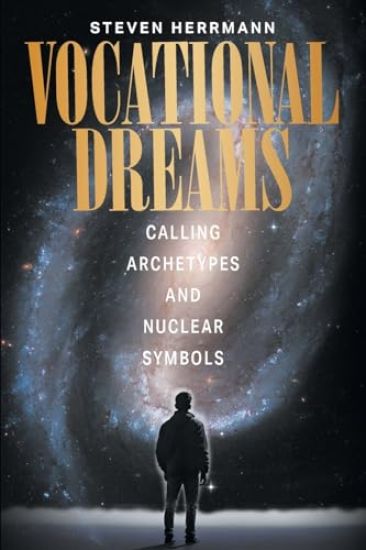
Vocational Dreams

Vocational Dreams

Steven Herrmann

Strategic Book Publishing
2024
pokkari
Jungian analyst Steven Herrmann advances his hypothesis in this book that vocational dreams can grace us with a sense of destiny. By paying careful attention to our dreams, calling archetypes may suddenly break forth from the Self to heal neurosis by dissolving defenses against the inner voice.After more than four decades of dream research, Herrmann's message is that vocational dreams are the single most important variables in the process of analytic work with patients and readers. Vocational archetypes have a center to them, a nuclear point of contact with the deepest parts of the Self.Some of our deepest motivations are produced by what Herrmann calls nuclear symbols, which are one of the most powerful sources of inspiration we can experience. They are dynamic factors of evolution in the personality, and are sources of centeredness and peace in the psyche and the world.To validate this theory, the author provides a number of examples from anthropological research, including child cases, interviews with young adults, biographies, and clinical vignettes from people in mid-life.Vocational dreams give us trust in our future destinations. They infuse us with purpose, energy, or life-force. This book will show psychotherapists, analysts, parents, teachers, career counselors, anthropologists, vision quest guides, coaches, and others how to recognize and affirm the emergence of calling dreams, which can free us to experience joy and human fulfillment through a process of vocational metamorphosis.Author Bio: Steven Herrmann, Ph.D. MFT is a certified Jungian analyst with a private practice in Oakland, California. He is the author of seven well-received books, including William James and C.G. Jung: Doorways to the Self.