Kirjojen hintavertailu. Mukana 11 717 486 kirjaa ja 12 kauppaa.

Kirjahaku

Etsi kirjoja tekijän nimen, kirjan nimen tai ISBN:n perusteella.

8 kirjaa tekijältä Steven J. Jensen

Good and Evil Actions

Good and Evil Actions

Steven J. Jensen

The Catholic University of America Press
2010
nidottu
Modern philosophy has long dismissed the traditional moral notion that some actions are inherently good or evil, claiming rather that actions lack clear boundaries and have no set nature, whether good, evil, or anything else. We might expect to find resources to rebut these consequentialist assertions in the perennial philosophy of St. Thomas Aquinas. Unfortunately, the analysis of the moral species within Aquinas confounds even the most resolute. Thomists are far from unanimity on the very questions at issue, such as the role of intention in moral judgment and the importance of the exterior or 'physical' act. One influential reading of Aquinas assigns intention a central role; another extols a return to teleology and to the physical nature of the action. In ""Good and Evil Actions"", Steven J. Jensen navigates a path through the debate, retrieving what is of value from each interpretation. Intention receives its proper due, while leaving room for physical causality and teleology. Jensen provides a novel explanation of self-defense and develops a much needed account of the dignity of the human person. With exceptional clarity, he identifies the essential issues, resolves conflicting views, and reveals the truth as conveyed by Aquinas. In his foreword, Ralph McInerny praises the book as 'a remarkable compendium of the status quaestionis of a large number of prickly issues associated with Thomas Aquinas' theory of human action, a fair look at proposed solutions, and finally Jensen's own best thought on the matter'. This title tackles the Thomistic debate surrounding the inherent good and evil of human actions.
Living the Good Life

Living the Good Life

Steven J. Jensen

The Catholic University of America Press
2013
nidottu
Living the Good Life presents a brief introduction to virtue and vice, self-control and weakness, misery and happiness. The book contrasts the thought of Aquinas with popular views, such as moral relativism, values clarification, utilitarianism, Kantian deontology and situation ethics. Following the Socratic dictum ""know thyself,"" Steven J. Jensen investigates the interior workings of the human mind, revealing the interplay of reason, will and emotions. According to Aquinas, in a healthy ethical life, reason guides the emotions and will to the true human good. In an unhealthy life, emotional impulses distort the vision of reason, entrapping one in futile pursuits. In the human struggle to gain self-mastery, a person must overcome the capricious desires that enslave him to false goods. Jensen ably guides readers through Aquinas's philosophy and explains the distinction between the moral and intellectual virtues. The moral virtues train our various desires toward the true good, helping us discard our misguided cravings and teaching us to enjoy what is truly worth pursuing. The virtue of justice directs our hearts to the good of others, freeing us from egoism in order to seek a good shared with others. The intellectual virtues train the mind toward the truth, so that we can find fulfilment in human understanding. Most important, the virtue of prudence directs our deliberations to discover the true path of life.Intended as a text for students, beginners of philosophy will gain access to a key aspect of Aquinas's thought, namely, that true happiness is realised not in the animal life of passion and greed but only in the reasonable pursuit of human goods, in which we find true peace and rest from the distractions of this world.
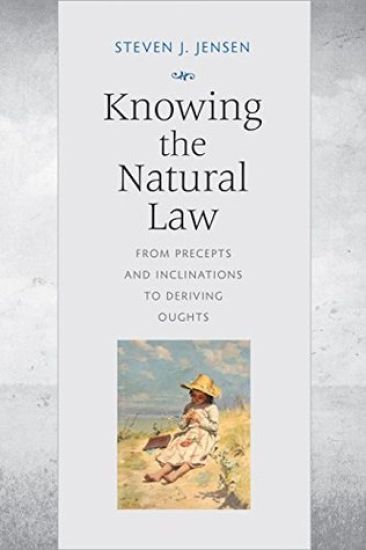
Knowing the Natural Law

Knowing the Natural Law

Steven J. Jensen

The Catholic University of America Press
2020
nidottu
Recent discussions of Thomas Aquinas's treatment of natural law have focused upon the ""self-evident"" character of the first principles, but few attempts have been made to determine in what manner they are self-evident. On some accounts, a self-evident precept must have, at most, a tenuous connection with speculative reason, especially our knowledge of God, and it must be untainted by the stain of ""deriving"" an ought from an is. Yet Aquinas himself had a robust account of the good, rooted in human nature. He saw no fundamental difference between is-statements and ought-statements, both of which he considered to be descriptive.Knowing the Natural Law traces the thought of Aquinas from an understanding of human nature to a knowledge of the human good, from there to an account of ought-statements, and finally to choice, which issues in human actions. The much discussed article on the precepts of the natural law (I-II, 94, 2) provides the framework for a natural law rooted in human nature and in speculative knowledge. Practical knowledge is itself threefold: potentially practical knowledge, virtually practical knowledge, and fully practical knowledge.This distinction within practical knowledge, typically overlooked or underutilized, reveals the steps by which the mind moves from speculative knowledge all the way to fully practical knowledge. The most significant sections of Knowing the Natural Law examine the nature of ought-statements, the imperative force of moral precepts, the special character of per se nota propositions as found within the natural law, and the final movement from knowledge to action.
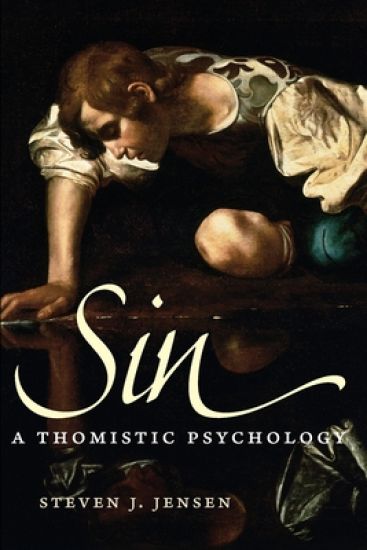
Sin

Sin

Steven J. Jensen

The Catholic University of America Press
2018
nidottu
If the human soul is made for good, then how do we choose evil? On the other hand, perhaps the human soul is not made for good. Perhaps the magnitude of human depravity reveals that the human soul may directly choose evil. Notably, Thomas Aquinas rejects this explanation for the prevalence of human sin. He insists that in all our desires we seek what is good. How, then, do we choose evil? Only by mistaking evil for good. This solution to the difficulty, however, leads Aquinas into another conundrum. How can we be held responsible for sins committed under a misunderstanding of the good? The sinner, it seems, has simply made an intellectual blunder. Sin has become an intellectual defect rather than a depravity of will and desire.Sin: A Thomistic Psychology grapples with these difficulties. A solution to the problem must address a host of issues. Does the ultimate good after which we all strive have unity, or is it simply a collection of basic goods? What is venial sin? What momentous choice must a child make in his first moral act? In what way do passion, a habitually evil will, and ignorance cause human beings to sin? What is the first cause of moral evil? Do human beings have free will to determine themselves to particular actions? The discussion of these topics focuses upon the interplay of reason, will, and the emotions, examining the inner workings of our moral deliberations. Ultimately, the book reveals how the failure to maintain balance in our deliberations subverts our fidelity to the one true good.
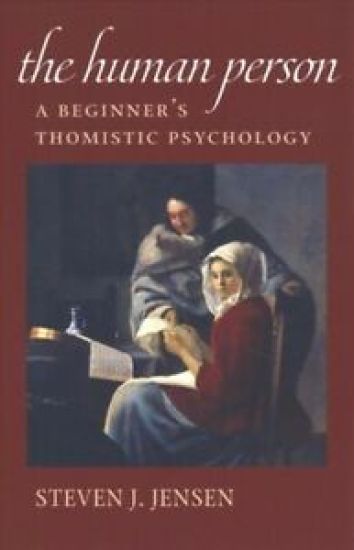
The Human Person

The Human Person

Steven J. Jensen

The Catholic University of America Press
2018
nidottu
The Human Person presents a brief introduction to the human mind, the soul, immortality, and free will. While delving into the thought of Thomas Aquinas, it addresses contemporary topics, such as skepticism, mechanism, animal language research, and determinism. Steven J. Jensen probes the primal questions of human nature. Are human beings free or determined? Is the capacity to reason distinctive to human beings or do animals also have some share of reason? Have animals really been taught to use language? The Human Person touches on topics that bear upon the very fabric of the universe. Are human beings merely well-ordered collections of chemicals or do they have a soul that gives them life and understanding? Is there any element in human beings that survives death? Can human minds get in touch with the objective world or just forever dwell in the domain of their subjective experiences? The book closes by considering the most fundamental question of all: are human beings merely cosmic accidents with no purpose or is there some meaning to human life? In this book, beginners of philosophy will learn the wonders of their own nature by studying Aquinas's thought on the human person.
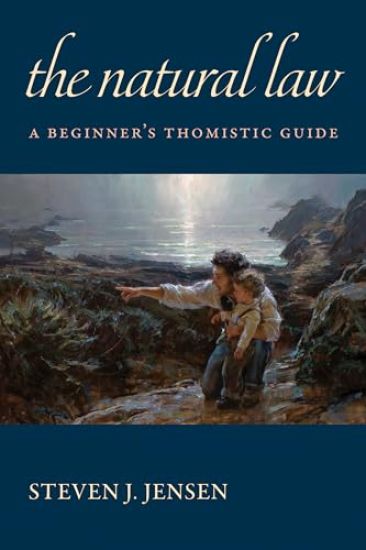
The Natural Law

The Natural Law

Steven J. Jensen

THE CATHOLIC UNIVERSITY OF AMERICA PRESS
2025
nidottu
Drawing upon the timeless wisdom of Thomas Aquinas, The Natural Law offers clear insights into perplexing ethical dilemmas. The compelling conclusions of Aquinas emerge through a critical examination of contemporary ethical frameworks including moral relativism, utilitarianism, and Machiavellian politics. In part one, which elucidates the core principles of natural law ethics, the reader will discover fundamental truths underpinning the concepts of right and wrong, which are rooted in the very fabric of our humanity. Part two navigates the ethics of harm, grappling with contentious issues such as capital punishment, just war, and self-defense, while at the same time addressing moral quandaries like sacrificing one life in order to save another. This section also resolves thorny practical questions surrounding human actions. How can we tell the difference between an action and its consequences? How do we determine exactly what it means to kill another person? Part three ventures into the intricacies of human societies. The reader will explore the importance of authority and rules in guiding social interactions, from the nurturing bonds of the family to the shifting complexities of political society. The principles examined will shed light upon controversial topics within sexual ethics, such as transgenderism, faithful spousal intimacy, and cloning. The Natural Law invites readers on an engaging journey of critical inquiry. By challenging prevailing assumptions and provoking self-reflection, it will reshape your understanding of ethics and human nature, ultimately revealing your role and purpose within the universe.