Kirjojen hintavertailu. Mukana 11 717 486 kirjaa ja 12 kauppaa.

Kirjahaku

Etsi kirjoja tekijän nimen, kirjan nimen tai ISBN:n perusteella.

8 kirjaa tekijältä Steven K. Green

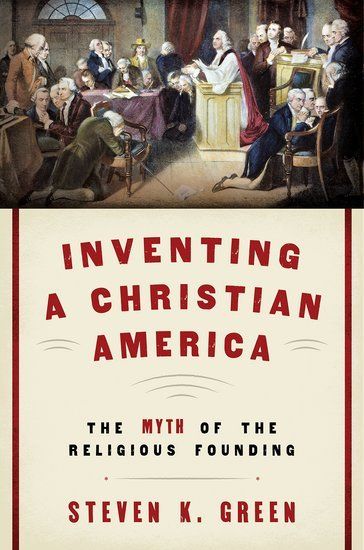
Inventing a Christian America

Inventing a Christian America

Steven K. Green

Oxford University Press Inc
2015
sidottu
One of the most enduring themes in United States history is that of its religious founding. This narrative is pervasive in school textbooks, political lore, and the popular consciousness. It is central to the way in which many Americans perceive the historical legacy of their nation. It is also largely a myth--one that this book sets out to unravel. Steven K. Green explores the historical record that supports the popular belief about the nation's religious origins. His aim is not to take part in the irresolvable debate over whether the Founders were devout Christians or atheistic deists, or whether the people of the founding generation believed chiefly in divine providence and the role of religion in public life or in separation of church and state. Rather, he seeks to explain how the ideas of America's religious founding and its status as a Christian nation became a leading narrative about the nation's collective identity. Moreover, Green takes seriously the notion that America's religious founding is a myth not merely in the colloquial sense, but also in a deeper sense, as a shared story that shapes the way we define ourselves and gives meaning to our history.
Inventing a Christian America

Inventing a Christian America

Steven K. Green

Oxford University Press Inc
2017
nidottu
Among the most enduring themes in American history is the idea that the United States was founded as a Christian nation. A pervasive narrative in everything from school textbooks to political commentary, it is central to the way in which many Americans perceive the historical legacy of their nation. Yet, as Steven K. Green shows in this illuminating new book, it is little more than a myth. In Inventing a Christian America, Green, a leading historian of religion and politics, explores the historical record that is purported to support the popular belief in America's religious founding and status as a Christian nation. He demonstrates that, like all myths, these claims are based on historical "facts" that have been colored by the interpretive narratives that have been imposed upon them. In tracing the evolution of these claims and the evidence levied in support of them from the founding of the New England colonies, through the American Revolution, and to the present day, he investigates how they became leading narratives in the country's collective identity. Three critical moments in American history shaped and continue to drive the myth of a Christian America: the Puritan founding of New England, the American Revolution and the forging of a new nation, and the early years of the nineteenth century, when a second generation of Americans sought to redefine and reconcile the memory of the founding to match their religious and patriotic aspirations. Seeking to shed light not only on the veracity of these ideas but on the reasons they endure, Green ultimately shows that the notion of America's religious founding is a myth not merely in the colloquial sense, but also in a deeper sense, as a shared story that gives deeper meaning to our collective national identity. Offering a fresh look at one of the most common and contested claims in American history, Inventing a Christian America is an enlightening read for anyone interested in the story of-and the debate over-America's founding.
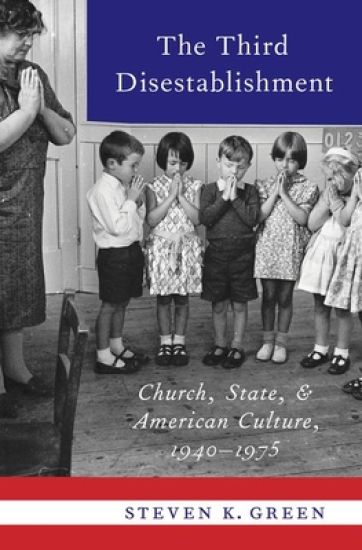
The Third Disestablishment

The Third Disestablishment

Steven K. Green

Oxford University Press Inc
2019
sidottu
In 1947, the Supreme Court embraced the concept of church-state separation as shorthand for the meaning of the Establishment Clause of the First Amendment. The concept became embedded in Court's jurisprudence and remains so today. Yet separation of church and state is not just a legal construct; it is embedded in the culture. Church-state separation was a popular cultural ideal, chiefly for Protestants and secularists, long before the Supreme Court adopted it as a constitutional principle. While the Court's church-state decisions have impacted public attitudes--particularly those controversial holdings regarding prayer and Bible reading in public schools--the idea of church-state separation has remained relatively popular; recent studies indicate that approximately two-thirds of Americans support the concept, even though they disagree over how to apply it. In the follow up to his 2010 book The Second Disestablishment, Steven K. Green sets out to examine the development of modern separationism from a legal and cultural perspective. The Third Disestablishment examines the dominant religious-cultural conflicts of the 1930s-1950s between Protestants and Catholics, but it also shows how other trends and controversies during mid-century impacted both judicial and popular attitudes toward church-state separation: the Jehovah's Witnesses' cases of the late-30s and early-40s, Cold War anti-communism, the religious revival and the rise of civil religion, the advent of ecumenism, and the presidential campaign of 1960. The book then examines how events of the 1960s--the school prayer decisions, the reforms of Vatican II, and the enactment of comprehensive federal education legislation providing assistance to religious schools--produced a rupture in the Protestant consensus over church-state separation, causing both evangelicals and religious progressives to rethink their commitment to that principle. Green concludes by examining a series of church-state cases in the late-60s and early-70s where the justices applied notions of church-state separation at the same time they were reevaluating that concept.
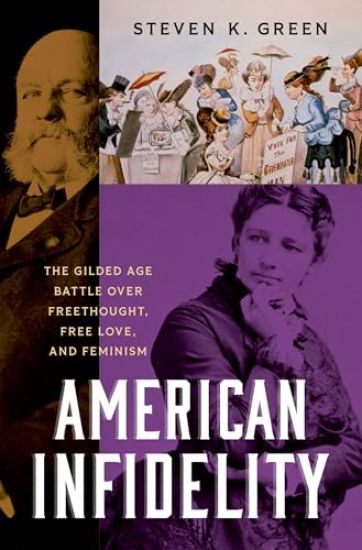
American Infidelity

American Infidelity

Steven K. Green

OXFORD UNIVERSITY PRESS INC
2026
sidottu
American Infidelity is a timely, provocative exploration of a forgotten chapter in American history--one that still echoes in our most urgent cultural debates. In the final decades of the 19th century, America stood at a cultural crossroads. Evangelical Protestantism reigned supreme, shaping laws, morals, and public life. But beneath the surface, a bold countercurrent surged--freethinkers, feminists, and sexual radicals who dared to imagine a freer, more equal society. In American Infidelity, historian Steven K. Green tells the riveting story of this ideological showdown. At its center were two powerful forces: a rising movement of skeptics and reformers who challenged religious orthodoxy and social convention, and the reactionary crusaders--led by the infamous Anthony Comstock--who fought to silence them. These "infidels," as Comstock branded them, weren't just questioning God--they were demanding access to birth control, advocating for divorce reform, and championing women's autonomy over their minds and bodies. Figures like Elizabeth Cady Stanton pushed feminism beyond the vote, calling for sexual and economic liberation. Freethought leaders rejected the idea that America was a Christian nation, insisting instead on reason, inquiry, and personal freedom. But their vision of a more open society collided head-on with a moral panic that sought to preserve traditional values at all costs. Green's gripping narrative reveals how this battle over belief, sex, and power shaped the cultural DNA of the United States. Drawing on vivid historical sources, he shows how the freethought and feminist movements were ultimately suppressed--but not extinguished. Their legacy lives on in today's ongoing struggles over reproductive rights, censorship, and the role of religion in public life.
The Bible, the School, and the Constitution

The Bible, the School, and the Constitution

Steven K. Green

Oxford University Press Inc
2012
sidottu
Few constitutional issues have been as contentious in modern times as those concerning school prayer and the public funding of religious schools. But as Steven K. Green surprisingly reveals in The Bible, the School, and the Constitution, the apogee of this debate was probably reached about one hundred and forty years ago, in the years between 1863 and 1876. As Green shows, the controversy over Bible reading in public schools captured national attention to an unprecedented degree, providing Americans with the opportunity to engage in a grand--and sometimes not so grand--public debate over the meaning of separation of church and state. Rarely in the nation's history have people from such various walks of life--Protestants and Catholics, skeptics and theocrats, nativists and immigrants, educators and politicians--been able to participate in a national discussion over the meaning of a constitutional principle. The debates of this period, Green shows, laid the foundation for constitutional arguments that still rage today.
The Grand Collaboration

The Grand Collaboration

Steven K. Green

UNIVERSITY OF VIRGINIA PRESS
2024
sidottu
How Jefferson and Madison ensured religious freedom in the United States Thomas Jefferson considered the establishment of religious freedom as a governing principle in the United States to be one of the great accomplishments of his life. It was not his accomplishment alone, however, but the result of sustained cooperation with the “father of the Constitution,” James Madison. The Grand Collaboration is the first comprehensive study of Jefferson and Madison’s mutual endeavor to ensure free inquiry, freedom of conscience, and the separation of church and state, examining their fifty-year partnership beginning with the Virginia Declaration of Rights and culminating with the founding of the University of Virginia as the nation’s first truly secular institution of higher education. In an era of increasing concern with the “original intentions” of the founding generation, Steven Green, one of our great authorities on the concept and history of religious freedom, represents the best possible guide to these complex, critical issues—issues that continue to confront our society in the twenty-first century.
The Grand Collaboration

The Grand Collaboration

Steven K. Green

UNIVERSITY OF VIRGINIA PRESS
2024
pokkari
How Jefferson and Madison ensured religious freedom in the United States Thomas Jefferson considered the establishment of religious freedom as a governing principle in the United States to be one of the great accomplishments of his life. It was not his accomplishment alone, however, but the result of sustained cooperation with the “father of the Constitution,” James Madison. The Grand Collaboration is the first comprehensive study of Jefferson and Madison’s mutual endeavor to ensure free inquiry, freedom of conscience, and the separation of church and state, examining their fifty-year partnership beginning with the Virginia Declaration of Rights and culminating with the founding of the University of Virginia as the nation’s first truly secular institution of higher education. In an era of increasing concern with the “original intentions” of the founding generation, Steven Green, one of our great authorities on the concept and history of religious freedom, represents the best possible guide to these complex, critical issues—issues that continue to confront our society in the twenty-first century.
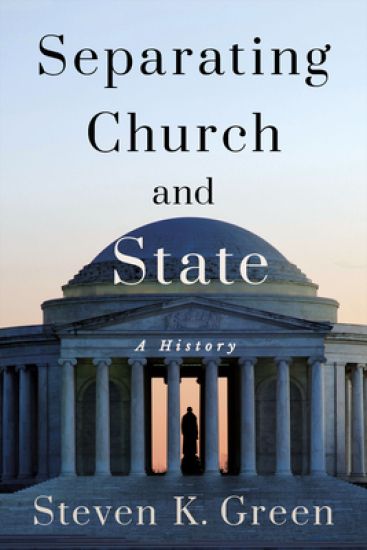
Separating Church and State

Separating Church and State

Steven K. Green

Cornell University Press
2022
sidottu
Steven K. Green, renowned for his scholarship on the separation of church and state, charts the career of the concept and helps us understand how it has fallen into disfavor with many Americans. In 1802, President Thomas Jefferson distilled a leading idea in the early American republic and wrote of a wall of separation between church and state. That metaphor has come down from Jefferson to twenty-first-century Americans through a long history of jurisprudence, political contestation, and cultural influence. This book traces the development of the concept of separation of church and state and the Supreme Court's application of it in the law. Green finds that conservative criticisms of a separation of church and state overlook the strong historical and jurisprudential pedigree of the idea. Yet, arguing with liberal advocates of the doctrine, he notes that the idea remains fundamentally vague and thus open to loose interpretation in the courts. As such, the history of a wall of separation is more a variable index of American attitudes toward the forces of religion and state. Indeed, Green argues that the Supreme Court's use of the wall metaphor has never been essential to its rulings. The contemporary battle over the idea of a wall of separation has thus been a distraction from the real jurisprudential issues animating the contemporary courts.