Kirjojen hintavertailu. Mukana 11 244 527 kirjaa ja 12 kauppaa.

Kirjahaku

Etsi kirjoja tekijän nimen, kirjan nimen tai ISBN:n perusteella.

5 kirjaa tekijältä Steven Kepnes

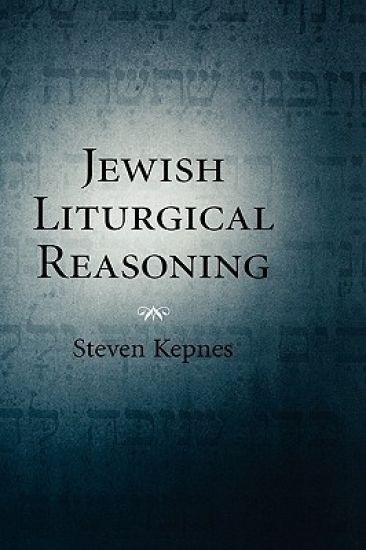
Jewish Liturgical Reasoning

Jewish Liturgical Reasoning

Steven Kepnes

Oxford University Press Inc
2007
sidottu
Liturgy, a complex interweaving of word, text, song, and behavior is a central fixture of religious life in the Jewish tradition. It is unique in that it is performed and not merely thought. Because liturgy is performed by a specific group at a specific time and place it is mutable. Thus, liturgical reasoning is always new and understandings of liturgical practices are always evolving. Liturgy is neither preexisting nor static; it is discovered and revealed in every liturgical performance. Jewish Liturgical Reasoning is an attempt to articulate the internal patterns of philosophical, ethical, and theological reasoning that are at work in synagogue liturgies. This book discusses the relationship between internal Jewish liturgical reasoning and the variety of external philosophical and theological forms of reasoning that have been developed in modern and post liberal Jewish philosophy. Steven Kepnes argues that liturgical reasoning can reorient Jewish philosophy and provide it with new tools, new terms of discourse and analysis, and a new sensibility for the twenty-first century. The formal philosophical study of Jewish liturgy began with Moses Mendelssohn and the modern Jewish philosophers. Thus the book focuses, in its first chapters, on the liturgical reasoning of Moses Mendelssohn, Hermann Cohen, and Franz Rosenzweig. However, it attempts to augment and further develop the liturgical reasoning of these figures with methods of study from Hermeneutics, Semiotic theory, post liberal theology, anthropology and performance theory. These newer theories are enlisted to help form a contemporary liturgical reasoning that can respond to such events as the Holocaust, the establishment of the State of Israel, and interfaith dialogue between Jews, Christians, and Muslims.
The Text As Thou

The Text As Thou

Steven Kepnes

Indiana University Press
1992
sidottu
The Text as Thou establishes Martin Buber's central concept of "I-Thou" as the heart of a dialogical theory of textual interpretation and a narrative method for explicating Jewish philosophy and theology. Part One takes up Buber's application of his hermeneutic method to the texts of Hasidism and the Bible and the way in which that method can be applied to secular texts as well. His development of a dialogical hermeneutics links Buber to such contemporary theorists as Gadamer, Ricoeur, and Bakhtin. Part Two demonstrates that narrative provides privileged access to Buber's thought. By the retelling of Hasidic tales, biblical stories, and autobiographical anecdotes with powerful immediacy and concreteness, Buber succeeds in a daring attempt to formulate a modern narrative Jewish theology. Taken together, Buber's dialogical hermeneutics and narrative theology constitute a key element in the contemporary revival of the Jewish midrashic imagination.
The Future of Jewish Theology

The Future of Jewish Theology

Steven Kepnes

John Wiley Sons Inc
2012
nidottu
This engaging argument for the future of Jewish theology, written by a renowned Jewish scholar, provides a rounded introduction to the faith, its history, and its place in the modern world. Explores foundational Jewish structures and concepts through the discussion and interpretation of Jewish textsArgues that we must acknowledge holiness as a ritual and ethical reality in order to heal the rift between different forms of Jewish practice and theologyCovers historical context as well as the relations between Judaism, Israel and the wider world todaySpeaks to both Jews and non-Jews and demonstrates through textual readings how Jews, Christians, and Muslims can understand and share their theological riches
The Future of Jewish Theology

The Future of Jewish Theology

Steven Kepnes

John Wiley Sons Inc
2012
sidottu
This engaging argument for the future of Jewish theology, written by a renowned Jewish scholar, provides a rounded introduction to the faith, its history, and its place in the modern world. Explores foundational Jewish structures and concepts through the discussion and interpretation of Jewish textsArgues that we must acknowledge holiness as a ritual and ethical reality in order to heal the rift between different forms of Jewish practice and theologyCovers historical context as well as the relations between Judaism, Israel and the wider world todaySpeaks to both Jews and non-Jews and demonstrates through textual readings how Jews, Christians, and Muslims can understand and share their theological riches
Reviving Jewish Theology

Reviving Jewish Theology

Steven Kepnes

Cambridge University Press
2025
sidottu
In this study, Steven Kepnes constructs a 'positive' Jewish theology, one that gives expression to God's nature and powers and that opposes 'apophatic' Holocaust and postmodern theologies that deny the ability of language to express God's nature. Drawing from the Pentateuch, Prophets, and Jewish prayer, Kepnes also uses methods from medieval philosophy, analytic philosophy, and hermeneutics. From medieval philosophy and the Bible, Kepnes develops what he calls a 'soft' metaphysics with principles of God and the revealed Torah at its center. Identifying a fundamental contradiction between the transcendent God of philosophy and the personal God of the Bible, he demonstrates how analytic philosophy, Jewish hermeneutics, and Jewish liturgy offer constructive strategies to negotiate this contradiction. Kepnes also argues that Jewish theology can neither remain in the domain of metaphysics nor the nature of God, but must turn toward the practical and ethical. He concludes with a call for a prophetic theological ethics to address the pressing issue of climate change.