Kirjojen hintavertailu. Mukana 12 083 983 kirjaa ja 12 kauppaa.

Kirjahaku

Etsi kirjoja tekijän nimen, kirjan nimen tai ISBN:n perusteella.

12 kirjaa tekijältä Steven King

Fraudulent Lives

Fraudulent Lives

Steven King

MCGILL-QUEEN'S UNIVERSITY PRESS
2024
sidottu
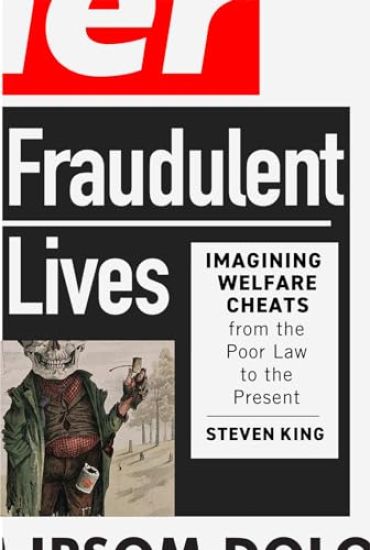
The Western welfare state model is beset with structural, financial, and moral crises. So-called scroungers, cheats, and disability fakers persistently occupy the centre of public policy discussions, even as official statistics suggest that relatively small amounts of money are lost to such schemes.In Fraudulent Lives Steven King focuses on the British case in the first ever long-term analysis of the scale, meaning, and consequences of welfare fraud in Western nations. King argues that an expectation of dishonesty on the part of claimants was written into the basic fabric of the founding statutes of the British welfare state in 1601, and that nothing has subsequently changed. Efforts throughout history to detect and punish fraud have been superficial at best because, he argues, it has never been in the interests of the three main stakeholders – claimants, the general public, and officials and policymakers – to eliminate it.Tracing a substantial underbelly of fraud from the seventeenth century to today, King finds remarkable continuities and historical parallels in public attitudes towards the honesty of welfare recipients – patterns that hold true across Western welfare states.
Fraudulent Lives

Fraudulent Lives

Steven King

MCGILL-QUEEN'S UNIVERSITY PRESS
2024
nidottu
The Western welfare state model is beset with structural, financial, and moral crises. So-called scroungers, cheats, and disability fakers persistently occupy the centre of public policy discussions, even as official statistics suggest that relatively small amounts of money are lost to such schemes.In Fraudulent Lives Steven King focuses on the British case in the first ever long-term analysis of the scale, meaning, and consequences of welfare fraud in Western nations. King argues that an expectation of dishonesty on the part of claimants was written into the basic fabric of the founding statutes of the British welfare state in 1601, and that nothing has subsequently changed. Efforts throughout history to detect and punish fraud have been superficial at best because, he argues, it has never been in the interests of the three main stakeholders – claimants, the general public, and officials and policymakers – to eliminate it.Tracing a substantial underbelly of fraud from the seventeenth century to today, King finds remarkable continuities and historical parallels in public attitudes towards the honesty of welfare recipients – patterns that hold true across Western welfare states.
Writing the Lives of the English Poor, 1750s-1830s

Writing the Lives of the English Poor, 1750s-1830s

Steven King

McGill-Queen's University Press
2019
sidottu
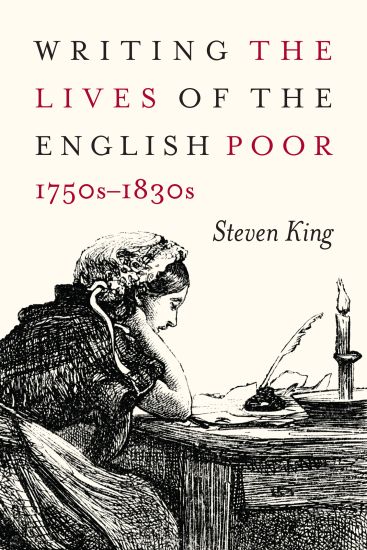
From the mid-eighteenth century to the early nineteenth century, the English Old Poor Law was waning, soon to be replaced by the New Poor Law and its dreaded workhouses. In Writing the Lives of the English Poor, 1750s-1830s Steven King reveals colourful stories of poor people, their advocates, and the officials with whom they engaged during this period in British history, distilled from the largest collection of parochial correspondence ever assembled. Investigating the way that people experienced and shaped the English and Welsh welfare system through the use of almost 26,000 pauper letters and the correspondence of overseers in forty-eight counties, Writing the Lives of the English Poor, 1750s-1830s reconstructs the process by which the poor claimed, extended, or defended their parochial allowances. Challenging preconceptions about literacy, power, social structure, and the agency of ordinary people, these stories suggest that advocates, officials, and the poor shared a common linguistic register and an understanding of how far welfare decisions could be contested and negotiated. King shifts attention away from traditional approaches to construct an unprecedented, comprehensive portrait of poor law administration and popular writing at the turn of the nineteenth century. At a time when the western European welfare model is under sustained threat, Writing the Lives of the English Poor, 1750s-1830s takes us back to its deepest roots to demonstrate that the signature of a strong welfare system is malleability.
Writing the Lives of the English Poor, 1750s-1830s

Writing the Lives of the English Poor, 1750s-1830s

Steven King

McGill-Queen's University Press
2019
nidottu
From the mid-eighteenth century to the early nineteenth century, the English Old Poor Law was waning, soon to be replaced by the New Poor Law and its dreaded workhouses. In Writing the Lives of the English Poor, 1750s-1830s Steven King reveals colourful stories of poor people, their advocates, and the officials with whom they engaged during this period in British history, distilled from the largest collection of parochial correspondence ever assembled. Investigating the way that people experienced and shaped the English and Welsh welfare system through the use of almost 26,000 pauper letters and the correspondence of overseers in forty-eight counties, Writing the Lives of the English Poor, 1750s-1830s reconstructs the process by which the poor claimed, extended, or defended their parochial allowances. Challenging preconceptions about literacy, power, social structure, and the agency of ordinary people, these stories suggest that advocates, officials, and the poor shared a common linguistic register and an understanding of how far welfare decisions could be contested and negotiated. King shifts attention away from traditional approaches to construct an unprecedented, comprehensive portrait of poor law administration and popular writing at the turn of the nineteenth century. At a time when the western European welfare model is under sustained threat, Writing the Lives of the English Poor, 1750s-1830s takes us back to its deepest roots to demonstrate that the signature of a strong welfare system is malleability.
Poverty, Sickness and Death in England, 1750-1850

Poverty, Sickness and Death in England, 1750-1850

Steven King

Continuum Publishing Corporation
2022
sidottu
Poverty, Sickness and Death in England, 1750-1850 provides an in-depth look at medical provision in England under the Old Poor Law, a subject on which little has been written to date. Based on the results of the first large-scale comparative regional analysis of the scale, form and duration of medical relief, this study provides a valuable insight into the issue of pauper access to medical care and sickness relief. Steven King draws on a wide range of sources for this study, including vestry minutes, overseers' accounts, doctor's treatment books, diaries, newspaper reporting, coroner's reports, court depositions, hospital and workhouse records and the correspondence of poor law unions. The largest ever sample of pauper letters are analysed to explore issues such as pauper agency, the nature of relief negotiation processes and the feelings and strategies of paupers.
Sickness, Medical Welfare and the English Poor, 1750-1834

Sickness, Medical Welfare and the English Poor, 1750-1834

Steven King

Manchester University Press
2018
sidottu
At the core of this book are three central contentions: That medical welfare became the totemic function of the Old Poor Law in its last few decades; that the poor themselves were able to negotiate this medical welfare rather than simply being subject to it; and that being doctored and institutionalised became part of the norm for the sick poor by the 1820s, in a way that had not been the case in the 1750s. Exploring the lives and medical experiences of the poor largely in their own words, Sickness, medical welfare and the English poor offers a comprehensive reinterpretation of the so-called crisis of the Old Poor Law from the later eighteenth century. The sick poor became an insistent presence in the lives of officials and parishes and the (largely positive) way that communities responded to their dire needs must cause us to rethink the role and character of the poor law.This book is relevant to United Nations Sustainable Development Goal 1, No poverty.
Women, Welfare and Local Politics, 1880-1920

Women, Welfare and Local Politics, 1880-1920

Steven King

Sussex Academic Press
2006
sidottu
Held back by the property qualifications needed to vote and stand as candidates in a range of local elections, female activists and feminists nonetheless formed local pressure groups to make their voices heard. When the property qualification was removed in the 1890s, they staked their claim to a formal engagement in public life, and by the early 20th century there were over 1000 female poor law Guardians. This book offers a reappraisal of the role of women in the politics and practice of welfare in late Victorian and early Edwardian England. Focusing on the Lancashire mill town of Bolton, it traces the emergence of a core of female social and political activists from the 1860s and analyses their achievements as they rose from the humble origins of a workhouse visiting committee to become pivotal players in the formulation and implementation of local welfare policy after 1894. Using a unique working diary written by the activist and female poor law Guardian Mary Haslam, the book portrays these Bolton women as sophisticated political operators. The author challenges established notions that women involved in local welfare administration were resented and achieved little, showing their importance in the process by which Bolton Poor Law Union moved from being one of the most backward and obstructive to one of the most progressive and dynamic in the country, adopting best practice from Britain and overseas and revolutionising the material and psychological fabric of the poor law.
Women, Welfare and Local Politics, 1880-1920

Women, Welfare and Local Politics, 1880-1920

Steven King

LIVERPOOL UNIVERSITY PRESS
2010
nidottu
Held back by the property qualifications needed to vote and stand as candidates in a range of local elections, female activists and feminists nonetheless formed local pressure groups to make their voices heard. When the property qualification was removed in the 1890s, they staked their claim to a formal engagement in public life, and by the early 20th century there were over 1000 female poor law Guardians. This book offers a reappraisal of the role of women in the politics and practice of welfare in late Victorian and early Edwardian England. Focusing on the Lancashire mill town of Bolton, it traces the emergence of a core of female social and political activists from the 1860s and analyses their achievements as they rose from the humble origins of a workhouse visiting committee to become pivotal players in the formulation and implementation of local welfare policy after 1894. Using a unique working diary written by the activist and female poor law Guardian Mary Haslam, the book portrays these Bolton women as sophisticated political operators. The author challenges established notions that women involved in local welfare administration were resented and achieved little, showing their importance in the process by which Bolton Poor Law Union moved from being one of the most backward and obstructive to one of the most progressive and dynamic in the country, adopting best practice from Britain and overseas and revolutionising the material and psychological fabric of the poor law.