Kirjojen hintavertailu. Mukana 11 244 527 kirjaa ja 12 kauppaa.

Kirjahaku

Etsi kirjoja tekijän nimen, kirjan nimen tai ISBN:n perusteella.

4 kirjaa tekijältä Steven L. Davis

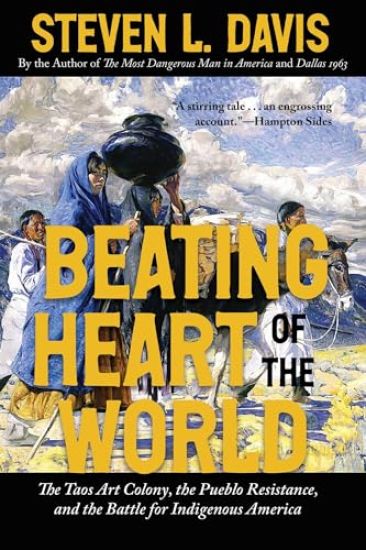
Beating Heart of the World

Beating Heart of the World

Steven L. Davis

UNIVERSITY OF NEW MEXICO PRESS
2026
sidottu
The fascinating true story of how Taos Pueblo’s Indigenous people recruited members of the famous Taos art colony to help spark a movement for Native justice that reshaped the nation. When the first white artists arrived in Taos by horse-drawn wagons, centuries of military conquest and brutal government policies had pushed Indigenous people to the brink of collapse. New Mexico’s pueblos had become some of America’s last holdouts of traditional culture, resolutely preserving their sacred lands in the face of mounting pressure. Many of the free-spirited newcomers in Taos came to admire the pueblos’ peaceful, communal societies and holy regard for the natural world. To these outsiders, pueblo civilization offered a marked contrast to America’s record of endless war, hyperindividualism, and environmental destruction. Among those attracted to Taos was the “Queen of Bohemia,” a wealthy New York heiress who dabbled in peyote and personified radical chic. Mabel Dodge Luhan fell in love with Taos Pueblo leader Tony Lujan and hoped to inspire an American spiritual renaissance based on pueblo values. She brought world-famous luminaries to Taos, including D. H. Lawrence, Georgia O’Keeffe, and Carl Jung, along with the fiery social reformer John Collier. As the art colony gained international fame, the US government targeted the pueblos for extinction, moving to seize their lands and destroy their cultures. This same grim scenario had played out countless times before in US history. It seemed that nothing could stop the brutal crush of conquest. But the puebloans, who had once unleashed a fierce revolt against Spain in 1680, found a new way to fight back in the modern era. As master diplomats, they began recruiting the prominent creatives converging on Taos, shrewdly enlisting them as political allies. And these artists and writers, at a crucial moment in history, rose to join the pueblos and challenged their own culture’s prevailing genocidal policies. Beating Heart of the World is the fascinating, fast-paced chronicle of a long-shot resistance movement that grew into a powerful national campaign for Indigenous justice. While a work of history, Beating Heart of the World speaks urgently to our own era as new resistance movements percolate—and as new generations increasingly look to ancient Indigenous wisdom to help guide sustainable pathways forward.
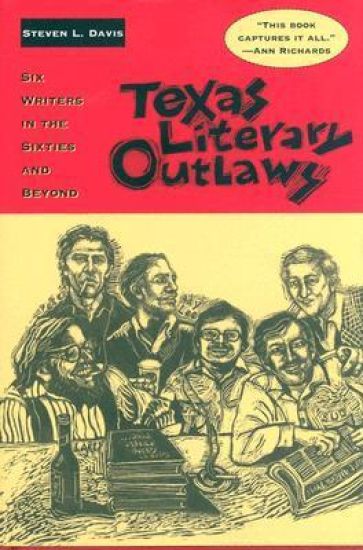
Texas Literary Outlaws

Texas Literary Outlaws

Steven L. Davis

Texas Christian University Press,U.S.
2004
sidottu
At the height of the sixties, a group of Texas writers stood apart from Texas' conservative establishment. Calling themselves the Mad Dogs, these six writers - Bud Shrake, Larry L. King, Billy Lee Brammer, Gary Cartwright, Dan Jenkins, and Peter Gent - closely observed the effects of the Vietnam War; the Kennedy assassination; the rapid population shift from rural to urban environments; Lyndon Johnson's rise to national prominence; the Civil Rights Movement; Tom Landry and the Dallas Cowboys; Willie Nelson, Jerry Jeff Walker, the new Outlaw music scene; the birth of a Texas film industry; Texas Monthly magazine; the flowering of ""Texas Chic""; and Ann Richards' election as governor. In Texas Literary Outlaws, Steven L. Davis makes extensive use of untapped literary archives to weave a fascinating portrait of writers who came of age during a period of rapid social change. With Davis's eye for vibrant detail and a broad historical perspective, Texas Literary Outlaws moves easily between H. L. Hunt's Dallas mansion and the West Texas oil patch, from the New York literary salon of Elaine's to the Armadillo World Headquarters in Austin, from Dennis Hopper on a film set in Mexico to Jerry Jeff Walker crashing a party at Princeton University, The Mad Dogs were less interested in Texas' mythic past than in the world they knew firstand - a place of fast-growing cities and hard-edged political battles. The Mad Dogs crashed headfirst into the sixties, and their legendary excesses have often overshadowed their literary production. Davis never shies away from criticism in this no-holds-barred account, yet he also shows how the Mad Dogs' rambunctious personae have deflected a true understanding of their deeper aims. Despite their popular image, the Mad Dogs were deadly serious as they turned their gaze on their home state, and they chronicled Texas culture with daring, wit, and sophistication.
Texas Literary Outlaws

Texas Literary Outlaws

Steven L. Davis

Texas Christian University Press,U.S.
2017
nidottu
At the height of the sixties, a group of Texas writers stood apart from Texas’s conservative establishment. Calling themselves the Mad Dogs, these six writers—Bud Shrake, Larry L. King, Billy Lee Brammer, Gary Cartwright, Dan Jenkins, and Peter Gent—closely observed the effects of the Vietnam War; the Kennedy assassination; the rapid population shift from rural to urban environments; Lyndon Johnson’s rise to national prominence; the Civil Rights Movement; Tom Landry and the Dallas Cowboys; Willie Nelson, Jerry Jeff Walker and the new Outlaw music scene; the birth of a Texas film industry; Texas Monthly magazine; the flowering of “Texas Chic”; and Ann Richards’s election as governor.In Texas Literary Outlaws, Steven L. Davis makes extensive use of untapped literary archives to weave a fascinating portrait of writers who came of age during a period of rapid social change. Despite their popular image, the Mad Dogs were deadly serious as they turned their gaze on their home state, and they chronicled Texas culture with daring, wit, and sophistication.
J. Frank Dobie

J. Frank Dobie

Steven L. Davis

UNIVERSITY OF TEXAS PRESS
2021
nidottu
The first Texas-based writer to gain national attention, J. Frank Dobie proved that authentic writing springs easily from the native soil of Texas and the Southwest. In best-selling books such as Tales of Old-Time Texas, Coronado's Children, and The Longhorns, Dobie captured the Southwest's folk history, which was quickly disappearing as the United States became ever more urbanized and industrial. Renowned as "Mr. Texas," Dobie paradoxically has almost disappeared from view-a casualty of changing tastes in literature and shifts in social and political attitudes since the 1960s.In this lively biography, Steven L. Davis takes a fresh look at a J. Frank Dobie whose "liberated mind" set him on an intellectual journey that culminated in Dobie becoming a political liberal who fought for labor, free speech, and civil rights well before these causes became acceptable to most Anglo Texans. Tracing the full arc of Dobie's life (1888–1964), Davis shows how Dobie's insistence on "free-range thinking" led him to such radical actions as calling for the complete integration of the University of Texas during the 1940s, as well as taking on governors, senators, and the FBI (which secretly investigated him) as Texas's leading dissenter during the McCarthy era.