Kirjojen hintavertailu. Mukana 11 244 527 kirjaa ja 12 kauppaa.

Kirjahaku

Etsi kirjoja tekijän nimen, kirjan nimen tai ISBN:n perusteella.

4 kirjaa tekijältä Steven Loza

Barrio Rhythm

Barrio Rhythm

Steven Loza

University of Illinois Press
1993
nidottu
The hit movie La Bamba (based on the life of Richie Valens), the versatile singer Linda Ronstadt, and the popular rock group Los Lobos all have roots in the dynamic music of the Mexican American community in East Los Angeles. The "Eastside Renaissance" in the region gave barrio music a symbolic power throughout the Southwest, yet its story has remained undocumented and virtually untold. In Barrio Rhythm, Steven Loza brings this hidden history to life, demonstrating the music's essential role in the cultural development of East Los Angeles and its influence on mainstream popular culture. Drawing from oral histories and other primary sources, as well as from appropriate representative songs, Loza provides a historical overview of the music from the nineteenth century to the present and offers in-depth profiles of nine Mexican American artists, groups, and entrepreneurs in Southern California from the post-World War II era to the present. His interviews with many of today's most influential barrio musicians, including members of Los Lobos, chronicle the cultural forces active in this complex urban community.
Tito Puente and the Making of Latin Music

Tito Puente and the Making of Latin Music

Steven Loza

University of Illinois Press
1999
nidottu
He is known as "El Rey" - the king - and has come to epitomize the Latin experience in music, not just to Latinos throughout the United States and Latin America but to a worldwide audience of all backgrounds. "Tito Puente and the Making of Latin Music" is the first in-depth historical, musical, and cultural look at the career and the influence of this giant of Latin music. In this seminal work, Steven Loza brings the man and his music vividly to life through exclusive interviews with Puente and a number of his close associates, including Hilton Ruiz, Ray Santos, Jerry Gonzlez, Poncho Sanchez, and Joe Conzo, as well as music journalist Max Salazar and former DJ/producer Chico Sesma. Loza shows how Puente's music evolved in tandem with the crystallization of Latin music into its current compelling mix of Afro-Cuban music, salsa, and Latin jazz. Tracing Puente's innovations as a drummer and a bandleader, Loza defines his influence over the course of half a century on Latin music as well as on other musicians and musical genres.Loza also delineates the social and cultural history of Latin music, exploring questions of nationalism and ethnic expression, the play between musical creation and commercial competition, and the politics of so-called multiculturalism as they bear on Latin music and musicians. The book includes detailed musical analyses and a discography of more than a hundred recordings. Celebrating a dynamic performer and a genre that is deeply rooted in America's rich ethnic diversity, "Tito Puente and the Making of Latin Music" traces a significant current in twentieth-century culture and reveals all the vibrancy and color of a consummate artist's life, work, and world.
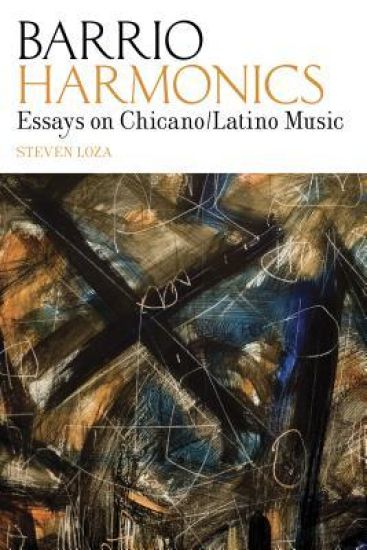
Barrio Harmonics

Barrio Harmonics

Steven Loza

UCLA Chicano Studies Research Center Press
2019
pokkari
This collection explores Chicano, Mexican, and Cuban musical forms and styles and their transformation in the United States. Employing musical, historical, and sociocultural analyses, Loza addresses issues such as marginality, identity, intercultural conflict and aesthetics, reinterpretation, postnationalism, and mestizaje—the mixing of race and culture—in the production and reception of Chicano/Latino music. Barrio Harmonics opens with a comprehensive overview that begins with music in the US Southwest in the seventeenth century and ends with the Grammy Awards for Latin American music in the first decade of the twenty-first century. In the following chapters, Loza discusses artists whose music ranges from sones, rancheros, and corridos to Latin jazz, R & B, and rock and roll. Among those he considers in depth are Pancho Sánchez, Lalo Guerrero, Tito Puente, and Los Lobos. He also surveys the contributions of scores of other individuals and groups who have shaped the current contour of Chicano/Latino music. Other topics include the music industry and the impact of globalization, the African diaspora, and Latin American music in Japan. In addition, Loza offers a candid assessment of intellectual capitalism and the void of nonwestern voices in contemporary scholarship.
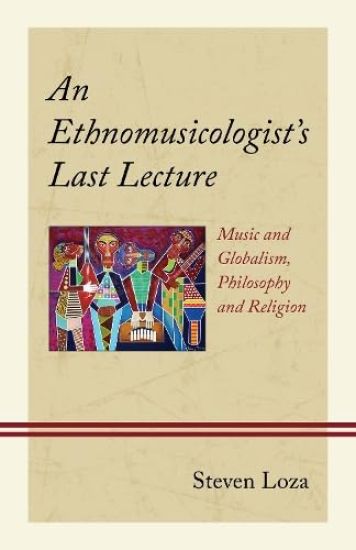
An Ethnomusicologist’s Last Lecture

An Ethnomusicologist’s Last Lecture

Steven Loza

BLOOMSBURY PUBLISHING PLC
2023
sidottu
An Ethnomusicologist’s Last Lecture: Music and Globalism, Philosophy and Religion explores the frustration of many scholars and artists with the content and directions of studies on music, which continue to be mostly based on Western thought, methods, theories, and even the modes of communicating ideas, and mostly through written, published works. Steven Loza argues that this pattern has pervaded both philosophy and ethnomusicology, fields which should be much more globally based in terms of intellectual analysis, culturally diverse points of view, and the recognition of multiple ways of thinking and doing. He criticizes what he perceives as an intellectual hegemony and biased approach to studying music, including the standards to which academics are held responsible, the manner in which we and our students have had to study music, and the forms by which we are pressured to present our findings, many times adapting theories and ideas that have nothing to do with the cultures we are examining through a one way microscope – and often a distorted lens. Loza takes the reader through an assortment of historical and contemporary global examples of musical expression, creative artists, and thinkers, looking for ways that we can assess how music both reflects and enacts culturally diverse peoples’ beliefs, thoughts, and world views.