Kirjojen hintavertailu. Mukana 11 342 296 kirjaa ja 12 kauppaa.

Kirjahaku

Etsi kirjoja tekijän nimen, kirjan nimen tai ISBN:n perusteella.

2 kirjaa tekijältä Steven M. Bachrach

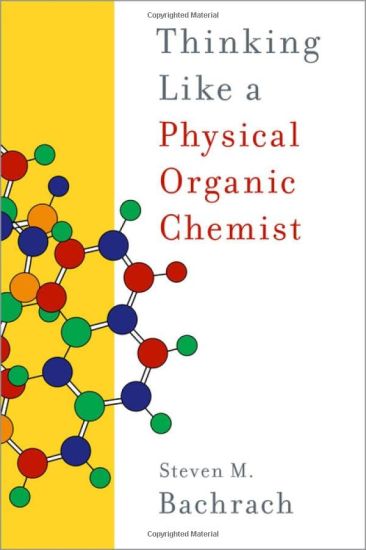
Thinking Like a Physical Organic Chemist

Thinking Like a Physical Organic Chemist

Steven M. Bachrach

OXFORD UNIVERSITY PRESS INC
2023
sidottu
Physical organic chemistry is a modern scientific subdiscipline whose reach is pervasive throughout chemistry, underpinning every academic and industrial synthetic process. All current organic chemistry textbooks rest upon the foundations of physical organic chemistry, and all of them rely on the concept of reaction mechanism as the means for understanding organic reactions. Yet many outside of the discipline either fear the topic or know nothing about it at all. The perceived difficulty of the subject of organic chemistry often prevents consideration of how the methods of organic chemists, their process of asking questions, devising tests, and building models, can be translated into other disciplines. In Thinking Like a Physical Organic Chemist, Professor Steven M. Bachrach uses analogies and colorful examples to provide experts and nonexperts alike with an alternative way of thinking about organic chemistry. He highlights a number of reaction mechanisms, walking through the important experiments that they rest upon, with an emphasis on the rules and logic systems that organic chemists have built to understand and predict reaction outcomes.
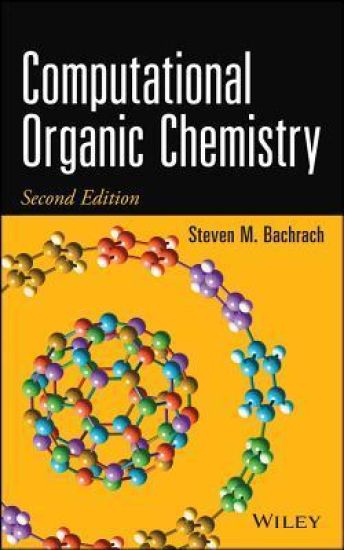
Computational Organic Chemistry

Computational Organic Chemistry

Steven M. Bachrach

John Wiley Sons Inc
2014
sidottu
The Second Edition demonstrates how computational chemistry continues to shed new light on organic chemistry The Second Edition of author Steven Bachrach’s highly acclaimed Computational Organic Chemistry reflects the tremendous advances in computational methods since the publication of the First Edition, explaining how these advances have shaped our current understanding of organic chemistry. Readers familiar with the First Edition will discover new and revised material in all chapters, including new case studies and examples. There’s also a new chapter dedicated to computational enzymology that demonstrates how principles of quantum mechanics applied to organic reactions can be extended to biological systems. Computational Organic Chemistry covers a broad range of problems and challenges in organic chemistry where computational chemistry has played a significant role in developing new theories or where it has provided additional evidence to support experimentally derived insights. Readers do not have to be experts in quantum mechanics. The first chapter of the book introduces all of the major theoretical concepts and definitions of quantum mechanics followed by a chapter dedicated to computed spectral properties and structure identification. Next, the book covers: Fundamentals of organic chemistryPericyclic reactionsDiradicals and carbenesOrganic reactions of anionsSolution-phase organic chemistryOrganic reaction dynamics The final chapter offers new computational approaches to understand enzymes. The book features interviews with preeminent computational chemists, underscoring the role of collaboration in developing new science. Three of these interviews are new to this edition. Readers interested in exploring individual topics in greater depth should turn to the book’s ancillary website www.comporgchem.com, which offers updates and supporting information. Plus, every cited article that is available in electronic form is listed with a link to the article.