Kirjojen hintavertailu. Mukana 11 699 587 kirjaa ja 12 kauppaa.

Kirjahaku

Etsi kirjoja tekijän nimen, kirjan nimen tai ISBN:n perusteella.

3 kirjaa tekijältä Steven M. Reiss

Frank Lloyd Wright's Pope-Leighey House

Frank Lloyd Wright's Pope-Leighey House

Steven M. Reiss

University of Virginia Press
2014
sidottu
Frank Lloyd Wright designed and realized over 500 buildings between 1886 and 1959 for a wide range of clients. In Frank Lloyd Wright's Pope-Leighey House, architect Steven Reiss presents the updated and detailed story of one of Wright’s few Virginia commissions. Designed and built for Loren and Charlotte Pope and later purchased by Marjorie and Robert Leighey, the Pope-Leighey House stands as a stunning example of an innovative form of shelter—which Wright called Usonian—for families beset by the Great Depression. Here, and elsewhere, Wright offered a unique and unprecedented approach for homes that would be small yet architecturally significant, carefully sited, and constructed of readily available local materials. He believed that anyone with an acre of land should have the opportunity to own a Usonian home. Set in Northern Virginia, the Pope-Leighey House has an unusual history in that it has been moved twice, first to the grounds of the National Trust’s Woodlawn to rescue it from the path of Route 66 in Falls Church, then to re-site it to better correspond to its original orientation. Wright’s mission was to remind us that ""we need to see life in simpler terms."" In this amply illustrated book, Reiss echoes Wright’s reminder that small, carefully built structures should be the starting point of sustainable and environmentally responsible house design.
Frank Lloyd Wright's Pope-Leighey House

Frank Lloyd Wright's Pope-Leighey House

Steven M. Reiss

UNIVERSITY OF VIRGINIA PRESS
2023
pokkari
In Frank Lloyd Wright’s Pope-Leighey House, architect Steven M. Reiss presents the updated and detailed story of one of Wright’s few Virginia commissions. Designed and built for Loren and Charlotte Pope and later purchased by Marjorie and Robert Leighey, the Pope-Leighey House stands as a stunning example of an innovative form of shelter—which Wright called Usonian—for families beset by the Great Depression. Here, and elsewhere, Wright offered a unique and unprecedented approach for homes that would be small yet architecturally significant, carefully sited, and constructed of readily available local materials. He believed that anyone with an acre of land should have the opportunity to own a Usonian home. In this amply illustrated book, Reiss echoes Wright’s reminder that small, carefully built structures should be the starting point of sustainable and environmentally responsible house design.
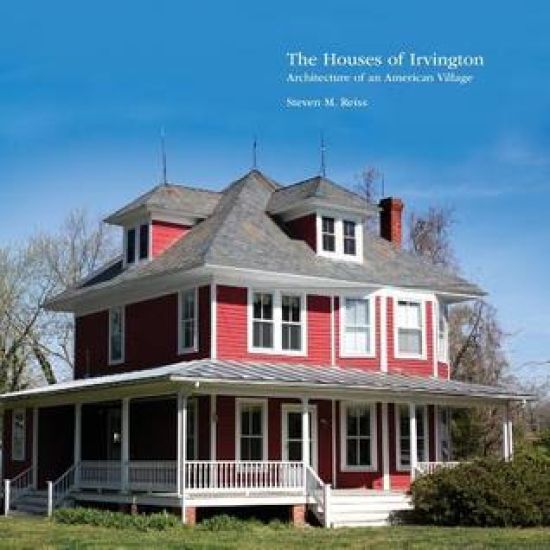
The Houses of Irvington: Architecture of an American Village

The Houses of Irvington: Architecture of an American Village

Steven M. Reiss

Createspace Independent Publishing Platform
2014
nidottu
The Houses of Irvington- Architecture of An American Village by Steven M. Reiss presents a unique perspective on the residential design of this small coastal Virginia community. Reiss has built on the villages' selection in 2000 into the National Register of Historic Places by examining its wide range of unique and well-preserved architectural house styles. Reiss sees Irvington as a living example of the chronology of American residential design. He believes that the history of any community can be better understood through the architectural lens of its homes constructed over time. The book offers a visual history of the evolution of American house design using photographs of over 40 Irvington homes and nine distinct home styles. The book examines each of these house styles in detail beginning with Irvington's oldest house, the 1740 Colonial designed Wilders Grant and takes the reader through the next several centuries of American houses up to and including a number of contemporary houses in Irvington. Using historic and current photographs and pen and ink sketches of each house style by the author the book frames the houses of Irvington from the mid-1700s through the Steamboat Era to the picturesque Irvington of today." A special section of the book is titled Yesterday and Today, which looks at a number of photographs of Irvington buildings and compares them with photographs from when they were first built. The Houses of Irvington reinforces how a community's character is deeply rooted in its past and that while structures can not always be saved, they should be remembered as their stories are told and retold through time.