Kirjahaku
Etsi kirjoja tekijän nimen, kirjan nimen tai ISBN:n perusteella.
8 kirjaa tekijältä Steven Marcus
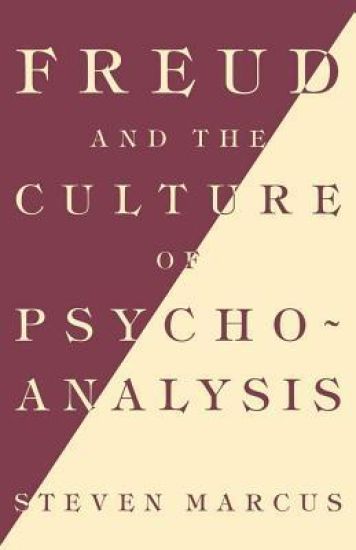
Steven Marcus discusses Freud's famous cases "Dora" and "The Rat Man," as well as the Freud--Fliess correspondence, the Three Essays on the Theory of Sexuality, and the evolution of Freud's notion of the superego. Through his close reading of various of Freud's theoretical and clinical texts, he is able to asses Freud both as an exemplary late Victorian and as a pivotal figure in the creation of modern thought and culture.
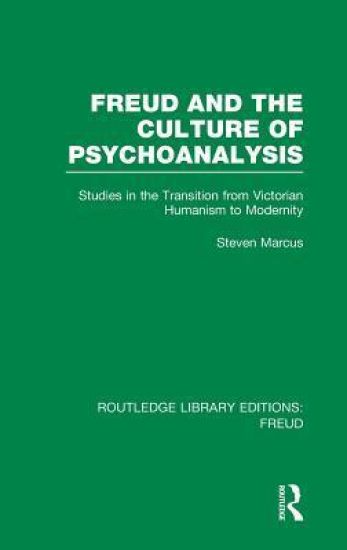
Originally published in 1984, this book broke new ground in assessing Freud as both an exemplary late-Victorian and as a pivotal figure in the creation of modern thought and culture. In his close reading of various of Freud’s theoretical and clinical texts, including two of the most famous case histories, Steven Marcus uncovers the steps in the development of Freud’s thought, the dynamics and contradictions and ‘the intellectual and emotional urgings, forces and conflicts that were at work… as the first original insights and discoveries that constituted the inception of psychoanalysis as a theory, discipline of inquiry, and new kind of therapy, came suddenly, often unexpectedly and without being bidden, upon Freud’.Central to Professor Marcus’ inquiry is the relationship of Freud’s work to cultural change and to the very process of disclosure, formation and construction in the transition to modernity. Freud’s writings, and the psychoanalytic discipline of which they are the foundations, are placed in the context of their contribution to modern modes of thought, and of their influence on our notions of the centres of significance of each existence as a whole.Freud and the Culture of Psychoanalysis is a major contribution to our understanding of how ideas and theories become internalized into the intellectual framework of our lives and affect the way we think about the world. By moving backward and forward from pre-Freudian to post-Freudian thinkers, Professor Marcus takes us on a journey through cultural transition that is also an exploration of how the individual interacts with his own moment in history to forge new modes of consciousness.
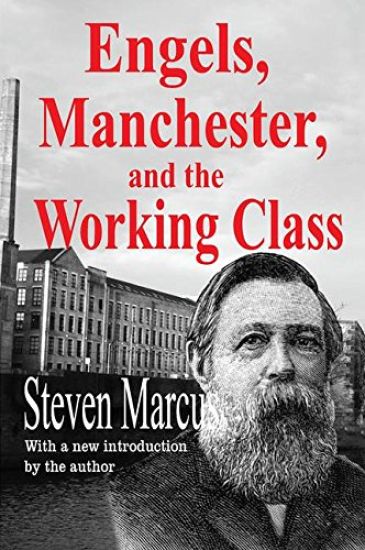
Friedrich Engels' first major work, The Condition of the Working Class in England in 1844, has long been considered a social, political, and economic classic. The first book of its kind to study the phenomenon of urbanism and the problems of the modern city, Engels' text contains many of the ideas he was later to develop in collaboration with Karl Marx. In this book, Steven Marcus, author of the highly acclaimed The Other Victorians, applies himself to the study of Engels' book and the conditions that combined to produce it.Marcus studies the city of Manchester, centre of the first Industrial Revolution, between 1835 and 1850 when the city and its inhabitants were experiencing the first great crisis of the newly emerging industrial capitalism. He also examines Engels himself, son of a wealthy German textile manufacturer, who was sent to Manchester to complete his business education in the English cotton mills.Touching upon several disciplines, including the history of socialism, urban sociology, Marxist thought, and the history and theory of the Industrial Revolution, Engels, Manchester, and the Working Class offers a fascinating study of nineteenth-century English literature and cultural life.
Originally published in 1984, this book broke new ground in assessing Freud as both an exemplary late-Victorian and as a pivotal figure in the creation of modern thought and culture. In his close reading of various of Freud’s theoretical and clinical texts, including two of the most famous case histories, Steven Marcus uncovers the steps in the development of Freud’s thought, the dynamics and contradictions and ‘the intellectual and emotional urgings, forces and conflicts that were at work… as the first original insights and discoveries that constituted the inception of psychoanalysis as a theory, discipline of inquiry, and new kind of therapy, came suddenly, often unexpectedly and without being bidden, upon Freud’.Central to Professor Marcus’ inquiry is the relationship of Freud’s work to cultural change and to the very process of disclosure, formation and construction in the transition to modernity. Freud’s writings, and the psychoanalytic discipline of which they are the foundations, are placed in the context of their contribution to modern modes of thought, and of their influence on our notions of the centres of significance of each existence as a whole.Freud and the Culture of Psychoanalysis is a major contribution to our understanding of how ideas and theories become internalized into the intellectual framework of our lives and affect the way we think about the world. By moving backward and forward from pre-Freudian to post-Freudian thinkers, Professor Marcus takes us on a journey through cultural transition that is also an exploration of how the individual interacts with his own moment in history to forge new modes of consciousness.

Friedrich Engels' first major work, The Condition of the Working Class in England in 1844, has long been considered a social, political, and economic classic. The first book of its kind to study the phenomenon of urbanism and the problems of the modern city, Engels' text contains many of the ideas he was later to develop in collaboration with Karl Marx. In this book, Steven Marcus, author of the highly acclaimed The Other Victorians, applies himself to the study of Engels' book and the conditions that combined to produce it.Marcus studies the city of Manchester, centre of the first Industrial Revolution, between 1835 and 1850 when the city and its inhabitants were experiencing the first great crisis of the newly emerging industrial capitalism. He also examines Engels himself, son of a wealthy German textile manufacturer, who was sent to Manchester to complete his business education in the English cotton mills.Touching upon several disciplines, including the history of socialism, urban sociology, Marxist thought, and the history and theory of the Industrial Revolution, Engels, Manchester, and the Working Class offers a fascinating study of nineteenth-century English literature and cultural life.