Kirjojen hintavertailu. Mukana 11 244 527 kirjaa ja 12 kauppaa.

Kirjahaku

Etsi kirjoja tekijän nimen, kirjan nimen tai ISBN:n perusteella.

43 kirjaa tekijältä Steven Pinker

The Language Instinct

The Language Instinct

Steven Pinker

HarperCollins
2007
pokkari
In this classic, the world's expert on language and mind lucidly explains everything you always wanted to know about language: how it works, how children learn it, how it changes, how the brain computes it, and how it evolved. With deft use of examples of humor and wordplay, Steven Pinker weaves our vast knowledge of language into a compelling story: language is a human instinct, wired into our brains by evolution. The Language Instinct received the William James Book Prize from the American Psychological Association and the Public Interest Award from the Linguistics Society of America. This edition includes an update on advances in the science of language since The Language Instinct was first published.
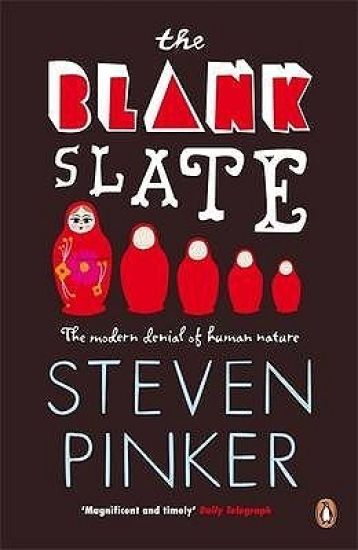
Blank Slate

Blank Slate

Steven Pinker

Penguin Books Ltd.
2003
pokkari
'A passionate defence of the enduring power of human nature ... both life-affirming and deeply satisfying' Daily Telegraph Recently many people have assumed that we are blank slates shaped by our environment. But this denies the heart of our being: human nature. Violence is not just a product of society; male and female minds are different; the genes we give our children shape them more than our parenting practices. To acknowledge our innate abilities, Pinker shows, is not to condone inequality, but to understand the very foundations of humanity. 'Brilliant ... enjoyable, informative, clear, humane' New Scientist 'If you think the nature-nurture debate has been resolved, you are wrong ... this book is required reading' Literary Review 'An original and vital contribution to science and also a rattling good read' Matt Ridley, Sunday Telegraph 'Startling ... This is a breath of air for a topic that has been politicized for too long' Economist
The Stuff of Thought

The Stuff of Thought

Steven Pinker

Penguin Books Ltd
2008
pokkari
In The Stuff of Thought: Language as a Window into Human Nature, Steven Pinker looks at how the relationship between words and thoughts can help us understand who we are. Why do so many swear words involve topics like sex, bodily functions or the divine? Why do some children's names thrive while others fall out of favour? Why do we threaten and bribe and seduce in such elaborate, often comical ways? How can a choice of metaphor damn a politician or start a war? And why do we rarely say what we actually mean? Language, as Steven Pinker shows, is at the heart of our lives, and through the way we use it - whether to inform, persuade, entertain or manipulate - we can glimpse the very essence of what makes us human. 'Awesome' Daily Mail 'Highly entertaining ... funny and thought-provoking' The Times 'Anyone interested in language should read The Stuff of Thought ... moments of genuine revelation and some very good jokes' Mark Haddon, Sunday Telegraph Books of the Year 'No one writes about language as clearly as Steven Pinker, and this is his best book yet' David Crystal, Financial Times Steven Pinker is the Johnstone Family Professor in the Department of Psychology at Harvard University. Until 2003, he taught in the Department of Brain and Cognitive Sciences at MIT. He conducts research on language and cognition, writes for publications such as The New York Times, Time and Slate, and is the author of six books, including The Language Instinct, How the Mind Works and The Blank Slate.
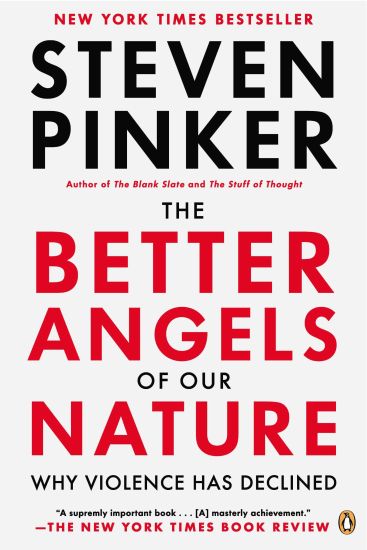
Better Angels of Our Nature

Better Angels of Our Nature

Steven Pinker

Penguin Books Ltd.
2012
pokkari
Can violence really have declined? The images of conflict we see daily on our screens from around the world suggest this is an almost obscene claim to be making. In this title, the author shows violence within and between societies - both murder and warfare.
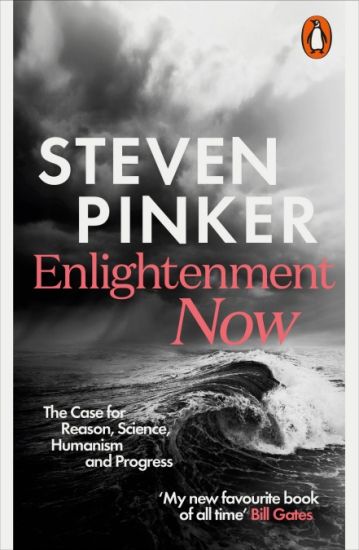
Enlightenment Now

Enlightenment Now

Steven Pinker

Penguin Books Ltd.
2019
pokkari
If you follow the headlines, the world in the 21st century appears to be sinking into chaos, hatred, and irrationality. Yet Steven Pinker shows that this is an illusion - a symptom of historical amnesia and statistical fallacies. If you follow the trendlines rather than the headlines, you discover that our lives have become longer, healthier, safer, happier, more peaceful, more stimulating and more prosperous - not just in the West, but worldwide. Such progress is no accident: it's the gift of a coherent and inspiring value system that many of us embrace without even realizing it. These are the values of the Enlightenment: of reason, science, humanism and progress.The challenges we face today are formidable, including inequality, climate change, Artificial Intelligence and nuclear weapons. But the way to deal with them is not to sink into despair or try to lurch back to a mythical idyllic past; it's to treat them as problems we can solve, as we have solved other problems in the past. In making the case for an Enlightenment newly recharged for the 21st century, Pinker shows how we can use our faculties of reason and sympathy to solve the problems that inevitably come with being products of evolution in an indifferent universe. We will never have a perfect world, but - defying the chorus of fatalism and reaction - we can continue to make it a better one.The challenges we face today are formidable, including inequality, climate change, Artificial Intelligence and nuclear weapons. But the way to deal with them is not to sink into despair or try to lurch back to a mythical idyllic past; it's to treat them as problems we can solve, as we have solved other problems in the past. In making the case for an Enlightenment newly recharged for the 21st century, Pinker shows how we can use our faculties of reason and sympathy to solve the problems that inevitably come with being products of evolution in an indifferent universe. We will never have a perfect world, but - defying the chorus of fatalism and reaction - we can continue to make it a better one.
The Language Instinct

The Language Instinct

Steven Pinker

Penguin Books Ltd
2015
pokkari
'Dazzling... Pinker's big idea is that language is an instinct...as innate to us as flying is to geese... Words can hardly do justice to the superlative range and liveliness of Pinker's investigations'- Independent'A marvellously readable book... illuminates every facet of human language: its biological origin, its uniqueness to humanity, it acquisition by children, its grammatical structure, the production and perception of speech, the pathology of language disorders and the unstoppable evolution of languages and dialects' - Nature
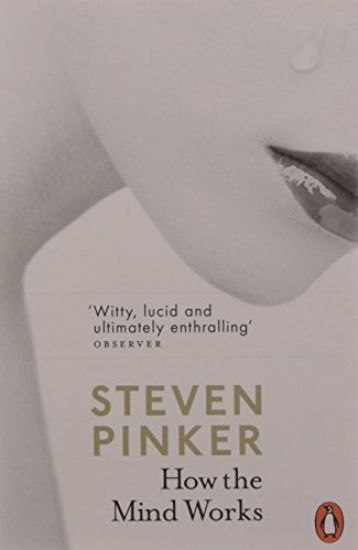
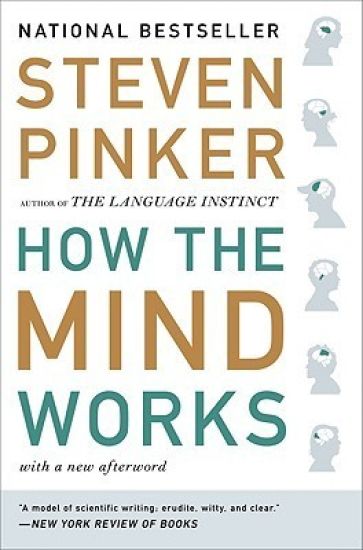
How the Mind Works

How the Mind Works

Steven Pinker

Penguin Books Ltd
2015
pokkari
Why do we laugh? What makes memories fade? Why do people believe in ghosts? How the Mind Works explores every aspect of mental life, showing that our minds are not a mystery, but a system of organs of computation designed by natural selection.
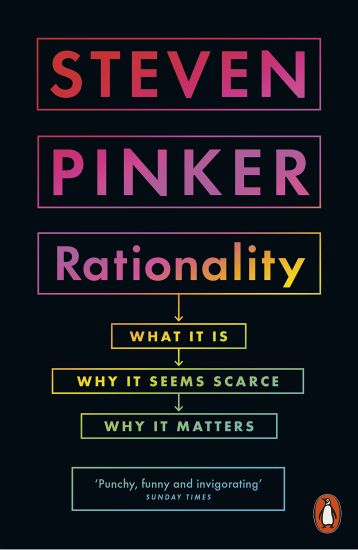
Rationality

Rationality

Steven Pinker

PENGUIN BOOKS LTD
2022
pokkari
A TIMES BOOK OF THE YEAR 2021 'Punchy, funny and invigorating ... Pinker is the high priest of rationalism' Sunday Times 'If you've ever considered taking drugs to make yourself smarter, read Rationality instead. It's cheaper, more entertaining, and more effective' Jonathan Haidt, author of The Righteous Mind In the twenty-first century, humanity is reaching new heights of scientific understanding - and at the same time appears to be losing its mind. How can a species that discovered vaccines for Covid-19 in less than a year produce so much fake news, quack cures and conspiracy theorizing? In Rationality, Pinker rejects the cynical cliché that humans are simply an irrational species - cavemen out of time fatally cursed with biases, fallacies and illusions. After all, we discovered the laws of nature, lengthened and enriched our lives and set the benchmarks for rationality itself. Instead, he explains, we think in ways that suit the low-tech contexts in which we spend most of our lives, but fail to take advantage of the powerful tools of reasoning we have built up over millennia: logic, critical thinking, probability, causal inference, and decision-making under uncertainty. These tools are not a standard part of our educational curricula, and have never been presented clearly and entertainingly in a single book - until now. Rationality matters. It leads to better choices in our lives and in the public sphere, and is the ultimate driver of social justice and moral progress. Brimming with insight and humour, Rationality will enlighten, inspire and empower. 'A terrific book, much-needed for our time' Peter Singer
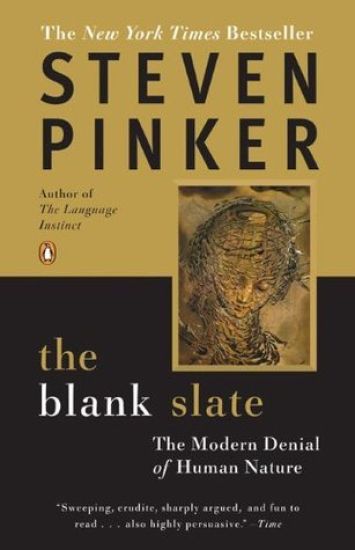
The Blank Slate: The Modern Denial of Human Nature

The Blank Slate: The Modern Denial of Human Nature

Steven Pinker

Penguin Publishing Group
2003
nidottu
In The Blank Slate, Steven Pinker, one of the world's leading experts on language and the mind, explores the idea of human nature and its moral, emotional, and political colorings. With characteristic wit, lucidity, and insight, Pinker argues that the dogma that the mind has no innate traits-a doctrine held by many intellectuals during the past century-denies our common humanity and our individual preferences, replaces objective analyses of social problems with feel-good slogans, and distorts our understanding of politics, violence, parenting, and the arts. Injecting calm and rationality into debates that are notorious for ax-grinding and mud-slinging, Pinker shows the importance of an honest acknowledgment of human nature based on science and common sense. Author Biography: Steven Pinker is Peter de Florez Professor at MIT. He has received many prizes for his teaching, his research, and his bestselling books, The Language Instinct, How the Mind Works, and Words and Rules.
Enlightenment Now: The Case for Reason, Science, Humanism, and Progress
INSTANT NEW YORK TIMES BESTSELLER A NEW YORK TIMES NOTABLE BOOK OF 2018ONE OF THE ECONOMIST'S BOOKS OF THE YEAR"My new favorite book of all time." --Bill Gates If you think the world is coming to an end, think again: people are living longer, healthier, freer, and happier lives, and while our problems are formidable, the solutions lie in the Enlightenment ideal of using reason and science. By the author of the new book, Rationality. Is the world really falling apart? Is the ideal of progress obsolete? In this elegant assessment of the human condition in the third millennium, cognitive scientist and public intellectual Steven Pinker urges us to step back from the gory headlines and prophecies of doom, which play to our psychological biases. Instead, follow the data: In seventy-five jaw-dropping graphs, Pinker shows that life, health, prosperity, safety, peace, knowledge, and happiness are on the rise, not just in the West, but worldwide. This progress is not the result of some cosmic force. It is a gift of the Enlightenment: the conviction that reason and science can enhance human flourishing. Far from being a na ve hope, the Enlightenment, we now know, has worked. But more than ever, it needs a vigorous defense. The Enlightenment project swims against currents of human nature--tribalism, authoritarianism, demonization, magical thinking--which demagogues are all too willing to exploit. Many commentators, committed to political, religious, or romantic ideologies, fight a rearguard action against it. The result is a corrosive fatalism and a willingness to wreck the precious institutions of liberal democracy and global cooperation. With intellectual depth and literary flair, Enlightenment Now makes the case for reason, science, and humanism: the ideals we need to confront our problems and continue our progress.
The Stuff of Thought: Language as a Window Into Human Nature
This New York Times bestseller is an exciting and fearless investigation of language from the author of Rationality, The Better Angels of Our Nature and The Sense of Style and Enlightenment Now. "Curious, inventive, fearless, naughty." --The New York Times Book Review Bestselling author Steven Pinker possesses that rare combination of scientific aptitude and verbal eloquence that enables him to provide lucid explanations of deep and powerful ideas. His previous books - including the Pulitzer Prize finalist The Blank Slate - have catapulted him into the limelight as one of today's most important popular science writers. In The Stuff of Thought, Pinker presents a fascinating look at how our words explain our nature. Considering scientific questions with examples from everyday life, The Stuff of Thought is a brilliantly crafted and highly readable work that will appeal to fans of everything from The Selfish Gene and Blink to Eats, Shoots & Leaves.
The Better Angels of Our Nature: Why Violence Has Declined
"If I could give each of you a graduation present, it would be this--the most inspiring book I've ever read." --Bill Gates A provocative history of violence--from the New York Times bestselling author of The Stuff of Thought, The Blank Slate, and Enlightenment Now.Believe it or not, today we may be living in the most peaceful moment in our species' existence. In his gripping and controversial new work, New York Times bestselling author Steven Pinker shows that despite the ceaseless news about war, crime, and terrorism, violence has actually been in decline over long stretches of history. Exploding myths about humankind's inherent violence and the curse of modernity, this ambitious book continues Pinker's exploration of the essence of human nature, mixing psychology and history to provide a remarkable picture of an increasingly enlightened world.
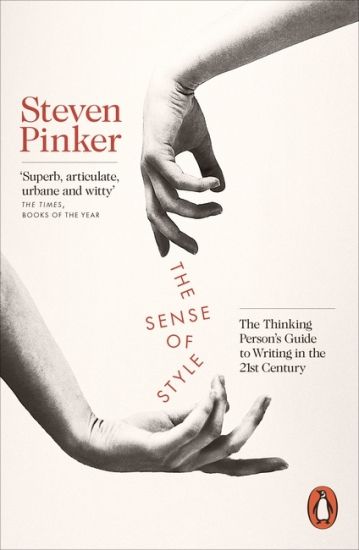
The Sense of Style: The Thinking Person's Guide to Writing in the 21st Century
"Charming and erudite," from the author of Rationality and Enlightenment Now, "The wit and insight and clarity he brings . . . is what makes this book such a gem." --Time.com Why is so much writing so bad, and how can we make it better? Is the English language being corrupted by texting and social media? Do the kids today even care about good writing--and why should we care? From the author of The Better Angels of Our Nature and Enlightenment Now. In this entertaining and eminently practical book, the cognitive scientist, dictionary consultant, and New York Times-bestselling author Steven Pinker rethinks the usage guide for the twenty-first century. Using examples of great and gruesome modern prose while avoiding the scolding tone and Spartan tastes of the classic manuals, he shows how the art of writing can be a form of pleasurable mastery and a fascinating intellectual topic in its own right. The Sense of Style is for writers of all kinds, and for readers who are interested in letters and literature and are curious about the ways in which the sciences of mind can illuminate how language works at its best.
Language, Cognition, and Human Nature

Language, Cognition, and Human Nature

Steven Pinker

Oxford University Press Inc
2015
nidottu
Language, Cognition, and Human Nature collects together for the first time much of Steven Pinker's most influential scholarly work on language and cognition. Pinker's seminal research explores the workings of language and its connections to cognition, perception, social relationships, child development, human evolution, and theories of human nature. This eclectic collection spans Pinker's thirty-year career, exploring his favorite themes in greater depth and scientific detail. It includes thirteen of Pinker's classic articles, ranging over topics such as language development in children, mental imagery, the recognition of shapes, the computational architecture of the mind, the meaning and uses of verbs, the evolution of language and cognition, the nature-nurture debate, and the logic of innuendo and euphemism. Each outlines a major theory or takes up an argument with another prominent scholar, such as Stephen Jay Gould, Noam Chomsky, or Richard Dawkins. Featuring a new introduction by Pinker that discusses his books and scholarly work, this collection reflects essential contributions to cognitive science by one of our leading thinkers and public intellectuals.
Language, Cognition, and Human Nature

Language, Cognition, and Human Nature

Steven Pinker

Oxford University Press Inc
2013
sidottu
Language, Cognition, and Human Nature collects together for the first time Steven Pinker's most influential scholarly work on language and cognition. Pinker is a highly eminent cognitive scientist, and his research emphasizes the importance of language and its connections to cognition, social relationships, child development, human evolution, and theories of human nature. The thirteen essays in this eclectic collection span Pinker's thirty-year career, ranging over topics such as language acquisitions, visual cognition, the meaning and syntax of verbs, regular and irregular phenomena in language and their implications for the mechanisms of cognition, and the social psychology of direct and indirect speech. Each outlines a major theory - such as evolution, or nature vs. nurture - or takes up an argument with other prominent scholars such as Stephen Jay Gould, Noam Chomsky, or Richard Dawkins. Featuring a new introduction by Pinker that discusses his books and scholarly work, this book represents a major contribution to the field of cognitive science, by one of the field's leading thinkers.
When Everyone Knows That Everyone Knows...

When Everyone Knows That Everyone Knows...

Steven Pinker

PENGUIN BOOKS LTD
2025
sidottu
'One of the most insightful books I’ve read about what makes us human and how we understand each other' Bill GatesSteven Pinker, one of the world's greatest thinkers and bestselling author of Enlightenment Now, The Better Angels of Our Nature and The Language Instinct, reveals the power and perils of thinking alike As a cognitive scientist, the ultimate subject of Steven Pinker’s fascination is how we think about each other’s thoughts, ad infinitum. It sounds impossible, but Steven Pinker shows that we do it all the time. This awareness, which we experience as something that is public or “out there,” is called common knowledge, and it has a momentous impact on our social, political, and economic lives.Common knowledge, Pinker shows, can make sense of many of life’s enigmas: financial bubbles and crashes, revolutions that come out of nowhere, the posturing and pretence of diplomacy, the eruption of social media shaming mobs and academic cancel culture, the awkwardness of a first date. But people also go to great lengths to avoid common knowledge—to ensure that even if everyone knows something, they can’t know that everyone else knows they know it. And so we get rituals like benign hypocrisy, veiled bribes and threats, sexual innuendo, and pretending not to see the elephant in the room.In exploring the paradoxes of human behaviour, When Everyone Knows that Everyone Knows… invites us to understand the ways we try to get into each other’s heads, and the harmonies, hypocrisies, and outrages that result.
When Everyone Knows That Everyone Knows...

When Everyone Knows That Everyone Knows...

Steven Pinker

Penguin Books Ltd.
2025
nidottu
One of the world's greatest thinkers investigates the logic and psychology of common knowledge As a cognitive scientist, the ultimate subject of Steven Pinker's fascination is how we think about each other's thoughts, ad infinitum. It sounds impossible, but Steven Pinker shows that we do it all the time. This awareness, which we experience as something that is public or "out there," is called common knowledge, and it has a momentous impact on our social, political, and economic lives.Common knowledge, Pinker shows, can make sense of many of life's enigmas: financial bubbles and crashes, revolutions that come out of nowhere, the posturing and pretence of diplomacy, the eruption of social media shaming mobs and academic cancel culture, the awkwardness of a first date. But people also go to great lengths to avoid common knowledge-to ensure that even if everyone knows something, they can't know that everyone else knows they know it. And so we get rituals like benign hypocrisy, veiled bribes and threats, sexual innuendo, and pretending not to see the elephant in the room.In exploring the paradoxes of human behaviour, When Everyone Knows that Everyone Knows... invites us to understand the ways we try to get into each other's heads, and the harmonies, hypocrisies, and outrages that result.
The Sense of Style

The Sense of Style

Steven Pinker

Penguin Books Ltd
2015
pokkari
Steven Pinker, the bestselling author of The Language Instinct, deploys his gift for explaining big ideas in The Sense of Style - an entertaining writing guide for the 21st centuryWhat is the secret of good prose? Does writing well even matter in an age of instant communication? Should we care? In this funny, thoughtful book about the modern art of writing, Steven Pinker shows us why we all need a sense of style.More than ever before, the currency of our social and cultural lives is the written word, from Twitter and texting to blogs, e-readers and old-fashioned books. But most style guides fail to prepare people for the challenges of writing in the 21st century, portraying it as a minefield of grievous errors rather than a form of pleasurable mastery. They fail to deal with an inescapable fact about language: it changes over time, adapted by millions of writers and speakers to their needs. Confusing changes in the world with moral decline, every generation believes the kids today are degrading society and taking language with it. A guide for the new millennium, writes Steven Pinker, has to be different.Drawing on the latest research in linguistics and cognitive science, Steven Pinker replaces the recycled dogma of previous style guides with reason and evidence. This thinking person's guide to good writing shows why style still matters: in communicating effectively, in enhancing the spread of ideas, in earning a reader's trust and, not least, in adding beauty to the world. Eye-opening, mind-expanding and cheerful, The Sense of Style shows that good style is part of what it means to be human.
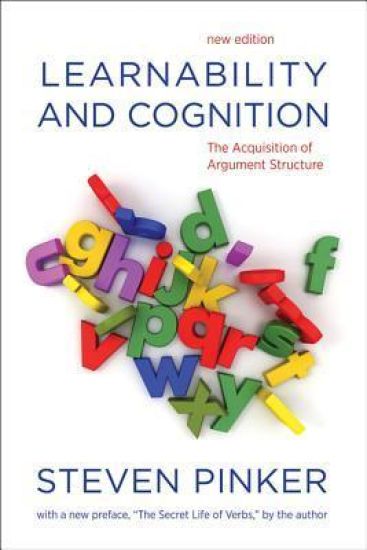
Learnability and Cognition

Learnability and Cognition

Steven Pinker

MIT Press
2013
pokkari
A classic book about language acquisition and conceptual structure, with a new preface by the author, "The Secret Life of Verbs."Before Steven Pinker wrote bestsellers on language and human nature, he wrote several technical monographs on language acquisition that have become classics in cognitive science. Learnability and Cognition, first published in 1989, brought together two big topics: how do children learn their mother tongue, and how does the mind represent basic categories of meaning such as space, time, causality, agency, and goals? The stage for this synthesis was set by the fact that when children learn a language, they come to make surprisingly subtle distinctions: pour water into the glass and fill the glass with water sound natural, but pour the glass with water and fill water into the glass sound odd. How can this happen, given that children are not reliably corrected for uttering odd sentences, and they don't just parrot back the correct ones they hear from their parents? Pinker resolves this paradox with a theory of how children acquire the meaning and uses of verbs, and explores that theory's implications for language, thought, and the relationship between them.As Pinker writes in a new preface, "The Secret Life of Verbs," the phenomena and ideas he explored in this book inspired his 2007 bestseller The Stuff of Thought: Language as a Window into Human Nature. These technical discussions, he notes, provide insight not just into language acquisition but into literary metaphor, scientific understanding, political discourse, and even the conceptions of sexuality that go into obscenity.
How the Mind Works

How the Mind Works

Steven Pinker

WW Norton Co
2009
pokkari
In this Pulitzer Prize finalist and national bestseller, one of the world's leading cognitive scientists tackles the workings of the human mind. What makes us rational and why are we so often irrational? How do we see in three dimensions? What makes us happy, afraid, angry, disgusted, or sexually aroused? Why do we fall in love? And how do we grapple with the imponderables of morality, religion, and consciousness? ?How the Mind Works? synthesizes the most satisfying explanations of our mental life from cognitive science, evolutionary biology, and other fields to explain what the mind is, how it evolved, and how it allows us to see, think, feel, laugh, interact, enjoy the arts, and contemplate the mysteries of life. This new edition of Pinker's bold and buoyant classic is updated with a new foreword by the author."