Kirjojen hintavertailu. Mukana 11 627 670 kirjaa ja 12 kauppaa.

Kirjahaku

Etsi kirjoja tekijän nimen, kirjan nimen tai ISBN:n perusteella.

12 kirjaa tekijältä Steven Rybin

The Cinema of Michael Mann

The Cinema of Michael Mann

Steven Rybin

Lexington Books
2007
sidottu
Few other contemporary Hollywood filmmakers fit the category of 'genre stylist' as well as Michael Mann, the director of such films as Heat, The Insider, Ali, Collateral, Manhunter, Thief, and Miami Vice. Mann's film style marks him as a director who chooses the iconographic backdrop of a genre as a canvas upon which he and his collaborators can craft a unique cinematic vision. The Cinema of Michael Mann traces the innovative and under-explored stylistic contours of Mann's work, the director's inflection upon and innovation within preexisting genre frameworks, and the relationship of both style and genre to issues of authorship and film criticism. Steven Rybin's critical study of Mann's cinema, and the importance of the filmmaker's themes to our contemporary world, is valuable for both film scholars and cinephiles alike.
The Cinema of Michael Mann

The Cinema of Michael Mann

Steven Rybin

Lexington Books
2007
nidottu
Few other contemporary Hollywood filmmakers fit the category of "genre stylist" as well as Michael Mann, the director of such films as Heat, The Insider, Ali, Collateral, Manhunter, Thief, and Miami Vice. Mann's film style marks him as a director who chooses the iconographic backdrop of a genre as a canvas upon which he and his collaborators can craft a unique cinematic vision. The Cinema of Michael Mann traces the innovative and under-explored stylistic contours of Mann's work, the director's inflection upon and innovation within preexisting genre frameworks, and the relationship of both style and genre to issues of authorship and film criticism. Steven Rybin's critical study of Mann's cinema, and the importance of the filmmaker's themes to our contemporary world, is valuable for both film scholars and cinephiles alike.
Terrence Malick and the Thought of Film

Terrence Malick and the Thought of Film

Steven Rybin

Lexington Books
2011
sidottu
As the director of Badlands, Days of Heaven, The Thin Red Line, and The New World, Terrence Malick has created a remarkable body of work that enables imaginative acts of philosophical interpretation. Steven Rybin's Terrence Malick and the Thought of Film looks closely at the dialogue between Malick's films and our powers of thinking, showing how his work casts the philosophy of thinkers such as Stanley Cavell, Martin Heidegger, Walter Benjamin, André Bazin, Edgar Morin, and Immanuel Kant in new cinematic light. With a special focus on how the voices of Malick's characters move us to thought, Terrence Malick and the Thought of Film offers new readings of his films and places Malick's work in the context of recent debates in the interdisciplinary field of film and philosophy. Rybin also provides a postscript on Malick's recently-released fifth film, The Tree of Life.
Terrence Malick and the Thought of Film

Terrence Malick and the Thought of Film

Steven Rybin

Lexington Books
2012
nidottu
As the director of Badlands, Days of Heaven, The Thin Red Line, and The New World, Terrence Malick has created a remarkable body of work that enables imaginative acts of philosophical interpretation. Steven Rybin's Terrence Malick and the Thought of Film looks closely at the dialogue between Malick's films and our powers of thinking, showing how his work casts the philosophy of thinkers such as Stanley Cavell, Martin Heidegger, Walter Benjamin, André Bazin, Edgar Morin, and Immanuel Kant in new cinematic light. With a special focus on how the voices of Malick's characters move us to thought, Terrence Malick and the Thought of Film offers new readings of his films and places Malick's work in the context of recent debates in the interdisciplinary field of film and philosophy. Rybin also provides a postscript on Malick's recently-released fifth film, The Tree of Life.
Michael Mann

Michael Mann

Steven Rybin

Scarecrow Press
2013
sidottu
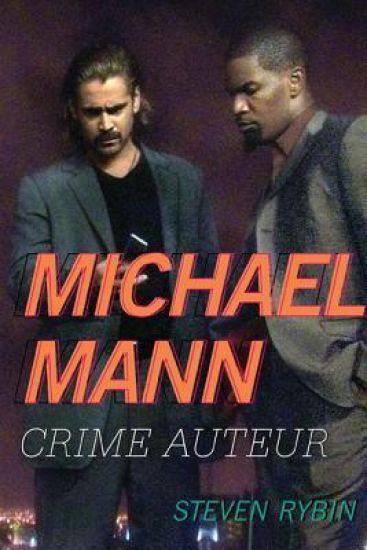
Michael Mann first made his mark as a writer for such television programs as Starsky and Hutch, Police Story, and Vegas. In 1981 he made his feature film directing debut with the James Caan thriller Thief, and in the 1980s he served as a writer and executive producer for the groundbreaking programs Miami Vice and Crime Story. Though he has delved into other genres, Mann’s career as a writer, producer, and director has consistently focused on criminal activity, from small-time hoods and professional thieves to corporate manipulators and serial killers. In Michael Mann: Crime Auteur, Steven Rybin looks at the television programs and films that Mann has stamped with his personal signature. This book closely examines the themes and techniques used in films such as Manhunter, Heat, The Insider, and Collateral and connects these elements to his work on the non-genre films The Last of the Mohicans and Ali. A revised and significantly expanded edition of The Cinema of Michael Mann (2007), this book includes new chapters on Public Enemies and the big screen version of Miami Vice, as well as Mann’s work on the shows Crime Story and Luck. Covering Mann’s entire career, this book will be of interest to fans of the writer/director’s body of work as well as to scholars of both film and television.
Geraldine Chaplin

Geraldine Chaplin

Steven Rybin

Edinburgh University Press
2020
sidottu
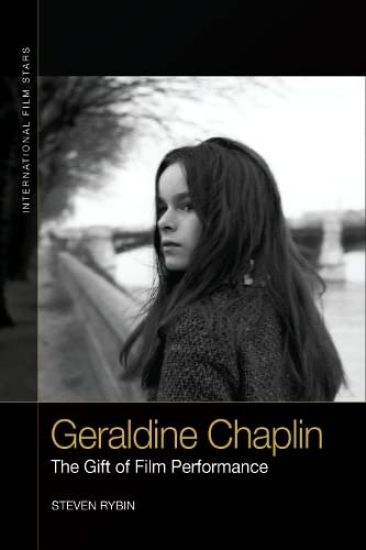
Geraldine Chaplin is the most distinguished actor among Charlie Chaplin's children. Through her collaborations with major international film directors, she has created a striking performative presence across international cinema. Her acting also evokes, with varying levels of self-consciousness and in shifting cinematic contexts, the memory of her father's screen performances. This book analyses the distinctive screen art of Geraldine Chaplin and uncover parallels between her performances and her father's work on film. Through this method, this star study explores the rich and surprising relationships between art cinema and silent film comedy, and between modernist and classical cinematic performance. It offers a long overdue appreciation of Geraldine Chaplin's own remarkable screen achievements, all the while shedding new insight into the art of Charlie Chaplin through the singular prism of his daughter's bold work.
Geraldine Chaplin

Geraldine Chaplin

Steven Rybin

EDINBURGH UNIVERSITY PRESS
2022
nidottu
The most distinguished actor among Charlie Chaplin's children, Geraldine Chaplin has created a striking performative presence across international cinema. In shifting cinematic contexts and through collaborations with major film directors, she playfully evokes the memory of her iconic father, while establishing her own distinctive screen art. Geraldine Chaplin: The Gift of Film Performance is a long-overdue appreciation of Chaplin's remarkable screen achievements, and includes close readings of her performances in films such as Doctor Zhivago, Peppermint Frappe, Cria cuervos, Nashville, Welcome to L.A., Remember My Name, Noroit, Chaplin, Talk to Her, and more.
Paul Verhoeven’s Cinema of Violence

Paul Verhoeven’s Cinema of Violence

Steven Rybin

BLOOMSBURY PUBLISHING PLC
2025
sidottu
The first English-language critical study of the films of Paul Verhoeven, the Dutch director of provocative and vividly imagined films such as Turkish Delight (1973), Robocop (1987), Basic Instinct (1992), Showgirls (1995), Starship Troopers (1997), Black Book (2006), and Elle (2016).Where some audiences find in Paul Verhoeven little more than empty provocation (or, even worse, immoral scandal), Paul Verhoeven’s Cinema of Violence takes a more careful and nuanced look at this director’s body of work and its penchant for violence of various kinds. Exploring the breadth of this director’s career, this book encompasses everything from his early short works as a student filmmaker in the 1960s to the most recently completed Benedetta (2021), a French-language film based on Judith C. Brown’s 1986 academic volume Immodest Acts: The Life of a Lesbian Nun in Renaissance Italy.This volume studies a wide range of themes and ideas across Verhoeven’s work, including his cinematic approach to violence, his adaptation of literature, his work in notable genres such as science fiction and the war film, his work with actors and direction of performances, his provocative treatment and representation of sexuality and gender, as well as his intense and frequently baroque cinematic style. It also traces in his work a career-long interest in religion: although an avowed atheist, Verhoeven has been obsessed with the image of Jesus in nearly all his films, a theme in his cinema that dovetails with his 2011 academic study Jesus of Nazareth. Through this comprehensive approach, Paul Verhoeven’s Cinema of Violence offers a passionate, nuanced, and comprehensive critical look at the cinematic output of one of the Netherlands’ – and Hollywood’s – most vital contemporary filmmakers.
Shots to the Heart: For the Love of Film Performance
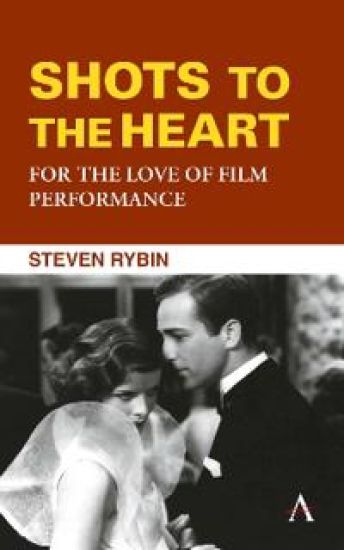
Shots to the Heart explores how the work of the film actor inspires, provokes, and refigures our feelings and thoughts about the cinema. The book closely considers the art of film performance, the combined effect of actors’ gestures, movements, and expressions, in relation to the viewer’s sensitive and creative eye. As discrete moments of performative incarnation on-screen slowly accumulate, actors also become figures of meaning. For many viewers, the screen figures which result from performance are simply called “characters.” But in thinking about cinema, the words “character” and “characterization” signal post-experiential abstractions: when we quickly identify characters or summarize characterization after seeing a movie, we are leaping over the emotions felt through our loving attention to the bodies flitting through a film. Such concepts can never replace a careful regard for what actors on-screen are actually doing, moment-by-moment, gesture-by-gesture. Shots to the Heart is finally not too concerned with the narrative machinations within which these gestures are inscribed, and even resists the attempt to assemble these descriptions of performance into a “full” account of the film as a whole. What Shots to the Heart does is let little moments of performance live on, in writing, as they are strung together alongside performative fragments from other films, in a kind of alternative, cinephilic account of what was felt as actors moved on the screen before us.
Playful Frames

Playful Frames

Steven Rybin

RUTGERS UNIVERSITY PRESS
2023
nidottu
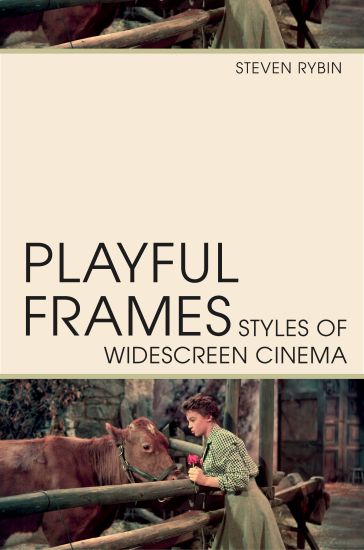
A widescreen frame in cinema beckons the eye to playfully, creatively roam. Such technology also gives inventive filmmakers room to disrupt and redirect audience expectations, surprising viewers through the use of a wider, more expansive screen. Playful Frames: Styles of Widescreen Cinema studies the poetics of the auteur-driven widescreen image, offering nimble, expansive analyses of the work of four distinctive filmmakers – Jean Negulesco, Blake Edwards, Robert Altman, and John Carpenter – who creatively inhabited the nooks and crannies of widescreen moviemaking during the final decades of the twentieth century. Exploring the relationship between aspect ratio and subject matter, Playful Frames shows how directors make puckish use of widescreen technology. All four of these distinctive filmmakers reimagined popular genres (such as melodrama, slapstick comedy, film noir, science fiction, and horror cinema) through their use of the wide frame, and each brings a range of intermedial interests (painting, performance, and music) to their use of the widescreen image. This study looks specifically at the technological underpinnings, aesthetic shapes, and interpretive implications of these four directors’ creative use of widescreen, offering a way to reconsider the way wide imagery still has the potential to amaze and move us today.
Playful Frames

Playful Frames

Steven Rybin

RUTGERS UNIVERSITY PRESS
2023
sidottu
A widescreen frame in cinema beckons the eye to playfully, creatively roam. Such technology also gives inventive filmmakers room to disrupt and redirect audience expectations, surprising viewers through the use of a wider, more expansive screen. Playful Frames: Styles of Widescreen Cinema studies the poetics of the auteur-driven widescreen image, offering nimble, expansive analyses of the work of four distinctive filmmakers – Jean Negulesco, Blake Edwards, Robert Altman, and John Carpenter – who creatively inhabited the nooks and crannies of widescreen moviemaking during the final decades of the twentieth century. Exploring the relationship between aspect ratio and subject matter, Playful Frames shows how directors make puckish use of widescreen technology. All four of these distinctive filmmakers reimagined popular genres (such as melodrama, slapstick comedy, film noir, science fiction, and horror cinema) through their use of the wide frame, and each brings a range of intermedial interests (painting, performance, and music) to their use of the widescreen image. This study looks specifically at the technological underpinnings, aesthetic shapes, and interpretive implications of these four directors’ creative use of widescreen, offering a way to reconsider the way wide imagery still has the potential to amaze and move us today.
Gestures of Love

Gestures of Love

Steven Rybin

State University of New York Press
2018
pokkari
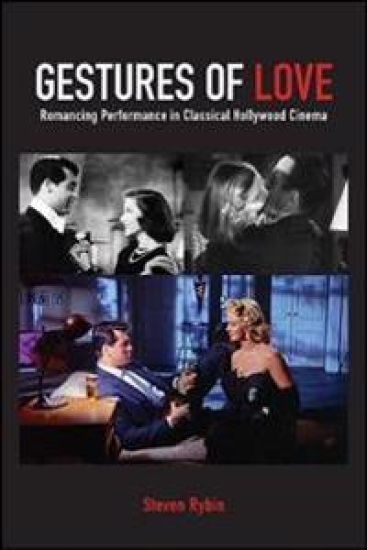
Examines movie romance in light of our emotional bond to the actors and characters on screen. Gestures of Love considers the viewer's enchantment with charismatic actors in film as the starting point for closely analyzing the performance of love in movies. Written with a thoughtful adoration for the actors who move us, Steven Rybin examines several of cinema's most beloved on-screen movie couples, including Katharine Hepburn and Cary Grant, Myrna Loy and William Powell, Carole Lombard and John Barrymore, Gene Tierney and Dana Andrews, Lauren Bacall and Humphrey Bogart, and Rock Hudson and Dorothy Malone. Using the classical genres of screwball comedy, film noir, and the family melodrama as touchstones, Rybin places the depiction of romance in films into dialogue with the viewer's own emotional bond to the actors on the screen. In doing so, he offers rich new analyses of such classic films as Bringing Up Baby, The Thin Man, Twentieth Century, Laura, To Have and Have Not, Tea and Sympathy, Written on the Wind, and more.