Kirjojen hintavertailu. Mukana 11 244 527 kirjaa ja 12 kauppaa.

Kirjahaku

Etsi kirjoja tekijän nimen, kirjan nimen tai ISBN:n perusteella.

12 kirjaa tekijältä Steven Salaita

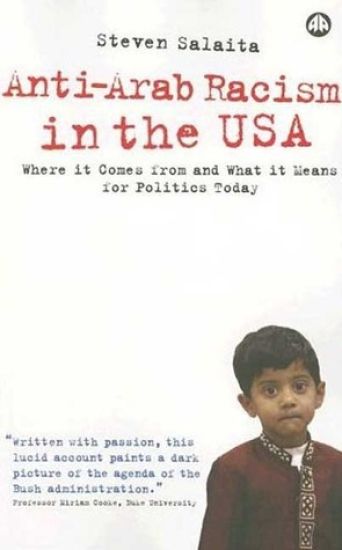
Anti-Arab Racism in the USA

Anti-Arab Racism in the USA

Steven Salaita

Pluto Press
2006
pokkari
Today is a difficult time to be both Arab and American. Since 9/11 there has been a lot of criticism of America’s involvement in the middle east. Yet there has been little analysis of how America treats citizens of Arab or middle eastern origin within its own borders. Steven Salaita explores the reality of Anti-Arab racism in America. He blends personal narrative, theory and polemics to show how this deep-rooted racism affects everything from legislation to cultural life, shining a light on the consequences of Anti-Arab racism both at home and abroad. The book shows how ingrained racist attitudes can be found within the progressive movements on the political left, as well as the right. Salaita argues that, under the guise of patriotism, Anti-Arab racism fuels support for policies such as the Patriot Act.
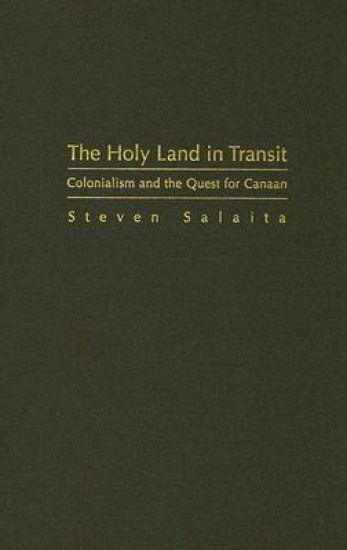
The Holy Land in Transit

The Holy Land in Transit

Steven Salaita

Syracuse University Press
2006
sidottu
Steven Salaita’s ambitious and thought-provoking work compares the dynamics of settler colonialism in the United States related to Native Americans with the circumstances in Israel related to the Palestinians, revealing the way in which politics influences literary production.The author’s original approach is based not on similarities between the two disparate settler regions but rather on similarities between the rhetoric employed by early colonialists in North America and that employed by Zionist immigrants in Palestine. Meticulously examining histories, theories, and literary depictions of colonialism and interethnic dialects, Salaita identifies the commonalities in the myths employed by both groups as well as the "counter-discourse" cultivated in the literature of resistance by native peoples. He complements his analysis with personal observations of Palestinians in Lebanese refuge camps, where he encountered a sympathetic perception of American Indians.The Holy Land in Transit presents one of the first intercommunal studies to assess the ways in which indigenous authors react to analogous colonial dynamics. With great energy and perception the author offers a fresh contribution to an emerging frame of reference for historical, political, literary, and cultural investigation.
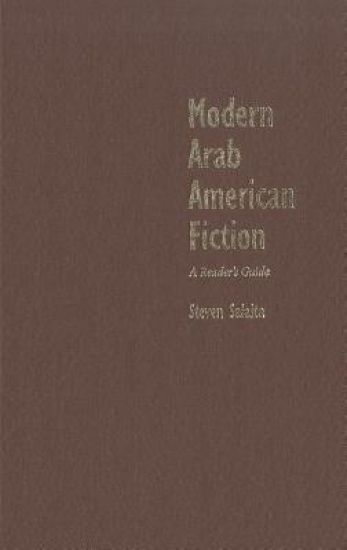
Modern Arab American Fiction

Modern Arab American Fiction

Steven Salaita

Syracuse University Press
2011
sidottu
Within the spectrum of American literary traditions, Arab American literature is relatively new. Writing produced by Americans of Arab origin is mainly a product of the twentieth century and only started to flourish in the past thirty years. While this young but thriving literature varies widely in content and style, it emerges from a common community and within a specific historical, political, and cultural context. In Modern Arab American Fiction, Salaita maps out the landscape of this genre as he details rather than defines the last century of Arab American fiction. Exploring the works of such best-selling authors as Rabih Alameddine, Mohja Kahf, Laila Halaby, Diana Abu-Jaber, Alicia Erian, and Randa Jarrar, Salaita highlights the development of each author’s writing and how each has influenced Arab American fiction. He examines common themes including the Israel-Palestine conflict, the Lebanese Civil War of 1975–90, the representation and practice of Islam in the United States, social issues such as gender and national identity in Arab cultures, and the various identities that come with being Arab American. Combining the accessibility of a primer with in-depth critical analysis, Modern Arab American Fiction is suitable for a broad audience, those unfamiliar with the subject area, as well as scholars of the literature.
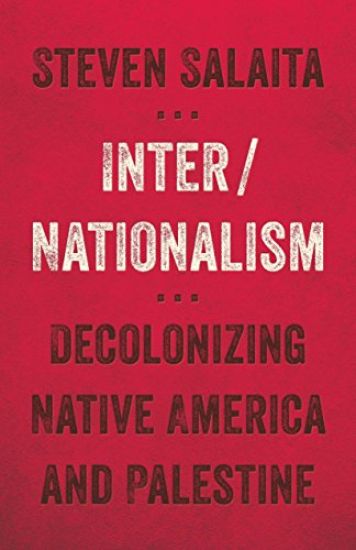
Inter/Nationalism

Inter/Nationalism

Steven Salaita

University of Minnesota Press
2016
sidottu
The age of transnational humanities has arrived.According to Steven Salaita, the seemingly disparate fields of Palestinian Studses and American Indian studies have more in common than one may think. In Inter/Nationalism, Salaita argues that American Indian and Indigenous studies must be more central to the scholarship and activism focusing on Palestine. Salaita offers a fascinating inside account of the Boycott, Divestment, and Sanctions (BDS) movement-which, among other things, aims to end Israels occupation of Palestinian land. In doing so, he emphasizes BDSs significant potential as an organizing entity as well as its importance in the creation of intellectual and political communities that put Natives and other colonized peoples such as Palestinians into conversation. His discussion includes readings of a wide range of Native poetry that invokes Palestine as a theme or symbol; the speeches of U.S. President Andrew Jackson and early Zionist thinker Zeev Jabotinsky; and the discourses of shared valuesbetween the United States and Israel. Inter/Nationalism seeks to lay conceptual ground between American Indian and Indigenous studies and Palestinian studies through concepts of settler colonialism, indigeneity, and state violence. By establishing Palestine as an indigenous nation under colonial occupation, this book draws crucial connections between the scholarship and activism of Indigenous America and Palestine.
Inter/Nationalism

Inter/Nationalism

Steven Salaita

University of Minnesota Press
2016
nidottu
The age of transnational humanities has arrived.According to Steven Salaita, the seemingly disparate fields of Palestinian Studses and American Indian studies have more in common than one may think. In Inter/Nationalism, Salaita argues that American Indian and Indigenous studies must be more central to the scholarship and activism focusing on Palestine. Salaita offers a fascinating inside account of the Boycott, Divestment, and Sanctions (BDS) movement-which, among other things, aims to end Israels occupation of Palestinian land. In doing so, he emphasizes BDSs significant potential as an organizing entity as well as its importance in the creation of intellectual and political communities that put Natives and other colonized peoples such as Palestinians into conversation. His discussion includes readings of a wide range of Native poetry that invokes Palestine as a theme or symbol; the speeches of U.S. President Andrew Jackson and early Zionist thinker Zeev Jabotinsky; and the discourses of shared valuesbetween the United States and Israel. Inter/Nationalism seeks to lay conceptual ground between American Indian and Indigenous studies and Palestinian studies through concepts of settler colonialism, indigeneity, and state violence. By establishing Palestine as an indigenous nation under colonial occupation, this book draws crucial connections between the scholarship and activism of Indigenous America and Palestine.
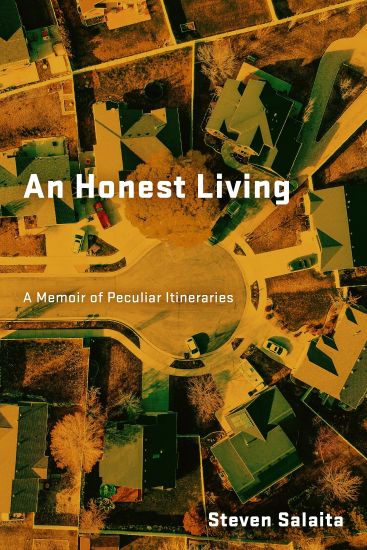
An Honest Living

An Honest Living

Steven Salaita

FORDHAM UNIVERSITY PRESS
2024
sidottu
An exiled professor's journey from inside and beyond academe In the summer of 2014, Steven Salaita was fired from a tenured position in American Indian Studies at the University of Illinois for his unwavering stance on Palestinian human rights and other political controversies. A year later, he landed a job in Lebanon, but that, too, ended badly. With no other recourse, Salaita found himself trading his successful academic career for an hourly salaried job. Told primarily from behind the wheel of a school bus—a vantage point from which Salaita explores social anxiety, suburban architecture, political alienation, racial oppression, working-class solidarity, professional malfeasance, and the joy of chauffeuring children to and from school—An Honest Living describes the author's decade of turbulent post-professorial life and his recent return to the lectern. Steven Salaita was practically born to a life in academia. His father taught physics at an HBCU in southern West Virginia and his earliest memories are of life on campus and the cinder walls of the classroom. It was no surprise that he ended up in the classroom straight after graduate school. Yet three of his university jobs—Virginia Tech, the University of Illinois, and the American University of Beirut [AUB] —ended in public controversy. Shaken by his sudden notoriety and false claims of antisemitism, Salaita found himself driving a school bus to make ends meet. While some considered this just punishment for his anti-Zionist beliefs, Steven found that driving a bus provided him with not just a means to pay the bills but a path toward freedom of thought. Now ten years later, with a job at American University at Cairo, Salaita reconciles his past with his future. His restlessness has found a home, yet his return to academe is met with the same condition of fugitivity from whence he was expelled: an occasion for defiance, not conciliation. An Honest Living presents an intimate personal narrative of the author's decade of professional joys and travails.
An Honest Living

An Honest Living

Steven Salaita

FORDHAM UNIVERSITY PRESS
2026
pokkari
An exiled professor's journey from inside and beyond academe In the summer of 2014, Steven Salaita was fired from a tenured position in American Indian Studies at the University of Illinois for his unwavering stance on Palestinian human rights and other political controversies. A year later, he landed a job in Lebanon, but that, too, ended badly. With no other recourse, Salaita found himself trading his successful academic career for an hourly salaried job. Told primarily from behind the wheel of a school bus—a vantage point from which Salaita explores social anxiety, suburban architecture, political alienation, racial oppression, working-class solidarity, professional malfeasance, and the joy of chauffeuring children to and from school—An Honest Living describes the author's decade of turbulent post-professorial life and his recent return to the lectern. Steven Salaita was practically born to a life in academia. His father taught physics at an HBCU in southern West Virginia and his earliest memories are of life on campus and the cinder walls of the classroom. It was no surprise that he ended up in the classroom straight after graduate school. Yet three of his university jobs—Virginia Tech, the University of Illinois, and the American University of Beirut [AUB] —ended in public controversy. Shaken by his sudden notoriety and false claims of antisemitism, Salaita found himself driving a school bus to make ends meet. While some considered this just punishment for his anti-Zionist beliefs, Steven found that driving a bus provided him with not just a means to pay the bills but a path toward freedom of thought. Now ten years later, with a job at American University at Cairo, Salaita reconciles his past with his future. His restlessness has found a home, yet his return to academe is met with the same condition of fugitivity from whence he was expelled: an occasion for defiance, not conciliation. An Honest Living presents an intimate personal narrative of the author's decade of professional joys and travails.
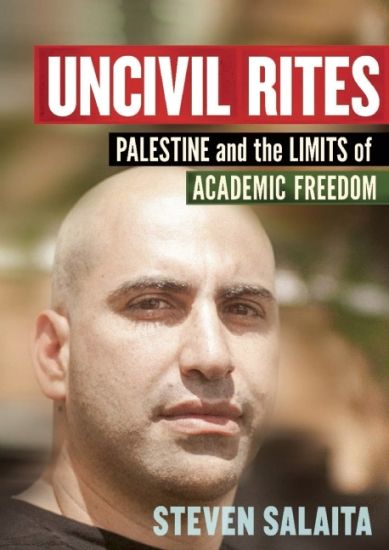
Uncivil Rites

Uncivil Rites

Steven Salaita

Haymarket Books
2015
sidottu
In 2014, renowned professor Steven Salaita had his appointment to a tenured professorship revoked by the University of Illinois at Urbana-Champaign in response to his tweets criticizing the Israeli government's assault on Gaza. Salaita's firing generated a huge public outcry, with thousands petitioning for his reinstatement and more than five thousand scholars pledging to boycott UIUC. His case raises important questions about academic freedom, free speech on campus and the movement for justice in Palestine. In Uncivil Rites, Salaita reflects upon the controversy.
Daughter, Son, Assassin

Daughter, Son, Assassin

Steven Salaita

Common Notions
2024
pokkari
A story of family bonds amid political betrayal that explores the drastic steps that a young girl will take in order to find a sense of belonging.Fred is lost, confused, almost certainly about to die. As he traces his steps back from the desert where he has been dropped by soldiers of a repressive Gulf Kingdom regime, his nine-year-old daughter, Nancy, is doing the same from six thousand miles away in a quiet neighborhood in the suburbs of Washington, DC. With his disappearance, she and her mother are forced to leave their comfortable house in DC for a new life in Virginia. Abandoned by their friends and desperate for answers, Nancy and her mother must acclimate to the strange world of suburban anonymity. As Nancy grows into adulthood, she pieces together what happened to her father and devises a bold plan to avenge his disappearance. Unraveling an international web of deceit in order to find her father will take time and patience; and becoming a cold-blooded assassin takes commitment to a life at odds with everything she knows.
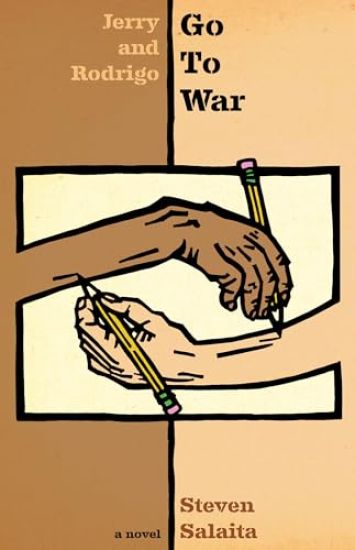
Jerry and Rodrigo Go to War

Jerry and Rodrigo Go to War

Steven Salaita

Common Notions
2026
nidottu
A sharp yet honest caricature of the neocolonial, uncritical right on American college campuses.Let me go ahead and say it upfront: I wrote that goddamn novel. An unsympathetic, self-concerned young professor at a small university in Appalachia is on the verge of a breakthrough. His first book, Coyote Road, has become a huge success. Students are reading his book on campus. Invitations to speak are pouring in from universities and bookstores. There is just one problem: no one believes it's his book. Some guy named Rodrigo Suarez has taken all of the credit, all of the adulation, all of the accolades, and all the attention. Thus begins the young professor's obsessive crusade to expose Rodrigo Suarez as a liar and a thief. In this uncomfortably plausible farce, the indefatigable Steven Salaita drops the hammer on the shallow and disingenuous discourse regarding identity politics and appropriation on American campuses.