Kirjojen hintavertailu. Mukana 11 244 527 kirjaa ja 12 kauppaa.

Kirjahaku

Etsi kirjoja tekijän nimen, kirjan nimen tai ISBN:n perusteella.

12 kirjaa tekijältä Steven Vogel

The Life of a Leaf

The Life of a Leaf

Steven Vogel

University of Chicago Press
2013
nidottu
In its essence, science is a way of looking at and thinking about the world. In The Life of a Leaf, Steven Vogel illuminates this approach, using the humble leaf as a model. Whether plant or person, every organism must contend with its immediate physical environment, a world that both limits what organisms can do and offers innumerable opportunities for evolving fascinating ways of challenging those limits. Here, Vogel explains these interactions, examining through the example of the leaf the extraordinary designs that enable life to adapt to its physical world. In Vogel's account, the leaf serves as a biological everyman, an ordinary and ubiquitous living thing that nonetheless speaks volumes about our environment as well as its own. Thus in exploring the leaf's world, Vogel simultaneously explores our own.
Why the Wheel Is Round

Why the Wheel Is Round

Steven Vogel

University of Chicago Press
2016
sidottu
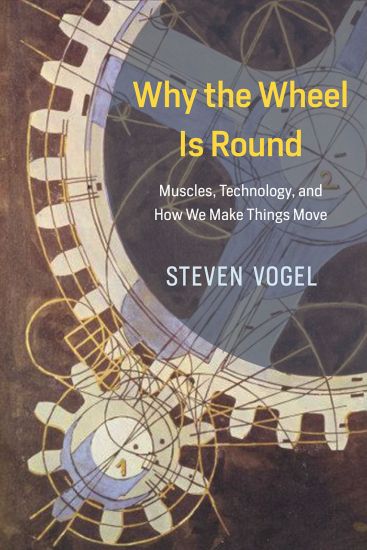
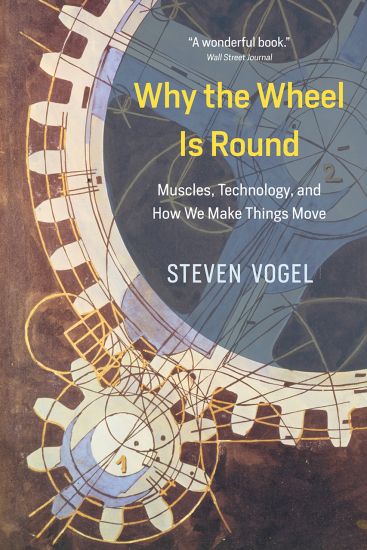
There is no part of our bodies that fully rotates be it a wrist or ankle or arm in a shoulder socket, we are made to twist only so far. And yet, there is no more fundamental human invention than the wheel a rotational mechanism that accomplishes what our physical form cannot. Throughout history, humans have developed technologies powered by human strength, complementing the physical abilities we have while overcoming our weaknesses. Providing a unique history of the wheel and other rotational devices, like cranks, cranes, carts, and capstans, Why the Wheel Is Round examines the contraptions and tricks we have devised in order to more efficiently move and move through the physical world. Steven Vogel combines his engineering expertise with his remarkable curiosity about how things work to explore how wheels and other mechanisms were, until very recently, powered by the push and pull of the muscles and skeletal systems of humans and other animals. Why the Wheel Is Round explores all manner of treadwheels, hand-spikes, gears, and more, as well as how these technologies diversified into such things as hand-held drills and hurdy-gurdies. Surprisingly, a number of these devices can be built out of everyday components and materials, and Vogel's accessible and expansive book includes instructions and models so that inspired readers can even attempt to make their own muscle-powered technologies, like trebuchets and ballista. Appealing to anyone fascinated by the history of mechanics and technology as well as to hobbyists with home workshops, Why the Wheel Is Round offers a captivating exploration of our common technological heritage based on the simple concept of rotation. From our leg muscles powering the gears of a bicycle to our hands manipulating a mouse on a roller ball, it will be impossible to overlook the amazing feats of innovation behind our daily devices.
Why the Wheel Is Round

Why the Wheel Is Round

Steven Vogel

University of Chicago Press
2018
pokkari
There is no part of our bodies that fully rotates—be it a wrist or ankle or arm in a shoulder socket, we are made to twist only so far. And yet there is no more fundamental human invention than the wheel—a rotational mechanism that accomplishes what our physical form cannot. Throughout history, humans have developed technologies powered by human strength, complementing the physical abilities we have while overcoming our weaknesses. Providing a unique history of the wheel and other rotational devices—like cranks, cranes, carts, and capstans—Why the Wheel Is Round examines the contraptions and tricks we have devised in order to more efficiently move—and move through—the physical world. Steven Vogel combines his engineering expertise with his remarkable curiosity about how things work to explore how wheels and other mechanisms were, until very recently, powered by the push and pull of the muscles and skeletal systems of humans and other animals. Why the Wheel Is Round explores all manner of treadwheels, hand-spikes, gears, and more, as well as how these technologies diversified into such things as hand-held drills and hurdy-gurdies. Surprisingly, a number of these devices can be built out of everyday components and materials, and Vogel’s accessible and expansive book includes instructions and models so that inspired readers can even attempt to make their own muscle-powered technologies, like trebuchets and ballista. Appealing to anyone fascinated by the history of mechanics and technology as well as to hobbyists with home workshops, Why the Wheel Is Round offers a captivating exploration of our common technological heritage based on the simple concept of rotation. From our leg muscles powering the gears of a bicycle to our hands manipulating a mouse on a roller ball, it will be impossible to overlook the amazing feats of innovation behind our daily devices.
Thinking like a Mall

Thinking like a Mall

Steven Vogel

MIT Press
2016
pokkari
A provocative argument that environmental thinking would be better off if it dropped the concept of "nature" altogether and spoke instead of the built environment.Environmentalism, in theory and practice, is concerned with protecting nature. But if we have now reached "the end of nature," as Bill McKibben and other environmental thinkers have declared, what is there left to protect? In Thinking like a Mall, Steven Vogel argues that environmental thinking would be better off if it dropped the concept of "nature" altogether and spoke instead of the "environment"-that is, the world that actually surrounds us, which is always a built world, the only one that we inhabit. We need to think not so much like a mountain (as Aldo Leopold urged) as like a mall. Shopping malls, too, are part of the environment and deserve as much serious consideration from environmental thinkers as do mountains. Vogel argues provocatively that environmental philosophy, in its ethics, should no longer draw a distinction between the natural and the artificial and, in its politics, should abandon the idea that something beyond human practices (such as "nature") can serve as a standard determining what those practices ought to be. The appeal to nature distinct from the built environment, he contends, may be not merely unhelpful to environmental thinking but in itself harmful to that thinking. The question for environmental philosophy is not "how can we save nature?" but rather "what environment should we inhabit, and what practices should we engage in to help build it?"
Cats' Paws and Catapults: Mechanical Worlds of Nature and People
Nature and humans build their devices with the same earthly materials and use them in the same air and water, pulled by the same gravity. Why, then, do their designs diverge so sharply? Humans, for instance, love right angles, while nature's angles are rarely right and usually rounded. Our technology goes around on wheels--and on rotating pulleys, gears, shafts, and cams--yet in nature only the tiny propellers of bacteria spin as true wheels. Our hinges turn because hard parts slide around each other, whereas nature's hinges (a rabbit's ear, for example) more often swing by bending flexible materials. In this marvelously surprising, witty book, Steven Vogel compares these two mechanical worlds, introduces the reader to his field of biomechanics, and explains how the nexus of physical law, size, and convenience of construction determine the designs of both people and nature. "This elegant comparison of human and biological technology will forever change the way you look at each."--Michael LaBarbera, American Scientist
Prime Mover

Prime Mover

Steven Vogel

WW Norton Co
2003
nidottu
Although muscles differ little in appearance and performance across the animal kingdom, they accomplish tasks as diverse as making flies fly, rattlesnakes rattle and squid flare out their tentacles. In this title, Steven Vogel relates the story and science of nature's greatest engine.
Life's Devices

Life's Devices

Steven Vogel

Princeton University Press
1988
pokkari
This entertaining and informative book describes how living things bump up against non-biological reality. "My immodest aim," says the author, "is to change how you view your immediate surroundings." He asks us to wonder about the design of plants and animals around us: why a fish swims more rapidly than a duck can paddle, why healthy trees more commonly uproot than break, how a shark manages with such a flimsy skeleton, or how a mouse can easily survive a fall onto any surface from any height. The book will not only fascinate the general reader but will also serve as an introductory survey of biomechanics. On one hand, organisms cannot alter the earth's gravity, the properties of water, the compressibility of air, or the behavior of diffusing molecules. On the other, such physical factors form both constraints with which the evolutionary process must contend and opportunities upon which it might capitalize. Life's Devices includes examples from every major group of animals and plants, with references to recent work, with illustrative problems, and with suggestions of experiments that need only common household materials.
Life in Moving Fluids

Life in Moving Fluids

Steven Vogel

Princeton University Press
1996
pokkari
Both a landmark text and reference book, Steven Vogel's Life in Moving Fluids has also played a catalytic role in research involving the applications of fluid mechanics to biology. In this revised edition, Vogel continues to combine humor and clear explanations as he addresses biologists and general readers interested in biological fluid mechanics, offering updates on the field over the last dozen years and expanding the coverage of the biological literature. His discussion of the relationship between fluid flow and biological design now includes sections on jet propulsion, biological pumps, swimming, blood flow, and surface waves, and on acceleration reaction and Murray's law. This edition contains an extensive bibliography for readers interested in designing their own experiments.
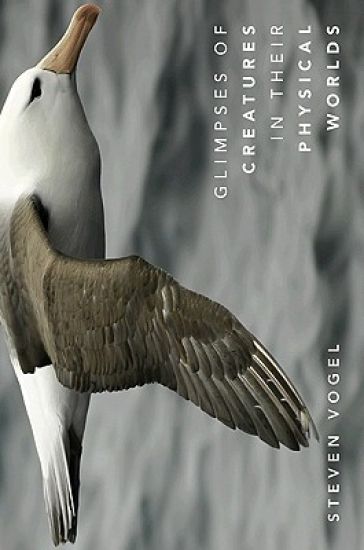
Glimpses of Creatures in Their Physical Worlds

Glimpses of Creatures in Their Physical Worlds

Steven Vogel

Princeton University Press
2009
pokkari
Glimpses of Creatures in Their Physical Worlds offers an eye-opening look into how the characteristics of the physical world drive the designs of animals and plants. These characteristics impose limits but also create remarkable and subtle opportunities for the functional biology of organisms. In particular, Steven Vogel examines the size and scale, and trade-offs among different physical processes. He pays attention to how the forms and activities of animals and plants reflect the materials available to nature, and he explores the unique constraints and possibilities provided by fluid flow, structural design, and environmental forces. Each chapter of the book investigates a facet of the physical world, including the drag on small projectiles; the importance of diffusion and convection; the size-dependence of acceleration; the storage, conduction, and dissipation of heat; the relationship among pressure, flow, and choice in biological pumps; and how elongate structures tune their relative twistiness and bendiness. Vogel considers design-determining factors all too commonly ignored, and builds a bridge between the world described by physics books and the reality experienced by all creatures. Glimpses of Creatures in Their Physical Worlds contains a wealth of accessible information related to functional biology, and requires little more than a basic background in secondary-school science and mathematics. Drawing examples from creatures of land, air, and water, the book demonstrates the many uses of biological diversity and how physical forces impact biological organisms.
Comparative Biomechanics

Comparative Biomechanics

Steven Vogel

Princeton University Press
2013
sidottu
Why do you switch from walking to running at a specific speed? Why do tall trees rarely blow over in high winds? And why does a spore ejected into air at seventy miles per hour travel only a fraction of an inch? Comparative Biomechanics is the first and only textbook that takes a comprehensive look at the mechanical aspects of life--covering animals and plants, structure and movement, and solids and fluids. An ideal entry point into the ways living creatures interact with their immediate physical world, this revised and updated edition examines how the forms and activities of animals and plants reflect the materials available to nature, considers rules for fluid flow and structural design, and explores how organisms contend with environmental forces. Drawing on physics and mechanical engineering, Steven Vogel looks at how animals swim and fly, modes of terrestrial locomotion, organism responses to winds and water currents, circulatory and suspension-feeding systems, and the relationship between size and mechanical design. He also investigates links between the properties of biological materials--such as spider silk, jellyfish jelly, and muscle--and their structural and functional roles. Early chapters and appendices introduce relevant physical variables for quantification, and problem sets are provided at the end of each chapter. Comparative Biomechanics is useful for physical scientists and engineers seeking a guide to state-of-the-art biomechanics. For a wider audience, the textbook establishes the basic biological context for applied areas--including ergonomics, orthopedics, mechanical prosthetics, kinesiology, sports medicine, and biomimetics--and provides materials for exhibit designers at science museums. * Problem sets at the ends of chapters * Appendices cover basic background information * Updated and expanded documentation and materials * Revised figures and text * Increased coverage of friction, viscoelastic materials, surface tension, diverse modes of locomotion, and biomimetics
Against Nature

Against Nature

Steven Vogel

State University of New York Press
1996
sidottu
Argues that the tradition of critical theory has had significant problems dealing with the concept of nature and that their solutions require taking seriously the idea of nature as socially constructed. Against Nature examines the history of the concept of nature in the tradition of Critical Theory, with chapters on Lukacs, Horkheimer and Adorno, Marcuse, and Habermas. It argues that the tradition has been marked by significant difficulties with respect to that concept; that these problems are relevant to contemporary environmental philosophy as well; and that a solution to them requires taking seriously—and literally—the idea of nature as socially constructed.
Against Nature

Against Nature

Steven Vogel

State University of New York Press
1996
pokkari
Argues that the tradition of critical theory has had significant problems dealing with the concept of nature and that their solutions require taking seriously the idea of nature as socially constructed.Against Nature examines the history of the concept of nature in the tradition of Critical Theory, with chapters on Lukacs, Horkheimer and Adorno, Marcuse, and Habermas. It argues that the tradition has been marked by significant difficulties with respect to that concept; that these problems are relevant to contemporary environmental philosophy as well; and that a solution to them requires taking seriously—and literally—the idea of nature as socially constructed.