Kirjojen hintavertailu. Mukana 11 342 296 kirjaa ja 12 kauppaa.

Kirjahaku

Etsi kirjoja tekijän nimen, kirjan nimen tai ISBN:n perusteella.

3 kirjaa tekijältä Steven W. Buskirk

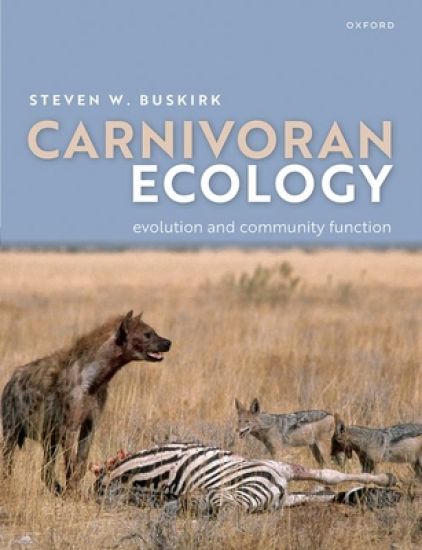
Carnivoran Ecology

Carnivoran Ecology

Steven W. Buskirk

Oxford University Press
2023
sidottu
These charismatic mammals, which include dogs, cats, hyenas, weasels, mongooses, seals, sea lions and bears, have always held special importance to humans throughout history and continue to do so today. In recent decades, the emergence of new technologies has completely transformed our knowledge of how carnivorans interact with their environments and consequently reshaped our view of carnivoran ecology. This unique synthesis uses examples from a diverse and expanding carnivoran literature, drawing from all carnivoran families and spanning the world's oceans and continents, to produce a clearly written and richly illustrated book that reviews our current state of knowledge of carnivoran ecology. It addresses all levels of biological organization and function, from genes to enzymes, organisms, populations, and ecosystems. Special attention is given to how carnivoran species interact with their prey, each other, and humans. There is an emphasis on community interactions and their importance in carnivoran evolution, showing how evolutionary constraints (morphological, physiological, and behavioral) structure communities today. The book's approach is strongly comparative, contrasting herbivores with carnivores, predators with scavengers, and cats with dogs. Carnivorans play important roles in many high-profile conservation cases, either as species of concern or agents of endangerment, and their importance is demonstrated in both contexts. Carnivoran Ecology is an accessible advanced textbook aimed principally at senior undergraduate and graduate students taking courses in carnivore ecology, as well as a broad audience of professional academics (especially carnivore and mammalian biologists), researchers, and practitioners working in both governmental and non-governmental organizations. A significant secondary market will exist amongst the large amateur naturalist community including those wishing to explore the ecological and evolutionary links between domestic carnivorans (dogs, cats, ferrets etc.) and their wild counterparts.
Carnivoran Ecology

Carnivoran Ecology

Steven W. Buskirk

Oxford University Press
2023
nidottu
These charismatic mammals, which include dogs, cats, hyenas, weasels, mongooses, seals, sea lions and bears, have always held special importance to humans throughout history and continue to do so today. In recent decades, the emergence of new technologies has completely transformed our knowledge of how carnivorans interact with their environments and consequently reshaped our view of carnivoran ecology. This unique synthesis uses examples from a diverse and expanding carnivoran literature, drawing from all carnivoran families and spanning the world's oceans and continents, to produce a clearly written and richly illustrated book that reviews our current state of knowledge of carnivoran ecology. It addresses all levels of biological organization and function, from genes to enzymes, organisms, populations, and ecosystems. Special attention is given to how carnivoran species interact with their prey, each other, and humans. There is an emphasis on community interactions and their importance in carnivoran evolution, showing how evolutionary constraints (morphological, physiological, and behavioral) structure communities today. The book's approach is strongly comparative, contrasting herbivores with carnivores, predators with scavengers, and cats with dogs. Carnivorans play important roles in many high-profile conservation cases, either as species of concern or agents of endangerment, and their importance is demonstrated in both contexts. Carnivoran Ecology is an accessible advanced textbook aimed principally at senior undergraduate and graduate students taking courses in carnivore ecology, as well as a broad audience of professional academics (especially carnivore and mammalian biologists), researchers, and practitioners working in both governmental and non-governmental organizations. A significant secondary market will exist amongst the large amateur naturalist community including those wishing to explore the ecological and evolutionary links between domestic carnivorans (dogs, cats, ferrets etc.) and their wild counterparts.
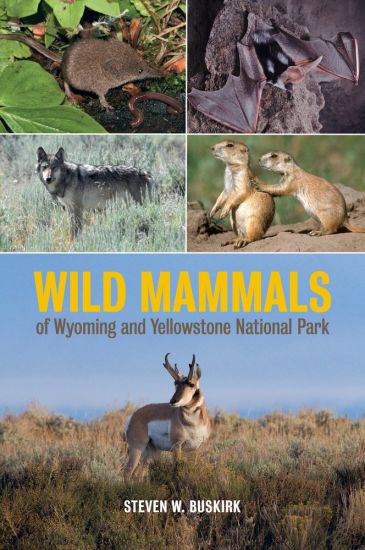
Wild Mammals of Wyoming and Yellowstone National Park

Wild Mammals of Wyoming and Yellowstone National Park

Steven W. Buskirk

University of California Press
2016
sidottu
Wild Mammals of Wyoming and Yellowstone National Park provides the scholar, conservationist, and interested lay reader with information on the state's 117 wild mammalian species from grizzly bears to pygmy shrews. It describes the history of mammalogy in Wyoming, the zoogeography of Wyoming mammals, and the prehistoric mammals of Wyoming. It also characterizes the habitats of Wyoming mammals and addresses the conservation and management of mammals in the region. Expanding beyond the traditional field guide, Steven W Buskirk emphasizes taxonomic classification, geographic range, and conservation status for mammalian species. Introductory sections are provided for each order and family, and individual species accounts organize a wealth of data ranging from habitat associations to field measurements in an easy-to-use format. Featuring color species photos, continental and state-scale distribution maps, and a comprehensive bibliography with nearly 1,000 references, Wild Mammals of Wyoming and Yellowstone National Park is an indispensable resource for wildlife and conservation biologists and mammalogists working in this region.