Kirjojen hintavertailu. Mukana 11 244 527 kirjaa ja 12 kauppaa.

Kirjahaku

Etsi kirjoja tekijän nimen, kirjan nimen tai ISBN:n perusteella.

11 kirjaa tekijältä Stewart Goetz

C. S. Lewis on the Soul, God, and Christianity

C. S. Lewis on the Soul, God, and Christianity

Stewart Goetz

Cambridge University Press
2025
pokkari
C. S. Lewis was an adamant atheist when he entered Oxford University as a student in 1917. By 1931, he was an Oxford don and a Christian. Lewis was someone who did not think highly of climates of opinion, and in his book The Problem of Pain he warned against uncritically going along with them: 'I take a very low view of 'climates of opinion'. In his own subject every man knows that all discoveries are made and all errors corrected by those who ignore the 'climate of opinion'.' A climate of opinion exists today that either intentionally or unintentionally disenchants or debunks C. S. Lewis. In this Element, the author explains Lewis' belief in the existence of the soul and how it related to his conviction that happiness consists of experiences of pleasure and is the purpose of life, God exists, and Christianity is true.
C. S. Lewis on the Soul, God, and Christianity

C. S. Lewis on the Soul, God, and Christianity

Stewart Goetz

Cambridge University Press
2025
sidottu
C. S. Lewis was an adamant atheist when he entered Oxford University as a student in 1917. By 1931, he was an Oxford don and a Christian. Lewis was someone who did not think highly of climates of opinion, and in his book The Problem of Pain he warned against uncritically going along with them: 'I take a very low view of 'climates of opinion'. In his own subject every man knows that all discoveries are made and all errors corrected by those who ignore the 'climate of opinion'.' A climate of opinion exists today that either intentionally or unintentionally disenchants or debunks C. S. Lewis. In this Element, the author explains Lewis' belief in the existence of the soul and how it related to his conviction that happiness consists of experiences of pleasure and is the purpose of life, God exists, and Christianity is true.
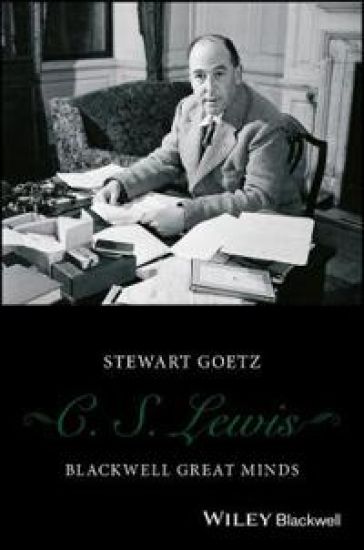
C. S. Lewis

C. S. Lewis

Stewart Goetz

John Wiley Sons Inc
2018
nidottu
The definitive exploration of C.S. Lewis’s philosophical thought, and its connection with his theological and literary work Arguably one of the most influential writers of the twentieth century, C.S. Lewis is widely hailed as a literary giant, his seven-volume Chronicles of Narnia having sold over 65 million copies in print worldwide. A prolific author and scholar whose intellectual contributions transcend the realm of children’s fantasy literature, Lewis is commonly read and studied as a significant theological figure in his own right. What is often overlooked is that Lewis first loved and was academically trained in philosophy. In this newest addition to the Blackwell Great Minds series, well-known philosopher and Lewis authority Stewart Goetz discusses Lewis’s philosophical thought and illustrates how it informs his theological and literary work. Drawing from Lewis’s published writing and private correspondence, including unpublished materials, C.S. Lewis is the first book to develop a cohesive and holistic understanding of Lewis as a philosopher. In this groundbreaking project, Goetz explores how Lewis’s views on topics of lasting interest such as happiness, morality, the soul, human freedom, reason, and imagination shape his understanding of myth and his use of it in his own stories, establishing new connections between Lewis’s philosophical convictions and his wider body of published work. Written in a scholarly yet accessible style, this short, engaging book makes a significant contribution to Lewis scholarship while remaining suitable for readers who have only read his stories, offering new insight into the intellectual life of this figure of enduring popular interest.
C. S. Lewis

C. S. Lewis

Stewart Goetz

John Wiley Sons Inc
2018
sidottu
The definitive exploration of C.S. Lewis’s philosophical thought, and its connection with his theological and literary work Arguably one of the most influential writers of the twentieth century, C.S. Lewis is widely hailed as a literary giant, his seven-volume Chronicles of Narnia having sold over 65 million copies in print worldwide. A prolific author and scholar whose intellectual contributions transcend the realm of children’s fantasy literature, Lewis is commonly read and studied as a significant theological figure in his own right. What is often overlooked is that Lewis first loved and was academically trained in philosophy. In this newest addition to the Blackwell Great Minds series, well-known philosopher and Lewis authority Stewart Goetz discusses Lewis’s philosophical thought and illustrates how it informs his theological and literary work. Drawing from Lewis’s published writing and private correspondence, including unpublished materials, C.S. Lewis is the first book to develop a cohesive and holistic understanding of Lewis as a philosopher. In this groundbreaking project, Goetz explores how Lewis’s views on topics of lasting interest such as happiness, morality, the soul, human freedom, reason, and imagination shape his understanding of myth and his use of it in his own stories, establishing new connections between Lewis’s philosophical convictions and his wider body of published work. Written in a scholarly yet accessible style, this short, engaging book makes a significant contribution to Lewis scholarship while remaining suitable for readers who have only read his stories, offering new insight into the intellectual life of this figure of enduring popular interest.
C.S. Lewis on Higher Education

C.S. Lewis on Higher Education

Stewart Goetz

BLOOMSBURY PUBLISHING PLC
2023
nidottu
Why pursue a university education? Some people answer in terms of the purpose of getting a good job. Others respond in terms of the aim of earning more money. Still others answer in terms of the goal of promoting social justice. Drawing on C. S. Lewis’s belief that the purpose of life is the experience of perfect happiness, Stewart Goetz explains Lewis’s simple but overlooked view that a person should pursue a university education for the pleasure that comes from higher-level intellectual activity. Goetz not only sharpens our understanding of Lewis’s life and work in higher education, but also leads us to question why we attend, study, teach, or research at a university.
C.S. Lewis on Higher Education

C.S. Lewis on Higher Education

Stewart Goetz

BLOOMSBURY PUBLISHING PLC
2023
sidottu
Why pursue a university education? Some people answer in terms of the purpose of getting a good job. Others respond in terms of the aim of earning more money. Still others answer in terms of the goal of promoting social justice. Drawing on C. S. Lewis’s belief that the purpose of life is the experience of perfect happiness, Stewart Goetz explains Lewis’s simple but overlooked view that a person should pursue a university education for the pleasure that comes from higher-level intellectual activity. Goetz not only sharpens our understanding of Lewis’s life and work in higher education, but also leads us to question why we attend, study, teach, or research at a university.
The Purpose of Life

The Purpose of Life

Stewart Goetz

Bloomsbury Continuum
2012
nidottu
What does philosophy have to say on the question of the meaning of life? This is one of the founding questions of philosophy and has remained a central problem for philosophers from antiquity through to the Middle Ages and modern period. It may surprise some readers that there has, in fact, been a good deal of agreement on the answer to this question: the meaning of life is happiness.The Purpose of Life is a serious but engaging exploration and defense of this answer. The central idea that shapes The Purpose of Life is Augustine's assertion that "It is the decided opinion of all who use their brains that all men desire to be happy." In working through the ramifications of this answer, Stewart Goetz provides a survey of the debates surrounding life's meaning, from both theists and atheists alike.
Freedom, Teleology, and Evil

Freedom, Teleology, and Evil

Stewart Goetz

Continuum Publishing Corporation
2011
nidottu
In Freedom, Teleology, and Evil Stewart Goetz defends the existence of libertarian freedom of the will. He argues that choices are essentially uncaused events with teleological explanations in the form of reasons or purposes. Because choices are uncaused events with teleological explanations, whenever agents choose they are free to choose otherwise. Given this freedom to choose otherwise, agents are morally responsible for how they choose. Thus, Goetz advocates and defends the principle of alternative possibilities which states that agents are morally responsible for a choice only if they are free to choose otherwise. Finally, given that agents have libertarian freedom, Goetz contends that this freedom is integral to the construction of a theodicy which explains why God allows evil.
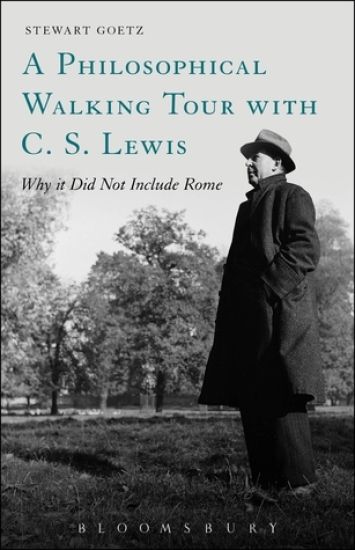
A Philosophical Walking Tour with C. S. Lewis

A Philosophical Walking Tour with C. S. Lewis

Stewart Goetz

Bloomsbury Academic USA
2015
sidottu
Although it has been almost seventy years since Time declared C.S. Lewis one of the world's most influential spokespersons for Christianity and fifty years since Lewis's death, his influence remains just as great if not greater today. While much has been written on Lewis and his work, virtually nothing has been written from a philosophical perspective on his views of happiness, pleasure, pain, and the soul and body. As a result, no one so far has recognized that his views on these matters are deeply interesting and controversial, and—perhaps more jarring—no one has yet adequately explained why Lewis never became a Roman Catholic. Stewart Goetz's careful investigation of Lewis's philosophical thought reveals oft-overlooked implications and demonstrates that it was, at its root, at odds with that of Thomas Aquinas and, thereby, the Roman Catholic Church.
A Philosophical Walking Tour with C. S. Lewis

A Philosophical Walking Tour with C. S. Lewis

Stewart Goetz

Bloomsbury Academic USA
2015
nidottu
Although it has been almost seventy years since Time declared C.S. Lewis one of the world's most influential spokespersons for Christianity and fifty years since Lewis's death, his influence remains just as great if not greater today. While much has been written on Lewis and his work, virtually nothing has been written from a philosophical perspective on his views of happiness, pleasure, pain, and the soul and body. As a result, no one so far has recognized that his views on these matters are deeply interesting and controversial, and—perhaps more jarring—no one has yet adequately explained why Lewis never became a Roman Catholic. Stewart Goetz's careful investigation of Lewis's philosophical thought reveals oft-overlooked implications and demonstrates that it was, at its root, at odds with that of Thomas Aquinas and, thereby, the Roman Catholic Church.
Freedom, Teleology, and Evil

Freedom, Teleology, and Evil

Stewart Goetz

Continuum International Publishing Group Ltd.
2008
sidottu
In "Freedom, Teleology, and Evil" Stewart Goetz defends the existence of libertarian freedom of the will. He argues that choices are essentially uncaused events with teleological explanations in the form of reasons or purposes. Because choices are uncaused events with teleological explanations, whenever agents choose they are free to choose otherwise. Given this freedom to choose otherwise, agents are morally responsible for how they choose. Thus, Goetz advocates and defends the principle of alternative possibilities which states that agents are morally responsible for a choice only if they are free to choose otherwise. Finally, given that agents have libertarian freedom, Goetz contends that this freedom is integral to the construction of a theodicy which explains why God allows evil."Continuum Studies in the Philosophy of Religion" presents scholarly monographs offering cutting-edge research and debate to students and scholars in philosophy of religion. The series engages with the central questions and issues within the field, including the problem of evil, the cosmological, teleological, moral, and ontological arguments for the existence of God, divine foreknowledge, and the coherence of theism. It also incorporates volumes on the following metaphysical issues as and when they directly impact on the philosophy of religion: the existence and nature of the soul, the existence and nature of free will, natural law, the meaning of life, and science and religion.