Kirjojen hintavertailu. Mukana 12 016 292 kirjaa ja 12 kauppaa.

Kirjahaku

Etsi kirjoja tekijän nimen, kirjan nimen tai ISBN:n perusteella.

14 kirjaa tekijältä Stewart Gordon

A History of the World in Seven Themes: Volume One: To 1600
We study world history to discern common rituals, problems, and patterns that do not stop at a territorial boundary. A history that accurately reflects the past must recognize that wars, battles, and empires barely touch how lives were lived, whether as an artisan, slave, trader, soldier, pilgrim, or doctor. World history is not about merely analyzing documents and amassing or memorizing facts. It is about learning to consider big questions that matter across the whole of human experience. Such themes do not stay in the past. They are the very stuff of our present and make us aware of our responsibilities to the future. In A History of the World in Seven Themes Stewart Gordon invites students and teachers to analyze, debate, and consider a broad range of questions.

A History of the World in Seven Themes: Volume Two: Since 1400
We study world history to discern common rituals, problems, and patterns that do not stop at a territorial boundary. A history that accurately reflects the past must recognize that wars, battles, and empires barely touch how lives were lived, whether as an artisan, slave, trader, soldier, pilgrim, or doctor. World history is not about merely analyzing documents and amassing or memorizing facts. It is about learning to consider big questions that matter across the whole of human experience. Such themes do not stay in the past. They are the very stuff of our present and make us aware of our responsibilities to the future. In A History of the World in Seven Themes Stewart Gordon invites students and teachers to analyze, debate, and consider a broad range of questions.
Mastering the Art of Performance

Mastering the Art of Performance

Stewart Gordon

Oxford University Press Inc
2006
sidottu
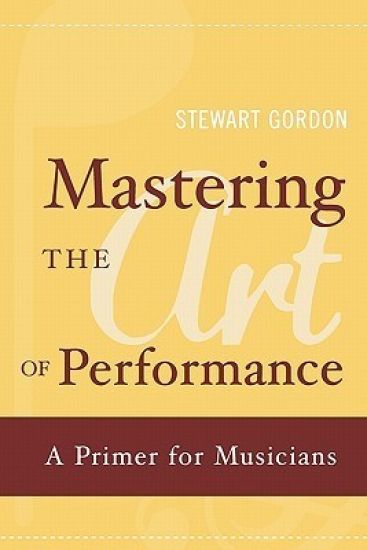
In Mastering the Art of Performance: A Primer for Musicians, Stewart Gordon offers seasoned advice to musicians intent on meeting the challenges of performance. Through real-life examples and pre-performance exercises, this accessible manual gives musicians and other performers practical insights into every aspect of performance. While other books merely identify and describe the problems associated with performance, this book offers detailed suggestions for solving them. First, Gordon tackles the critical planning and preparatory stages, helping performers to evaluate their strengths and weaknesses. The book's easy-to-follow exercises address the self-doubt and anxiety many musicians contend with, helping them to analyze why they perform, set goals and assess the level of energy needed to achieve them, and develop a performance philosophy. The book also offers techniques that will help musicians deal with some of the classic pitfalls of performance preparation, including repetition and drill, changing bad habits, and developing memory. For the performance itself, Gordon's insights help musicians with pacing and managing stage fright. For the aftermath, Gordon arms performers with strategies for dealing with criticism and conducting a constructive self-evaluation, equipping them to face the challenges of a lifetime of performances, including career plateaus and burnout. Gordon draws from more than forty years of experience in front of audiences to offer readers invaluable tips and personal reflections. While aimed primarily at musicians, the book will be useful to anyone facing the pressures of performance, such as actors, dancers, and even public speakers.
Mastering the Art of Performance

Mastering the Art of Performance

Stewart Gordon

Oxford University Press Inc
2010
nidottu
In Mastering the Art of Performance: A Primer for Musicians, Stewart Gordon offers seasoned advice to musicians intent on meeting the challenges of performance. Through real-life examples and pre-performance exercises, this accessible manual gives musicians and other performers practical insights into every aspect of performance. While other books merely identify and describe the problems associated with performance, this book offers detailed suggestions for solving them. First, Gordon tackles the critical planning and preparatory stages, helping performers to evaluate their strengths and weaknesses. The book's easy-to-follow exercises address the self-doubt and anxiety many musicians contend with, helping them to analyze why they perform, set goals and assess the level of energy needed to achieve them, and develop a performance philosophy. The book also offers techniques that will help musicians deal with some of the classic pitfalls of performance preparation, including repetition and drill, changing bad habits, and developing memory. For the performance itself, Gordon's insights help musicians with pacing and managing stage fright. For the aftermath, Gordon arms performers with strategies for dealing with criticism and conducting a constructive self-evaluation, equipping them to face the challenges of a lifetime of performances, including career plateaus and burnout. Gordon draws from more than forty years of experience in front of audiences to offer readers invaluable tips and personal reflections. While aimed primarily at musicians, the book will be useful to anyone facing the pressures of performance, such as actors, dancers, and even public speakers.
There and Back

There and Back

Stewart Gordon

Oxford University Press
2018
sidottu
Throughout human history, routes concentrated, funnelled, and mixed human experience. On them moved books, scrolls, and art, in addition to armies, ambassadorial entourages, slaves, brides, and pilgrims. The interaction of people on routes generated surprising innovations in ideas, religions, art, technology, and cuisine. Common themes appear repeatedly, such as slavery, piracy, government taxation and control, medicinal plants, military expeditions, the interaction of competing religions, processing of goods along the way, and networks of credit, trust, and information that often spanned continents. This book is divided into four seconds, each concentrating on a type of route: river, pilgrimage, tribute, and trade. The arrangement is based on cognitive geography, rather than technological or physical similarities. For instance, the Rhine is not a river route because there is water flowing between two banks, but because of the songs and fairy tales about it and its long history as a political boundary. Pilgrimage routes are grounded in shared expectations and experiences, just as routes of imperial tribute rest primarily on the expectations of local officials, transporters, and military guards. Trade routes foreground the expectations of professional traders. Each route is 'travelled' through the memoir of a real traveller, pulling away to address larger issues, but never losing the engagement of the human story. The geographic reach is worldwide with chapters, for example, on the Grand Canal of China and the Inca road system; they also have considerable historical depth, from the ancient Nile to the Erie Canal and the modern Hajj.
Planning Your Piano Success

Planning Your Piano Success

Stewart Gordon

Oxford University Press Inc
2014
sidottu
Young pianists pursuing a professional career face a barrage of questions, choices, and challenges. In this book, experienced teacher and performer Stewart Gordon offers a new and practical way to approach them by helping readers to plan strategically and build a secure and successful career from the ground up. For decades, Gordon has guided young pianists through the details of how to prepare musically, navigate their college years, and forge a career that will provide a livelihood. In this guide to beginning that musical career, Gordon has assembled the wisdom of decades of teaching: a fundamental body of information emerging pianists will rely on as they work toward their goals. His advice, focused on both mental and practical work, will enhance both motivation and security. Carefully balancing aspiration with reality and inspiration with organization, Gordon creates a blueprint for transforming dreams into achievement, and illustrates his points with examples drawn from the lives of famous musicians. The book also addresses many practical matters, such as developing keyboard technique, acquiring reading and memorizing skills, building repertoire, and balancing the demands of being a musician with living a full life. This volume is a valuable resource for both young pianists and their parents.
Planning Your Piano Success

Planning Your Piano Success

Stewart Gordon

Oxford University Press Inc
2014
nidottu
Young pianists pursuing a professional career face a barrage of questions, choices, and challenges. In this book, experienced teacher and performer Stewart Gordon offers a new and practical way to approach them by helping readers to plan strategically and build a secure and successful career from the ground up. For decades, Gordon has guided young pianists through the details of how to prepare musically, navigate their college years, and forge a career that will provide a livelihood. In this guide to beginning that musical career, Gordon has assembled the wisdom of decades of teaching: a fundamental body of information emerging pianists will rely on as they work toward their goals. His advice, focused on both mental and practical work, will enhance both motivation and security. Carefully balancing aspiration with reality and inspiration with organization, Gordon creates a blueprint for transforming dreams into achievement, and illustrates his points with examples drawn from the lives of famous musicians. The book also addresses many practical matters, such as developing keyboard technique, acquiring reading and memorizing skills, building repertoire, and balancing the demands of being a musician with living a full life. This volume is a valuable resource for both young pianists and their parents.
When Asia Was the World

When Asia Was the World

Stewart Gordon

Yale University Press
2007
sidottu
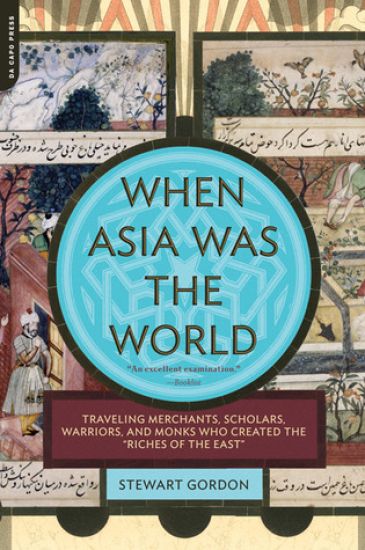
While European intellectual, cultural, and commercial life stagnated during the early medieval period, Asia flourished as the wellspring of science, philosophy, and religion. Linked together by a web of religious, commercial, and intellectual connections, the different regions of Asia's vast civilization, from Arabia to China, hummed with commerce, international diplomacy and the brisk exchange of ideas. Stewart Gordon has fashioned a fascinating and unique look at Asia from 700 to 1500 AD, a time when Asia was the world, by describing the personal journeys of Asia's many travellers - the merchants who traded spices along the Silk Road, the apothecaries who exchanged medicine and knowledge from China to the Middle East, and the philosophers and holy men who crossed continents to explore and exchange ideas, books, science and culture. Arranged chronologically, each chapter focuses on an actual memoir from a traveller of the time - Chinese, Arab, Jewish, Mongol and Portuguese - entrepreneurs who interacted with and moved through this world. Their dramatic first hand observations are woven into a sophisticated new narrative of the period and region.
When Asia Was the World

When Asia Was the World

Stewart Gordon

Da Capo Press Inc
2009
pokkari
While European civilization stagnated in the Dark Ages," Asia flourished as the wellspring of science, philosophy, and religion. Linked together by a web of spiritual, commercial, and intellectual connections, the distant regions of Asia's vast civilization, from Arabia to China, hummed with trade, international diplomacy, and the exchange of ideas. Stewart Gordon has fashioned a compelling and unique look at Asia from AD 700 to 1500,a time when Asia was the world,by relating the personal journeys of Asia's many travellers.
The Marathas 1600–1818

The Marathas 1600–1818

Stewart Gordon

Cambridge University Press
2007
pokkari
In this book, Dr Stewart Gordon presents a comprehensive history of one of the most colourful and least-understood kingdoms of India: the Maratha Empire. The empire was founded by Shivaji in the mid-seventeenth century, spread across most of India during the following century, and was conquered by the British in the nineteenth century. Using administrative documents of the Maratha polity, family papers and Histories of the Empire, Stewart Gordon explores the origin of the Marathas, their emergence as elite families, patterns of loyalty and strategies for maintaining legitimacy. He traces how the armies developed into European-style infantry and artillery and assesses the economics that funded the polity, especially taxation and credit. Finally the author considers the lasting effects the empire had on administrations, law and trade patterns of Central India, Gujarat and Maharashtra.
A History of the World in Sixteen Shipwrecks

A History of the World in Sixteen Shipwrecks

Stewart Gordon

Dartmouth College Press
2017
nidottu
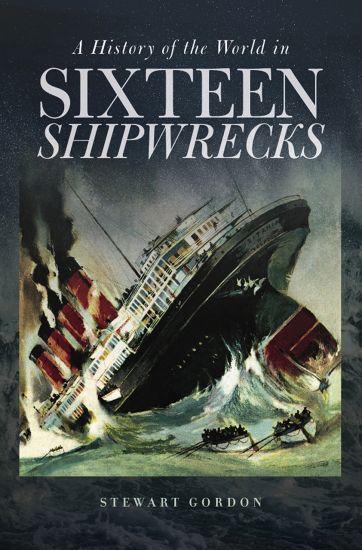
Stories of disasters at sea, whether about Roman triremes, the treasure fleet of the Spanish Main, or great transatlantic ocean liners, fire the imagination as little else can. From the historical sinkings of the Titanic and the Lusitania to the recent capsizing of a Mediterranean cruise ship, the study of shipwrecks also makes for a new and very different understanding of world history. A History of the World in Sixteen Shipwrecks explores the age-old, immensely hazardous, persistently romantic, and ongoing process of moving people and goods across the seven seas. In recounting the stories of ships and the people who made and sailed them, from the earliest craft plying the ancient Nile to the Exxon Valdez, Stewart Gordon argues that the gradual integration of mainly local and separate maritime domains into fewer, larger, and more interdependent regions offers a unique perspective on world history. Gordon draws a number of provocative conclusions from his study, among them that the European “Age of Exploration” as a singular event is simply a myth: over the millennia, many cultures, east and west, have explored far-flung maritime worlds, and technologies of shipbuilding and navigation have been among the main drivers of science and exploration throughout history. In a series of compelling narratives, A History of the World in Sixteen Shipwrecks shows that the development of institutions and technologies that made the terrifying oceans familiar and turned unknown seas into well-traveled sea-lanes matters profoundly in our modern world.