Kirjojen hintavertailu. Mukana 11 627 428 kirjaa ja 12 kauppaa.

Kirjahaku

Etsi kirjoja tekijän nimen, kirjan nimen tai ISBN:n perusteella.

2 kirjaa tekijältä Stewart J. Brown

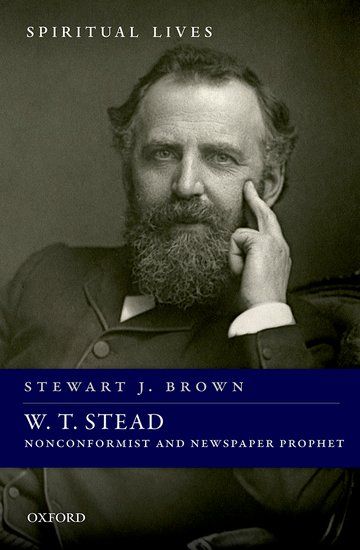
W. T. Stead

W. T. Stead

Stewart J. Brown

Oxford University Press
2019
sidottu
W. T. Stead (1849-1912) was a newspaper editor, author, social reformer, advocate for women rights, peace campaigner, spiritualist, and one of the best-known public figures in the late Victorian and Edwardian Britain. W. T. Stead: Nonconformist and Newspaper Prophet provides a compelling religious biography of Stead, offering particular attention to his conception of journalism--in an age of growing mass literacy--as a means to communicate religious truth and morality, and his view of the editor's desk as a modern pulpit. Leading scholar, Stewart J. Brown explores how his Nonconformist Conscience and sense of divine calling infused Stead's newspaper crusades-most famously his 'Maiden Tribute' campaign against child prostitution. The biography also examines Stead's growing interest in spiritualism and the occult, as he searched for the evidence of an afterlife that might draw people in a more secular age back to faith. It discusses his imperialism and his belief in the English-speaking peoples of the British Empire and American Republic as God's new chosen people for the spread of civilisation; and it highlights how his growing understanding of other faiths and cultures--but more especially his moral revulsion over the South African War of 1899-1902--brought him to question those beliefs. Finally, it assesses the influence of religious faith on his campaigns for world peace and the arbitration of international disputes.
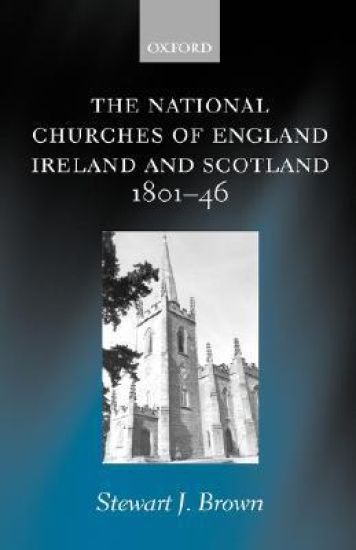
The National Churches of England, Ireland, and Scotland 1801-46
In 1801, the United Kingdom was a semi-confessional State, and the national established Churches of England, Ireland and Scotland were vital to the constitution. They expressed the religious conscience of the State and served as guardians of the faith. Through their parish structures, they provided religious and moral instruction, and rituals for common living. This book explores the struggle to strengthen the influence of the national Churches in the first half of the nineteenth century. For many, the national Churches would help form the United Kingdom into a single Protestant nation-state, with shared beliefs, values and a sense of national mission. Between 1801 and 1825, the State invested heavily in the national Churches. But during the 1830s the growth of Catholic nationalism in Ireland and the emergence of liberalism in Britain thwarted the efforts to unify the nation around the established Churches. Within the national Churches themselves, moreover, voices began calling for independence from the State connection - leading to the Oxford Movement in England and the Disruption of the Church of Scotland.