Kirjojen hintavertailu. Mukana 11 632 081 kirjaa ja 12 kauppaa.

Kirjahaku

Etsi kirjoja tekijän nimen, kirjan nimen tai ISBN:n perusteella.

5 kirjaa tekijältä Stewart Patrick

Weak Links

Weak Links

Stewart Patrick

Oxford University Press Inc
2011
sidottu
Conventional wisdom holds that weak and failing states are the source of the world's most pressing security threats. After all, the 9/11 attacks originated in an impoverished, war-ravaged country, and transnational crime appears to flourish in weakly governed states. However, our assumptions about the threats posed by failing states are based on anecdotal arguments, not on a systematic analysis of the connections between state failure and transnational security threats. Analyzing terrorism, transnational crime, WMDs, pandemic diseases, and energy insecurity, Stewart Patrick shows that while some global threats do emerge in fragile states, most of their weaknesses create misery only for their own citizenry. Moreover, many threats originate farther up the chain, in wealthier and more stable countries like Russia and Venezuela. Weak Links will force policymakers to rethink what they assume about state failure and transnational insecurity.
Weak Links

Weak Links

Stewart Patrick

Oxford University Press Inc
2011
nidottu
Conventional wisdom holds that weak and failing states are the source of the world's most pressing security threats. After all, the 9/11 attacks originated in an impoverished, war-ravaged country, and transnational crime appears to flourish in weakly governed states. However, our assumptions about the threats posed by failing states are based on anecdotal arguments, not on a systematic analysis of the connections between state failure and transnational security threats. Analyzing terrorism, transnational crime, WMDs, pandemic diseases, and energy insecurity, Stewart Patrick shows that while some global threats do emerge in fragile states, most of their weaknesses create misery only for their own citizenry. Moreover, many threats originate farther up the chain, in wealthier and more stable countries like Russia and Venezuela. Weak Links will force policymakers to rethink what they assume about state failure and transnational insecurity.
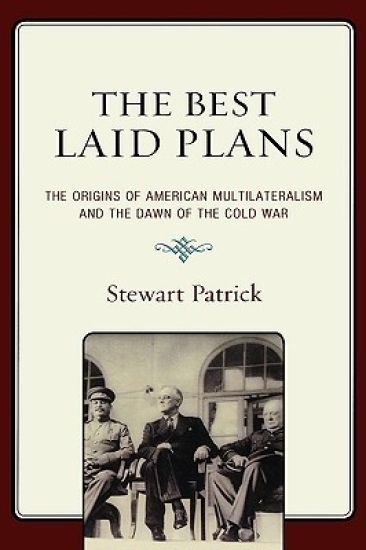
The Best Laid Plans

The Best Laid Plans

Stewart Patrick

Rowman Littlefield Publishers
2008
sidottu
The long-standing, but unresolved debate of the virtues and values of multilateralism vs. unilateralism in American foreign policy is critically important in today's complicated world. To understand the history of each approach is to understand their opportunities and challenges for the future. The Best Laid Plans answers two central questions. First, why did the United States embrace the principles and practices of liberal multilateralism during World War II? Second, why did it cling to this vision of world order despite the outbreak of the Cold War in the late 1940s, as the "One World" that had been anticipated by U.S. postwar planners split into two rival global camps? The book contends that neither the U.S. turn to liberal multilateralism nor the persistence of this orientation during the Cold War can be attributed solely or even primarily to the global power structure or crude considerations of material self interest. Rather, Stewart Patrick argues that a combination of enduring identity commitments and new ideas, based on the lessons of recent, cataclysmic events, shaped the policy preferences of American central decision-makers in the Roosevelt and Truman administrations. Although the book is steeped in history, its conclusions have tremendous relevance for the contemporary era, when the United States once again finds itself at the apex of world power, and debates are rife about the role of multilateral cooperation in the realization of U.S. foreign policy objectives.
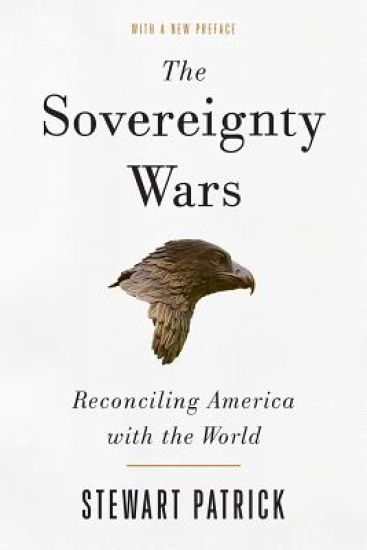
The Sovereignty Wars

The Sovereignty Wars

Stewart Patrick

Brookings Institution
2019
nidottu
Now in paperback?with a new preface by the authorAmericans have long been protective of the country's sovereignty?all the way back to George Washington who, when retiring as president, admonished his successors to avoid ?permanent? alliances with foreign powers. Ever since, the nation has faced periodic, often heated, debates about how to maintain that sovereignty, and whether and when it is appropriate to cede some of it in the form of treaties and the alliances about which Washington warned.As the 2016 election made clear, sovereignty is also one of the most frequently invoked, polemical, and misunderstood concepts in politics?particularly American politics. The concept wields symbolic power, implying something sacred and inalienable: the right of the people to control their fate without subordination to outside authorities. Given its emotional pull, however, the concept is easily high-jacked by political opportunists. By playing the sovereignty card, they can curtail more reasoned debates over the merits of proposed international commitments by portraying supporters of global treaties or organizations as enemies of motherhood and apple pie.Such polemics distract Americans from what is really at stake in the sovereignty debate: the ability of the United States to shape its destiny in a global age. The United States cannot successfully manage globalization, much less insulate itself from cross-border threats, on its own. As global integration deepens and cross-border challenges grow, the nation's fate is increasingly tied to that of other countries, whose cooperation will be needed to exploit the shared opportunities and mitigate the common risks of interdependence.The Sovereignty Wars is intended to help today's policymakers think more clearly about what is actually at stake in the sovereignty debate and to provide some criteria for determining when it is appropriate to make bargains over sovereignty?and how to make them.