Kirjojen hintavertailu. Mukana 11 610 456 kirjaa ja 12 kauppaa.

Kirjahaku

Etsi kirjoja tekijän nimen, kirjan nimen tai ISBN:n perusteella.

9 kirjaa tekijältä Stewart Shapiro

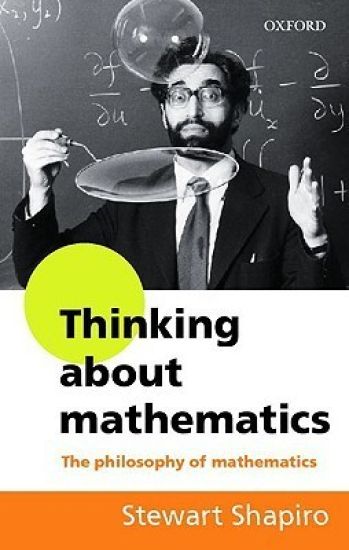
Thinking about Mathematics

Thinking about Mathematics

Stewart Shapiro

Oxford University Press
2000
nidottu
This unique text by Stewart Shapiro looks at a range of philosophical issues and positions concerning mathematics in four comprehensive sections. The first describes questions and issues about mathematics that have motivated philosophers almost since the beginning of intellectual history. Part II is an historical survey, discussing the role of mathematics in such thinkers as Plato, Aristotle, Kant, and Mill. The third section covers the three major positions, and battle lines, throughout the twentieth century: that mathematics is logic (logicism), that the essence of mathematics is the rule-governed manipulation of characters (formalism), and a revisionist philosophy that focuses on the mental activity of mathematics (intuitionism). Finally, Part IV looks at contemporary positions and work which brings the reader up-to-date on the discipline. Thinking about Mathematics is accessible to those with little background in either mathematics or philosophy. It is aimed at students and professionals in mathematics who have little contact with academic philosophy and at philosophy students and other philosophers who forgot much of their mathematics.
Philosophy of Mathematics: Structure and Ontology

Philosophy of Mathematics: Structure and Ontology

Stewart Shapiro

Oxford University Press, USA
1997
sidottu
Do numbers, sets, and so forth, exist? What do mathematical statements mean? Are they literally true or false, or do they lack truth values altogether? Addressing questions that have attracted lively debate in recent years, Stewart Shapiro contends that standard realist and antirealist accounts of mathematics are both problematic. As Benacerraf first noted, we are confronted with the following powerful dilemma. The desired continuity between mathematical and, say, scientific language suggests realism, but realism in this context suggests seemingly intractable epistemic problems. As a way out of this dilemma, Shapiro articulates a structuralist approach. On this view, the subject matter of arithmetic, for example, is not a fixed domain of numbers independent of each other, but rather is the natural number structure, the pattern common to any system of objects that has an initial object and successor relation satisfying the induction principle. Using this framework, realism in mathematics can be preserved without troublesome epistemic consequences. Shapiro concludes by showing how a structuralist approach can be applied to wider philosophical questions such as the nature of an "object" and the Quinean nature of ontological commitment. Clear, compelling, and tautly argued, Shapiro's work, noteworthy both in its attempt to develop a full-length structuralist approach to mathematics and to trace its emergence in the history of mathematics, will be of deep interest to both philosophers and mathematicians.
Philosophy of Mathematics

Philosophy of Mathematics

Stewart Shapiro

Oxford University Press Inc
2000
nidottu
Do numbers, sets, and so forth, exist? What do mathematical statements mean? Are they literally true or false, or do they lack truth values altogether? Addressing questions that have attracted lively debate in recent years, Stewart Shapiro contends that standard realist and antirealist accounts of mathematics are both problematic. As Benacerraf first noted, we are confronted with the following powerful dilemma. The desired continuity between mathematical and, say, scientific language suggests realism, but realism in this context suggests seemingly intractable epistemic problems. As a way out of this dilemma, Shapiro articulates a structuralist approach. On this view, the subject matter of arithmetic, for example, is not a fixed domain of numbers independent of each other, but rather is the natural number structure, the pattern common to any system of objects that has an initial object and successor relation satisfying the induction principle. Using this framework, realism in mathematics can be preserved without troublesome epistemic consequences. Shapiro concludes by showing how a structuralist approach can be applied to wider philosophical questions such as the nature of an "object" and the Quinean nature of ontological commitment. Clear, compelling, and tautly argued, Shapiro's work, noteworthy both in its attempt to develop a full-length structuralist approach to mathematics and to trace its emergence in the history of mathematics, will be of deep interest to both philosophers and mathematicians.
Foundations without Foundationalism

Foundations without Foundationalism

Stewart Shapiro

Oxford University Press
2000
nidottu
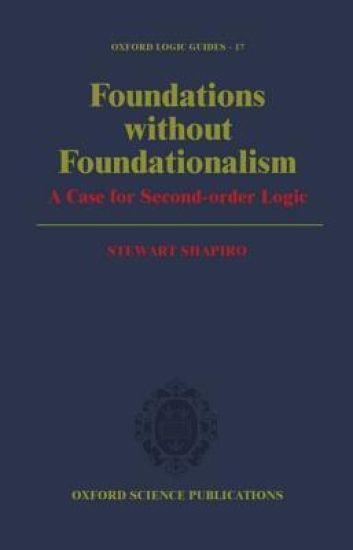
Stewart Shapiro presents a distinctive and persuasive view of the foundations of mathematics, arguing controversially that second-order logic has a central role to play in laying these foundations. To support this contention, he first gives a detailed development of second-order and higher-order logic, in a way that will be accessible to graduate students. He then demonstrates that second-order notions are prevalent in mathematics as practised, and that higher-order logic is needed to codify many contemporary mathematical concepts. Throughout, he emphasizes philosophical and historical issues that the subject raises. Foundations without Foundationalism is a key contribution both to philosophy of mathematics and to mathematical logic. 'In this excellent treatise Shapiro defends the use of second-order languages and logic as framework for mathematics. His coverage of the wide range of logical and philosophical topics required for understanding the controversy over second-order logic is thorough, clear, and persuasive. . . . Shapiro recognizes that it is unlikely that he has had the last word on these controversial philosophical subjects. Nevertheless, his book is certainly an excellent place to start work on them.' Michael D. Resnik, History and Philosophy of Logic
Foundations without Foundationalism

Foundations without Foundationalism

Stewart Shapiro

Clarendon Press
1991
sidottu
The central contention of this book is that second-order logic has a central role to play in laying the foundations of mathematics. In order to develop the argument fully, the author presents a detailed development of higher-order logic, including a comprehensive discussion of its semantics. Professor Shapiro demonstrates the prevalence of second-order notions in mathematics is practised, and also the extent to which mathematical concepts can be formulated in second-order languages . He shows how first-order languages are insufficient to codify many concepts in contemporary mathematics, and thus that higher-order logic is needed to fully reflect current mathematics. Throughout, the emphasis is on discussing the philosophical and historical issues associated with this subject, and the implications that they have for foundational studies. For the most part, the author assumes little more than a familiarity with logic as might be gained from a beginning graduate course which includes the incompleteness of arithmetic and the Lowenheim-Skolem theorems. All those concerned with the foundations of mathematics will find this a thought-provoking discussion of some of the central issues in this subject.
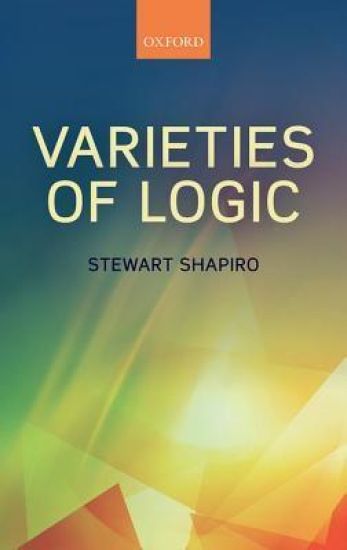
Varieties of Logic

Varieties of Logic

Stewart Shapiro

Oxford University Press
2020
nidottu
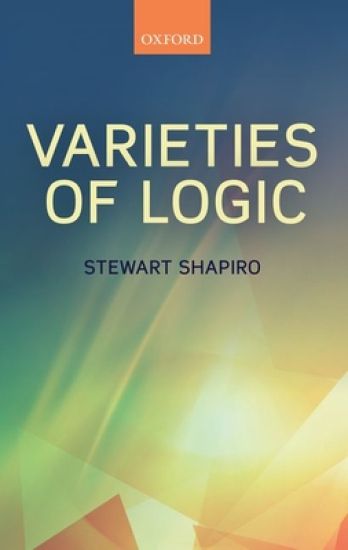
Logical pluralism is the view that different logics are equally appropriate, or equally correct. Logical relativism is a pluralism according to which validity and logical consequence are relative to something. In Varieties of Logic, Stewart Shapiro develops several ways in which one can be a pluralist or relativist about logic. One of these is an extended argument that words and phrases like 'valid' and 'logical consequence' are polysemous or, perhaps better, are cluster concepts. The notions can be sharpened in various ways. This explains away the 'debates' in the literature between inferentialists and advocates of a truth-conditional, model-theoretic approach, and between those who advocate higher-order logic and those who insist that logic is first-order. A significant kind of pluralism flows from an orientation toward mathematics that emerged toward the end of the nineteenth century, and continues to dominate the field today. The theme is that consistency is the only legitimate criterion for a theory. Logical pluralism arises when one considers a number of interesting and important mathematical theories that invoke a non-classical logic, and are rendered inconsistent, and trivial, if classical logic is imposed. So validity is relative to a theory or structure. The perspective raises a host of important questions about meaning. The most significant of these concern the semantic content of logical terminology, words like 'or', 'not', and 'for all', as they occur in rigorous mathematical deduction. Does the intuitionistic 'not', for example, have the same meaning as its classical counterpart? Shapiro examines the major arguments on the issue, on both sides, and finds them all wanting. He then articulates and defends a thesis that the question of meaning-shift is itself context-sensitive and, indeed, interest-relative. He relates the issue to some prominent considerations concerning open texture, vagueness, and verbal disputes. Logic is ubiquitous. Whenever there is deductive reasoning, there is logic. So there are questions about logical pluralism that are analogous to standard questions about global relativism. The most pressing of these concerns foundational studies, wherein one compares theories, sometimes with different logics, and where one figures out what follows from what in a given logic. Shapiro shows that the issues are not problematic, and that is usually easy to keep track of the logic being used and the one mentioned.
Vagueness in Context

Vagueness in Context

Stewart Shapiro

Clarendon Press
2006
sidottu
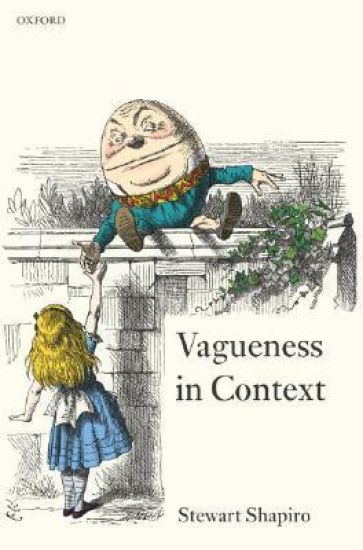
Stewart Shapiro's aim in Vagueness in Context is to develop both a philosophical and a formal, model-theoretic account of the meaning, function, and logic of vague terms in an idealized version of a natural language like English. It is a commonplace that the extensions of vague terms vary with such contextual factors as the comparison class and paradigm cases. A person can be tall with respect to male accountants and not tall (even short) with respect to professional basketball players. The main feature of Shapiro's account is that the extensions (and anti-extensions) of vague terms also vary in the course of a conversation, even after the external contextual features, such as the comparison class, are fixed. A central thesis is that in some cases, a competent speaker of the language can go either way in the borderline area of a vague predicate without sinning against the meaning of the words and the non-linguistic facts. Shapiro calls this open texture, borrowing the term from Friedrich Waismann. The formal model theory has a similar structure to the supervaluationist approach, employing the notion of a sharpening of a base interpretation. In line with the philosophical account, however, the notion of super-truth does not play a central role in the development of validity. The ultimate goal of the technical aspects of the work is to delimit a plausible notion of logical consequence, and to explore what happens with the sorites paradox. Later chapters deal with what passes for higher-order vagueness - vagueness in the notions of 'determinacy' and 'borderline' - and with vague singular terms, or objects. In each case, the philosophical picture is developed by extending and modifying the original account. This is followed with modifications to the model theory and the central meta-theorems. As Shapiro sees it, vagueness is a linguistic phenomenon, due to the kinds of languages that humans speak. But vagueness is also due to the world we find ourselves in, as we try to communicate features of it to each other. Vagueness is also due to the kinds of beings we are. There is no need to blame the phenomenon on any one of those aspects.
Vagueness in Context

Vagueness in Context

Stewart Shapiro

Oxford University Press
2008
nidottu
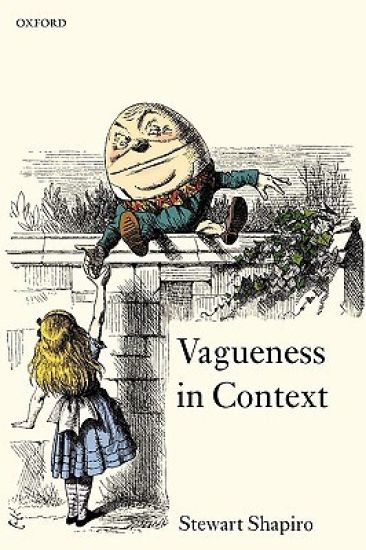
Stewart Shapiro's aim in Vagueness in Context is to develop both a philosophical and a formal, model-theoretic account of the meaning, function, and logic of vague terms in an idealized version of a natural language like English. It is a commonplace that the extensions of vague terms vary with such contextual factors as the comparison class and paradigm cases. A person can be tall with respect to male accountants and not tall (even short) with respect to professional basketball players. The main feature of Shapiro's account is that the extensions (and anti-extensions) of vague terms also vary in the course of a conversation, even after the external contextual features, such as the comparison class, are fixed. A central thesis is that in some cases, a competent speaker of the language can go either way in the borderline area of a vague predicate without sinning against the meaning of the words and the non-linguistic facts. Shapiro calls this open texture, borrowing the term from Friedrich Waismann. The formal model theory has a similar structure to the supervaluationist approach, employing the notion of a sharpening of a base interpretation. In line with the philosophical account, however, the notion of super-truth does not play a central role in the development of validity. The ultimate goal of the technical aspects of the work is to delimit a plausible notion of logical consequence, and to explore what happens with the sorites paradox. Later chapters deal with what passes for higher-order vagueness - vagueness in the notions of 'determinacy' and 'borderline' - and with vague singular terms, or objects. In each case, the philosophical picture is developed by extending and modifying the original account. This is followed with modifications to the model theory and the central meta-theorems. As Shapiro sees it, vagueness is a linguistic phenomenon, due to the kinds of languages that humans speak. But vagueness is also due to the world we find ourselves in, as we try to communicate features of it to each other. Vagueness is also due to the kinds of beings we are. There is no need to blame the phenomenon on any one of those aspects.
Varieties of Logic

Varieties of Logic

Stewart Shapiro

Oxford University Press
2014
sidottu
Logical pluralism is the view that different logics are equally appropriate, or equally correct. Logical relativism is a pluralism according to which validity and logical consequence are relative to something. In Varieties of Logic, Stewart Shapiro develops several ways in which one can be a pluralist or relativist about logic. One of these is an extended argument that words and phrases like 'valid' and 'logical consequence' are polysemous or, perhaps better, are cluster concepts. The notions can be sharpened in various ways. This explains away the 'debates' in the literature between inferentialists and advocates of a truth-conditional, model-theoretic approach, and between those who advocate higher-order logic and those who insist that logic is first-order. A significant kind of pluralism flows from an orientation toward mathematics that emerged toward the end of the nineteenth century, and continues to dominate the field today. The theme is that consistency is the only legitimate criterion for a theory. Logical pluralism arises when one considers a number of interesting and important mathematical theories that invoke a non-classical logic, and are rendered inconsistent, and trivial, if classical logic is imposed. So validity is relative to a theory or structure. The perspective raises a host of important questions about meaning. The most significant of these concern the semantic content of logical terminology, words like 'or', 'not', and 'for all', as they occur in rigorous mathematical deduction. Does the intuitionistic 'not', for example, have the same meaning as its classical counterpart? Shapiro examines the major arguments on the issue, on both sides, and finds them all wanting. He then articulates and defends a thesis that the question of meaning-shift is itself context-sensitive and, indeed, interest-relative. He relates the issue to some prominent considerations concerning open texture, vagueness, and verbal disputes. Logic is ubiquitous. Whenever there is deductive reasoning, there is logic. So there are questions about logical pluralism that are analogous to standard questions about global relativism. The most pressing of these concerns foundational studies, wherein one compares theories, sometimes with different logics, and where one figures out what follows from what in a given logic. Shapiro shows that the issues are not problematic, and that is usually easy to keep track of the logic being used and the one mentioned.