Kirjojen hintavertailu. Mukana 11 244 527 kirjaa ja 12 kauppaa.

Kirjahaku

Etsi kirjoja tekijän nimen, kirjan nimen tai ISBN:n perusteella.

6 kirjaa tekijältä Stuart A. Cohen

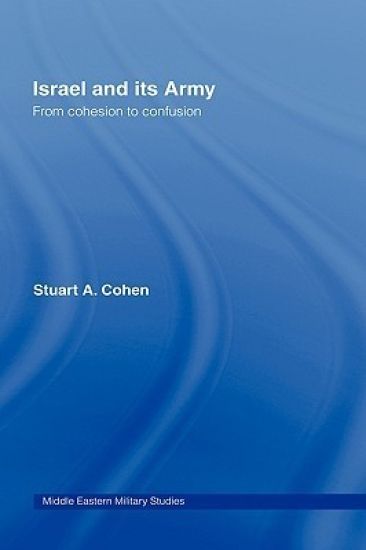
Israel and its Army

Israel and its Army

Stuart A. Cohen

Routledge
2008
sidottu
An examination of the Israeli Defense Force (IDF), this book analyzes the strategic, societal and organizational aspects of the IDF, identifying the changes occurring in Israel's military framework, and exploring their potential implications. It focuses on the transformations in the operational environment.
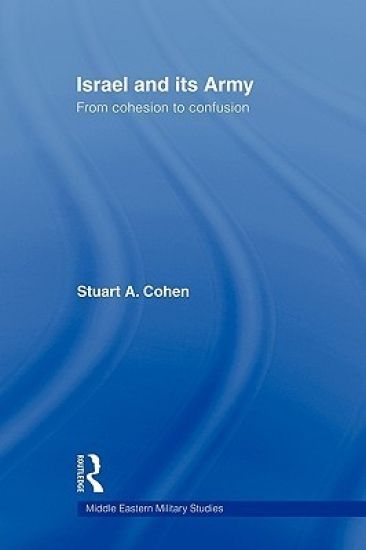
Israel and its Army

Israel and its Army

Stuart A. Cohen

Routledge
2009
nidottu
The Israel Defense Force (IDF) plays a key role in Israeli society, and has traditionally been perceived not only as the guardian of national survival, but also as a 'people's army' responsible for the custody of national values. This volume analyses the circumstances currently undermining these perceptions, and explores both the changes occurring in Israel’s military framework, and their potential implications. The book highlights the influence exerted by massive shifts in both Israel's external strategic landscape and in the country's domestic and cultural environments, which have compelled the IDF to undertake major programmes of structural reform, technological adaptation and doctrinal revision. This book argues that these changes have lead the public to subject the armed forces and their conduct to unprecedented critical scrutiny. The way in which Israelis and their army resolve these tensions is of crucial importance not only for Israel, but for the Middle East as a whole.
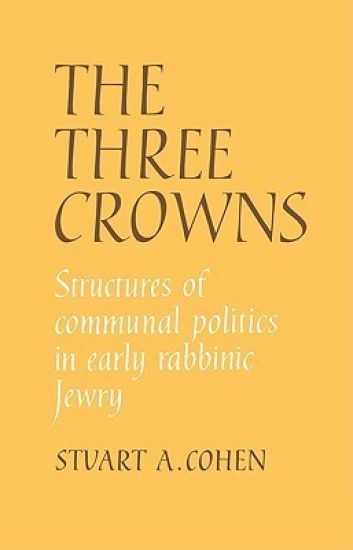
The Three Crowns

The Three Crowns

Stuart A. Cohen

Cambridge University Press
2007
pokkari
The Jewish national revival of our times has stimulated scholarly interest in the historical origins and manifestations of Jewry's distinctive traditions of constitutional thought and political action. This study is a contribution to that enquiry. Focusing on the structures of communal rule forged during the first five centuries of the common era, the book presents an analysis of the processes whereby the rabbis and their disciples replaced both priests and civic rulers as foci of political royalty and instruments of domestic government throughout the Jewish world. Cohen argues that much of Jewish political history during the age of the Mishnah and Talmud can be read as a record of the attempt to reinterpret the ancient concept of the three crowns (or clusters of rulership which determined Jewish public behaviour) and adapt it to rabbinic purposes.
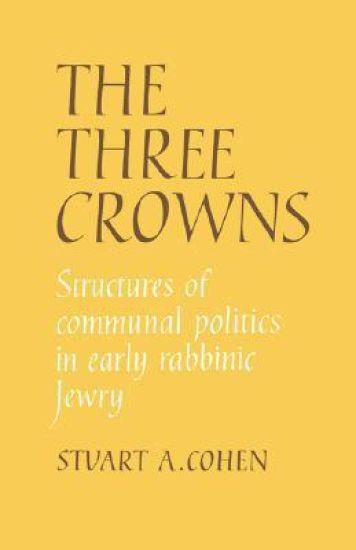
The Three Crowns

The Three Crowns

Stuart A. Cohen

Cambridge University Press
1990
sidottu
The Jewish national revival of our times has stimulated scholarly interest in the historical origins and manifestations of Jewry's distinctive traditions of constitutional thought and political action. This study is a contribution to that enquiry. Focusing on the structures of communal rule forged during the first five centuries of the common era, the book presents a novel analysis of the processes whereby the rabbis and their disciples replaced both priests and civic rulers as foci of political royalty and instruments of domestic government throughout the Jewish world. Cohen argues that much of Jewish political history during the age of the Mishnah and Talmud can be read as a record of the attempt to re-interpret the ancient concept of the three crowns (or clusters of rulership which determined Jewish public behaviour) and adapt it to rabbinic purposes. Drawing on recent scholarship in Hebrew as well as in English, this is the first book to advance a sustained and overtly political analysis of these developments, as opposed to simply a religious one, and its author illuminates throughout the conceptual dimensions which have influenced Jewish institutional practice for much of the past two millenia.
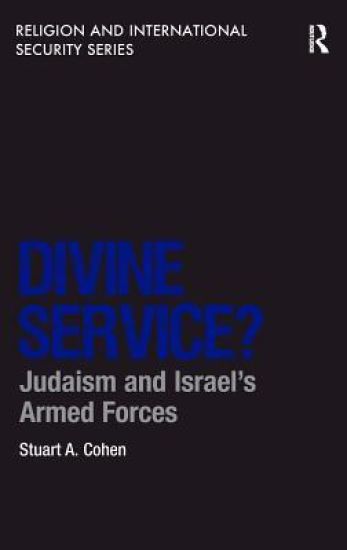
Divine Service?

Divine Service?

Stuart A. Cohen

Routledge
2016
nidottu
Religion now plays an increasingly prominent role in the discourse on international security. Within that context, attention largely focuses on the impact exerted by teachings rooted in Christianity and Islam. By comparison, the linkages between Judaism and the resort to armed force are invariably overlooked. This book offers a corrective. Comprising a series of essays written over the past two decades by one of Israel's most distinguished military sociologists, its point of departure is that the establishment of the state of Israel in 1948, quite apart from revolutionizing Jewish political activity, also triggered a transformation in Jewish military perceptions and conduct. Soldiering, which for almost two millennia was almost entirely foreign to Jewish thought and practice, has by virtue of universal conscription (for women as well as men) become a rite of passage to citizenship in the Jewish state. For practicing orthodox Jews in Israel that change generates dilemmas that are intellectual as well as behavioural, and has necessitated both doctrinal and institutional adaptations. At the same time, the responses thus evoked are forcing Israel's decision-makers to reconsider the traditional role of the Israel Defence Force (IDF) as their country's most evocative symbol of national unity.
Divine Service?

Divine Service?

Stuart A. Cohen

Ashgate Publishing Limited
2013
sidottu
Religion now plays an increasingly prominent role in the discourse on international security. Within that context, attention largely focuses on the impact exerted by teachings rooted in Christianity and Islam. By comparison, the linkages between Judaism and the resort to armed force are invariably overlooked. This book offers a corrective. Comprising a series of essays written over the past two decades by one of Israel's most distinguished military sociologists, its point of departure is that the establishment of the state of Israel in 1948, quite apart from revolutionizing Jewish political activity, also triggered a transformation in Jewish military perceptions and conduct. Soldiering, which for almost two millennia was almost entirely foreign to Jewish thought and practice, has by virtue of universal conscription (for women as well as men) become a rite of passage to citizenship in the Jewish state. For practicing orthodox Jews in Israel that change generates dilemmas that are intellectual as well as behavioural, and has necessitated both doctrinal and institutional adaptations. At the same time, the responses thus evoked are forcing Israel's decision-makers to reconsider the traditional role of the Israel Defence Force (IDF) as their country's most evocative symbol of national unity.