Kirjojen hintavertailu. Mukana 11 244 527 kirjaa ja 12 kauppaa.

Kirjahaku

Etsi kirjoja tekijän nimen, kirjan nimen tai ISBN:n perusteella.

4 kirjaa tekijältä Stuart A. Selber

Multiliteracies for a Digital Age

Multiliteracies for a Digital Age

Stuart A. Selber

Southern Illinois University Press
2004
sidottu
Multiliteracies for a Digital Age serves as a guide for composition teachers to develop effective, full-scale computer literacy programs that are also professionally responsible by emphasizing different kinds of literacies. Stuart A. Selber also proposes methods for helping students move among these literacies in strategic ways. Defining computer literacy as a domain of writing and communication, Selber addresses the questions that few other computer literacy texts consider: What should a computer literate student be able to do? What is required of literacy teachers to educate such a student? How can functional computer literacy fit within the values of teaching writing and communication as a profession? Reimagining functional literacy in ways that speak to teachers of writing and communication, he builds a framework for computer literacy instruction that blends functional, critical, and rhetorical concerns in the interest of social action and change. Multiliteracies for a Digital Age reviews the extensive literature on computer literacy and critiques it from a humanistic perspective. This approach, which will remain useful as new versions of computer hardware and software inevitab
Institutional Literacies

Institutional Literacies

Stuart A. Selber

University of Chicago Press
2020
sidottu
Information technologies have become an integral part of writing and communication courses, shaping the ways students and teachers think about and do their work. But, too often, teachers and other educational stakeholders take a passive or simply reactive role in institutional approaches to technologies, and this means they are missing out on the chance to make positive changes in their departments and on campus.Institutional Literacies argues that writing and communication teachers and program directors should collaborate more closely and engage more deeply with IT staff as technology projects are planned, implemented, and expanded. Teachers need to both analyze how their institutions approach information technologies and intervene in productive ways as active university citizens with relevant expertise. To help them do so, the book offers a three-part heuristic, reflecting the reality that academic IT units are complex and multilayered, with historical, spatial, and textual dimensions. It discusses six ways teachers can intervene in the academic IT work of their own institutions: maintaining awareness, using systems and services, mediating for audiences, participating as user advocates, working as designers, and partnering as researchers. With these strategies in hand, educators can be proactive in helping institutional IT approaches align with the professional values and practices of writing and communication programs.
Institutional Literacies

Institutional Literacies

Stuart A. Selber

University of Chicago Press
2020
nidottu
Information technologies have become an integral part of writing and communication courses, shaping the ways students and teachers think about and do their work. But, too often, teachers and other educational stakeholders take a passive or simply reactive role in institutional approaches to technologies, and this means they are missing out on the chance to make positive changes in their departments and on campus.Institutional Literacies argues that writing and communication teachers and program directors should collaborate more closely and engage more deeply with IT staff as technology projects are planned, implemented, and expanded. Teachers need to both analyze how their institutions approach information technologies and intervene in productive ways as active university citizens with relevant expertise. To help them do so, the book offers a three-part heuristic, reflecting the reality that academic IT units are complex and multilayered, with historical, spatial, and textual dimensions. It discusses six ways teachers can intervene in the academic IT work of their own institutions: maintaining awareness, using systems and services, mediating for audiences, participating as user advocates, working as designers, and partnering as researchers. With these strategies in hand, educators can be proactive in helping institutional IT approaches align with the professional values and practices of writing and communication programs.
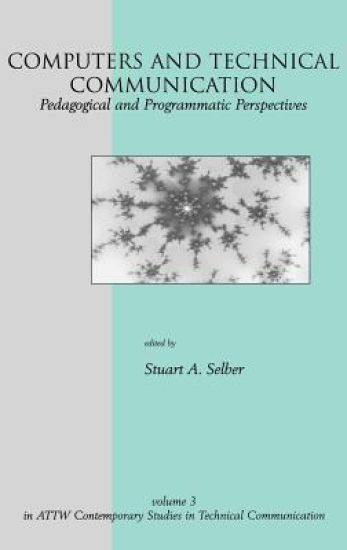
Computers and Technical Communication

Computers and Technical Communication

Stuart A. Selber

Praeger Publishers Inc
1997
sidottu
The essays collected in this volume address the full range of pedagogical and programmatic issues specifically facing technical communication teachers and programme directors in the computer age. The authors locate computers and computing activities within the richly-textured cultural contexts of a technological society, focusing on the technical communication instructional issues that remain most important as old versions of hardware and software are endlessly replaced by new ones. Part One, "Broadening Notions of Computer Literacy", complicates mechanistic approaches to computer-related instruction by locating the design and use of hardware and software within social, cultural, political, ethical and legal contexts. Part Two examines how teachers and programme directors can encourage critical literacies in their classrooms and programmes. At the same time, it considers how computer technologies such as the World Wide Web, hypertext, electronic mail, Internet discussion groups and real-time conferencing environments might challenge traditional notions of technical communication pedagogical practice. Building on the first two sections, Part Three, "Examining Computer-Supported Communication Facilities from Pedagogical Perspectives", explores a wide range of instructional and political challenges in designing and supporting the robust computing needs of technical communication programmes. Part Four, "Planning for Technological Changes in Technical Communication Programmes", outlines some long-term ways of thinking about computers and technical communications that are instructionally and institutionally productive for students, teachers and programme directors.