The word "pharmacopoeia" has come to have many meanings, although it is commonly understood to be a book describing approved compositions and standards for drugs. In 1813 the Royal College of Physicians of London considered a proposal to develop an imperial British pharmacopoeia – at a time when separate official pharmacopoeias existed for England, Scotland, and Ireland. A unified British pharmacopoeia was published in 1864, and by 1914 it was considered suitable for the whole Empire.Pharmacopoeias, Drug Regulation, and Empires traces the 350-year development of officially sanctioned pharmacopoeias across the British Empire, first from local to national pharmacopoeias, and later to a standardized pharmacopoeia that would apply throughout Britain’s imperial world. The evolution of British pharmacopoeias and the professionalization of medicine saw developments including a transition from Galenic principles to germ theory, and a shift from plant-based to chemical medicines. While other colonial powers in Europe usually imposed metropolitan pharmacopoeias across their colonies, Britain consulted with practitioners throughout its Empire. As the scope of the pharmacopoeia widened, the process of agreeing upon drug standardization became more complex and fraught. A wide range of issues was exposed, from bioprospecting and the inclusion of indigenous medicines in pharmacopoeias, to adulteration and demands for the substitution of pharmacopoeial drugs with locally available ones.Pharmacopoeias, Drug Regulation, and Empires uses the evolution of an imperial pharmacopoeia in Britain as a vehicle for exploring the hegemonic power of European colonial powers in the medical field, and the meaning of pharmacopoeia more broadly.
The word "pharmacopoeia" has come to have many meanings, although it is commonly understood to be a book describing approved compositions and standards for drugs. In 1813 the Royal College of Physicians of London considered a proposal to develop an imperial British pharmacopoeia – at a time when separate official pharmacopoeias existed for England, Scotland, and Ireland. A unified British pharmacopoeia was published in 1864, and by 1914 it was considered suitable for the whole Empire.Pharmacopoeias, Drug Regulation, and Empires traces the 350-year development of officially sanctioned pharmacopoeias across the British Empire, first from local to national pharmacopoeias, and later to a standardized pharmacopoeia that would apply throughout Britain’s imperial world. The evolution of British pharmacopoeias and the professionalization of medicine saw developments including a transition from Galenic principles to germ theory, and a shift from plant-based to chemical medicines. While other colonial powers in Europe usually imposed metropolitan pharmacopoeias across their colonies, Britain consulted with practitioners throughout its Empire. As the scope of the pharmacopoeia widened, the process of agreeing upon drug standardization became more complex and fraught. A wide range of issues was exposed, from bioprospecting and the inclusion of indigenous medicines in pharmacopoeias, to adulteration and demands for the substitution of pharmacopoeial drugs with locally available ones.Pharmacopoeias, Drug Regulation, and Empires uses the evolution of an imperial pharmacopoeia in Britain as a vehicle for exploring the hegemonic power of European colonial powers in the medical field, and the meaning of pharmacopoeia more broadly.
Immigration is a comprehensive and practical guide to the history, economics, and contributions of immigrants, written by a former key policymaker who is now a leading researcher in the field. Immigration is a comprehensive examination of U.S. immigration policies and their impact on the nation, combining a historical overview and a guide to how immigration works in practice. In this one-volume compendium on the history, politics, culture, and contributions of immigrants to the United States, the author uses his experience in key immigration policy posts to provide an insider's perspective on a broad array of immigration-related issues. Offering a detached, unbiased analysis of the economic, fiscal, and other impacts of current immigration policies, he recommends reforms and policy solutions for the thorniest immigration issues, such as illegal immigration. But the book does not ignore the fact that immigration has always enriched and strengthened our nation. Along with policy considerations, it also encompasses enlightening profiles detailing the many contributions of individual immigrants in such diverse areas as science, sports, the military, and business.
This book explores the difficulties experienced by objectors in the Armed Forces and those who worked on the land, and also considers women who objected to compulsion extended to them for the first time.
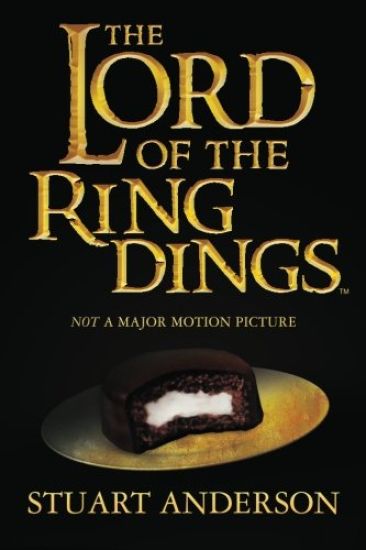
Bobbits were generally not large but Filbo Daggins was larger and stranger than most and people in the Shire often said so. "I say, that Filbo is large," said one. "Yes, that Filbo is larger and stranger than most," said another. That evening Filbo would be celebrating his eleventy-first birthday. On their birthday, it was customary among the Bobbits to give gifts to other people. There was much grumbling in the Shire that Filbo usually gave presents such as gift certificates to stores nobody could find. . . . In The Lord of the Ring Dings, Sam and Dodo must overcome the evil Lord Sorehead, the nasty Sorry-Man, and a host of product placements to reach Door-Door and destroy the Ring Ding of Power. It's like The Lord of the Rings movies except the budget is much lower. Oregon courts Liv Tyler and Gimpley the dwarf woos the ladies of Middling-earth (both of them). The Elvis lend a hand, providing the travelers with the traditional Elvis food of meatloaf and fried peanut butter and banana sandwiches. Gandolf is around as well, but his spells generally don't work well and he forgets things a lot. And, of course, there's Jollum, the weird creature who will stop at nothing to get his hands on the precious Ring Ding. ADVANCE PRAISE for The Lord of the Ring Dings "This book really nails it. It tells what really happened." - Aragorn, King of Gondor "I thought my part could have been bigger." - Arwen, Queen of Gondor "Although I am a wizard I never would have predicted such a fine book. Wait, that sounds cheesy. No, don't write that down." - Gandalf, a wizard "I thought the portrayal of my great, great grand uncle was unfair. For example, he didn't like fish that much." - Johann Sm agol III, Gollum's great, great grand nephew "I really wish there were more women in the story, or anywhere." - Gimli, son of Gl in "I think I was much cooler in the movie, but in the book I was still pretty cool." - Legolas "We no portrayed fair. Me no like." - Gorkran, an Orc
Darwin Litton's ex-squeeze is brutally and mysteriously murdered in Ireland. As an experienced fantasist and self-appointed pack leader, Darwin assembles an unwitting team of intrepid investigators to set sail for the distant shores of Wales to follow up on the only lead they have.Wales is not quite as leek as they had hoped, and a world of serious crime, kidnaps, multiple murders, and international hit men draws them in. Their investigations take them to an underworld of Witness Protection, Special Forces and Government cover-ups. "This fast-paced story cleverly combines page-turning drama and the sharpest of humour as it darts skilfully through the twists and turns of a classic thriller."This is the first in a series of novels by Stuart Anderson featuring the investigative adventures of Darwin Litton.
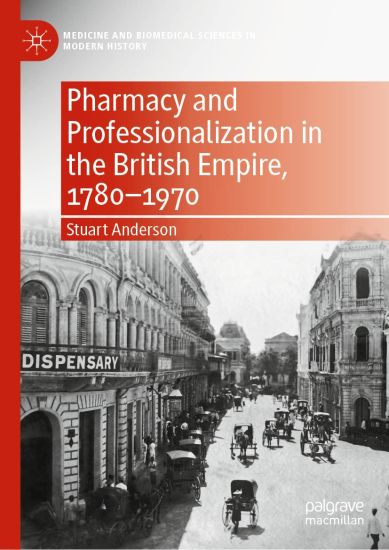
Offering a valuable resource for medical and other historians, this book explores the processes by which pharmacy in Britain and its colonies separated from medicine and made the transition from trade to profession during the nineteenth and twentieth centuries. When the Pharmaceutical Society of Great Britain was founded in 1841, its founders considered pharmacy to be a branch of medicine. However, the 1852 Pharmacy Act made the exclusion of pharmacists from the medical profession inevitable, and in 1864 the General Medical Council decided that pharmacy legislation was best left to pharmacists themselves. Yet across the Empire, pharmacy struggled to establish itself as an autonomous profession, with doctors in many colonies reluctant to surrender control over pharmacy. In this book the author traces the professionalization of pharmacy by exploring issues including collective action by pharmacists, the role of the state, the passage of legislation, the extension of education, and its separation from medicine. The author considers the extent to which the British model of pharmacy shaped pharmacy in the Empire, exploring the situation in the Divisions of Empire where the 1914 British Pharmacopoeia applied: Canada, the West Indies, the Mediterranean colonies, the colonies in West and South Africa, India and the Eastern colonies, Australia, New Zealand, and the Western Pacific Islands. This insightful and wide-ranging book offers a unique history of British pharmaceutical policy and practice within the colonial world, and provides a firm foundation for further studies in this under-researched aspect of the history of medicine.
Offering a valuable resource for medical and other historians, this book explores the processes by which pharmacy in Britain and its colonies separated from medicine and made the transition from trade to profession during the nineteenth and twentieth centuries. When the Pharmaceutical Society of Great Britain was founded in 1841, its founders considered pharmacy to be a branch of medicine. However, the 1852 Pharmacy Act made the exclusion of pharmacists from the medical profession inevitable, and in 1864 the General Medical Council decided that pharmacy legislation was best left to pharmacists themselves. Yet across the Empire, pharmacy struggled to establish itself as an autonomous profession, with doctors in many colonies reluctant to surrender control over pharmacy. In this book the author traces the professionalization of pharmacy by exploring issues including collective action by pharmacists, the role of the state, the passage of legislation, the extension of education, and its separation from medicine. The author considers the extent to which the British model of pharmacy shaped pharmacy in the Empire, exploring the situation in the Divisions of Empire where the 1914 British Pharmacopoeia applied: Canada, the West Indies, the Mediterranean colonies, the colonies in West and South Africa, India and the Eastern colonies, Australia, New Zealand, and the Western Pacific Islands. This insightful and wide-ranging book offers a unique history of British pharmaceutical policy and practice within the colonial world, and provides a firm foundation for further studies in this under-researched aspect of the history of medicine.