Kirjojen hintavertailu. Mukana 11 708 555 kirjaa ja 12 kauppaa.

Kirjahaku

Etsi kirjoja tekijän nimen, kirjan nimen tai ISBN:n perusteella.

3 kirjaa tekijältä Stuart Streichler

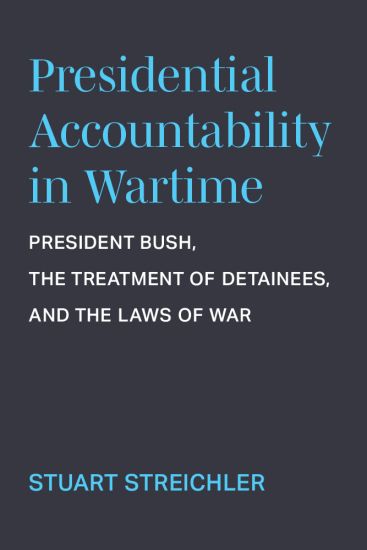
Presidential Accountability in Wartime

Presidential Accountability in Wartime

Stuart Streichler

THE UNIVERSITY OF MICHIGAN PRESS
2023
nidottu
The American presidency has long tested the capacity of the system of checks and balances to constrain executive power, especially in times of war. While scholars have examined presidents starting military conflicts without congressional authorization or infringing on civil liberties in the name of national security, Stuart Streichler focuses on the conduct of hostilities. Using the treatment of war-on-terror detainees under President George W. Bush as a case study, he integrates international humanitarian law into a constitutional analysis of the repercussions of presidential war powers for human rights around the world. Putting President Bush’s actions in a wider context, Presidential Accountability in Wartime begins with a historical survey of the laws of war, with particular emphasis on the 1949 Geneva Conventions and the Nuremberg Tribunal. Streichler then reconstructs the decision-making process that led to the president’s approval of interrogation methods that violated Geneva’s mandate to treat wartime captives humanely. While taking note of various accountability options—from within the executive branch to the International Criminal Court—the book illustrates the challenge in holding presidents personally responsible for violating the laws of war through an in-depth analysis of the actions taken by Congress, the Supreme Court, and the public in response. In doing so, this book not only raises questions about whether international humanitarian law can moderate wartime presidential behavior but also about the character of the presidency and the American constitutional system of government.
Presidential Accountability in Wartime

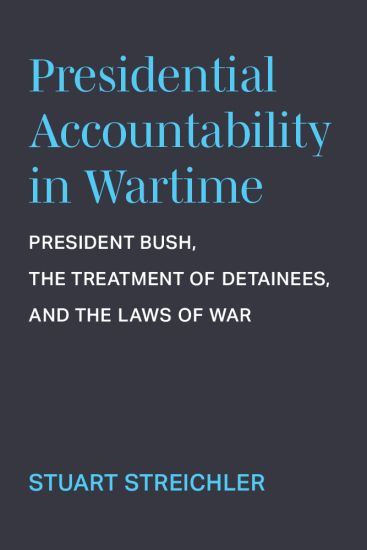
Presidential Accountability in Wartime

Stuart Streichler

THE UNIVERSITY OF MICHIGAN PRESS
2023
sidottu
The American presidency has long tested the capacity of the system of checks and balances to constrain executive power, especially in times of war. While scholars have examined presidents starting military conflicts without congressional authorization or infringing on civil liberties in the name of national security, Stuart Streichler focuses on the conduct of hostilities. Using the treatment of war-on-terror detainees under President George W. Bush as a case study, he integrates international humanitarian law into a constitutional analysis of the repercussions of presidential war powers for human rights around the world. Putting President Bush’s actions in a wider context, Presidential Accountability in Wartime begins with a historical survey of the laws of war, with particular emphasis on the 1949 Geneva Conventions and the Nuremberg Tribunal. Streichler then reconstructs the decision-making process that led to the president’s approval of interrogation methods that violated Geneva’s mandate to treat wartime captives humanely. While taking note of various accountability options—from within the executive branch to the International Criminal Court—the book illustrates the challenge in holding presidents personally responsible for violating the laws of war through an in-depth analysis of the actions taken by Congress, the Supreme Court, and the public in response. In doing so, this book not only raises questions about whether international humanitarian law can moderate wartime presidential behavior but also about the character of the presidency and the American constitutional system of government.
Justice Curtis in the Civil War Era

Justice Curtis in the Civil War Era

Stuart Streichler

University of Virginia Press
2005
sidottu
During a career as both a lawyer and a Supreme Court justice, Benjamin R. Curtis addressed practically every major constitutional question of the mid-nineteenth century, making judgments that still resonate in American law. Aside from a family memoir written by his brother over one hundred years ago, however, no book-length treatment of Curtis exists. Now Stuart Streichler has filled this gap in judicial biography, using Curtis's life and work as a window on the most serious constitutional crisis in American history, the Civil War. Curtis was the lead attorney for President Andrew Johnson in the Senate's impeachment trial, where he delivered the pivotal argument, and his was an influential voice in the pervasive constitutional struggle between states and the federal government. He is best remembered, however, for dissenting in the Dred Scott case, in which he disputed Chief Justice Taney's proslavery ruling that no black person could ever become a citizen of the United States. In the wake of the decision, Curtis resigned from the court, the only justice in the Supreme Court's history to do so on grounds of principle. Yet he also clashed with Boston's abolitionists over enforcing the Fugitive Slave Act, and he opposed the Emancipation Proclamation. In a period when the Constitution was radically transformed from a charter that protected slavery to one that granted all persons equal rights of citizenship, Justice Curtis maintained his faith in the Constitution as an adaptable instrument of self-government and tried to mark out a path for gradual change. Streichler assesses Curtis's common-law methods in the context of his divisive times and shows how the judge's views continue to shed light on issues that have become once again relevant, such as the presidential impeachment process and, after 9/11, the use of military tribunals to try civilians.