Kirjojen hintavertailu. Mukana 12 426 064 kirjaa ja 12 kauppaa.

Kirjahaku

Etsi kirjoja tekijän nimen, kirjan nimen tai ISBN:n perusteella.

20 kirjaa tekijältä Studs Terkel

The Studs Terkel Reader

The Studs Terkel Reader

Studs Terkel

The New Press
2007
nidottu
A beautiful paperback edition of Terkel's greatest hits. For this volume, Studs himself selected the best interviews from eight of his classic books: American Dreams, Coming of Age, Division Street, The Good War, The Great Divide, Hard Times, Race and Working - together with his original introductions to each book. Published in the year of teh great man's 95th birthday, it's a keeper from the United States' foremost oral historian and the bestselling author of 12 legendary books of oral history.
Studs Terkel's Chicago

Studs Terkel's Chicago

Studs Terkel

The New Press
2012
sidottu
Chicago was home to the Pulitzer Prize winning Studs Terkel, who moved there in 1922 and made it his home until his death in 2008 at the age of 96. A tribute to the 'Second City' that is part history, part memoir and 100% Studs Terkel, the book is infused with anecdotes, memories and reflections that celebrate the great city of Chicago. Illustrated throughout with black-and-white photographs that perfectly capture Chicago's unique beauty; here is a splendid evocation of Studs' hometown in all of its glory and imperfection.
The Studs Terkel Interviews

The Studs Terkel Interviews

Studs Terkel

The New Press
2008
nidottu
A collection of the Pulitzer-Prize winning oral historian's remarkable conversations with some of the greatest luminaries of theatre and film. Among the many highlights are Buster Keaton explaining the wonder of unscripted silent comedy and interviews with Arthur Miller, Edward Albee, and Tennessee Williams. Because Studs knows his subjects' work intimately, he asks precisely the right questions to elicit the most revealing responses.
Talking To Myself

Talking To Myself

Studs Terkel

The New Press
2009
nidottu
The veteran journalist-interviewer records memorable incidents, meetings, and endeavors of his life, providing anecdotes involving his own experiences and observations, and those of people famous and unknown
The Good War: An Oral History of World War II
Winner of the Pulitzer Prize in General Nonfiction "The Good War" is a testament not only to the experience of war but to the extraordinary skill of Studs Terkel as an interviewer and oral historian. From a pipe fitter's apprentice at Pearl Harbor to a crew member of the flight that dropped the atomic bomb on Nagasaki, his subjects are open and unrelenting in their analyses of themselves and their experiences, producing what People magazine has called "a splendid epic history" of WWII. With this volume Terkel expanded his scope to the global and the historical, and the result is a masterpiece of oral history.
American Dreams

American Dreams

Studs Terkel

The New Press
1999
nidottu
In this unique look at one of our most pervasive national myths, Studs Terkel persuades an extraordinary range of Americans to articulate their version of "The American Dream." Beginning with an embittered winner of the Miss U.S.A. contest who sees the con behind the dream of success and including an early interview with a highly ambitious Arnold Schwarzenegger, Terkel explores the diverse landscape of the promise of the United States—from farm kids dreaming of the city to city kids determined to get out, from the Boston Brahmin to the KKK member, from newly arrived immigrants to families who have lived in this country for generations, these narratives include figures both famous and infamous. Filtered through the lens of our leading oral historian, the chorus of voices in American Dreams highlights the hopes and struggles of coming to and living in the United States. Originally published in 1980, this is a classic work of oral history that provides an extraordinary and moving picture of everyday American lives.
The Spectator

The Spectator

Studs Terkel

The New Press
1999
sidottu
"The Studs Terkel Interviews: Film and Theater" collects the Pulitzer Prize-winning oral historian's remarkable conversations with some of the greatest luminaries of film and theater. Originally published under the title "The Spectator," this "knowledgeable and perceptive" ("Library Journal") look at show business presents the actors directors, playwrights, dancers, lyricists, and others who created the dramatic works of the twentieth century.Among the many highlights in these pages, Buster Keaton explains the wonders of unscripted silent comedy, Federico Fellini reflects on honesty in art, Carol Channing reveals that she is far more serious than she lets on, and Marlon Brando turns the tables and wants to interview Terkel. We learn about crucial artistic decisions in the lives of Arthur Miller, Tennessee Williams, and Edward Albee and hear from a range of film directors, from Vittorio De Sica and King Vidor to Satyajit Ray. We even get to witness Terkel playing straight man to a wildly inventive Zero Mostel. Because Terkel knows his subjects' work intimately, he asks precisely the right questions to elicit the most revealing responses. As the "New York Times Book Review " noted, "Terkel's knowledge and force of personality make him fully a player alongside his famous guests."
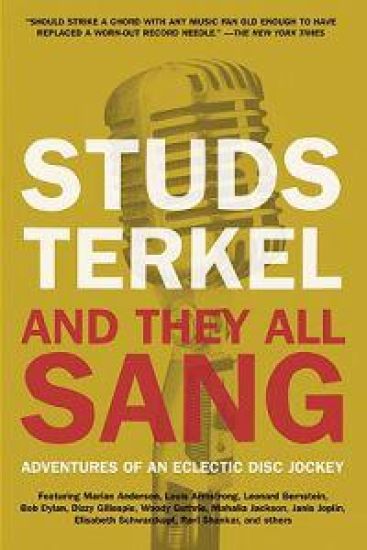
And They All Sang

And They All Sang

Studs Terkel

THE NEW PRESS
2006
pokkari
A selection of forty previously unpublished interviews with top musicians from the past half-century includes the Pulitzer Prize-winning oral historian's discussions with such figures as Bob Dylan, Janis Joplin, and Louis Armstrong. Reprint.
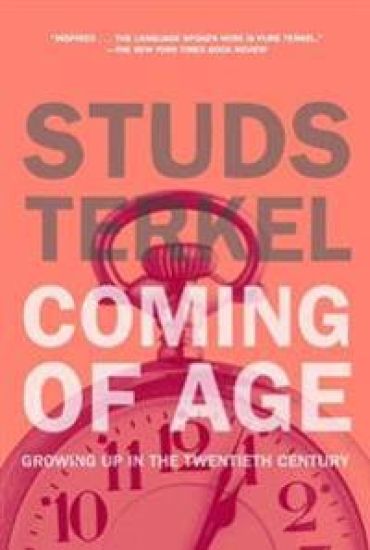
Coming Of Age

Coming Of Age

Studs Terkel

The New Press
2007
nidottu
Bestselling oral history of what it was like to age in the 20th century - as told by those who lived through almost all of it - published to coincide with Terkel's 95th birthday year. in many ways a sequel to Studs' most famous book, Working, COMING OF AGE weaves the voices of 74 very different people - from an angry farmer to a resigned bank president; and those who were at the vanguard of their movements, be they trade unionists, gay rights activists or artists. Indispensable oral history from the undisputed king of the genre.
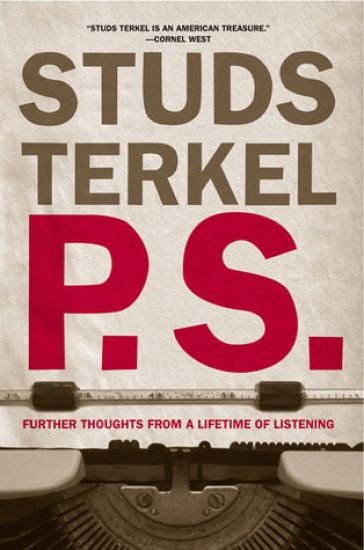
P.s.

P.s.

Studs Terkel

The New Press
2008
nidottu
The pieces collected here reflect Studs' wide-ranging interests and travels, as well as his abiding connection to his hometown, Chicago. A fitting postscript to a lifetime of listening, P.S. is a truly Turkelesque display of extraordinary range and talent, and the amazing people he found to talk to.
Hard Times

Hard Times

Studs Terkel

The New Press
2013
nidottu
First published in 1970, Studs Terkel's Hard Times has been called a huge anthem in praise of the American spirit' (Saturday Review) and 'an invaluable record' (New York Times). With grace and compassion, Terkel evokes a mosaic of memories from artists, politicians, businessmen, writers, racketeers, speakeasy operators, strikers, farmers, people who were just kids and those who remember losing a fortune. Now, in a beautiful new illustrated edition, Studs's interviews are complemented by Farm Security Administration photographs from the Library of Congress.'
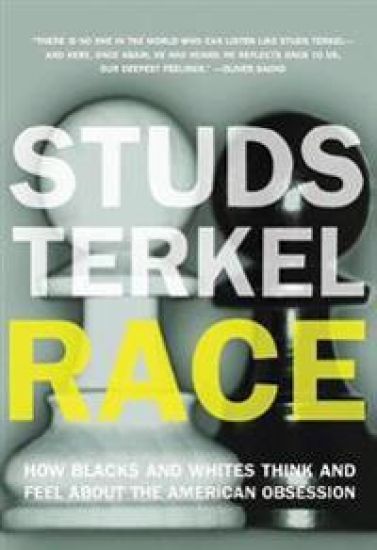
Race

Race

Studs Terkel

The New Press
2012
nidottu
First published in 1992 at the height of the furore over the Rodney King incident, Studs Terkel's Race was an immediate bestseller. Offering a rare and revealing look at how people in America truly feel about race, Terkel's candid interviews depict a complexity of thoughts and emotions and uncover a fascinating narrative of changing opinions. Preachers and street punks, college students and Klansmen, pioneering interracial couples, the nephew of the founder of apartheid, and Emmett Till's mother are among those whose voices appear in Race.
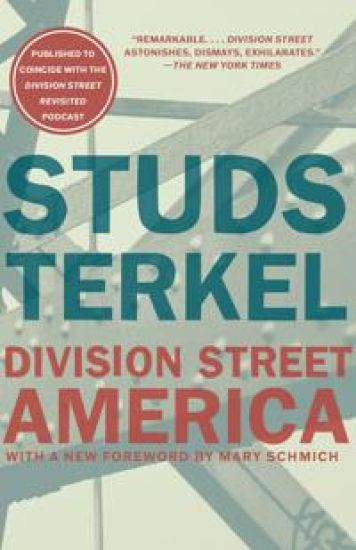
Division Street

Division Street

Studs Terkel

THE NEW PRESS
2024
pokkari
A landmark reissue of Studs Terkel’s classic microcosm of America, with a new foreword by the Pulitzer Prize–winning journalist and co-creator of the Division Street Revisited podcast“Remarkable. . . . Division Street astonishes, dismays, exhilarates.”—The New York TimesWhen New Press founder André Schiffrin first published Division Street in 1967, Studs Terkel’s reputation as America’s foremost oral historian was established overnight.Approaching Chicagoans as emblematic of the nation at large, Terkel set out with his tape recorder and spent a year talking to over seventy people about race, family, education, work, prospects for the future—all topics that remain deeply contentious today. Subjects included a Black woman who attended the 1963 March on Washington, a tool-and-die maker, a baker from Budapest, a closeted gay actor, and a successful but cynical ad man. As Tom Wolfe wrote, Studs was “one of those rare thinkers who is actually willing to go out and talk to the incredible people of this country.”Most interviewees shared the hope for a good life for their children and the wish for a less divided and more just America, but the real Chicago street referenced in the title takes on a metaphorical meaning as a symbol of the acute social divides of the 1960s—and highlights the continued relevance of Terkel’s work in our polarized times.Now, over fifty years later, Melissa Harris and Pulitzer Prize–winning journalist Mary Schmich have created the remarkable Division Street Revisited podcast, coming in January 2025, in which they have found and interviewed descendants of Terkel’s original subjects in seven rich episodes. Schmich’s foreword to the reissue and the extraordinary podcast—along with the new edition of Division Street—together demonstrate Studs Terkel’s prescience and the enduring importance of his work.
Division Street America

Division Street America

Studs Terkel

The New Press
1993
nidottu
Division Street, Studs Terkel's first book of oral history, established his reputation as America's foremost oral historian and as "one of those rare thinkers who is actually willing to go out and talk to the incredible people of this country" (in the words of Tom Wolfe). Viewing the inhabitants of a single city, Chicago, as a microcosm of the nation at large, Division Street chronicles the thoughts and feelings of some seventy people from widely varying backgrounds in terms of class, race, and personal history. From a mother and son who migrated from Appalachia to a Native American boilerman, from a streetwise ex–gang leader to a liberal police officer, from the poorest African Americans to the richest socialites, these unique and often intimate first-person accounts form a multifaceted collage that defies any simple stereotype of America. As Terkel himself put it: "I was on the prowl for a cross–section of urban thought, using no one method or technique. . . I guess I was seeking some balance in the wildlife of the city as Rachel Carson sought it in nature. Revealing aspects of people's lives that are normally invisible to most of us, Division Street is a fascinating survey of a city, and a society, at a pivotal moment of the twentieth century.
Hårda tider : amerikaner berättar om den stora depressionen

Hårda tider : amerikaner berättar om den stora depressionen

Studs Terkel; Kjell Östberg; Olof Palme

Natur Kultur Allmänlitteratur
2022
nidottu
”Detta är en bok om Amerika, om 30-talet och om oss själva - depressionen har allmängiltig betydelse därför att den visar hur nödvändigt det är att demokratin äger handlingskraft.”Ur Olof Palmes förord”Hårda tider återger inte depressionsåren – den är dem.”Arthur Miller”Läs en sida, vilken som helst. Försök sedan att sluta.”The National ObserverWall Street, New York, en oktoberdag 1929. Börskraschen sätter punkt för det glada 20-talet. Miljoner amerikaner kastas ut i ett årtionde av arbetslöshet, svält, förtvivlan. Studs Terkel uppsökte några av dem som minns dessa hårda tider och lät dem tala fritt till hans bandspelare –tiggare, strippor, gangsters, politiker, skattmasar, affärsmän,hemmafruar, präster, skådespelare. Resultatet är inte enbart en rörande och upprörande fresk av livsöden och livsvisdomar utan också ett skickligt exempel så kallad ”oral history”. I förlängningen väcker boken också frågan: kan detta upprepas, och hur skulle det bli då?
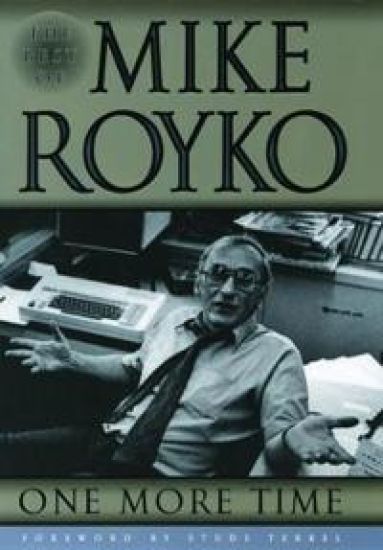
One More Time

One More Time

Mike Royko; Studs Terkel

University of Chicago Press
2000
nidottu
Mike Royko wrote a daily column for nearly 35 years - at first for the "Chicago Daily News", then the "Sun-Times", and finally the "Tribune" - and his Pulitzer Prize-winning commentary was syndicated in more than 600 newspapers nationwide. Pretension and hypocrisy were his targets, and his well-aimed salvos, delivered with blunt honesty and penetrating wit, w on him fans and foes alike. This text collects the best of Royko's columns from his career. Culled from 7500 columns and spanning four decades, from his early days to his last dispatch, the writings in this collection reflect a radically changing America as seen by a man whose sense of justice and humour never faltered. Included in this volume are columns such as: the stories of his childhood as recollected by himself and his pal, "Slats" Grobnik; his modern-day Christmas parable of Mary and Joseph looking for a room in Chicago; "A Faceless Man's Plea," the tale of woe that in one day had Richard Nixon publicly reversing the Veterans Administration; his account of Frank Sinatra's threat to punch him in the eye; the column he wrote about how his feet had always disappointed him; his pieces on racism; and his amusing attacks on political correctness. Putting each decade into perspective are introductions by Lois Wille, Royko's friend and colleague at all three Chicago dailies.
Ramblin' Man

Ramblin' Man

Ed Cray; Studs Terkel

WW Norton Co
2006
nidottu
The life and career of the most recognized and beloved folk musician of the twentieth century are recalled here, with details of his hobo days as well as his marriage, his "subversive" activities, and his eventual death from Huntingdon's Disease. Reprint. 10,000 first printing.
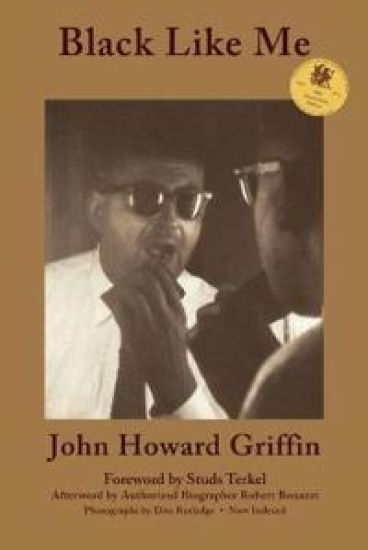
Black Like Me

Black Like Me

John Howard Griffin; Studs Terkel; Robert Bonazzi

Wings Press
2011
sidottu
On October 28, 1959, John Howard Griffin underwent a transformation that changed many lives beyond his own—he made his skin black and traveled through the segregated Deep South. His odyssey of discovery was captured in journal entries, arguably the single most important documentation of 20th-century American racism ever written. More than 50 years later, this newly edited edition—which is based on the original manuscript and includes a new design and added afterword—gives fresh life to what is still considered a “contemporary book.” The story that earned respect from civil rights leaders and death threats from many others endures today as one of the great human—and humanitarian—documents of the era. In this new century, when terrorism is too often defined in terms of a single ethnic designation or religion, and the first black president of the United States is subject to hateful slurs, this record serves as a reminder that America has been blinded by fear and racial intolerance before. This is the story of a man who opened his eyes and helped an entire nation to do likewise.
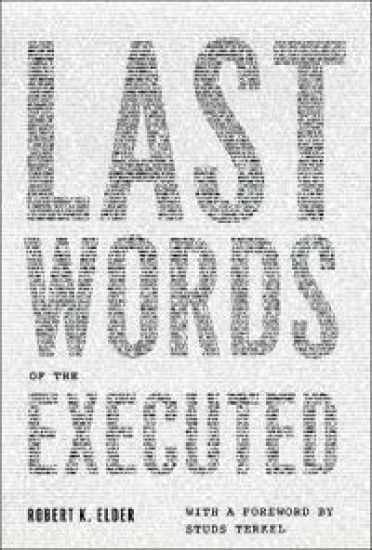
Last Words of the Executed

Last Words of the Executed

Robert K. Elder; Studs Terkel

University of Chicago Press
2010
sidottu
Some beg for forgiveness. Others claim innocence. At least three cheer for their favorite football teams. Death waits for us all, but only those sentenced to death know the day and the hour-and only they can be sure that their last words will be recorded for posterity. "Last Words of the Executed" presents an oral history of American capital punishment, as heard from the gallows, the chair, and the gurney. The product of seven years of extensive research by journalist Robert K. Elder, the book explores the cultural value of these final statements and asks what we can learn from them. We hear from both the famous-such as Nathan Hale, Joe Hill, Ted Bundy, and John Brown-and the forgotten, and their words give us unprecedented glimpses into their lives, their crimes, and the world they inhabited. Organized by era and method of execution, these final statements range from heartfelt to horrific. Some are calls for peace or cries against injustice; others are accepting, confessional, or consoling; still others are venomous, rage-fueled diatribes. Even the chills evoked by some of these last words are brought on in part by the shared humanity we can't ignore, their reminder that we all come to the same end, regardless of how we arrive there. "Last Words of the Executed" is not a political book. Rather, Elder simply asks readers to listen closely to these voices that echo history. The result is a riveting, moving testament from the darkest corners of society.