Kirjojen hintavertailu. Mukana 12 083 983 kirjaa ja 12 kauppaa.

Kirjahaku

Etsi kirjoja tekijän nimen, kirjan nimen tai ISBN:n perusteella.

9 kirjaa tekijältä Sugata Bose

The Nation As Mother

The Nation As Mother

Sugata Bose

Penguin Random House India
2021
pokkari
AN ESSENTIAL VOLUME TO UNDERSTAND INDIA'S NATIONAL AND CULTURAL LEGACYIn The Nation as Mother, an interconnected set of deeply researched and powerfully argued essays and speeches Sugata Bose explores the relationship between nation, reason and religion in Indian political thought and practice. Offering a subtle interpretation of the ways of imagining the nation as mother, the book illuminates different visions of India as a free and flexible federal union that have acquired renewed salience today.Breaking out of the false dichotomy between secular nationalism and religious communalism, the author provides incisive analyses of the political legacies of Tagore and Gandhi, Nehru and Bose, Aurobindo and Jinnah, and a range of other thinkers and leaders of the anti-colonial movement. The essays question assumptions about any necessary contradiction between cosmopolitanism and patriotism and the tendency among religious majoritarians and secularists alike to confuse uniformity with unity. The speeches in Parliament draw on a rich historical repertoire to offer valuable lessons in political ethics.In arguing against the dangers of an intolerant religious majoritarianism, this book makes a case for concepts of layered and shared sovereignty that might enable an overarching sense of Indian nationhood to coexist with multiple identities of the country's diverse populace. The Nation as Mother delves into history to evoke an alternative future of a new India based on cultural intimacy among its different communities.
Peasant Labour and Colonial Capital

Peasant Labour and Colonial Capital

Sugata Bose

Cambridge University Press
2007
pokkari
This book is a critical work of synthesis and interpretation on one of the central themes in modern Indian history - agrarian change under British colonial rule. Sugata Bose analyses the relationships between demography, commercialization, class structure and peasant resistance unfolding over the long term between 1770 and more recent times. By integrating the histories of land and capital, he examines the relationship between capitalist 'development' of the wider economy under colonial rule and agrarian continuity and change. Drawing most of his empirical evidence from rural Bengal, the author makes comparisons with regional agrarian histories of other parts of South Asia. Thus, this study stands on its own in the field of modern Indian social and economic history in its chronological sweep and comparative context and makes the complex subject of India's peasantry accessible to students and the interested non-specialist.
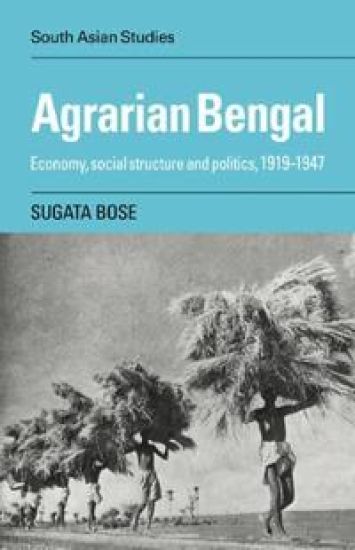
Agrarian Bengal

Agrarian Bengal

Sugata Bose

Cambridge University Press
2007
pokkari
As well as being an outstanding contribution to Indian economic and social history, this book draws important conclusions about peasant politics in general and about the effects of international economic fluctuations on primary producing countries. Dr Bose develops a general typology of systems of agrarian production in Bengal to show how these responded to different types of pressure from the world economy, and treats in detail the effects of the world Depression on Bengal. Separate chapters are devoted to the themes of agrarian conflict and religious strife in east Bengal, the agrarian dimension of mass nationalism in west Bengal and sharecroppers agitations in the frontier regions. The conclusion attempts a synthesis of the typology of agrarian social structure and the periodisation of peasant politics, placing this in the wider context of agrarian societies and protest in other parts of India and in South-east Asia.
Peasant Labour and Colonial Capital

Peasant Labour and Colonial Capital

Sugata Bose

Cambridge University Press
1993
sidottu
This book is a critical work of synthesis and interpretation on one of the central themes in modern Indian history - agrarian change under British colonial rule. Sugata Bose analyses the relationships between demography, commercialization, class structure and peasant resistance unfolding over the long term between 1770 and more recent times. By integrating the histories of land and capital, he examines the relationship between capitalist 'development' of the wider economy under colonial rule and agrarian continuity and change. Drawing most of his empirical evidence from rural Bengal, the author makes comparisons with regional agrarian histories of other parts of South Asia. Thus, this study stands on its own in the field of modern Indian social and economic history in its chronological sweep and comparative context and makes the complex subject of India's peasantry accessible to students and the interested non-specialist.
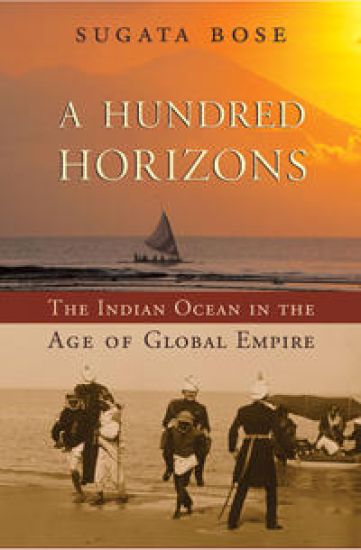
A Hundred Horizons

A Hundred Horizons

Sugata Bose

Harvard University Press
2009
nidottu
On December 26, 2004, giant tsunami waves destroyed communities around the Indian Ocean, from Indonesia to Kenya. Beyond the horrific death toll, this wall of water brought a telling reminder of the interconnectedness of the many countries on the ocean rim, and the insignificance of national boundaries. A Hundred Horizons takes us to these shores, in a brilliant reinterpretation of how culture developed and history was made at the height of the British raj.Between 1850 and 1950, the Indian Ocean teemed with people, commodities, and ideas: pilgrims and armies, commerce and labor, the politics of Mahatma Gandhi and the poetry of Rabindranath Tagore were all linked in surprising ways. Sugata Bose finds in these intricate social and economic webs evidence of the interdependence of the peoples of the lands beyond the horizon, from the Middle East to East Africa to Southeast Asia.In following this narrative, we discover that our usual ways of looking at history--through the lens of nationalism or globalization--are not adequate. The national ideal did not simply give way to inevitable globalization in the late twentieth century, as is often supposed; Bose reveals instead the vital importance of an intermediate historical space, where interregional geographic entities like the Indian Ocean rim foster nationalist identities and goals yet simultaneously facilitate interaction among communities.A Hundred Horizons merges statistics and myth, history and poetry, in a remarkable reconstruction of how a region's culture, economy, politics, and imagination are woven together in time and place.
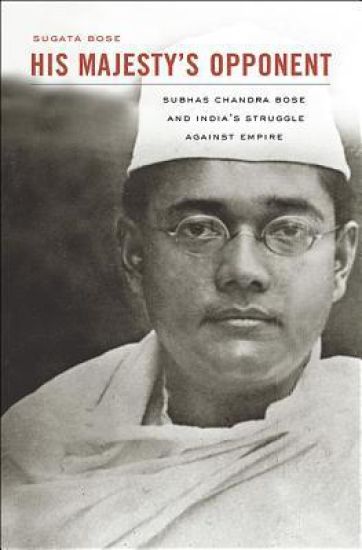
His Majesty’s Opponent

His Majesty’s Opponent

Sugata Bose

The Belknap Press
2012
nidottu
The man whom Indian nationalists perceived as the “George Washington of India” and who was President of the Indian National Congress in 1938–1939 is a legendary figure. Called Netaji (“leader”) by his countrymen, Subhas Chandra Bose struggled all his life to liberate his people from British rule and, in pursuit of that goal, raised and led the Indian National Army against Allied Forces during World War II. His patriotism, as Gandhi asserted, was second to none, but his actions aroused controversy in India and condemnation in the West.Now, in a definitive biography of the revered Indian nationalist, Sugata Bose deftly explores a charismatic personality whose public and private life encapsulated the contradictions of world history in the first half of the twentieth century. He brilliantly evokes Netaji’s formation in the intellectual milieu of Calcutta and Cambridge, probes his thoughts and relations during years of exile, and analyzes his ascent to the peak of nationalist politics. Amidst riveting accounts of imprisonment and travels, we glimpse the profundity of his struggle: to unite Hindu and Muslim, men and women, and diverse linguistic groups within a single independent Indian nation. Finally, an authoritative account of his untimely death in a plane crash will put to rest rumors about the fate of this “deathless hero.”This epic of a life larger than its legend is both intimate, based on family archives, and global in significance. His Majesty’s Opponent establishes Bose among the giants of Indian and world history.
Asia after Europe

Asia after Europe

Sugata Bose

HARVARD UNIVERSITY PRESS
2024
sidottu
A concise new history of a century of struggles to define Asian identity and express alternatives to European forms of universalism.The balance of global power changed profoundly over the course of the twentieth century, above all with the economic and political rise of Asia. Asia after Europe is a bold new interpretation of the period, focusing on the conflicting and overlapping ways in which Asians have conceived their bonds and their roles in the world. Tracking the circulation of ideas and people across colonial and national borders, Sugata Bose explores developments in Asian thought, art, and politics that defied Euro-American models and defined Asianness as a locus of solidarity for all humanity.Impressive in scale, yet driven by the stories of fascinating and influential individuals, Asia after Europe examines early intimations of Asian solidarity and universalism preceding Japan’s victory over Russia in 1905; the revolutionary collaborations of the First World War and its aftermath, when Asian universalism took shape alongside Wilsonian internationalism and Bolshevism; the impact of the Great Depression and Second World War on the idea of Asia; and the persistence of forms of Asian universalism in the postwar period, despite the consolidation of postcolonial nation-states on a European model.Diverse Asian universalisms were forged and fractured through phases of poverty and prosperity, among elites and common people, throughout the span of the twentieth century. Noting the endurance of nationalist rivalries, often tied to religious exclusion and violence, Bose concludes with reflections on the continuing potential of political thought beyond European definitions of reason, nation, and identity.